






More Allergy, Asthma & Infectious Disease Articles
Can Stress Cause Cold Sores on the Lips?
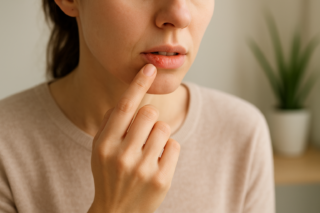
By Your Health Magazine Health Information Team
Yes, stress can trigger cold sores on the lips in some people, but it does not cause the underlying infection. Cold sores are caused by the herpes simplex virus, usually herpes simplex virus type 1 (HSV-1). After infection, the virus remains inactive in nerve cells and may later reactivate. Emotional stress, physical strain, illness, fatigue, and inadequate sleep are among the factors that may contribute to an outbreak.
How Stress Can Trigger a Cold Sore
Stress does not create HSV or mean that every stressful period will produce a sore. Instead, it may temporarily affect immune regulation, making it easier for an already-present virus to become active. Research has found an association between psychological distress and recurrent herpes symptoms, although the relationship varies from person to person.
Other common triggers include:
- Colds, fever, or another illness
- Sun exposure
- Physical or emotional exhaustion
- Hormonal changes, including menstruation
- Dry, cracked, or injured lips
- Dental work or procedures around the mouth
- Hot, cold, or windy weather
An outbreak may involve several triggers at once. For example, a stressful week may also include less sleep, skipped meals, and more time outdoors. Some cold sores also appear without an obvious trigger.
What a Stress-Related Cold Sore Looks and Feels Like
Cold sores commonly form on the lip’s outer edge or the surrounding skin. According to the MedlinePlus overview of cold sores, they are contagious and usually develop outside the mouth, although oral sores may occur on the gums or roof of the mouth.
An outbreak often progresses through these stages:
- Warning sensations: Tingling, itching, tenderness, or burning may begin before a blister is visible.
- Blister formation: One or more small, fluid-filled blisters develop, sometimes grouped in a patch.
- Oozing and crusting: The blisters may break, leaving shallow sores that form a crust.
- Healing: The crust gradually resolves, usually without scarring.
Recurrent cold sores are often less severe than the initial infection and may return in roughly the same area.
Cold Sore or Canker Sore?
| Feature | Cold sore | Canker sore |
|---|---|---|
| Usual location | Outside the mouth, especially along the lip border | Inside the lips, cheeks, or other soft areas of the mouth |
| Appearance | Clusters of fluid-filled blisters that crust | Round or oval ulcer with a pale center and red border |
| Cause | Herpes simplex virus | Not caused by herpes; the exact cause varies |
| Contagious? | Yes | No |
A healthcare professional can often recognize a typical cold sore by examining it. A swab from an active lesion may be used when the diagnosis is uncertain. Blood antibody tests generally cannot confirm that a particular lip sore is an active HSV outbreak. As with other antibody findings, including a reactive hepatitis B surface antibody result, interpretation depends on what the test measures and the surrounding clinical context.
What to Do When a Cold Sore Starts
Cold-sore treatment generally works best when started during the tingling or burning stage. Options depend on a person’s age, symptoms, health history, and frequency of outbreaks.
- Use a cool, clean compress to reduce discomfort.
- Keep the area clean and avoid picking at blisters or crusts.
- Apply medication with clean hands or a cotton-tipped applicator.
- Consider asking a pharmacist about an appropriate nonprescription cold-sore product.
- Contact a healthcare professional promptly if prescription treatment has previously been recommended for outbreaks.
Prescription antiviral medicines may shorten an outbreak, particularly when used early. People with frequent, painful, or disruptive outbreaks can discuss episodic or preventive treatment with a primary care clinician or dermatologist. The American Academy of Dermatology provides additional information about cold-sore diagnosis and antiviral treatment.
Cold sores cannot be cured permanently, and treatment does not remove HSV from the body. However, appropriate treatment may reduce discomfort and healing time.
Can Stress Management Prevent Future Outbreaks?
Stress management cannot guarantee that cold sores will stop, but it may reduce one potential trigger. Practical strategies include:
- Keeping a consistent sleep schedule
- Getting regular physical activity
- Using slow breathing, meditation, or another relaxation practice
- Taking short breaks during demanding periods
- Eating regular, balanced meals and staying hydrated
- Recording outbreaks and possible triggers in a calendar
If worry or tension is persistent, difficult to control, or interfering with sleep and daily activities, consider discussing it with a healthcare professional. The MedlinePlus information about anxiety explains common symptoms and available forms of support.
Protecting the lips may also help. Dermatologists recommend broad-spectrum lip balm with SPF 30 or higher for people whose outbreaks are triggered by sunlight. Keeping lips moisturized and getting adequate sleep may be useful as well. More practical prevention measures are available in the American Academy of Dermatology’s cold-sore self-care guidance.
How to Avoid Spreading the Virus
HSV spreads through close contact. Transmission is especially likely when blisters or open sores are present, but the virus can sometimes spread without a visible sore.
From the first tingling sensation until the area has completely healed:
- Avoid kissing and oral sex.
- Do not share cups, eating utensils, towels, razors, lip balm, or cosmetics.
- Wash your hands after touching the area or applying medication.
- Avoid touching the eyes, because HSV infection involving an eye requires prompt care.
- Use separate applicators for lip products, and replace products that directly contacted the sore.
When to Seek Care
Contact a primary care clinician or dermatologist if the diagnosis is uncertain, outbreaks are frequent, symptoms are severe, or a sore has not healed within about two weeks. Medical evaluation is also appropriate if you have eczema, multiple spreading sores, difficulty eating or drinking, or a condition or medication that weakens the immune system.
Seek prompt medical care for eye pain, redness, light sensitivity, vision changes, or sores near an eye. Infants and people with significantly weakened immune systems should also be evaluated promptly after possible exposure or when herpes symptoms develop.
Other Articles You May Find of Interest...
- Can Stress Cause Cold Sores on the Lips?
- Gram-Positive Rods in a Blood Culture: Contamination or Infection?
- Can Head Lice Get Into Your Ears?
- Staph and Eczema: Why Infected Skin Needs Prompt Care
- Reactive Hepatitis B Surface Antibody: What the Result Means
- Is ‘Cannibal Rash’ a Real Medical Diagnosis?
- Do Allergies Cause a Fever? What Your Temperature Can Reveal





