






Your Health Magazine Contributor
4201 Northview Drive
Suite 102
Bowie, MD 20716
More Weight Control, Nutrition & Exercise Articles
Can Athletes Use Nose Strips During Exercise and Recovery?

Nose strips have become increasingly visible in running, cycling, football, tennis, and gym training. External nose strips stay across the bridge of the nose. Their flexible material gently pulls the sides of the nose outward. This action reduces resistance around the nasal valve and makes nasal breathing feel easier.
However, easier nasal airflow does not automatically improve endurance, speed, power, or recovery. Sleep and wellness products may support comfortable breathing, but research has not consistently found improvements in VO₂ max, heart rate, or perceived exertion among healthy athletes.
The practical question is not whether nose strips improve athletic ability. It is whether they provide useful breathing comfort during a specific training or recovery situation.
Where Do Nose Strips Fit in an Athlete’s Routine?
Nose strips may have the greatest value during activities where nasal breathing remains practical. This often includes warmups, steady cardio, mobility sessions, and cooldowns. Their effect may become less noticeable during intense exercise. Athletes usually breathe through both the nose and mouth when their need for airflow rises.
| Athlete situation | Possible value | Main reason |
| Warmup | Moderate | Nasal breathing may remain comfortable |
| Easy run | Moderate | Nasal or mixed breathing is common |
| Zone 2 cardio | Moderate | Steady breathing makes nasal comfort noticeable |
| Tempo session | Low to moderate | Mouth breathing becomes more important |
| HIIT or sprinting | Low | High airflow demand usually requires mouth breathing |
| Strength training | Low to moderate | May support comfort between sets |
| Cooldown | Moderate | Slower nasal breathing may feel comfortable |
| Sleep after training | Moderate | May support mild nighttime nasal restriction |
| Severe congestion | Low | External support may not address internal swelling |
How Does Exercise Intensity Change How Athletes Breathe?

Athletes do not use the nose and mouth in the same way at every exercise intensity. This difference helps explain why nose strips may feel useful during one session but irrelevant during another.
Low-Intensity Exercise
Warmups, easy runs, and light cycling place a lower demand on the respiratory system. Many athletes can breathe mainly through the nose or use a mix of nasal and mouth breathing. A strip may make this stage feel more comfortable when the nasal valve area feels narrow. It does not replace a structured warmup or proper pace control.
Moderate-Intensity Exercise
During steady or tempo training, athletes often use both the nose and mouth. A nose strip may still create a feeling of openness, but the mouth also carries more airflow.
The value at this level is personal. Some athletes may notice less nasal restriction, while others may notice no difference.
High-Intensity Exercise
Sprinting and hard intervals require rapid airflow. Mouth breathing usually becomes dominant as intensity rises. A nose strip may remain comfortable, but it is unlikely to change the main breathing limitation during intense exercise.
Heavy Strength Training
Strength training involves bracing and short breathing cycles. Safe lifting technique and load control matter more than minor changes in nasal resistance. A strip may support comfort during preparation or rest periods. It should not change established breathing and bracing techniques.
How Do Nose Strips Fit Different Sports?
The requirement and usage of a nose strip changes with the sport, exercise intensity, and breathing pattern.
Runners
Runners may find nose strips most useful during warmups, easy mileage, and cooldowns. They are less likely to affect hard intervals or short races. A familiar 30-minute easy run is a suitable first test.
Cyclists
Cyclists may test strips during steady road rides or indoor trainer sessions. Sweat and sunscreen can affect adhesion.
Gym Users
Gym users may wear them during mobility work, light cardio, or recovery periods. They should not change their normal breathing and bracing methods during heavy sets.
Team Sport Athletes
Football, basketball, rugby, and hockey involve repeated changes in exercise intensity. A strip may feel useful during preparation but less noticeable during hard play.
Practice sessions provide a better testing setting than competitive matches.
Yoga and Pilates Participants
These activities often include slower breathing and controlled movement. Changes in nasal comfort may be more noticeable at this intensity. The strip should support comfortable breathing rather than force nasal-only breathing.
Swimmers
External adhesive strips have limited practical value in water. Moisture can weaken adhesion, and the swimming environment changes normal breathing patterns.
When Nose Strips are Most Useful for Athletes?
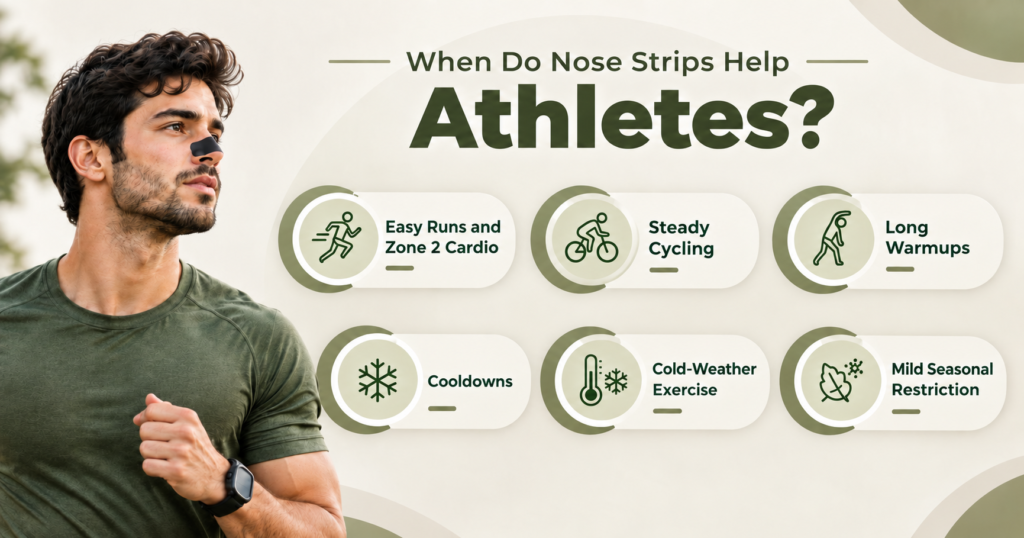
Nose strips may feel most useful when nasal resistance affects comfort during lower-intensity activity.
Easy Runs and Zone 2 Cardio
Easy runs often allow nasal or mixed breathing. This makes changes in nasal comfort easier to notice. Athletes can test a strip during a familiar route while keeping the pace controlled.
Steady Cycling
Indoor air, fans, and long stationary sessions may make the nose feel dry or restricted. A strip may support comfort during steady cycling. Testing it during an indoor session can make comparison easier.
Long Warmups
Applying a strip before the warm-up allows the adhesive to settle before heavy sweating begins. The warm-up also gives the athlete time to check fit and comfort before the main session.
Cooldowns
Breathing becomes slower as exercise intensity falls. Athletes may return to nasal or mixed breathing during this stage. A strip may make nasal breathing feel calmer. It should not be expected to lower recovery heart rate faster.
Cold-Weather Exercise
Cold, dry air may make nasal breathing feel less comfortable. Some athletes may notice greater value from a strip in these conditions. The strip does not prevent airway irritation caused by cold air.
Mild Seasonal Restriction
Allergies may cause temporary nasal restriction. A strip can support the outer nasal area but cannot reduce internal inflammation. Athletes with recurring allergy symptoms should follow suitable medical guidance.
When Are Nose Strips Less Useful?
Nose strips may add little value when nasal airflow is not limiting comfort for atheletes.
Sprinting and HIIT
Hard intervals require rapid airflow. Mouth breathing becomes more important, which can reduce the practical value of a nose strip.
Severe Congestion
A strip cannot remove mucus or reduce swollen internal tissue. Severe or persistent congestion may require separate care.
Exercise-Induced Wheezing
Wheezing, chest tightness, coughing, or unusual breathlessness may involve the lower airways. A nose strip cannot treat asthma or exercise-induced bronchoconstriction. Athletes should stop exercising and seek medical advice when these symptoms appear.
Heavy Sweating
Sweat, skin oil, sunscreen, and moisturizer can weaken the adhesive. A loose strip may become distracting during training. Applying it to clean, dry skin may improve its hold.
Skin Irritation
Adhesive may cause itching, redness, or skin pulling. The strip should be removed if irritation begins. It should not be applied over broken, inflamed, or sunburned skin.
How Can Athletes Test Nose Strips?
A simple comparison can show whether a strip provides enough comfort to remain part of the routine.
Test During a Familiar Session
Choose an easy run, steady ride, or regular warmup. Avoid testing during illness, unusual fatigue, or extreme weather. Complete one session without a strip. Repeat the same session later with a strip under similar conditions.
Track Practical Factors
Track practical factors during and after use. Note nasal comfort, ease of application, adhesion during sweating, skin response, distraction during movement, comfort during cooldown, and willingness to use the strips again. Pace and heart rate can provide context. They should not be used to prove a performance effect from one or two sessions.
Keep or Skip the Strip
Keep using it when it feels comfortable, remains attached, and makes nasal breathing noticeably easier. Skip it when it irritates the skin, peels away, causes distraction, or produces no useful difference.
How Should Athletes Apply Nose Strips?
Correct application helps the strip remain secure during movement and sweat.
Clean and Dry the Nose
Wash the skin to remove oil, sweat, moisturiser, and sunscreen. Dry the area fully before applying the strip.
Position the Strip Correctly
Place the strip across the lower bridge of the nose, above the flare of the nostrils. Follow the instructions provided with the product. Poor placement may reduce the lifting effect.
Press the Edges Down
Press the strip firmly across the nose. Hold the edges briefly to support adhesion. Apply it before the warmup rather than after sweating begins.
Test Before an Event
Do not use a new strip or placement method for the first time during a race or match. A normal training session will show whether the adhesive remains secure.
Remove It Slowly
Peel the strip away gently after use. Moistening the adhesive may make removal more comfortable. Stop using the strip if redness, itching, swelling, or soreness continues.
Athletes looking for external nasal support can compare the material, fit, size, and application method of different nose strips for breathing before selecting one for training.
Safety Signs Athletes Should Not Ignore
Nose strips are simple external products, but breathing symptoms during exercise can require medical care.
Stop exercising and seek suitable help for:
- Wheezing or chest tightness
- Chest pain
- Severe breathlessness
- Dizziness or faintness
- Blue or grey lips
- Sudden breathing changes
- Symptoms that continue after rest
Persistent nasal blockage, facial pain, frequent nosebleeds, or repeated sinus symptoms may also need assessment.
During sleep, loud snoring, gasping, choking, breathing pauses, morning headaches, or strong daytime tiredness can indicate a sleep-related breathing disorder. Nose strips do not treat sleep apnea.
Final Verdict
Nose strips can be a practical addition to an athlete’s routine when nasal breathing feels limited during training or recovery. Their primary role is to help open the nasal passages, not to directly improve athletic performance.
The potential benefit depends on individual comfort and breathing needs. While they may make breathing feel easier for some athletes, current evidence does not establish nose strips as a reliable way to increase endurance, speed, or recovery. Use them as a breathing aid alongside proven recovery habits rather than as a performance shortcut.
Frequently Asked Questions
Can athletes wear nose strips while training?
Yes. They can wear them when the strip feels comfortable, stays attached, and does not irritate the skin.
Do nose strips help runners breathe better?
They may make nasal airflow feel easier for some runners. Research does not consistently show improved running performance.
Do nose strips improve VO₂ max?
Current evidence does not show a consistent improvement in VO₂ max among healthy people.
Are nose strips useful for Zone 2 training?
They may support nasal comfort because lower-intensity exercise often involves nasal or mixed breathing.
Do nose strips help after exercise?
They may support comfortable nasal breathing during a cooldown. They have not been shown to speed physiological recovery.
Other Articles You May Find of Interest...
- Can Athletes Use Nose Strips During Exercise and Recovery?
- Why Pineapple Makes Your Tongue Sting
- How To Lose Weight Fast? 12 Expert Tips
- First Month on GLP-1: What Should You Track?
- How Obesity Can Affect Height, Posture, and Growth
- The Drumstick Vegetable Plant: Nutrition and Uses of Moringa
- How Telehealth Is Making Medical Weight Management More Accessible





