






Your Health Magazine Contributor
4201 Northview Drive
Suite 102
Bowie, MD 20716
More Podiatry Foot Care Articles
When a Doctor Recommends Arch Support: What to Expect

It’s a common moment in a doctor’s office: you’re there for knee pain, or your lower back has been bothering you, or you mention that your feet ache by the end of every shift, and your doctor says the words “you might want to look into arch support.” Then the appointment moves on, and you’re left holding a recommendation with no real roadmap for what to do with it.
That gap, between a doctor’s suggestion and an actual next step, is where a lot of patients get stuck. Here’s what that recommendation usually means, and what the process of acting on it tends to look like.
Why Doctors Recommend Arch Support in the First Place
Feet are the foundation for how the rest of the body moves, so when something is off in how a foot strikes the ground or distributes weight, it can show up as pain in places that seem unrelated. Overpronation, flat arches, or high, rigid arches can all change how force travels up through the ankles, knees, hips, and lower back. Plantar fasciitis, one common reason a doctor may discuss arch support, involves irritation and degeneration of the plantar fascia, the band of tissue that runs along the bottom of the foot. Foot mechanics can contribute in some patients, although the condition can have several contributing factors.
When a physician, physical therapist, or orthopedic specialist raises arch support, they’re typically pointing at this same idea: that supporting the foot’s structure may help ease strain further up the chain, not just in the foot itself.
The Two Paths After a Referral
Once arch support comes up, patients generally have two directions to go, and doctors don’t always spell out the difference.
Podiatrist-Prescribed Custom Orthotics
One path is a formal referral to a podiatrist, who can evaluate gait, take a mold or scan of the foot, and send it to a lab to produce custom orthotics built to that exact prescription. This route tends to involve a longer timeline, often several weeks between the evaluation and the finished device, and the cost varies depending on insurance coverage and the specific practice.
Store-Fitted Arch Supports
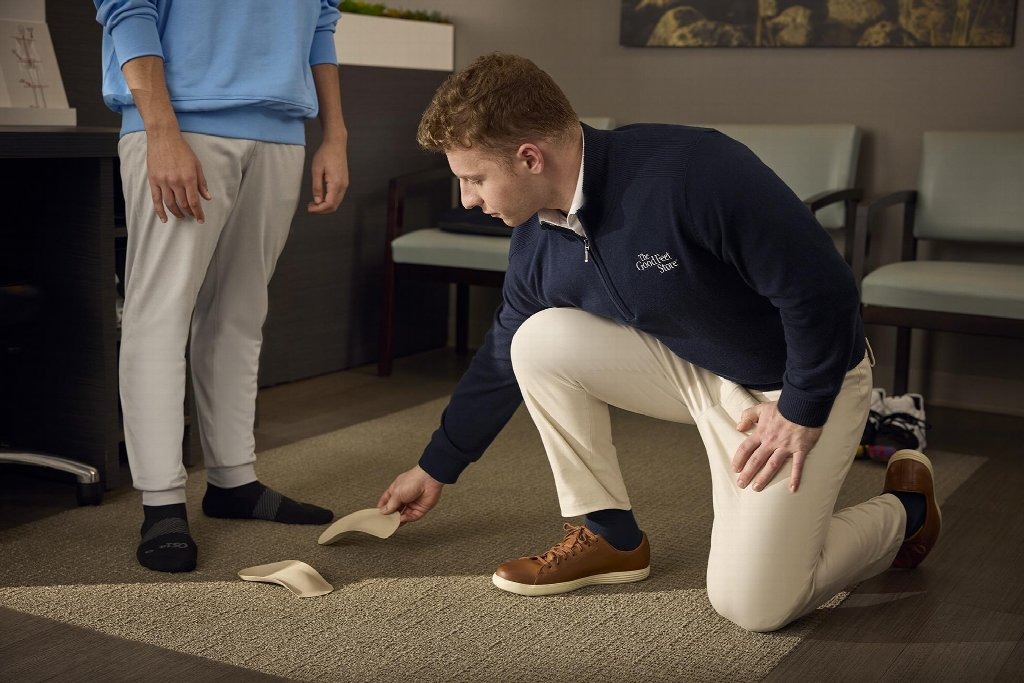
The second path is a store-based fitting, which is faster and doesn’t require a lab turnaround. The Good Feet Store is one option in this category, offering a personalized, same-day fitting where a specialist measures the foot and matches it to a structured arch support without the mold-and-wait process. This route may be an option for people looking for non-prescription arch support, and it can sometimes be used alongside care from a podiatrist, physical therapist, or other healthcare professional. Patients with a specific diagnosis or significant pain should confirm with their healthcare provider whether a store-fitted support is appropriate.
Neither path is inherently the “right” one for every patient. What matters is understanding which problem is being addressed and how urgently.
What to Expect During a Good Feet Fitting
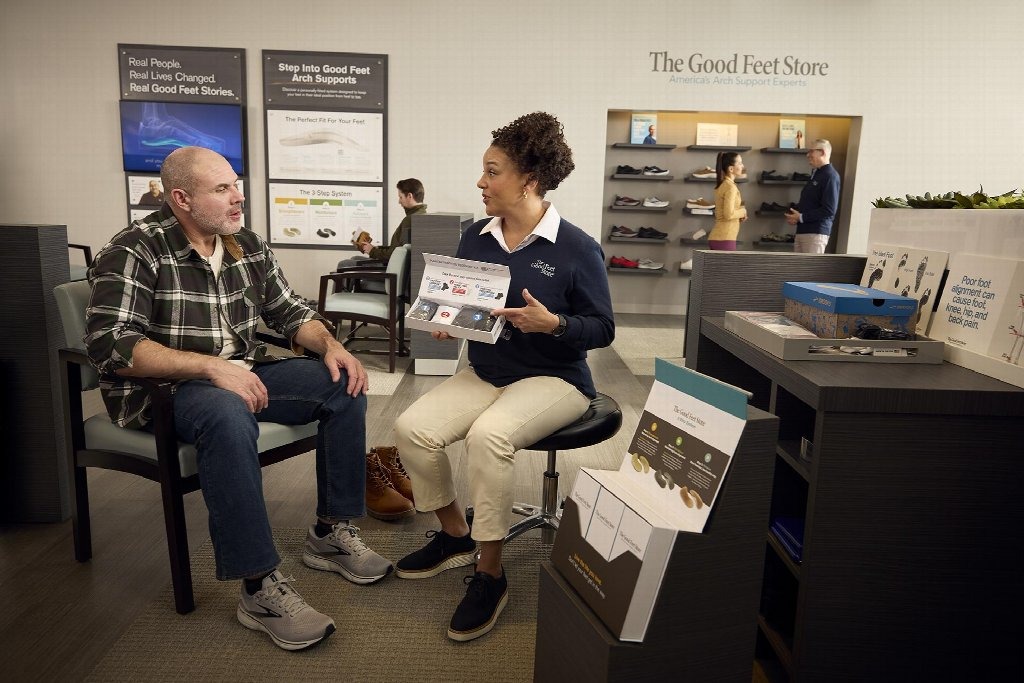
For patients considering the store-fitted route, the process is fairly structured. It starts with a digital foot scan that measures arch height, heel width, and how weight shifts across the foot, details that go well beyond a standard shoe size. A specialist then reviews those results and talks through the person’s specific pain points and daily activities before recommending a personalized fitting.
Good Feet’s medical leadership includes Dr. Pamela Mehta, a board-certified orthopedic surgeon who serves as the company’s Chief Medical Officer, along with healthcare professionals involved in the company’s medical ambassador and referral programs. That involvement does not replace an individual patient’s medical evaluation, but it provides clinical input into the company’s approach to arch support and fitting.
Most fittings also involve a test walk, where the person wears the arch supports around the store in their own shoes before deciding on anything, so the fit can be assessed in real time rather than after the fact.
Questions Worth Asking Before You Commit
Whichever path a doctor’s recommendation leads toward, it’s worth asking a few questions before moving forward:
- Is this recommendation addressing a specific diagnosis, or general preventive support?
- Does the provider offer any kind of adjustment period or return option if the fit isn’t right?
- What’s the total cost, including any follow-up visits or replacement parts over time?
- Is this meant to replace another treatment, or work alongside it?
- How soon can you expect to notice a difference, and when should you check back in if you don’t?
A good provider, whether that’s a podiatrist’s office or a store-based fitting, should be able to answer these clearly without pressure.
Key Takeaways
- Doctors recommend arch support most often for issues involving flat feet, high arches, overpronation, or pain that starts in the feet and radiates upward.
- There are generally two paths: podiatrist-prescribed custom orthotics, which take weeks to produce, and store-fitted arch supports, which are typically same-day.
- The Good Feet Store’s fitting process includes a digital foot scan, a specialist consultation, and a test walk, and is informed by input from a medical advisory board that includes an orthopedic surgeon.
- Store-fitted arch supports can work as a first step, a complement to podiatric care, or a faster option while waiting on a custom device.
- Always confirm with your doctor whether a specific option is appropriate for your diagnosis before committing to it.
Frequently Asked Questions
Do I need a doctor’s referral to get fitted for arch supports at The Good Feet Store?
No. While many customers arrive with a doctor’s recommendation, a referral isn’t required to get a fitting.
How is a store fitting different from a podiatrist’s custom orthotic?
A podiatrist’s custom orthotic is built from a mold or scan and manufactured to an individual prescription over a period of weeks. A store fitting uses a digital scan to match a person to an existing, structured arch support the same day.
Will insurance cover an arch support fitting?
Coverage depends on the provider and plan. Custom orthotics prescribed by a podiatrist are more commonly billed through insurance, while store-fitted arch supports are typically paid out of pocket, though many are FSA and HSA eligible.
Can I use a store-fitted arch support alongside a treatment plan from my doctor or physical therapist?
Yes, for many patients this is a complementary option rather than a replacement. It’s worth mentioning to your provider so it can be factored into your broader treatment plan.
Other Articles You May Find of Interest...
- When a Doctor Recommends Arch Support: What to Expect
- Swelling on the Bottom of Your Foot: Causes to Consider
- When Plantar Fasciitis Won’t Settle: A Podiatrist’s Treatment Options For Stubborn Heel Pain
- The ACV and Baking Soda Foot Soak: What It Does
- How Foot Massagers Can Help Relieve Stress, Fatigue, and Muscle Tension
- Why your feet hurt after having a baby (and what actually helps)
- Ankle ORIF Recovery: From Cast to First Steps




