






Your Health Magazine Contributor
4201 Northview Drive
Suite 102
Bowie, MD 20716
More Practice Management Articles
Choosing a Security Camera System for Healthcare Practices and Facilities
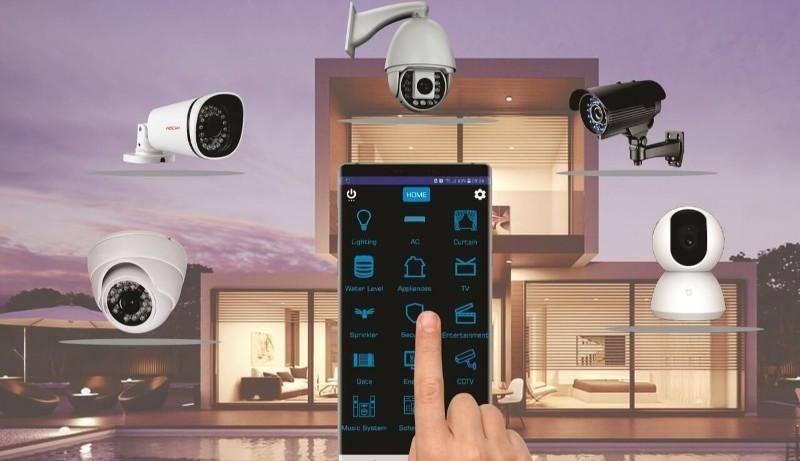
For healthcare practices and facilities, an IP security camera system can be a practical choice because it can provide high-resolution video, network connectivity, remote viewing, and room for future expansion. However, there is no single camera setup that works equally well for every healthcare property. A physician’s office, dental practice, outpatient center, medical office building, pharmacy, and healthcare parking facility can all have different surveillance requirements.
The right system should match the property’s size, layout, lighting conditions, vulnerable areas, recording needs, network infrastructure, and budget. Professional commercial security camera installation also matters because even a high-quality camera may provide limited coverage if it is installed at the wrong height, aimed incorrectly, or connected to an unreliable network.
What Makes a Security Camera System Suitable for Healthcare Use?
A healthcare security system should provide reliable coverage, clear video, dependable recording, and convenient access to footage. The goal is not simply to install cameras but to create coverage that makes sense for the way a healthcare facility operates.
Start by identifying the areas that need the most visibility. Entrances and exits may require clear views of people entering and leaving. Reception areas, pharmacy counters, supply rooms, employee-only areas, parking lots, and loading areas may require different types of coverage depending on the facility.
Healthcare organizations should also consider patient privacy when planning camera placement. Surveillance should be positioned carefully around examination rooms, treatment spaces, changing areas, and other locations where patients reasonably expect privacy, while access to recorded footage should be limited to authorized personnel.
Image quality is another important consideration. Higher-resolution cameras can capture more detail, but resolution alone does not determine whether footage will be useful. Camera placement, lighting, lens selection, and viewing distance also affect what the camera can capture.
Night vision and low-light performance are especially important for exterior areas. A parking lot or back entrance may look well covered during daylight but provide poor footage after dark if the camera is not suited to the lighting conditions.
Motion detection can help identify activity and make reviewing recorded footage more efficient. Remote access can also allow authorized business owners, practice managers, or facility administrators to view live video or recordings from a computer or mobile device.
Storage is equally important. Commercial systems may use an NVR, DVR, network storage, or another recording solution. The appropriate setup depends on factors such as the number of cameras, video resolution, recording schedule, and how long footage needs to be retained.
Which Types of Security Cameras Are Best for Healthcare Facilities?
Different camera types are designed for different environments. A healthcare property may use several types rather than relying on one camera design throughout the building.
| Camera Type | Common Healthcare Application |
|---|---|
| Bullet cameras | Entrances, exterior walls, driveways, and parking areas |
| Dome cameras | Reception areas, offices, hallways, pharmacies, and indoor spaces |
| PTZ cameras | Large areas that require pan, tilt, and zoom coverage |
| IP cameras | Network-based systems requiring high-resolution video and scalability |
| Outdoor cameras | Exterior locations exposed to weather and changing lighting |
- Bullet cameras have a directional design that can work well when a specific area needs to be monitored. They are commonly considered for building exteriors, entrances, and parking areas.
- Dome cameras offer a compact design that can suit reception areas, offices, hallways, pharmacies, and other indoor healthcare spaces. Their form factor can also work well where a less prominent camera is preferred.
- PTZ cameras can pan across an area, tilt vertically, and zoom in on specific activity. They may be useful for larger properties where a broad viewing range is important.
- IP cameras connect through a network and can support high-resolution video, remote access, and scalable installations. They can be a practical option for healthcare organizations planning to expand their surveillance system over time.
For exterior locations, commercial outdoor cameras should be selected according to weather exposure, lighting, mounting height, viewing distance, and the area that needs to be covered.
Are WiFi Security Cameras a Good Choice for Fort Myers Healthcare Practices?
WiFi security cameras can be useful for some healthcare practices and medical office settings because they transmit video over a wireless network rather than requiring a dedicated data cable at every camera location.
This can be practical in smaller practices, finished medical offices where running new cable is difficult, or locations where flexible camera placement is important. Wireless cameras can also support remote viewing, allowing authorized users to check the property without being physically present.
However, WiFi cameras still require careful planning. The camera needs a suitable power source, and the wireless network must provide a reliable connection from the camera to the network equipment. Walls, building materials, distance, interference, and network traffic can all affect performance.
Healthcare practices researching WiFi security cameras Fort Myers should therefore evaluate wireless coverage before choosing a camera location. A camera positioned outside the effective range of the network may experience connectivity problems or inconsistent video transmission.
For larger healthcare properties, areas with weak wireless coverage, or systems where consistent network connectivity is especially important, wired IP cameras may be worth considering.
What Should You Consider Before Commercial Security Camera Installation?
A good installation starts before any camera is mounted. Walk through the property and identify the locations where video coverage provides the most value.
Entrances and exits are often priorities because they provide important views of people entering or leaving the property. Parking lots may require wider views, while healthcare facilities may need cameras covering entrances, reception areas, hallways, supply rooms, loading areas, and employee access points.
Consider camera height and angle as well. A camera can technically cover an area while still producing poor footage if an obstruction, bright light source, reflection, or unsuitable viewing angle affects the image.
The number of cameras should also be based on coverage requirements rather than simply installing as many devices as possible. Multiple cameras pointed at the same area may add little value if another important location remains uncovered.
Networking and cabling should be planned alongside camera placement. Wired IP systems may use Ethernet connections, while WiFi systems depend on wireless coverage. Storage requirements should also be determined before installation so the recording system can support the desired number of cameras and retention period.
During commercial security camera installation, each camera should be positioned and tested based on the conditions of its specific location. This includes checking daytime and nighttime views, confirming recording, testing remote access, and looking for potential blind spots.
How Can Healthcare Practices Choose the Right Security Camera System?
The simplest way to choose a system is to start with the property’s actual security requirements instead of starting with a particular camera model.
First, identify what needs to be monitored. Make a list of entrances, exits, parking areas, reception spaces, offices, supply rooms, employee-only areas, loading zones, and other locations where visibility is important.
Next, determine how much detail is required. A general view of a large parking area may have different requirements from a camera positioned near a reception desk, pharmacy counter, or entrance.
Then consider wired versus WiFi cameras. Wired systems can provide dependable network connectivity where cabling is practical. WiFi systems can offer more flexibility in locations where running network cable is difficult, provided wireless coverage is reliable.
Storage and recording should be considered at the same time. Healthcare organizations should determine whether they need continuous recording, motion-based recording, remote access, and a particular footage retention period.
Finally, think about future growth. A practice that expects to add cameras, expand to another office, or upgrade its network may benefit from a system that can accommodate additional devices.
Rather than choosing a one-size-fits-all package, healthcare organizations should build the system around their property, operating schedule, security priorities, privacy considerations, and infrastructure.
Why Professional Installation Matters for Healthcare Security Cameras
Camera quality is only one part of a reliable surveillance system. Installation determines whether those cameras actually provide useful coverage.
A professional installer can assess camera positions, identify potential blind spots, evaluate lighting conditions, plan cable or network connections, and configure recording equipment. The system can then be tested to confirm that cameras are recording properly and that authorized users can access the footage as intended.
Proper installation can also help with future expansion. If a healthcare organization later needs additional cameras, storage, network equipment, or coverage in a newly added area, a well-planned system can make those changes easier to manage.
For healthcare properties, this planning is particularly valuable because security requirements can vary significantly from one area of a building to another. A camera selected for an indoor office or reception area may not be appropriate for a dark parking area, just as a wide-angle parking camera may not provide the detail needed at an entrance.
Conclusion
For many healthcare practices and facilities, an IP-based security camera system can provide a strong foundation because it supports network connectivity, high-resolution video, remote access, and future expansion. But the right configuration depends on the individual property.
Healthcare organizations should consider coverage, image quality, low-light performance, camera type, storage, network reliability, remote access, patient privacy, and future scalability before choosing their equipment.
For Fort Myers healthcare practices and facilities, the process can start with a practical assessment of entrances, parking areas, reception spaces, offices, supply areas, employee-only spaces, and other locations where security visibility is important. From there, the appropriate combination of wired or WiFi cameras, recording equipment, and camera placements can be determined.
A professionally planned and installed system is more likely to provide useful coverage because each camera is selected and positioned according to the property’s actual needs rather than following a generic package.
Other Articles You May Find of Interest...
- Choosing a Security Camera System for Healthcare Practices and Facilities
- How to Choose Microblading Insurance for an Independent Artist or Growing Salon
- Smart Coding Strategies for Today’s Healthcare Practices
- How Consultants Can Organise Their Appointments Effectively
- The Difference Between a Pharmacy Network and a Pharmacy, and Why It Matters
- AI Medical Receptionists for Healthcare Practices in 2026: A Comparison Guide
- 10 Wellness App Development Companies in the USA for 2027




