






More Kratom Education Articles
White Borneo Kratom Review: Effects, Benefits & Alkaloid Profile Explained

White Borneo kratom is a widely misunderstood product category. Most people who purchase White Borneo Kratom assume the “white” label refers to something botanical — something fixed and consistent across vendors. In reality, it is more complex, and understanding this distinction makes for a more informed buyer.
What Is White Borneo Kratom?
White Borneo Kratom is a white vein kratom product sourced from Mitragyna speciosa trees grown on the island of Borneo. The “white vein” designation indicates that the leaf was harvested earlier in the growth cycle — before the central vein shifts from a pale color to the deeper hue seen in mature leaves. This early harvest timing is the most defining botanical characteristic of white vein kratom, regardless of geographic origin.
Borneo is one of the most significant kratom-growing regions in the world. Indonesian Borneo — also known as Kalimantan — produces a large portion of the kratom sold in the US market. The island’s rainforest climate, humidity, and volcanic soil create favorable conditions for Mitragyna speciosa cultivation. Most White Borneo Kratom available in the US originates from Kalimantan, though product labels do not always specify the exact region.
Why the Geographic Label Gets Complicated
“Borneo” is generally more reliable as an origin claim than names such as “Malay” or “Thai,” because Indonesian Borneo is a legally available export zone. However, some complications remain.
Borneo spans over 700,000 square kilometers across three countries. Growing conditions vary significantly across the island. Kratom harvested in West Kalimantan may have a noticeably different alkaloid profile from that harvested in East Kalimantan, even within the same species. Most product labels simply state “White Borneo” without specifying province, farm, or elevation. This lack of geographic detail makes it difficult for consumers to compare products across vendors or assess batch-to-batch quality.
The label identifies the island and the vein color. All other information must be sought through vendor documentation.
Key Characteristics of White Borneo Kratom
White Borneo has developed a distinct market profile based on its early-harvest leaf characteristics. Commonly noted features include:
- Harvest stage: Early maturation, before full leaf development
- Vein color at harvest: Pale white to light green
- Powder color: Light green to pale tan — typically lighter than red vein powders
- Alkaloid profile: Mitragynine-dominant, with lower 7-hydroxymitragynine compared to later-harvested varieties
- Market positioning: Often categorized among the more “stimulating” kratom varieties, though no clinical evidence supports specific effect claims
The lighter powder color is one of the more consistent visual distinctions between white and red vein products, though it is not entirely reliable as a quality indicator.
Alkaloids: What the Science Actually Shows
All kratom products share the same alkaloid framework. White Borneo is no exception. The two primary alkaloids are mitragynine and 7-hydroxymitragynine. Mitragynine is the dominant compound, typically comprising 60–70% of total alkaloids. 7-hydroxymitragynine is present in smaller amounts but has been more extensively studied.
White vein products are generally associated with lower levels of 7-hydroxymitragynine compared to red vein products, likely due to the earlier harvest stage — the leaf has not yet reached the full alkaloid density of a mature red vein leaf.
Beyond these two primary compounds, Mitragyna speciosa contains more than 40 known alkaloids, including speciogynine, paynantheine, corynantheidine, and speciociliatine. Their ratios vary based on harvest timing, geography, soil composition, and processing methods. Batch-specific lab testing remains the only reliable way to determine the exact alkaloid content of any given product.
From Tree to Powder: Processing and Quality
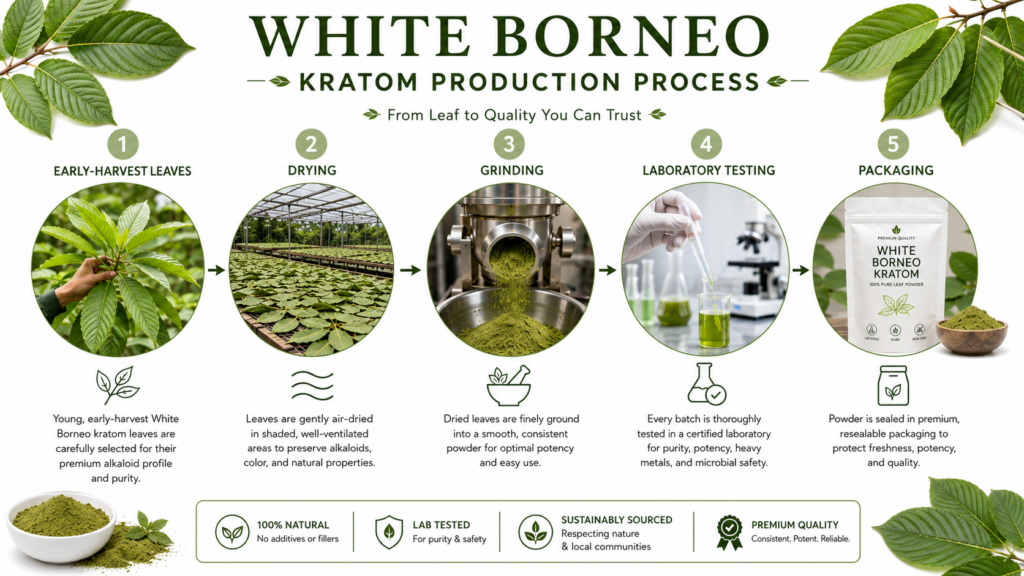
Harvest timing is only the beginning. How the leaves are handled after picking significantly affects the final product.
The typical production process for White Borneo Kratom involves:
- Hand-harvesting early-mature leaves with visible white veins
- Cleaning to remove surface contaminants
- Drying outdoors in direct sunlight, or indoors with controlled airflow or UV light
- De-stemming and de-veining to isolate pure leaf material
- Milling into fine powder using industrial equipment
- Packaging under varying quality control conditions
The drying method has a substantial impact on the final alkaloid profile. Indoor drying under controlled airflow tends to preserve alkaloids more effectively. Sun drying can accelerate oxidation and alter alkaloid ratios.
A reputable manufacturer documents every stage of this process. This is precisely what GMP-certified vendors are inspected on — and it is this level of transparency that distinguishes quality operations from lower-standard ones.
White Borneo vs. Other Popular Kratom Strains
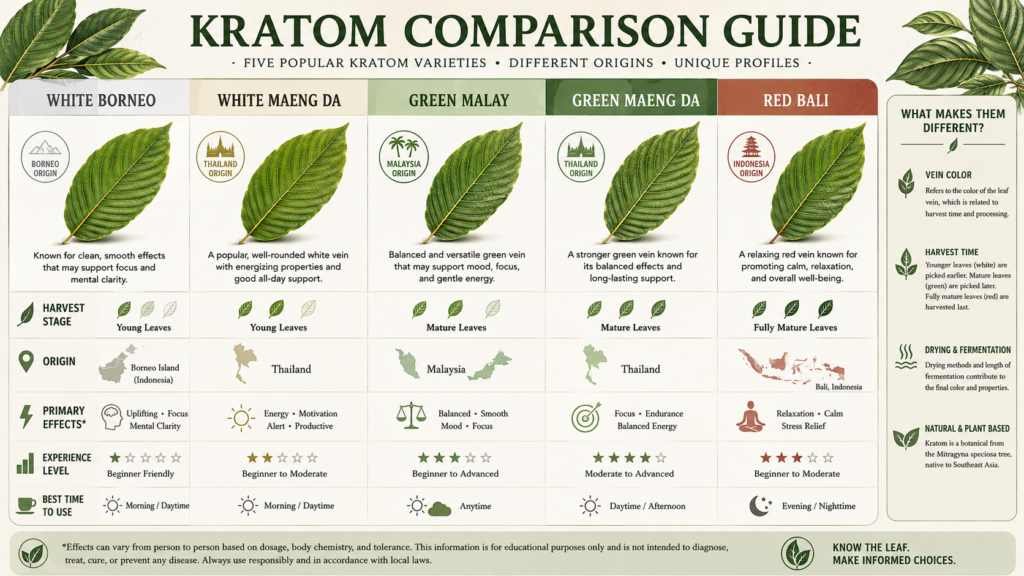
| Strain | Common Description | Key Characteristics | Important Limitation |
| White Borneo | Early-harvest white vein from Borneo/Kalimantan | Low 7-OH, mitragynine-dominant, lighter powder | Sub-regions within Borneo are rarely specified on labels |
| Green Malay | Mid-maturity green vein, Malaysian origin claim | Moderate alkaloid balance, large-leaf reputation | Most supply is Indonesian; geographic claim is broadly accepted |
| Red Bali | Late-harvest red vein with Bali-associated sourcing | Higher alkaloid content common across batches | Bali origins are often overstated; supply is generally Indonesian |
| Green Maeng Da | “Premium” green vein, no specific geographic origin | Mid-spectrum balanced alkaloid profile | “Maeng Da” is a quality label, not a botanical classification |
| White Maeng Da | Early-harvest “premium” white vein designation | Similar alkaloid range to White Borneo | Same naming inconsistency applies as other Maeng Da products |
Traditional Roots and the Modern Market
Mitragyna speciosa has a long history of traditional use across Southeast Asia. In Borneo particularly, indigenous communities have used kratom leaves for centuries, consuming them fresh or as tea.
Traditional use was straightforward and local. The modern kratom market has transformed it into a globally distributed powder product.
White Borneo kratom entered Western markets as part of the broader growth of the kratom industry in the early 2010s. White vein products developed a distinct reputation and sustained consumer demand. The American Kratom Association (AKA) estimates that 10–16 million people in the United States have used kratom. White vein varieties, including White Borneo, are among the commonly marketed product categories.
What Consumers Typically Report
Kratom forums, consumer reviews, and survey data offer a general picture of how White Borneo is perceived in the marketplace. Commonly reported characteristics include:
- Preference for daytime use over evening consumption
- Described as less sedating than red vein products
- Frequently chosen by those who find red vein products too heavy
- Capsule format widely preferred for consistent serving sizes
These are consumer reports, not clinical findings. They reflect subjective experiences, not verified medical outcomes. Kratom products are not FDA-approved, and no strain-specific therapeutic claims have been confirmed through clinical research.
Important Risk Information
Kratom is not approved by the U.S. Food and Drug Administration (FDA) for any medical use. It may cause physical dependence with regular use, and withdrawal symptoms have been reported upon discontinuation. Kratom may interact with prescription medications, over-the-counter drugs, and other supplements. Individuals with pre-existing health conditions should exercise particular caution. Anyone considering kratom use should consult a qualified healthcare professional before doing so.
Safety Standards and Regulatory Landscape
Third-Party Testing
Every serious manufacturer should provide batch-specific certificates of analysis (COAs) issued by accredited, independent laboratories. Consumers should look for alkaloid quantification (mitragynine and 7-hydroxymitragynine percentages), heavy metal testing (lead, mercury, arsenic, cadmium), microbial testing (salmonella, E. coli), and pesticide residue testing. Undated COAs or generic certifications not tied to a specific batch are warning signs.
Manufacturing Standards
AKA GMP Certification is the closest thing to a regulatory standard currently available in the US kratom market. Certified vendors are inspected for documented manufacturing processes, sanitation practices, equipment calibration, and complaint resolution systems.
Label Transparency
Compliant labels include batch numbers, product weight, serving size, manufacturer information, and alkaloid content. The COA batch number should always match the number printed on the product packaging.
Legal Considerations
Kratom is legal under federal law in the United States, but is prohibited in Alabama, Arkansas, Indiana, Rhode Island, Vermont, and Wisconsin. Some municipalities in other states have additional local restrictions. Internationally, kratom is restricted or banned in several countries, including Australia and parts of Europe. Consumers should verify current laws in their jurisdiction before purchasing.
Common Misconceptions About White Borneo Kratom
Myth: White vein kratom is a distinct plant species from red or green vein kratom.
Fact: All three vein colors come from the same species, Mitragyna speciosa. Vein color reflects harvest timing, not a different cultivar, plant variety, or genetic variation.
Myth: White Borneo powder should appear white in color.
Fact: The finished powder typically ranges from light green to pale tan — not white. “White” refers to the vein color at the time of harvest, which is not visible in the processed product.
Myth: White Borneo is always more potent than red or green vein products.
Fact: Potency is determined by alkaloid concentration, which depends on growing conditions and processing methods — not vein color.
Myth: All White Borneo products from different vendors are essentially the same.
Fact: Without standardized sourcing requirements tied to the label, two products with identical names can have significantly different alkaloid profiles, origins, and quality standards.
Frequently Asked Questions
What makes White Borneo different from other white vein kratom products?
The Borneo designation refers to geographic origin — specifically Indonesian Borneo (Kalimantan), a major kratom-producing region. Compared to other white vein products such as White Maeng Da or White Sumatra, the distinction of White Borneo is primarily geographic rather than chemically unique. Regional soil and climate conditions in Kalimantan produce Mitragyna speciosa with certain regional characteristics, but chemical differences between white vein varieties are better assessed through batch-specific testing than through strain name comparisons.
Why does White Borneo Kratom powder appear green rather than white?
The “white” designation refers to the color of the leaf’s central vein at the time of harvest — not the color of the final powder. Once leaves are dried, de-veined, and milled, the resulting powder is difficult to visually distinguish from other vein types. Green, white, and red vein powders can appear similar to the untrained eye, which is why visual appearance is not a reliable quality indicator after processing.
How can I evaluate the quality of White Borneo Kratom?
Look for three things: batch-specific COAs from recognized, independent laboratories; AKA GMP vendor certification; and clear sourcing information. A COA should include alkaloid content, heavy metal contamination results, microbial testing, and pesticide residue data. Batch numbers on the COA must match those on the product packaging. Vendors who cannot provide this information upon request present a significant quality risk, regardless of how their product is labeled or priced.
Is White Borneo Kratom legal in all US states?
No. Although kratom is federally legal in the United States, it is prohibited in Alabama, Arkansas, Indiana, Rhode Island, Vermont, and Wisconsin. Certain cities and counties in other states have enacted local restrictions. Legal status can change, and consumers should verify state and local laws before purchasing. Internationally, kratom is banned or restricted in numerous countries. Staying informed about regulatory changes in your specific jurisdiction is important, given how frequently kratom legislation is debated at various levels of government.
What alkaloids are found in White Borneo Kratom?
White Borneo contains the same alkaloid structure as other Mitragyna speciosa products: mitragynine is the dominant compound (typically 60–70% of total alkaloids), with 7-hydroxymitragynine present in smaller amounts. Secondary alkaloids include speciogynine, corynantheidine, paynantheine, and speciociliatine. Early-harvested white vein products tend to exhibit lower levels of 7-hydroxymitragynine compared to late-harvested red vein products, but exact concentrations vary significantly from batch to batch. A current, batch-specific COA is the most reliable way to confirm alkaloid content in any given product.
The Bottom Line
White Borneo Kratom holds a consistent position in the market. Its early-harvest white vein profile, Kalimantan origin, and mitragynine-dominant alkaloid structure give it a recognizable identity — particularly when compared to strain names with no geographic anchor.
However, the name tells only part of the story. Sub-regional sourcing, drying methods, alkaloid density, and contamination levels all vary between batches and vendors. A product label is not a substitute for batch-specific laboratory documentation from an accredited testing facility.
Kratom is federally legal in the United States but is not regulated for therapeutic claims. Legal status varies by state. Kratom products are not FDA-approved, may cause dependency, and may interact with medications. Anyone considering kratom use should consult a qualified healthcare professional beforehand and verify the laws in their local jurisdiction.
The strain name is a starting point. Quality documentation is where meaningful evaluation begins.
Other Articles You May Find of Interest...
- Kratom Legality in 2026: Why the Rules Vary by Location
- 7 Things to Know About Split Kilo Kratom Before a Bulk Order
- Red Thai Kratom: The Strain With a Complicated History and a Loyal Following
- Red Sumatra Kratom: What Makes This Strain Stand Apart
- Red Indo Kratom: The Strain That Built the Modern Kratom Market
- Red Hulu Kapuas Kratom: What Makes This Rare Strain So Talked About?
- Red Borneo Kratom: The Strain That Built the Modern Kratom Market





