






8500 Executive Park Ave.
Suite 408
Fairfax, VA 22031
703-204-1555
More Dental Health Articles
The Advanced LightwireFunctional (ALF) Appliances

A Gentle, Whole-Body Approach To Treating TMJ Disorders
From a diagnostic aspect, an evaluation of the relationships and functioning of the joints and associated structures, including the maxilla (upper jaw), temporal bones, and occiput (back of the head), becomes more important in understanding what is happening. From a treatment aspect, the focus shifts from the details of temporomandibular joint (TMJ) malfunction to creating an environment within which the mandible (lower jaw) is in balance with the maxilla and surrounding structures.
That environment consists of postural, cranial, facial, and dental structures that comprise the stomatognathic system. The stomatognathic system is a highly coordinated neuromuscular system in which the teeth, jaws, temporomandibular joints, muscles of the head and neck, tongue, lips, and associated nerves and tissues work together to enable chewing, swallowing, speaking, breathing, and maintaining oral and facial function.
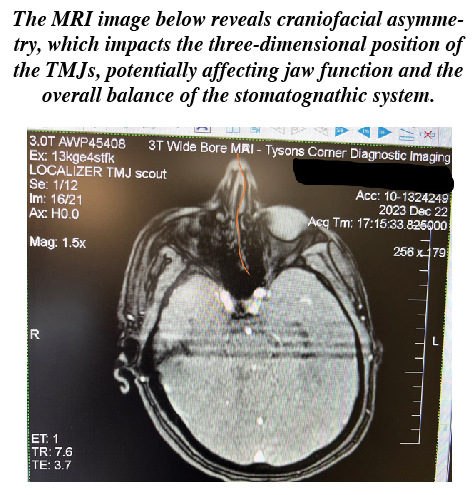
Because these structures are interdependent, dysfunction in one component can influence the health and function of the entire system. A problem in one area can affect other areas. Disorientation of the temporal bones affects the angulation of the glenoid fossae (socket-like depressions in the temporal bones of the skull that receive the heads of the condyles to form the TMJs) and, in due course, results in TMJ dysfunction.
If the temporal bones are not level relative to each other, there may be a corresponding imbalance of the pelvis. This relationship between the temporal bones and the pelvis should be recognized.
Above is an example of a postural assessment of a TMD patient who came to me because of his locked jaw. The orientation of the temporal bones affects the alignment of the TMJ, pelvis, and spine. As you can see, his head is off-center to the left, the right shoulder and shoulder blade are much lower than the left, there is scoliosis of the spine, and the right pelvis is higher.

TMJ disorder is a symptom and not the main problem. Success in treatment is finding the root cause of why the patient is experiencing TMJ issues.
In my years of experience treating temporomandibular joint disorders, it is common to observe spontaneous improvement or resolution of symptoms in many non-dental areas, such as a reduction in neck and shoulder discomfort, improvement in hearing, resolution of a sense of nausea, etc.
When a broader view of the patient is taken, which includes postural and cranial factors, the origins of many apparently unrelated symptoms can be understood. Even more importantly, with a well-planned, comprehensive treatment approach, it is often possible to resolve these symptoms and improve overall function instead of just focusing on the TMJ symptoms.
If you have been living with jaw pain, headaches, neck pain, or clicking in your jaw, you have probably discovered that finding lasting relief isn’t always easy.
Many patients are told they have a temporomandibular disorder (TMD) and are given a night guard, medication, or muscle relaxants. While these treatments may help relieve symptoms, the underlying cause of the problem is not being addressed or diagnosed.
Other Articles You May Find of Interest...
- Why Parents Put Off Their Own Dental Care, and What Some Practices Are Changing
- Dental Anxiety Is More Common Than People Admit: What Actually Helps
- Why Careful Implant Planning Matters for Long-Term Oral Health
- Who Is Actually a Candidate for Dental Implants? What Bone, Gums, and Health History Decide
- When Should You See a Root Canal Specialist? 7 Signs You May Need Endodontic Care
- How to Find an Emergency Dentist in London When You Need Urgent Care
- Invisalign VAT Price Change UK 2026: What Does It Mean for Patients and Dental Practices?




