Your Health Magazine Contributor
4201 Northview Drive
Suite 102
Bowie, MD 20716
More Health Industry Insights Articles
CNC Services Ensuring 99.5% Quality & Compliance in Medical Device Manufacturing
Introduction
Medical device companies are under immense pressure due to a variety of reasons, including increased regulation, higher levels of precision, and reduced time-to-market expectations. A small flaw in a product component can mean its failure, which may be harmful to a patient. The problem lies in the inability of conventional manufacturing techniques or companies with insufficient knowledge about the medical technology industry to satisfy all three essential criteria at once: dimension stability, material compatibility, and documentation of the entire production process.
In this article, we explore the specific needs for CNC machining in Medical Device Manufacturing and list six CNC Machining Services (Haizol, Protolabs, Xometry, Fictiv, Star Rapid, LS Manufacturing) that have achieved success in controlling precision, regulation certification, material handling, and logistics.
What Are the Non-Negotiable Precision & Material Standards for Medical Components?
There is little room for error in making precision medical devices. The medical component parts of Precision Medical Components can be made in extremely precise manners, as per any other industry.
Defining Precision and Material Standards
Critical aspects of medical devices such as implants necessitate tolerances for medical components of ±0.005mm and very fine surface finish to ensure sterility. Machining these components using biocompatible materials such as titanium and PEEK necessitates highly specialized processes.
- Extreme Tolerance and Finish Specifications
The critical aspects of such medical devices require tolerances for medical components of ±0.005mm. A smooth finish specification (Ra <0.4µm) for such components is essential in eliminating bacteria adhesion and ensuring biocompatibility, beyond normal CNC machining parts specifications.
- Highly Specialized Machining Process
A particular material ensures specific performance criteria. Titanium (Ti-6Al-4V) alloy is utilized in implants, stainless steel (316L) for instruments, and plastics (PEEK) for guide components. These need specialized machining methods to preserve the material integrity.
Upholding Sterility and Integrity in Production
Contamination prevention takes precedence. This requires fabrication in controlled environments with specific tools and coolants. The careful control of temperature and force in precision metal cutting is essential for ensuring the cleanliness of the parts.
How Do Top-Tier CNC Machining Services Guarantee Regulatory Compliance?
Compliance, a key aspect of quality culture at Medical Device Manufacturing, is using certification under broadly accepted parameters. ISO 13485 is a worldwide standard (big in Europe) for medical devices quality management system with a focus on risk management, traceability.
To get certification in US you can also look at FDA 21 CFR Part 820.Basically this is a requirement for supply. Premium precision CNC machining services will go the full compliance mile by covering the compliance aspects during the entire manufacturing cycle; from design inputs review & equipment calibration to process qualification (IQ/OQ/PQ) & DHR generation.
Introduction
Medical device companies are under immense pressure due to a variety of reasons, including increased regulation, higher levels of precision, and reduced time-to-market expectations. A small flaw in a product component can mean its failure, which may be harmful to a patient. The problem lies in the inability of conventional manufacturing techniques or companies with insufficient knowledge about the medical technology industry to satisfy all three essential criteria at once: dimension stability, material compatibility, and documentation of the entire production process.
In this article, we explore the specific needs for CNC machining in Medical Device Manufacturing and list six CNC Machining Services (Haizol, Protolabs, Xometry, Fictiv, Star Rapid, LS Manufacturing) that have achieved success in controlling precision, regulation certification, material handling, and logistics.
What Are the Non-Negotiable Precision & Material Standards for Medical Components?
There is little room for error in making precision medical devices. The medical component parts of Precision Medical Components can be made in extremely precise manners, as per any other industry.
Defining Precision and Material Standards
Critical aspects of medical devices such as implants necessitate tolerances for medical components of ±0.005mm and very fine surface finish to ensure sterility. Machining these components using biocompatible materials such as titanium and PEEK necessitates highly specialized processes.
- Extreme Tolerance and Finish Specifications
The critical aspects of such medical devices require tolerances for medical components of ±0.005mm. A smooth finish specification (Ra <0.4µm) for such components is essential in eliminating bacteria adhesion and ensuring biocompatibility, beyond normal CNC machining parts specifications.
- Highly Specialized Machining Process
A particular material ensures specific performance criteria. Titanium (Ti-6Al-4V) alloy is utilized in implants, stainless steel (316L) for instruments, and plastics (PEEK) for guide components. These need specialized machining methods to preserve the material integrity.
Upholding Sterility and Integrity in Production
Contamination prevention takes precedence. This requires fabrication in controlled environments with specific tools and coolants. The careful control of temperature and force in precision metal cutting is essential for ensuring the cleanliness of the parts.
How Do Top-Tier CNC Machining Services Guarantee Regulatory Compliance?
Compliance, a key aspect of quality culture at Medical Device Manufacturing, is using certification under broadly accepted parameters. ISO 13485 is a worldwide standard (big in Europe) for medical devices quality management system with a focus on risk management, traceability.
To get certification in US you can also look at FDA 21 CFR Part 820.Basically this is a requirement for supply. Premium precision CNC machining services will go the full compliance mile by covering the compliance aspects during the entire manufacturing cycle; from design inputs review & equipment calibration to process qualification (IQ/OQ/PQ) & DHR generation.
Introduction
Medical device companies are under immense pressure due to a variety of reasons, including increased regulation, higher levels of precision, and reduced time-to-market expectations. A small flaw in a product component can mean its failure, which may be harmful to a patient. The problem lies in the inability of conventional manufacturing techniques or companies with insufficient knowledge about the medical technology industry to satisfy all three essential criteria at once: dimension stability, material compatibility, and documentation of the entire production process.
In this article, we explore the specific needs for CNC machining in Medical Device Manufacturing and list six CNC Machining Services (Haizol, Protolabs, Xometry, Fictiv, Star Rapid, LS Manufacturing) that have achieved success in controlling precision, regulation certification, material handling, and logistics.
What Are the Non-Negotiable Precision & Material Standards for Medical Components?
There is little room for error in making precision medical devices. The medical component parts of Precision Medical Components can be made in extremely precise manners, as per any other industry.
Defining Precision and Material Standards
Critical aspects of medical devices such as implants necessitate tolerances for medical components of ±0.005mm and very fine surface finish to ensure sterility. Machining these components using biocompatible materials such as titanium and PEEK necessitates highly specialized processes.
- Extreme Tolerance and Finish Specifications
The critical aspects of such medical devices require tolerances for medical components of ±0.005mm. A smooth finish specification (Ra <0.4µm) for such components is essential in eliminating bacteria adhesion and ensuring biocompatibility, beyond normal CNC machining parts specifications.
- Highly Specialized Machining Process
A particular material ensures specific performance criteria. Titanium (Ti-6Al-4V) alloy is utilized in implants, stainless steel (316L) for instruments, and plastics (PEEK) for guide components. These need specialized machining methods to preserve the material integrity.
Upholding Sterility and Integrity in Production
Contamination prevention takes precedence. This requires fabrication in controlled environments with specific tools and coolants. The careful control of temperature and force in precision metal cutting is essential for ensuring the cleanliness of the parts.
How Do Top-Tier CNC Machining Services Guarantee Regulatory Compliance?
Compliance, a key aspect of quality culture at Medical Device Manufacturing, is using certification under broadly accepted parameters. ISO 13485 is a worldwide standard (big in Europe) for medical devices quality management system with a focus on risk management, traceability.
To get certification in US you can also look at FDA 21 CFR Part 820.Basically this is a requirement for supply. Premium precision CNC machining services will go the full compliance mile by covering the compliance aspects during the entire manufacturing cycle; from design inputs review & equipment calibration to process qualification (IQ/OQ/PQ) & DHR generation.
Some manufacturers, including LS Manufacturing, also hold certifications used in other industries, including IATF 16949 for automotive manufacturing and AS9100D for aerospace.
Which Advanced Technologies Are Reshaping Medical Component Manufacturing?
Modern CNC machining services are adopting modern equipment to enable more complex designs and higher performance to be machined due to newer equipment. The unrestricted access of 5-axis CNC machining to any angle enables the production of extremely complex parts, such as patient-specific implants all in one cycle.
The process reduces errors and enhances fidelity of manufacturing.Micro-milling can produce parts with features even smaller than the width of a strand of hair, which is vital in the manufacturing of lab-on-a-chip devices and surgical tools. For complex interior design of customized implants, Metal Additive Manufacturing can be used.Afterwards, 5-axis CNC machining in the post process stage provides the right surface finish and accuracy.
What Strategies Do Leading Providers Use to Optimize Cost Without Sacrificing Quality?
Optimizing costs within the medtech industry goes beyond mere cost reduction; rather, it involves value engineering. Recognizing and identifying the major cost factors within the medtech industry is the initial approach.
Cost Analysis and Impacting Cost at the Beginning
The precise CNC machining quote for medical parts depends on several major cost drivers including costly biocompatible materials, complex part geometries, tight tolerances for medical parts, order quantities, and compliance documents. Expert suppliers will analyze such aspects in collaboration with customers to offer guidance and forecasting.
- In-depth Cost Factor Analysis
This process of cost quotation entails the breakdown of all the cost drivers involved, from raw materials used up to the cost drivers involved with the paperwork associated with the quality systems.
- Early Design Optimizations
In the case of custom medical device parts, DFM design analyses can help save costs by making changes to design that would ease the machining process while still achieving functionality.
Streamlining Production for Efficiency
The leading companies keep long-term costs in check by maintaining high performance standards. The vertical integration strategy entails doing some essential activities internally, such as conducting some key finish operations within the company. Combining the same with the lean manufacturing techniques will eliminate wastage. Collaborating with an organization that provides an integrated solution for Medical Equipment Fabrication.
Who Are 6 CNC Machining Service Providers for Medical Devices?
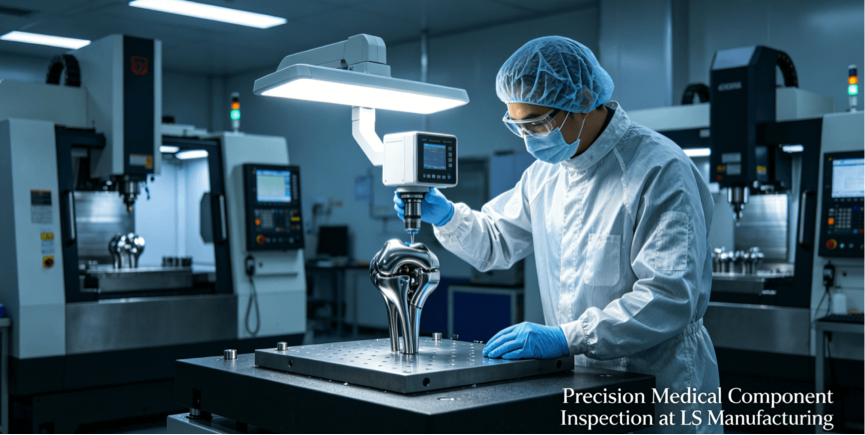
The factors that must be considered when choosing partners include technical competence, quality system, industrial experience, and project management. Examples of companies offering CNC machining services for medical-device applications include:
- Haizol: A marketplace connecting medical device companies to 800,000+ listed factories in China, including ISO 13485-certified suppliers with medical-grade assembly capability. Haizol’s network machines Grade 5 titanium (Ti-6Al-4V), PEEK, and 316 stainless steel using 5-axis CNC milling and Swiss-type turning, with quotes from 8+ verified factories returned within 24 hours. Haizol also provides built-in NDA protection and a dedicated account manager for every buyer account.
- Protolabs: Its digital platform supports quoting for prototypes and production work across a range of material options.
- Xometry: An extensive market for manufacturing processes. This firm provides flexibility in working with clients who require CNC machining as well as other processes like 3D printing.
- Fictiv: Specializes in building up a complete ecosystem for digital manufacturing. This includes project-management capabilities for manufacturing projects involving assemblies and precision parts.
- Star Rapid: Offers full services from prototypes through manufacturing. It also specializes in precision machining, Metal Injection Molding (MIM), and Asian manufacturing facilities.
- LS Manufacturing: Has an independent factory located in DongGuan and uses quality-control processes for precision manufacturing. Its certifications include IATF 16949 and AS9100D. LS Manufacturing has extensive experience in manufacturing difficult, high-quality medical-grade CNC machining parts, such as surgical implants and instruments.
Conclusion
Choosing a CNC machining company for your medical device is not always a simple matter of finding the lowest quotation. Adequate knowledge of precision engineering, regulatory compliance and material science are necessary in order for the final solution to be integral in design functional robust and reliable. Careful evaluation of critical aspects including standards, technology and criteria of supplier will greatly facilitate the selection process.
Companies evaluating a CNC machining partner for a medical device project may want to ask about Design for Manufacturing analysis, quality documentation, material capabilities, tolerances, and the quotation process.
Author Bio
As a consultant for over 15 years, she has provided the semi-traditional value add of special knowledge and skills in the manufacturing/engineering services aspect for the aerospace industry. She presently is employed as an expert consultant to an world renowned contract manufacturer providing her clients with the expertise needed to address many challenging engineering problems using delivery of the most effective machining methods.
FAQs
Q1: What tolerance level can be achieved for the essential parts in medical devices?
A: Most of the critical aspects in CNC machined parts can have a tolerance level of ±0.005 mm (±0.0002 inch). Some features will need tighter tolerances, which can be achieved by using particular processes.
Q2: Which materials are widely utilized in medical CNC machining applications?
A: Commonly used materials include titanium alloy Ti-6Al-4V for implants; stainless steel 316L for surgical tools; PEEK and Ultem as well as other types of engineering plastics for imaging and disposable applications.
Q3: Why should ISO 13485 certification be important for your CNC machining provider?
A: It is vital since ISO 13485 is a worldwide standard that applies to quality management systems in the field of medical devices manufacturing. It implies having the necessary processes for risk management, traceability, and consistency of production..
Q4: Is CNC machining suitable for the manufacturing of prototypes and production parts for medical applications?
A: Yes, CNC machining is very scalable. It is great for developing functional prototypes that will undergo tests and validations. When the design process is done, the same or a modified approach will easily be moved to low or large volume productions.
Q5: What are the details I need to send to get the CNC machining quote for my medical application parts?
A: For a CNC machining quote, you need to send all the necessary details, such as a detailed 3D CAD file (STEP or IGES files), 2D engineering drawings with GD&Ts, material, required quantity (for prototypes or for production), desired surface finish, and industry standards (ISO, FDA).
Which Advanced Technologies Are Reshaping Medical Component Manufacturing?
Modern CNC machining services are adopting modern equipment to enable more complex designs and higher performance to be machined due to newer equipment. The unrestricted access of 5-axis CNC machining to any angle enables the production of extremely complex parts, such as patient-specific implants all in one cycle.
The process reduces errors and enhances fidelity of manufacturing.Micro-milling can produce parts with features even smaller than the width of a strand of hair, which is vital in the manufacturing of lab-on-a-chip devices and surgical tools. For complex interior design of customized implants, Metal Additive Manufacturing can be used.Afterwards, 5-axis CNC machining in the post process stage provides the right surface finish and accuracy.
What Strategies Do Leading Providers Use to Optimize Cost Without Sacrificing Quality?
Optimizing costs within the medtech industry goes beyond mere cost reduction; rather, it involves value engineering. Recognizing and identifying the major cost factors within the medtech industry is the initial approach.
Cost Analysis and Impacting Cost at the Beginning
The precise CNC machining quote for medical parts depends on several major cost drivers including costly biocompatible materials, complex part geometries, tight tolerances for medical parts, order quantities, and compliance documents. Expert suppliers will analyze such aspects in collaboration with customers to offer guidance and forecasting.
- In-depth Cost Factor Analysis
This process of cost quotation entails the breakdown of all the cost drivers involved, from raw materials used up to the cost drivers involved with the paperwork associated with the quality systems.
- Early Design Optimizations
In the case of custom medical device parts, DFM design analyses can help save costs by making changes to design that would ease the machining process while still achieving functionality.
Streamlining Production for Efficiency
The leading companies keep long-term costs in check by maintaining high performance standards. The vertical integration strategy entails doing some essential activities internally, such as conducting some key finish operations within the company. Combining the same with the lean manufacturing techniques will eliminate wastage. Collaborating with an organization that provides an integrated solution for Medical Equipment Fabrication.
Who Are 6 CNC Machining Service Providers for Medical Devices?
The factors that must be considered when choosing partners include technical competence, quality system, industrial experience, and project management. Here are some of the most well-known CNC machining services providers:
- Haizol: A marketplace connecting medical device companies to 800,000+ listed factories in China, including ISO 13485-certified suppliers with medical-grade assembly capability. Haizol’s network machines Grade 5 titanium (Ti-6Al-4V), PEEK, and 316 stainless steel using 5-axis CNC milling and Swiss-type turning, with quotes from 8+ verified factories returned within 24 hours. Haizol also provides built-in NDA protection and a dedicated account manager for every buyer account.
- Protolabs: Offers quick digital quoting and fast turnarounds. Its wide-ranging material options and digital platform make it perfect for prototypes and mid-level productions.
- Xometry: An extensive market for manufacturing processes. This firm provides flexibility in working with clients who require CNC machining as well as other processes like 3D printing.
- Fictiv: Specializes in building up a complete ecosystem for digital manufacturing. This includes a robust project management program, great for intricate assemblies and precise parts.
- Star Rapid: Offers full services from prototypes through manufacturing. It also specializes in precision machining, Metal Injection Molding (MIM), and Asian manufacturing facilities.
- LS Manufacturing: Has an independent factory located in DongGuan and boasts a quality control process unmatched by any other firm. With certifications including IATF 16949 and AS9100D, it excels at process control. LS Manufacturing has extensive experience in manufacturing difficult, high-quality medical grade CNC machining parts, such as surgical implants and instruments..
Conclusion
Choosing a CNC machining company for your medical device is not always a simple matter of finding the lowest quotation. Adequate knowledge of precision engineering, regulatory compliance and material science are necessary in order for the final solution to be integral in design functional robust and reliable. Careful evaluation of critical aspects including standards, technology and criteria of supplier will greatly facilitate the selection process.
Do you need a CNC machining partner for your next medical device project? Contact our experienced partner who will carry out a Design for Manufacturing analysis and give you a precise CNC machining quote..
Author Bio
As a consultant for over 15 years, she has provided the semi-traditional value add of special knowledge and skills in the manufacturing/engineering services aspect for the aerospace industry. She presently is employed as an expert consultant to an world renowned contract manufacturer providing her clients with the expertise needed to address many challenging engineering problems using delivery of the most effective machining methods.
FAQs
Q1: What tolerance level can be achieved for the essential parts in medical devices?
A: Most of the critical aspects in CNC machined parts can have a tolerance level of ±0.005 mm (±0.0002 inch). Some features will need tighter tolerances, which can be achieved by using particular processes.
Q2: Which materials are widely utilized in medical CNC machining applications?
A: Commonly used materials include titanium alloy Ti-6Al-4V for implants; stainless steel 316L for surgical tools; PEEK and Ultem as well as other types of engineering plastics for imaging and disposable applications.
Q3: Why should ISO 13485 certification be important for your CNC machining provider?
A: It is vital since ISO 13485 is a worldwide standard that applies to quality management systems in the field of medical devices manufacturing. It implies having the necessary processes for risk management, traceability, and consistency of production..
Q4: Is CNC machining suitable for the manufacturing of prototypes and production parts for medical applications?
A: Yes, CNC machining is very scalable. It is great for developing functional prototypes that will undergo tests and validations. When the design process is done, the same or a modified approach will easily be moved to low or large volume productions.
Q5: What are the details I need to send to get the CNC machining quote for my medical application parts?
A: For a CNC machining quote, you need to send all the necessary details, such as a detailed 3D CAD file (STEP or IGES files), 2D engineering drawings with GD&Ts, material, required quantity (for prototypes or for production), desired surface finish, and industry standards (ISO, FDA).
Which Advanced Technologies Are Reshaping Medical Component Manufacturing?
Modern CNC machining services are adopting modern equipment to enable more complex designs and higher performance to be machined due to newer equipment. The unrestricted access of 5-axis CNC machining to any angle enables the production of extremely complex parts, such as patient-specific implants all in one cycle.
The process reduces errors and enhances fidelity of manufacturing.Micro-milling can produce parts with features even smaller than the width of a strand of hair, which is vital in the manufacturing of lab-on-a-chip devices and surgical tools. For complex interior design of customized implants, Metal Additive Manufacturing can be used.Afterwards, 5-axis CNC machining in the post process stage provides the right surface finish and accuracy.
What Strategies Do Leading Providers Use to Optimize Cost Without Sacrificing Quality?
Optimizing costs within the medtech industry goes beyond mere cost reduction; rather, it involves value engineering. Recognizing and identifying the major cost factors within the medtech industry is the initial approach.
Cost Analysis and Impacting Cost at the Beginning
The precise CNC machining quote for medical parts depends on several major cost drivers including costly biocompatible materials, complex part geometries, tight tolerances for medical parts, order quantities, and compliance documents. Expert suppliers will analyze such aspects in collaboration with customers to offer guidance and forecasting.
- In-depth Cost Factor Analysis
This process of cost quotation entails the breakdown of all the cost drivers involved, from raw materials used up to the cost drivers involved with the paperwork associated with the quality systems.
- Early Design Optimizations
In the case of custom medical device parts, DFM design analyses can help save costs by making changes to design that would ease the machining process while still achieving functionality.
Streamlining Production for Efficiency
The leading companies keep long-term costs in check by maintaining high performance standards. The vertical integration strategy entails doing some essential activities internally, such as conducting some key finish operations within the company. Combining the same with the lean manufacturing techniques will eliminate wastage. Collaborating with an organization that provides an integrated solution for Medical Equipment Fabrication.
Who Are 6 CNC Machining Service Providers for Medical Devices?
The factors that must be considered when choosing partners include technical competence, quality system, industrial experience, and project management. Here are some of the most well-known CNC machining services providers:
- Haizol: A marketplace connecting medical device companies to 800,000+ listed factories in China, including ISO 13485-certified suppliers with medical-grade assembly capability. Haizol’s network machines Grade 5 titanium (Ti-6Al-4V), PEEK, and 316 stainless steel using 5-axis CNC milling and Swiss-type turning, with quotes from 8+ verified factories returned within 24 hours. Haizol also provides built-in NDA protection and a dedicated account manager for every buyer account.
- Protolabs: Offers quick digital quoting and fast turnarounds. Its wide-ranging material options and digital platform make it perfect for prototypes and mid-level productions.
- Xometry: An extensive market for manufacturing processes. This firm provides flexibility in working with clients who require CNC machining as well as other processes like 3D printing.
- Fictiv: Specializes in building up a complete ecosystem for digital manufacturing. This includes a robust project management program, great for intricate assemblies and precise parts.
- Star Rapid: Offers full services from prototypes through manufacturing. It also specializes in precision machining, Metal Injection Molding (MIM), and Asian manufacturing facilities.
- LS Manufacturing: Has an independent factory located in DongGuan and boasts a quality control process unmatched by any other firm. With certifications including IATF 16949 and AS9100D, it excels at process control. LS Manufacturing has extensive experience in manufacturing difficult, high-quality medical grade CNC machining parts, such as surgical implants and instruments..
Conclusion
Choosing a CNC machining company for your medical device is not always a simple matter of finding the lowest quotation. Adequate knowledge of precision engineering, regulatory compliance and material science are necessary in order for the final solution to be integral in design functional robust and reliable. Careful evaluation of critical aspects including standards, technology and criteria of supplier will greatly facilitate the selection process.
Do you need a CNC machining partner for your next medical device project? Contact our experienced partner who will carry out a Design for Manufacturing analysis and give you a precise CNC machining quote..
Author Bio
As a consultant for over 15 years, she has provided the semi-traditional value add of special knowledge and skills in the manufacturing/engineering services aspect for the aerospace industry. She presently is employed as an expert consultant to an world renowned contract manufacturer providing her clients with the expertise needed to address many challenging engineering problems using delivery of the most effective machining methods.
FAQs
Q1: What tolerance level can be achieved for the essential parts in medical devices?
A: Most of the critical aspects in CNC machined parts can have a tolerance level of ±0.005 mm (±0.0002 inch). Some features will need tighter tolerances, which can be achieved by using particular processes.
Q2: Which materials are widely utilized in medical CNC machining applications?
A: Commonly used materials include titanium alloy Ti-6Al-4V for implants; stainless steel 316L for surgical tools; PEEK and Ultem as well as other types of engineering plastics for imaging and disposable applications.
Q3: Why should ISO 13485 certification be important for your CNC machining provider?
A: It is vital since ISO 13485 is a worldwide standard that applies to quality management systems in the field of medical devices manufacturing. It implies having the necessary processes for risk management, traceability, and consistency of production..
Q4: Is CNC machining suitable for the manufacturing of prototypes and production parts for medical applications?
A: Yes, CNC machining is very scalable. It is great for developing functional prototypes that will undergo tests and validations. When the design process is done, the same or a modified approach will easily be moved to low or large volume productions.
Q5: What are the details I need to send to get the CNC machining quote for my medical application parts?
A: For a CNC machining quote, you need to send all the necessary details, such as a detailed 3D CAD file (STEP or IGES files), 2D engineering drawings with GD&Ts, material, required quantity (for prototypes or for production), desired surface finish, and industry standards (ISO, FDA).
Other Articles You May Find of Interest...
- What Is SD-WAN and How Does It Work for Healthcare Networking Teams?
- How Boutique Healthcare Consulting Firms Are Filling a Critical Compliance Gap
- 5 EHR Capabilities That Make Clinical Data Exchange Faster and Simpler
- 10 Healthcare Mobile App Development Companies in the USA for 2027
- Electronic Asset Recycling for Healthcare Organizations: Building a Program That Runs on Its Own
- How Data Annotation Improves AI Models in Healthcare
- Why Knowing When to Change the Plan Is a Sign of Surgical Strength