More Mental Health Articles
Can Your Home Design Style Reveal Your Personality? Interior Psychology Says Yes
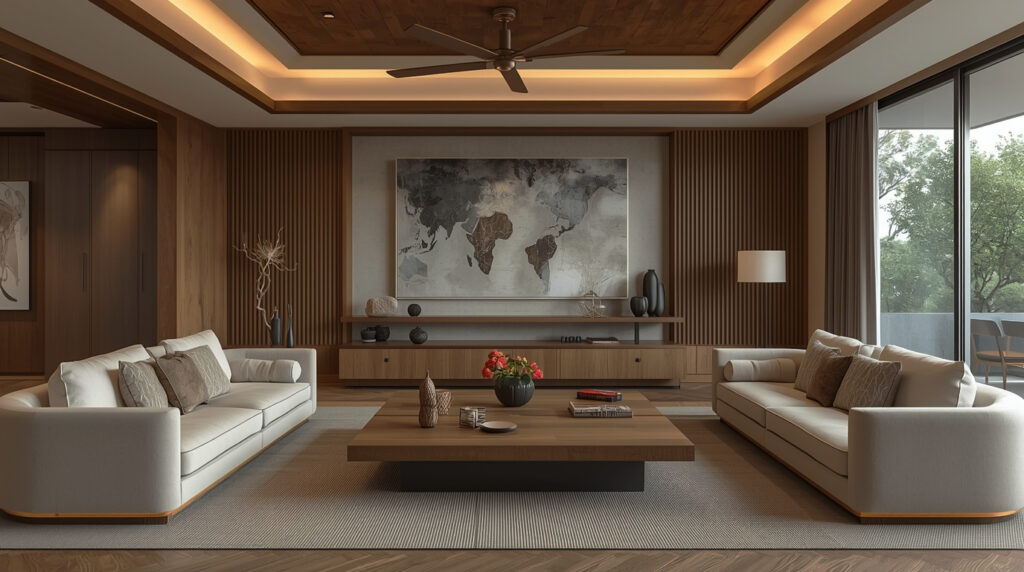
You walk into someone’s home for the first time and, before they’ve said a word, you already know something about them and their mindset. Not because of the square footage or the neighborhood; it’s because of the chair by the window, the rug under the coffee table, and the way the light hits a particular wall. Interiors communicate. They always have.
Interior psychology, the study of how our spatial choices reflect our inner world, has transitioned from niche academic research into mainstream conversation, and the conclusion is clear: the way we furnish our homes is rarely accidental. Our spaces are quiet self-portraits. For example, choosing the Poliform Westside sofa reveals different qualities than choosing the Edra Boa sofa. The first one speaks to restraint and enduring craft, while the other speaks to provocation and expressive form.
The Minimalist: Control as Self-Expression
Strip everything back, and what’s left? For the minimalist, the answer is simple: only what matters. Clean lines, neutral palettes, and deliberately bare surfaces. To outside observers, a minimalist home may seem cold or unfinished. To the person living in it, however, it’s the opposite. It’s a space where mental clarity feels possible.
Psychologists associate minimalist tendencies with a strong need for autonomy and cognitive control. People drawn to this aesthetic often describe their homes as the one place where they set the rules. This is not rigidity; it is self-knowledge. The deliberate absence of visual clutter is a form of active decision-making. Every object that remains has earned its place.
In furniture terms, this often translates to carefully chosen investment pieces. A single sofa in quality leather, the kind Poltrona Frau makes with the Get Back, anchors the room without competing for attention. A dining table that doubles as a workspace, like the B&B Italia Athos ’12, earns its place twice over, while storage solutions often blend into the architecture. There’s less stuff, but it’s rarely cheap.
The Maximalist: Identity Worn Out Loud
At the other end of the spectrum is the maximalist, whose approach is just as intentional, even if it appears to be the opposite: layered textiles, collected objects, walls that tell stories, and color used without apology. A maximalist home is a biography written in three dimensions.
According to research in environmental psychology, people who prefer rich, layered interiors tend to score high in openness to experience, one of the Big Five personality traits associated with creativity, curiosity, and comfort with complexity. They don’t just tolerate visual abundance; they need it. An empty wall isn’t restful for them. It’s an opportunity.
What’s worth noting is that maximalism, when it works, is never random. The best maximalist spaces have an internal logic: a color thread (such as the red and gold that characterize many Edra furnishings), a cultural reference (like the M’Afrique Collection by Moroso), and a collecting instinct that gives the whole thing coherence. The chaos is curated.
The Mid-Century Modern Loyalist: Nostalgia with an Edge
Mid-century modern remains one of the most enduring aesthetic preferences in residential interiors, and its psychological allure is worth examining. With clean organic forms, warm woods, and a color scheme that sits somewhere between earthy and optimistic, it’s no wonder this style never fully disappears.
For many people, mid-century modern design represents a sense of emotional security, evoking the notion of a simpler, more understandable world. However, it’s not just nostalgia. The style’s emphasis on craftsmanship and quality materials (visible joinery, solid wood, and upholstery that ages well rather than falls apart) speaks to a particular value system. Those who choose it prioritize longevity over trend and quality over novelty. They’re not just decorating for the present moment; they’re furnishing for the long term.
Classic lounge chair designs from the postwar American tradition and Italian rationalist furniture, which influenced brands like Cassina and Arflex, continue to appear in homes because they carry a combination of emotional resonance and formal integrity.
The Eclectic Mixer: Comfort with Contradiction
Perhaps, the most psychologically complex of all interior personalities is the eclectic decorator, the person who pairs a Victorian armchair with a Scandinavian floor lamp and a Moroccan rug, and somehow makes it work. This approach is often misread as indecisiveness. But it’s usually the opposite.
Eclectic interiors tend to reflect the personalities of people who have a strong sense of self and don’t require a single, coherent aesthetic to feel at home. They’re comfortable with contradictions. A vintage credenza next to a contemporary art print isn’t a failure to commit; it’s a record of different chapters and influences that don’t cancel each other out.
There’s also something honest about eclectic spaces. Rather than being designed from scratch, they tend to accumulate over time, documenting the passage of time. A home that looks like a showroom can be impressive. But a home that looks like someone actually lives there, richly and specifically, is something else entirely.
The Space Between Style and Self
Interior psychology doesn’t provide a simple key. You can’t fully understand a person from their throw pillows alone. However, it suggests that our homes are more autobiographical than we usually acknowledge.
The choices we make when furnishing a space tend to reflect something real about us, especially when no one is watching, and there’s no social script to follow. These choices reflect our relationship to order, our tolerance for stimulation, and our sense of how much space we’re allowed to take up in the world. The most interesting question isn’t which style is better. It’s what your space would say about you if it could speak, and whether you’d be comfortable with the answer.
Other Articles You May Find of Interest...
- Anxiety Symptoms You Feel in Your Body, and When They Mean Something Else
- Medicare Psychiatrist: Understanding Psychiatric Care and Treatment Options
- Help! Caffeine makes me sleepy! How does caffeine affect ADHD?
- Why the Body Stays in Fight or Flight Long After the Danger Has Passed
- Psychopath vs. Sociopath: A Side-by-Side Comparison
- How Does Night-Shift Work Affect Mental Health and Substance Use?
- Why Can Anxiety Feel Worse the Day After Drinking?