More Dental Health Articles
Why Dental Implants Are Essential for Long-Term Oral Health
When Americans lose adult teeth, 69% never replace them—and the consequences reach far beyond cosmetics. According to the American College of Prosthodontists, over 120 million Americans are missing at least one tooth, while 36 million have no teeth at all. What many don’t realize is that missing teeth trigger a cascade of oral health problems that compound over time, from jawbone deterioration to shifting teeth that create new complications.
The cost of inaction is substantial. Untreated tooth loss leads to an average of $45,000 in additional dental work over a lifetime, according to recent dental economics research. Meanwhile, the technology for permanent tooth replacement has reached remarkable sophistication, with success rates exceeding 95% when properly implemented.
Here’s what makes this conversation critical: traditional solutions like dentures and bridges address the visible problem but ignore the underlying bone health crisis. Only dental implants tackle the root cause—literally. Understanding how implants preserve long-term oral health isn’t just about replacing missing teeth; it’s about preventing a domino effect that can reshape your entire oral landscape.
What Are Dental Implants and How Do They Function?
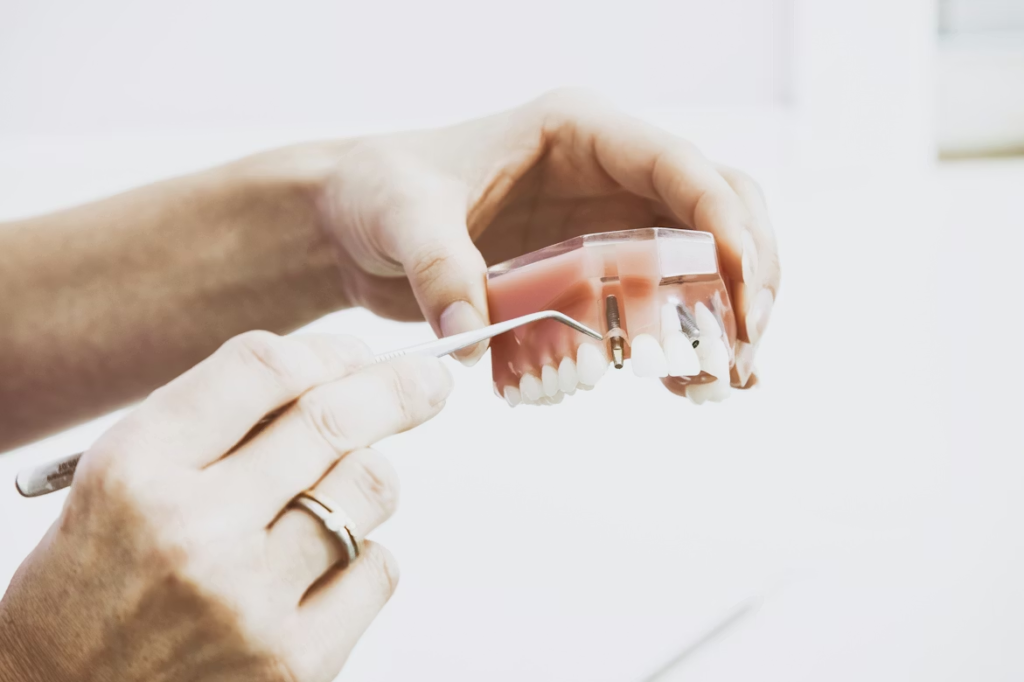
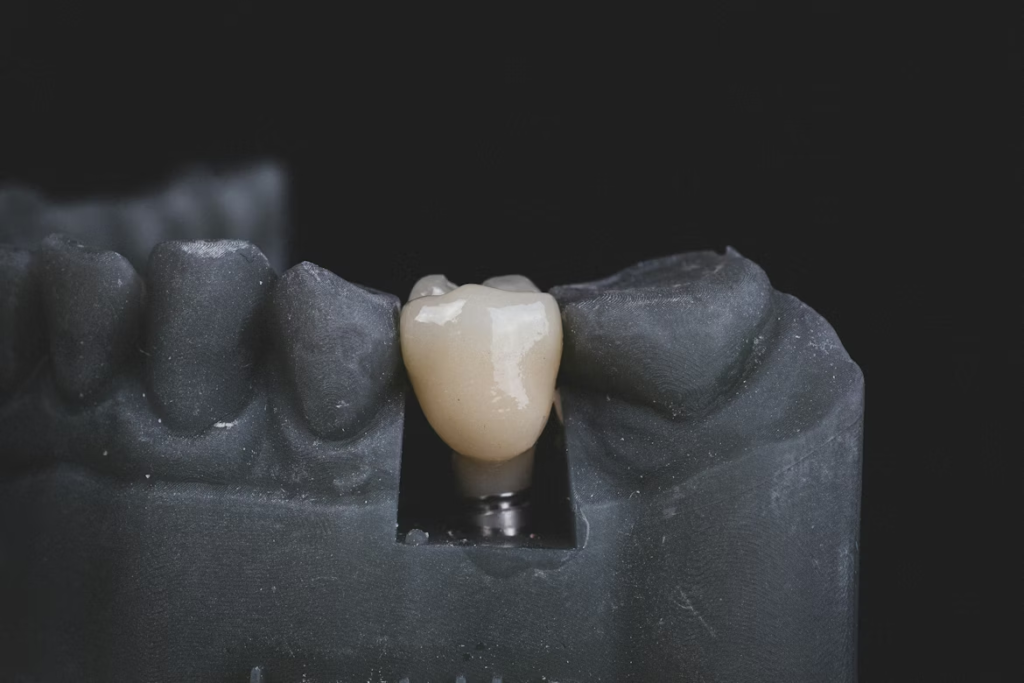
Think of dental implants as artificial tooth roots that integrate directly with your jawbone. Unlike dentures that sit on top of gums or bridges that rely on adjacent teeth for support, implants become part of your skeletal structure. A titanium or zirconia post is surgically placed into the jawbone, where it fuses with the bone tissue over several months. Once integrated, this foundation supports a crown, bridge, or even full-arch prosthetic that functions like natural teeth.
The revolutionary aspect isn’t just the replacement—it’s the preservation. When you chew, implants transfer force directly to the jawbone, just like natural tooth roots. This mechanical stimulation tells your body to maintain bone density in that area. Without this stimulation, jawbone begins deteriorating within months of tooth loss, a process called resorption that accelerates over time.
Consider the difference between implants and conventional solutions: a traditional bridge requires grinding down healthy adjacent teeth to serve as anchors, potentially compromising their long-term health. Partial dentures can accelerate bone loss and place additional stress on remaining natural teeth. Implants, by contrast, operate independently while actually supporting the health of surrounding structures.
This fundamental difference in approach explains why implants have become the gold standard for tooth replacement among dental professionals. They’re not just filling a gap—they’re maintaining the biological environment that keeps your entire oral system stable.
How Does Dental Implant Surgery Work?
Overview of the Surgical Procedure
Modern implant surgery has evolved into a precise, often minimally invasive procedure. The process begins with comprehensive imaging—typically cone beam CT scans—that create a three-dimensional map of your jawbone, nerves, and sinus cavities. This planning phase allows surgeons to place implants with remarkable accuracy, often using computer-guided surgical templates.
During the procedure, the surgeon creates a small opening in the gum tissue and prepares a precisely sized space in the jawbone. The implant is then placed into this prepared site, and in many cases, the gums are sutured closed over the implant to heal. Advanced techniques sometimes allow for immediate placement of a temporary crown, though this depends on bone quality and implant stability.
What surprises many patients is how manageable the discomfort typically is. Because the procedure targets bone tissue, which has fewer nerve endings than soft tissue, post-operative pain is often less than anticipated. Most patients manage well with over-the-counter pain medications and return to normal activities within a few days.
The Osseointegration Process Explained
Osseointegration—the biological fusion between implant and bone—represents one of modern dentistry’s most remarkable achievements. This process occurs at the cellular level over approximately 3-6 months. Bone cells called osteoblasts gradually grow onto and around the implant surface, creating a mechanical and biological bond stronger than the original tooth root attachment.
The implant surface plays a crucial role in this process. Modern implants feature specially treated surfaces with microscopic textures that encourage bone growth. Some incorporate bioactive coatings that accelerate integration, while others use surface modifications that enhance cellular attachment. This isn’t simply mechanical retention—it’s biological incorporation.
During osseointegration, the implant actually becomes stronger over time. Initial stability comes from the mechanical fit within the prepared bone site, but long-term stability develops as living bone incorporates the implant into the jaw structure. This explains why implants can last decades with proper care—they become part of your body’s architecture.
The Role of Bone Grafting in Implant Success
When insufficient bone exists to support an implant, bone grafting creates the necessary foundation. This might involve adding bone material to areas where natural bone has been lost due to infection, trauma, or prolonged tooth absence. Grafting techniques range from simple socket preservation at the time of tooth extraction to more complex procedures that rebuild significant bone volume.
The grafting process uses various materials: your own bone harvested from another site, processed donor bone, synthetic bone substitutes, or combinations of these materials. These grafts serve as scaffolding that your body’s bone cells colonize and eventually replace with your own living bone tissue.
Advanced grafting techniques can restore bone in areas where implants would have been impossible just a few years ago. Sinus lifts add bone to the upper jaw’s posterior region, while ridge augmentation rebuilds width and height in deficient areas. These procedures extend implant candidacy to patients who might otherwise rely on conventional prosthetics.
What Types of Dental Implants and Materials Are Available?
The implant landscape offers solutions ranging from single tooth replacement to full-mouth restoration. Single tooth implants replace individual missing teeth without affecting adjacent healthy teeth. Implant-supported bridges replace multiple consecutive missing teeth using fewer implants than individual teeth—typically two or three implants supporting three to four crowns. Full-arch restoration can replace all upper or lower teeth using as few as four strategically placed implants, a technique popularized as “All-on-4.”
Material science has refined implant options significantly. Titanium implants remain the gold standard, offering decades of clinical success and extensive research validation. Titanium’s biocompatibility allows complete osseointegration, and its strength-to-weight ratio provides excellent long-term durability. Zirconia implants offer a metal-free alternative with excellent biocompatibility and natural tooth-colored appearance, though they have a shorter track record and different mechanical properties.
The choice between materials often depends on specific clinical factors. Titanium excels in challenging bone conditions and complex cases requiring maximum strength. Zirconia appeals to patients with metal sensitivities or those prioritizing aesthetics in the anterior region where the implant might be visible through thin gum tissue.
Traditional alternatives—removable partial and complete dentures, fixed bridges—serve important roles but with significant limitations. Dentures can accelerate bone loss and provide only 20-30% of natural chewing efficiency. Bridges require modifying healthy adjacent teeth and typically last 10-15 years before replacement. Neither option prevents the underlying bone loss that follows tooth extraction.
How Do Dental Implants Benefit Oral Health Long Term?
The most profound long-term benefit involves jawbone preservation. Natural teeth transmit chewing forces through their roots into the surrounding bone, stimulating bone cells to maintain density and volume. When teeth are lost, this stimulation disappears, triggering a resorption process that can reduce bone height by 25% in the first year and continue indefinitely. Implants restore this crucial mechanical loading, effectively stopping bone loss and maintaining facial support structures.
This preservation extends beyond the immediate implant site. Maintaining proper bone volume supports the health of remaining natural teeth by preserving their supporting structures. The facial height and profile that give you your characteristic appearance depend on adequate bone volume. Without it, the lower face appears collapsed, lips lose support, and wrinkles become more pronounced—changes that occur gradually but become increasingly noticeable over years.
Functional restoration with implants approaches natural tooth performance. Chewing efficiency with implants reaches 85-90% of natural teeth, compared to 20-30% with conventional dentures. This improvement impacts nutrition, as patients can comfortably eat a wider variety of foods, including tough proteins and fibrous vegetables that are often avoided with conventional prosthetics.
Speech patterns also benefit significantly. Missing teeth, especially in the anterior region, affect pronunciation of certain sounds. While dentures can help, they may slip or require adhesives that affect speech clarity. Implants provide stable support that allows natural tongue positioning and clear articulation without the bulk that characterizes many removable prosthetics.
The psychological and social benefits shouldn’t be underestimated. Research indicates that patients with implants report higher self-confidence and improved quality of life compared to those with conventional prosthetics. The security of knowing your teeth won’t slip or require special adhesives removes anxiety from social and professional situations.
What Risks and Complications Are Associated with Dental Implants?
Like any surgical procedure, dental implant placement carries inherent risks that vary based on patient factors and surgical complexity. Infection represents the most common complication, occurring in roughly 2-5% of cases. This can range from minor soft tissue inflammation to more serious infections affecting the bone around the implant. Early detection and treatment typically resolve these issues without implant loss.
Nerve injury poses a more serious concern, particularly in the lower jaw where the main sensory nerve runs close to potential implant sites. Temporary numbness occurs in about 2% of lower jaw implant cases, while permanent numbness affects less than 0.5%. Advanced imaging and surgical planning have significantly reduced these risks, but they cannot be eliminated entirely.
Sinus complications can occur when upper jaw implants penetrate the maxillary sinus. This might result in sinus infections or implant displacement into the sinus cavity. Proper pre-surgical evaluation and surgical technique minimize these risks, and when complications occur, they’re typically manageable with appropriate intervention.
Implant failure occurs when osseointegration doesn’t develop properly or when an integrated implant is lost due to infection, overload, or other factors. Primary failure (failure to integrate initially) occurs in 2-5% of cases, while secondary failure (loss after successful integration) affects 1-2% of implants over 10 years. Risk factors include smoking, uncontrolled diabetes, radiation therapy, and certain medications.
The key to minimizing complications lies in proper patient selection, thorough pre-surgical evaluation, and adherence to post-operative care instructions. Many complications that do occur can be successfully managed when caught early, emphasizing the importance of regular follow-up care.
What Are Effective Dental Implant Care and Maintenance Practices?
Successful long-term implant maintenance requires understanding that while implants can’t develop cavities, they remain susceptible to gum disease and mechanical complications. Peri-implantitis—inflammation around implants that can lead to bone loss and implant failure—affects 10-15% of implants over 10 years. However, this condition is largely preventable with appropriate care and consistent monitoring through trusted local dental implant services, where clinicians can detect early warning signs and provide targeted preventive treatment before complications progress.
Daily hygiene should focus on disrupting bacterial biofilm around the implant and crown. Regular brushing with a soft-bristled toothbrush effectively cleans implant crowns, while interdental cleaning becomes crucial around implant sites. Traditional floss works well, but many patients find water flossers or interdental brushes more effective for accessing areas around implant crowns and abutments.
Professional maintenance typically involves more frequent visits than with natural teeth alone. Most dental professionals recommend cleaning appointments every 3-4 months for implant patients, allowing early detection of any complications. These visits include specialized cleaning techniques using plastic instruments that won’t scratch titanium surfaces, assessment of implant stability, and evaluation of the surrounding soft tissues.
Mechanical considerations include protecting implants from excessive force. While implants can handle normal chewing loads exceptionally well, habits like ice chewing, pen biting, or using teeth as tools can damage the crown or, in extreme cases, affect the implant itself. Patients who grind or clench their teeth typically need protective night guards to prevent overloading.
The investment in proper maintenance pays significant dividends. Studies show that implants receiving appropriate care maintain success rates above 95% at 10 years, while those with inadequate maintenance show substantially higher failure rates. This makes consistent care not just beneficial but essential for protecting your investment.
What Are Common Myths About Dental Implants?
“Implants are too expensive compared to alternatives” persists despite economics that favor implants long-term. While the initial cost exceeds bridges or dentures, implants typically last 25+ years with proper care, compared to 10-15 years for bridges and 5-10 years for dentures. When calculated over a lifetime, implants often prove more economical, especially considering the additional procedures required to maintain or replace conventional prosthetics.
“The surgery is extremely painful” doesn’t align with patient experiences. Post-operative discomfort typically resembles that following a tooth extraction, with most patients managing well on over-the-counter pain medications. Advanced surgical techniques, including computer-guided surgery and minimally invasive approaches, have further reduced surgical trauma and recovery time.
“Implants aren’t suitable for older patients” ignores the reality that age alone doesn’t disqualify implant candidacy. Health status matters more than chronological age. Many patients in their 70s, 80s, and beyond successfully receive implants when their overall health supports healing. In fact, implants often prove especially beneficial for older patients who struggle with denture stability or the dietary restrictions conventional prosthetics impose.
“Implants feel artificial and uncomfortable” contradicts patient reports. Once fully healed and restored, implants provide sensation and function very similar to natural teeth. Unlike dentures, which patients often describe as foreign objects, implants integrate into the oral environment naturally. Patients frequently report forgetting which teeth are implants.
These misconceptions often stem from outdated information or confusion with earlier implant technologies. Modern implants benefit from decades of refinement in materials, surgical techniques, and restoration protocols, resulting in outcomes that consistently exceed patient expectations when proper protocols are followed.
What Does Current Research Say About the Future of Dental Implants?
Current research trajectories suggest remarkable improvements in both implant materials and surgical techniques. Surface technology continues evolving, with new coatings and treatments that accelerate osseointegration and enhance long-term stability. Some experimental surfaces incorporate growth factors or other biologics that could reduce healing time from months to weeks.
Digital dentistry integration promises more predictable outcomes through improved planning and execution. Artificial intelligence algorithms now assist in implant placement planning, potentially reducing human error and optimizing outcomes. Robotic surgery systems, while still in development for oral applications, could enhance precision beyond current capabilities.
Bioengineering approaches explore growing replacement teeth from stem cells, though practical application remains years away. More immediately, researchers are developing enhanced bone grafting materials that could eliminate healing time between grafting and implant placement, reducing overall treatment duration.
Immediate loading protocols continue expanding, allowing more patients to receive functional teeth on the same day as implant placement. Research into implant design and surface treatments aims to make immediate loading safe for a broader range of clinical situations.
The integration of personalized medicine concepts into implant dentistry could revolutionize treatment planning. Genetic testing might predict healing capacity and infection risk, while individualized protocols could optimize outcomes based on patient-specific factors. These advances suggest that implant success rates, already impressive, will continue improving while treatment becomes more predictable and efficient.
As these technologies mature, dental implants are positioned to become even more accessible and successful, reinforcing their role as the definitive solution for tooth replacement and long-term oral health maintenance.
Other Articles You May Find of Interest...
- Why Your Teeth May Look Healthy but Still Need Dental Attention
- What Goes Into Developing an Alcohol-Free Mouthwash Beyond the Ingredient List
- 6 Best Dentist Options in Reston, Virginia for Family, Cosmetic, and Emergency Care
- Why Comprehensive Dental Care Matters at Every Stage of Life
- Why Preventive Dental Care Matters at Every Stage of Life
- Colored Braces: A Practical Guide for Teens and Parents in the UAE
- Brushing Teeth for Kids: Secrets to Making Healthy Habits Actually Stick