






More Complementary & Integrative Healthcare Articles
How to Choose a Sauna Heater for a Home Sauna: Sizing, Safety, and Setup Basics

Creating a home sauna is a rewarding investment in comfort and well-being, but its true performance depends on the heater you choose. A poor-quality heater can lead to uneven heat, weak sessions, or potential safety risks. In contrast, the right heater turns your sauna into a consistently warm, safe, and deeply relaxing space, where stress melts away, muscles recover faster, and every session feels like a private spa retreat inside your own home.
Understanding Sauna Heater Types
Before diving into specifications and sizing calculations, it’s essential to understand the main types of sauna heaters available. Each has distinct advantages depending on your specific situation, budget, and preferences.
- Electric Heaters: Electric heaters are the most popular choice for home saunas, particularly in urban and suburban settings. They’re clean, convenient, and don’t require venting beyond what’s needed for the sauna room itself. These heaters use heating elements to warm sauna rocks, which then radiate heat throughout the space. They’re available in various sizes and can be controlled with precision, making them ideal for consistent sauna sessions.
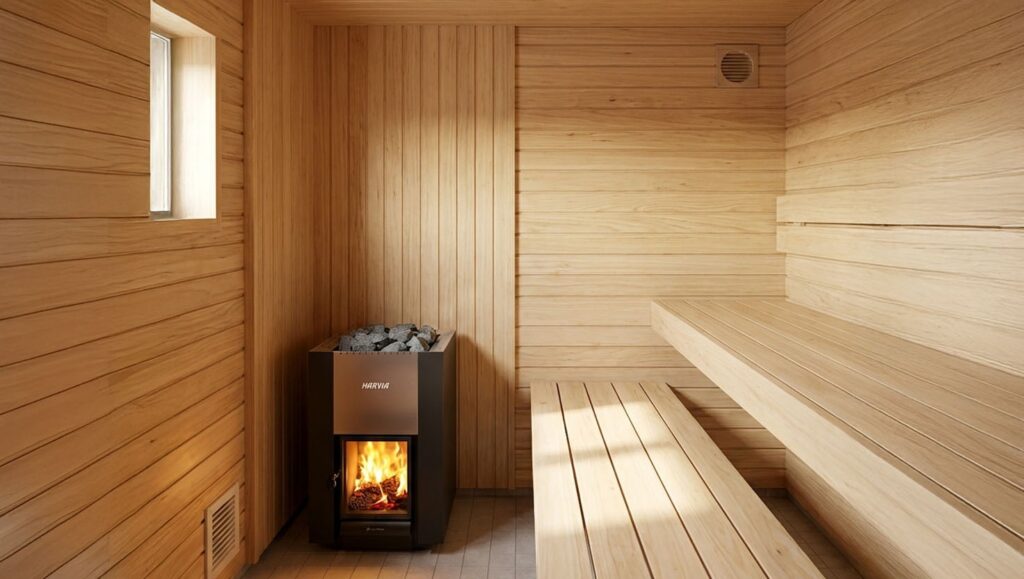
- Wood-Burning: They offer the traditional sauna experience with the authentic crackle of fire and a unique ambiance that electric models can’t replicate. They’re perfect for rural properties or detached sauna buildings where installing a chimney is feasible. However, they require more maintenance, proper venting, and a steady supply of firewood.
- Gas Heaters: Gas heaters fall somewhere in between, offering quick heating times and potentially lower operating costs in areas where natural gas is inexpensive. They’re less common in residential settings but worth considering if you already have gas lines running to your property.
- Infrared Heaters: These heaters represent a different approach altogether. Rather than heating the air, they use infrared panels to warm the body directly. While technically not traditional saunas, infrared models have gained popularity for their lower operating temperatures and energy efficiency.
Narrowing Down Your Options: Electric vs. Wood-Burning
For most homeowners, the decision narrows down to electric versus wood-burning heaters, as these represent the two most practical and popular options. The choice between these two ultimately depends on location, lifestyle, and whether convenience or tradition takes priority.
Electric

Electric heaters excel in ease of use. Just set the temperature and timer, and the sauna preheats itself without any attention. They are especially ideal for indoor spaces, basement saunas, or any location where installing a chimney is difficult or restricted by local building codes.
Modern electric models offer digital controls, smartphone connectivity, and programmable settings that make regular sauna use effortless.
Wood-Burning
Wood-burning heaters, conversely, appeal to those seeking an authentic, ritualistic experience. The process of building and tending the fire becomes part of the sauna tradition, creating a connection to how saunas have been enjoyed for generations.
The heat quality from wood fire is often described as softer and more enveloping, and for those with access to affordable firewood, the operating costs can be nearly negligible. Wood heaters also provide complete independence from the electrical grid, making them ideal for remote cabins or properties where power reliability is a concern.
Sizing Your Sauna Heater Correctly
Getting the heater size right is crucial. Too small, and the sauna won’t reach optimal temperatures or will take forever to heat up. Too large, and you’ll waste energy while potentially creating uncomfortable hot spots.
As Ryan Williams, Sauna Expert at SaunaHeaters.com, puts it: “Most sauna problems aren’t brand problems, they’re sizing problems. When the heater matches the room, heat-up time is predictable, and the sauna feels consistent from bench to bench.”
A practical guideline is to match your sauna’s size with a heater that delivers roughly 1 kilowatt (kW) of power for every 50 cubic feet of space.
- Insulation quality plays a significant role. A well-insulated sauna with minimal heat loss can get by with less power, while poorly insulated spaces need extra heating capacity to compensate. If your sauna includes a glass door or window, you should increase the heater’s capacity because glass conducts heat and will draw warmth out of the room.
- Climate and location play a bigger role than many assume. A sauna in Minnesota winter conditions will need more power than one in Southern California. Similarly, outdoor saunas or those built in unheated spaces like garages require additional heating capacity compared to saunas located inside climate-controlled homes.
- Ceiling height affects calculations too. Saunas with ceilings higher than the standard seven to eight feet need additional power to heat the extra volume effectively. Heat rises, so taller spaces require more energy to maintain comfortable temperatures at bench level.
- Construction materials influence heat retention. Cedar and hemlock, the most common sauna woods, have different thermal properties. Concrete or tile floors absorb more heat than wooden ones, potentially requiring a more powerful heater.
Most manufacturers provide sizing charts that account for these variables. This sauna heater guide provides a practical walkthrough for sizing, including room volume calculations, insulation factors, glass effects, and common pitfalls to watch for.
When in doubt, it’s generally better to go slightly larger rather than undersized. A more powerful heater can always be run at lower settings, but an undersized unit will struggle constantly.
Critical Safety Considerations
Sauna heaters operate at extremely high temperatures, making safety paramount. Saving costs in this area is not smart and can be dangerous.
Electrical requirements for electric sauna heaters usually range from 220-240 volts. Most residential electric heaters over 6 kW require hardwiring by a licensed electrician. The electrical panel must have adequate capacity, and the circuit must be properly sized with the correct gauge wire and breaker rating. To ensure proper function and avoid risks, have a certified electrician handle this installation rather than doing it yourself.
Clearances are specified by manufacturers for good reason. Heaters must maintain proper distances from walls, benches, and the ceiling to prevent fire hazards. These specifications are essential safety requirements. Flammable items should be positioned far from the heater unit to ensure safe operation and prevent potential hazards.
The most common mistake people make when installing a home sauna is underestimating the importance of proper heater placement and clearance. Those clearance requirements exist because sauna heaters get incredibly hot, and wood can ignite if it’s too close. Following the manufacturer’s instructions is critical for safety and can prevent fire risks.
- Protective guards should surround the heater to prevent accidental contact with hot surfaces or rocks. This is especially important in family homes where children might use the sauna. Even adults can accidentally brush against a heater when moving in a confined space.
- Ventilation ensures fresh air circulation and prevents carbon monoxide buildup in wood or gas-burning saunas. Even electric saunas benefit from proper ventilation to maintain air quality and comfort. Most building codes specify minimum ventilation requirements.
- Temperature controls and safety shutoffs are essential features. Look for heaters with built-in timers, high-temperature limit switches, and emergency shutoff capabilities. These features prevent overheating and provide peace of mind.
Setup and Installation Basics
Proper installation begins long before the heater arrives. Planning the sauna layout with the heater location in mind prevents costly modifications later.
Heater placement usually works best along a wall where bathers won’t accidentally lean against it. The location should allow for proper clearances while maximizing heat distribution throughout the space. Corner installations can work well in smaller saunas, while larger units might benefit from a central wall placement.
Mounting requirements vary by heater type. Wall-mounted units are popular for their space-saving design, while floor-standing models offer easier installation and better heat distribution in larger saunas. Ensure the mounting surface can support the heater’s weight, especially when rocks are included.
Rock selection and arrangement greatly affect heating performance. Use only stones designed for saunas. Arrange them following the manufacturer’s instructions, making sure there is enough air circulation around the heating elements while maintaining sufficient thermal mass for optimal steam production. Never use backyard rocks as they can crack, explode, or release harmful substances when heated.
Control systems range from simple mechanical timers to sophisticated digital controllers that allow precise temperature programming. More advanced systems can include smartphone connectivity, preset programs, and remote activation so that the sauna is warm and ready when you arrive home.
Professional versus DIY installation depends on your skills and local regulations. While some aspects, like rock arrangement, are manageable for handy homeowners, electrical connections for larger heaters always require licensed professionals. Many jurisdictions require permits and inspections for sauna installations, particularly for electrical work and any venting systems.
Final Thoughts
Picking the perfect sauna heater means weighing several important elements, such as the sauna’s dimensions, insulation efficiency, heating capacity, safety features, and overall cost. Taking time to properly size and install the heater pays dividends in performance, safety, and longevity.
The investment in a quality sauna heater and professional installation might seem significant initially, but it’s minimal compared to the years of enjoyment a properly equipped home sauna provides. Whether opting for traditional wood-burning warmth, convenient electric heating, or modern infrared technology, the right heater transforms a simple wooden room into a personal wellness sanctuary that enhances both home value and quality of life.
Although saunas provide many advantages for relaxation and overall wellness, individuals with existing health issues should consult their doctor before using one regularly. Likewise, any electrical work must be carried out by a licensed electrician in strict accordance with the manufacturer’s guidelines and local building regulations. These precautions ensure that the home sauna remains a safe, enjoyable space for years to come.
Author Bio
Mark Adams is the resident sauna expert at SaunaHeaters.com, where he shares practical tips and advice on sauna heaters, maintenance, and wellness. He firmly believes that life’s best moments happen somewhere between a good steam and an ice-cold plunge.
Other Articles You May Find of Interest...
- How to Support Your Immune System Naturally in Everyday Life
- Chinese Medicine and Western Medicine: Different Questions
- Cellular Healing Solutions
- Acupuncture and Cupping For Cancer Side Effects
- Hot-Cold Contrast Therapy at Home: A Beginner’s Guide
- Natural Tennis Elbow Remedies That Hold Up
- How to Support Your Immune System Naturally in Everyday Life





