More Pain Management & Rehabilitation Articles
The Chronic Pain Epidemic: Why Your Neck Pain Might Be a Sleep Issue
Chronic neck pain affects millions of adults worldwide, fast becoming a silent epidemic in our modern, digital age. We are quick to blame our smartphones (“text neck”), our poor posture at office desks, and our sedentary lifestyles. While these are certainly contributing factors, the root cause is often overlooked: sleep posture. Considering we spend approximately one-third of our lives in bed, the alignment of the cervical spine during those critical hours is the most significant factor for long-term musculoskeletal health.
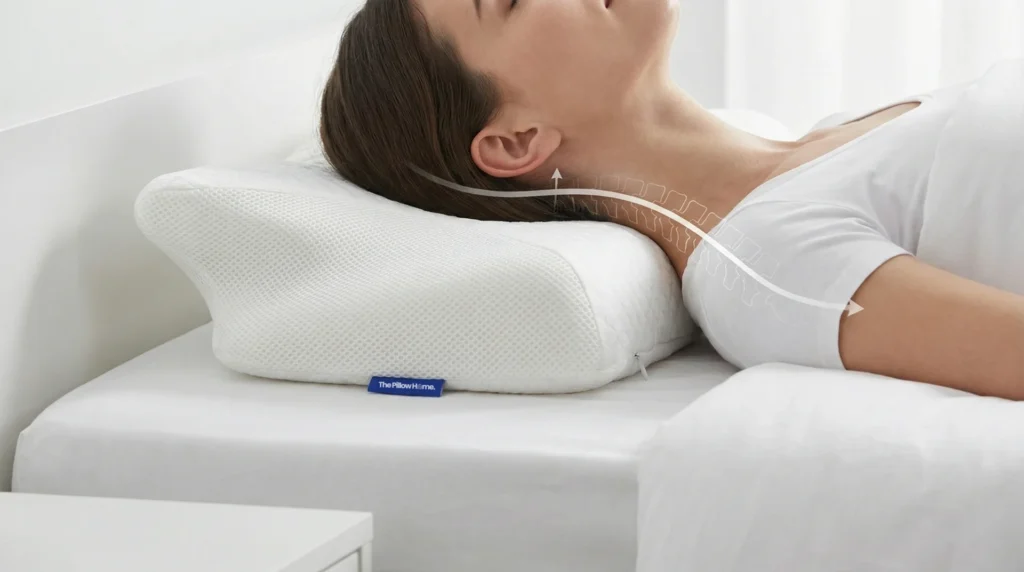
The Anatomy of Proper Alignment (C1-C7)
To understand the pain, we must look at the anatomy. The human neck consists of seven vertebrae (C1 through C7) that support the head, which weighs between 10 to 12 pounds on average. This structure possesses a natural lordotic curve (a backward C-shape) that acts as a shock absorber.
Traditional feather, polyester, or old down pillows often fail to support this specific curve. They tend to be either too high—forcing the neck forward into flexion—or too soft, offering no resistance and causing the neck to extend backward. This misalignment strains the facet joints and creates micro-tears in the surrounding muscles and ligaments. If you wake up with stiffness that slowly eases after a hot shower or some movement, it is a clear clinical sign that your sleep environment is causing inflammation, not relieving it.
The Cycle of Pain and Insomnia
Pain and sleep have a bidirectional relationship. Poor sleep lowers your pain threshold, making existing conditions feel worse. Conversely, pain prevents you from entering the deep, restorative stages of sleep (Stages 3 and 4) where tissue repair occurs. Breaking this cycle is essential.
From a medical perspective, correcting sleep posture is the first non-invasive step toward resolving chronic tension headaches and upper back pain. For recovery to occur, the spine must remain neutral. This is where material density becomes crucial. Memory foam is uniquely suited for orthopedic support because it is viscoelastic—it responds to heat and pressure, molding to the specific gap between the head and the mattress without pushing back aggressively.
Choosing the Right Orthopedic Tool
Using a specialized orthopedic neck pillow can prevent the compression of nerve roots during the night. By maintaining the neck’s natural curve, you allow the trapezius and levator scapulae muscles to fully disengage and enter a relaxed state.
However, not all corrective pillows are created equal. Factors such as firmness, height, and contour shape play a massive role depending on your body type. If you are unsure about the options available, checking a professional review of the best cervical pillows regarding pain relief can help you understand the different ergonomic designs available for side and back sleepers.
Conclusion
Living with pain is not a lifestyle choice you have to accept as you age. It is a signal from your body that something mechanical needs to change. Before resorting to painkillers, injections, or expensive physical therapies, look closely at what is under your head every night. Proper support is often the missing link to a pain-free life.
Other Articles You May Find of Interest...
- Broken Kneecap Recovery: How Long Healing Usually Takes
- The Thumb Grind Test: What Pain During It Can Mean
- Choosing a Trigger Thumb Splint That Actually Supports Healing
- Can Tendons Heal on Their Own? What Recovery Requires
- How Chronic Knee Pain Can Be Treated Without Joint Replacement
- What ‘Gnawing Pain’ Tells Your Doctor
- Why Does Pain Continue After an Injury? When to Consider Seeing a Pain Management Doctor