
More Health & Wellness Tips Articles
How to Convert 37.6°C to Fahrenheit and Why It Matters for Your Health
Updated October 27, 2026 by the editorial team at Your Health Magazine – Scott Hunter, Editor-in-Chief and Heather Mahoney, Managing Editor
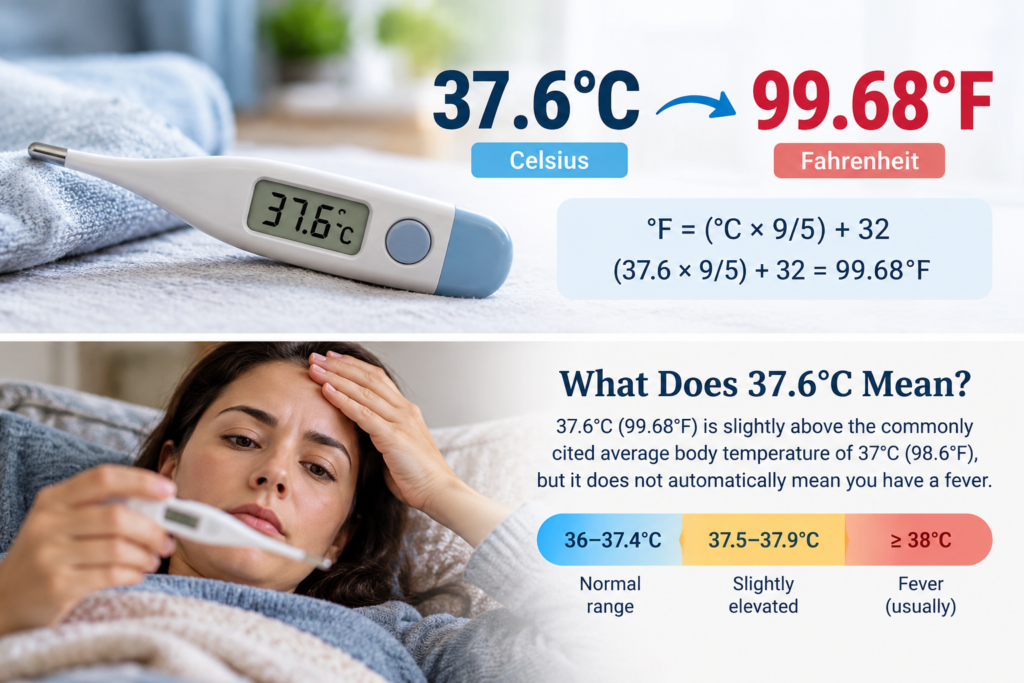
37.6°C is equal to 99.68°F.
If you are converting 37.6 Celsius to Fahrenheit for a body-temperature reading, this is slightly above the commonly cited average of 37°C (98.6°F), but it does not automatically mean you have a fever. Body temperature varies by person, time of day, age, activity, and how the temperature was measured.
Converting 37.6°C to Fahrenheit
To convert Celsius to Fahrenheit, use this formula:
°F = (°C × 9/5) + 32
For 37.6°C:
(37.6 × 9/5) + 32 = 99.68°F
So, 37.6°C equals 99.68°F.
Why Temperature Conversion Matters in Health
Understanding temperature conversion between Celsius and Fahrenheit is especially useful when interpreting body temperature. Knowing that 37.6°C translates to 99.68°F helps put the reading in context alongside your usual temperature, symptoms, and how the temperature was measured.
Body Temperature: A Key Health Indicator
Normal body temperature varies by person, age, activity, time of day, and measurement method. The commonly cited average is around 37°C (98.6°F), while many healthcare sources use 38°C (100.4°F) as a general fever threshold. The significance of any individual reading depends on the person’s usual temperature, symptoms, and how the temperature was measured.
Implications of a 37.6°C Reading
Is 37.6°C (99.68°F) a Fever? A temperature of 37.6°C (99.68°F) is slightly elevated compared with the traditional average body temperature of 37°C (98.6°F), but it is not necessarily a fever. Many healthcare sources use 38°C (100.4°F) as a general fever threshold. The significance of a 37.6°C reading depends on factors including your usual temperature, age, time of day, symptoms, and whether the temperature was measured orally, rectally, in the ear, under the arm, or on the forehead.
Interpreting Temperature for Different Age Groups
Normal body temperature can vary with age. Infants and young children, for instance, have higher baseline body temperatures than adults due to higher metabolic rates. Conversely, older adults may have a slightly lower baseline temperature. Understanding these variations is essential to interpret whether 37.6°C in a person might be concerning.
When to Seek Medical Help
If a temperature of 37.6°C persists or rises, especially in children or the elderly, it’s advisable to reach out to a healthcare provider. For instance, if such a temperature accompanies rash, persistent vomiting, or confusion, it might necessitate immediate medical attention.
Understanding Fever Phases
Fever can generally be categorically divided into three phases:
- Onset: Initial increase in temperature, often accompanied by chilling.
- Plateau: Temperature stabilizes at the elevated level while the body fights the infection.
- Defervescence: Temperature returns to normal as the body overcomes the illness.
Converting 37.6°C to Fahrenheit can help people compare temperature readings across different thermometers, medical instructions, and healthcare systems.
Practical Tips on Managing Fever
Hydration is key when managing fever. Drinking plenty of fluids helps to prevent dehydration. Over-the-counter medications, like acetaminophen, may reduce fever and alleviate discomfort. However, it’s essential to follow the packaging instructions or consult with healthcare providers.
Ultimately, understanding and monitoring body temperature changes, such as recognizing what 37.6°C to F conversion indicates, could be crucial in day-to-day health management and prompt intervention when necessary.
- 37.6°C is equal to 99.68°F and may be slightly above a person’s usual baseline temperature.
- Understanding temperature in both scales is vital for health monitoring.
- A mild fever can be a natural response to infection.
- Infants and the elderly need careful monitoring if this temperature persists.
- Consult a healthcare professional for persistent or concerning symptoms.
What is 37.6°C in Fahrenheit?
37.6°C is 99.68°F. To convert Celsius to Fahrenheit, multiply the Celsius temperature by 9/5 and then add 32.
What is the formula for converting Celsius to Fahrenheit?
The formula for converting Celsius to Fahrenheit is °F = (°C × 9/5) + 32. Applying this to 37.6°C gives 99.68°F.
Is 37.6°C considered a fever?
Not necessarily. 37.6°C equals 99.68°F and may be slightly above a person’s usual temperature, but many healthcare professionals use 38°C (100.4°F) as a general fever threshold. Temperature should be interpreted along with the measurement method, age, symptoms, and the person’s normal baseline.
Does body temperature vary with age?
Yes, normal body temperature can vary by age. Infants and younger children tend to have slightly higher temperatures, whereas older adults might experience slightly lower baseline temperatures.
When should you seek medical attention for a fever?
Seek medical attention if a fever persists, especially if accompanied by severe symptoms such as rash, vomiting, or confusion. High fevers or those lasting more than a couple of days may require a healthcare provider’s evaluation.
How can fever be managed at home?
Hydration is crucial, along with rest and over-the-counter medications to manage discomfort. Monitoring temperature congruently with understanding symptoms can guide home care interventions.
Other Articles You May Find of Interest...
- Magnesium Citrate FAQs: Timing, Food, and Daily Dosing
- The Desk Job Recovery Problem: Can Red Light Fit Into a Smarter After-Work Routine?
- Why Hiring a Treadmill Can Be Better Than Buying One
- How to Build a Complete Strength Training Routine With One Machine
- How Creatine Can Help Improve Performance During High Intensity Workouts
- Simple Ways to Keep Your Mind Engaged During Short Breaks at Home
- Is Your Cutting Board Making You Sick? A Hygiene Guide for Home Cooks