
Brain Bloom Neurotherapy Center
1303 Vincent Place
McLean, VA 22101
703-712-7539
More Mental Health Articles
Transcranial Magnetic Stimulation (TMS)
A Non-Invasive Option For Treating Depression
Depression is a complex and often debilitating mental health condition that affects millions of adults each year. While antidepressant medications and psychotherapy remain effective treatments for many individuals, a significant number of patients continue to experience symptoms despite multiple treatment attempts. For those individuals, Transcranial Magnetic Stimulation (TMS) offers a scientifically supported, non-invasive option that can provide meaningful relief from depression.
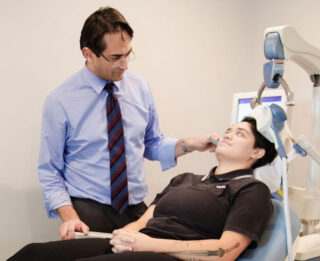
TMS is an FDA-cleared treatment for major depressive disorder, particularly for patients who have not responded adequately to medication. The therapy uses focused magnetic pulses to stimulate specific areas of the brain involved in mood regulation – most notably the prefrontal cortex, which is often underactive in people with depression. By gently activating these neural pathways, TMS helps restore healthier brain activity patterns associated with improved mood, motivation, and emotional balance.
One of the most appealing aspects of TMS is that it is non-systemic. Unlike antidepressant medications, TMS does not circulate through the bloodstream, which means it does not typically cause side effects such as weight gain, sexual dysfunction, gastrointestinal upset, or sedation. Treatments are performed while the patient is fully awake, seated comfortably in a chair, and able to resume normal daily activities immediately afterward. There is no anesthesia, no recovery time, and no need to take time off work or arrange transportation.
A standard course of TMS treatment typically involves sessions five days per week for four to six weeks, although protocols may vary based on individual needs. Each session lasts approximately 20-40 minutes. During treatment, patients may feel a tapping sensation on the scalp, but the procedure is generally well tolerated. The most common side effects are mild scalp discomfort or headache, which usually diminish as treatment progresses.
Clinical studies show that TMS can significantly reduce depressive symptoms, even in individuals with treatment-resistant depression. Many patients report improvements in mood, energy, concentration, sleep, and overall quality of life. Importantly, these benefits often extend beyond symptom relief, allowing patients to more fully engage in therapy, relationships, and daily responsibilities.
TMS may also be appropriate for individuals who cannot tolerate antidepressant medications, prefer non-pharmacologic treatments, or wish to avoid long-term medication use. Ongoing research continues to explore the effectiveness of TMS for related conditions such as anxiety disorders, obsessive-compulsive disorder, and post-traumatic stress disorder, further expanding its role in mental health care.
For individuals struggling with depression who feel stuck or discouraged after trying multiple treatments, TMS represents a hopeful and evidence-based option. A consultation with a qualified mental health professional can help determine whether TMS is an appropriate part of a personalized treatment plan, offering renewed possibilities for recovery and long-term emotional well-being.
Other Articles You May Find of Interest...
- Can You Get a Medical Marijuana Card for Anxiety or PTSD?
- How to Find the Right Autism Support in Texas: A Step-by-Step Guide
- Understanding SPRAVATO Treatment for Persistent Depression Symptoms
- Stress and Distraction Can Put Extra Pressure on Everyday Mental Balance
- AuDHD Diagnosis: When Autism and ADHD Overlap
- How to Treat Limerence and Break the Cycle of Obsessive Attachment
- Recognizing Trauma and Finding the Right Path to Recovery