






More Weight Control, Nutrition & Exercise Articles
The GLP-1 Revolution & The Muscle Defense Protocol: Your Complete Guide to Thriving on the “Wonder Drug”
If you’ve opened a news app, scrolled through TikTok, or just chatted with friends at brunch lately, you’ve heard the noise. It’s everywhere. We are living through what might be the biggest shift in metabolic health history: the era of GLP-1s.
But if you are one of the millions of people currently taking—or considering—these medications, you might have noticed the conversation shifting. It started with “Look how much weight I lost!” and now, increasingly, it’s “Why do I look so tired?” or “Why is my skin sagging?” or the big one: “Where did my muscle go?”
You aren’t looking for a magic pill that leaves you frail. You’re looking for vitality.
This guide isn’t just another dry medical overview. This is your 360-degree roadmap to understanding what these drugs actually do to your body, why the “Ozempic Body” phenomenon is happening, and exactly how to protect your metabolism using the right GLP-1 diet strategies, and why using a GLP tracking tool can help you monitor your progress more accurately over time.
Let’s dive deep.
Part 1: The 360-Degree View – What Actually Is GLP-1?
Before we talk about protein shakes and gym routines, we need to understand the machinery. What is this hormone that has seemingly “cured” obesity overnight for so many?
The “Incretin” Effect
GLP-1 stands for Glucagon-like Peptide-1. It is not a synthetic chemical made in a lab from scratch; it’s a mimic of a hormone your body already produces.
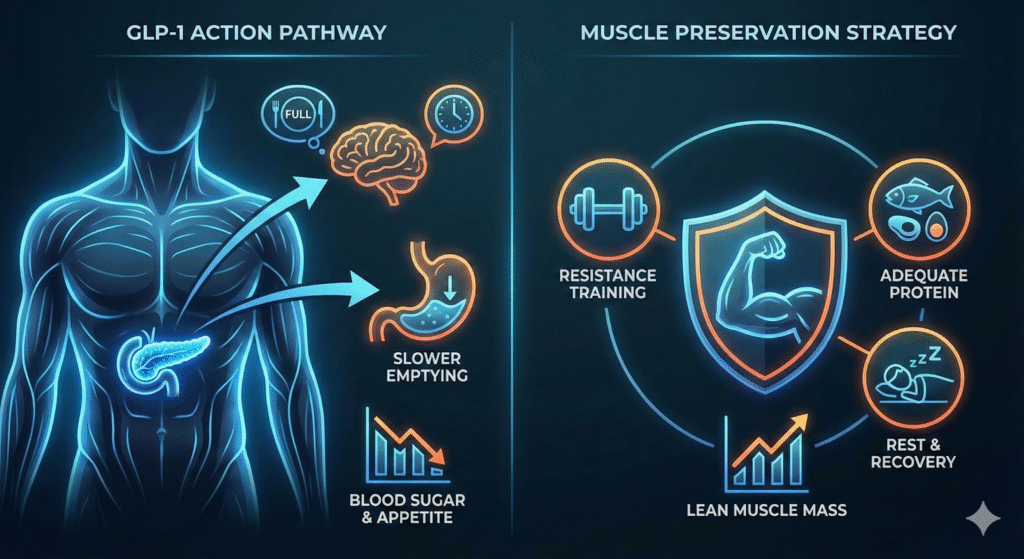
Naturally, when you eat a meal, your intestines release GLP-1. It travels to your brain and your pancreas to deliver three critical messages:
- To the Pancreas: “Release insulin to handle this sugar.”
- To the Stomach: “Slow down! Keep food here longer so we stay full.”
- To the Brain: “We are satisfied. Turn off the hunger signal.”
For decades, this system has been broken in people with Type 2 diabetes and obesity. Their “satiety signal” was weak or ignored. GLP-1 medications (known scientifically as GLP-1 receptor agonists) essentially flood the system with a super-potent version of this signal that lasts for days instead of minutes.
From Gila Monsters to Global Phenomenon
Here is a cocktail party fact for you: The journey didn’t start with weight loss. It started with venom. In the early 1990s, researchers discovered a hormone in the venom of the Gila Monster lizard (native to the Southwestern US) that acted suspiciously like human GLP-1, but didn’t break down nearly as fast.
This discovery birthed the first generation of GLP-1 drugs like exenatide. Originally, these were strictly GLP-1 medications for diabetes. But doctors noticed a “side effect” that was impossible to ignore: patients weren’t just controlling their blood sugar—they were shedding pounds rapidly.
Fast forward to today, and we have the modern titans: Semaglutide (Ozempic/Wegovy) and Tirzepatide (Mounjaro/Zepbound). We have moved from “sugar control” to full-blown metabolic rewiring.
Part 2: The Silent Crisis – “Ozempic Body” and Sarcopenia
Here is the part of the story that marketing commercials tend to skip.
When you take a GLP-1 agonist, the appetite suppression can be profound. You might forget to eat lunch. You might look at a steak and feel icky. You might survive on crackers and iced coffee because that’s all you can stomach.
The scale goes down, yes. But weight loss and fat loss are not the same thing.
The Math of Muscle Loss
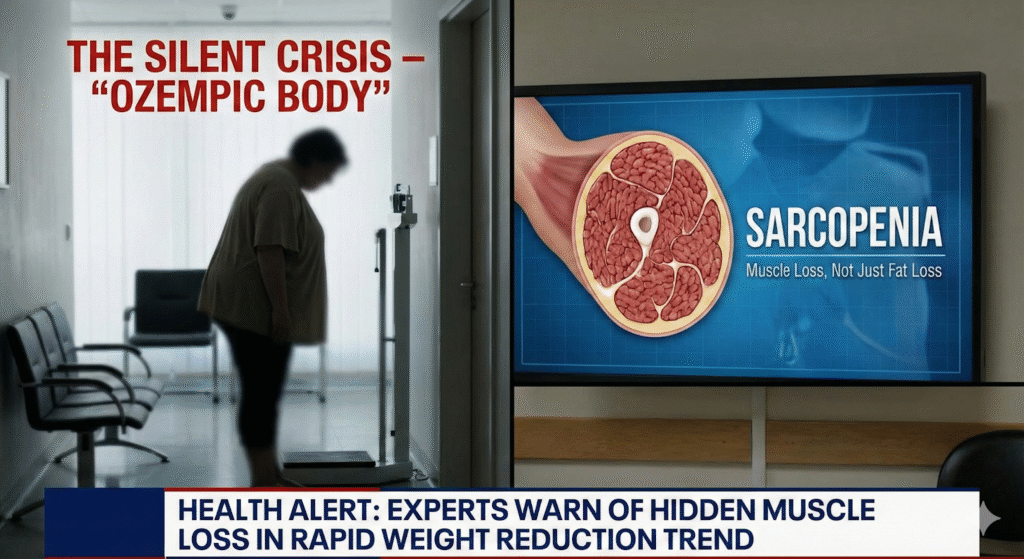
In a typical unassisted diet, about 25% of the weight you lose is muscle mass. On GLP-1 weight loss protocols without proper nutrition, that number can jump to 40% or higher.
This condition is called Sarcopenia (muscle poverty). Why does this matter?
- Muscle is your engine: Muscle tissue burns calories just by existing. If you lose muscle, your metabolism slows down. This is the “trap” that leads to rapid weight regain if you ever stop the medication.
- Aesthetics: Losing facial fat + losing facial muscle = the “gaunt” look often called “Ozempic Face.”
- Longevity: For our older readers, muscle is the organ of longevity. It protects your bones and keeps you mobile.
The dilemma: You need to eat more protein to save your muscle, but the drug makes you want to eat less food.
This is where the strategy needs to change. You cannot just “eat less and move more.” You have to eat smarter.
Part 3: The GLP-1 Friendly Lifestyle Strategy
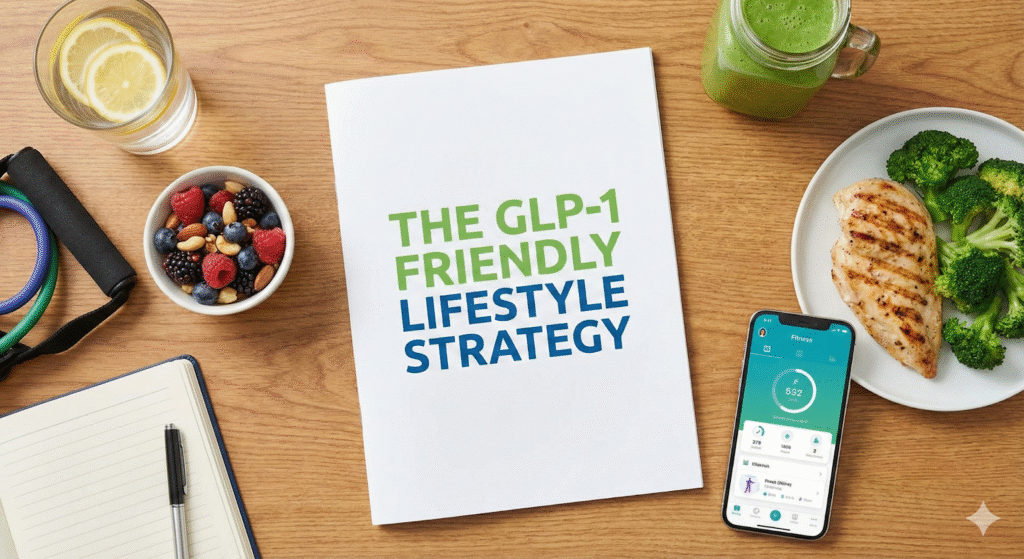
To thrive on these medications, you need a protocol that prioritizes muscle defense. We call this the GLP-1 Diet 2.0.
1. Protein is the Anchor
When your appetite is suppressed, every bite must fight for its rent. You do not have “room” in your stomach for empty calories.
The goal? 100 grams of protein per day, minimum.
This can be incredibly difficult when you are fighting nausea or early satiety. Chewing through a dry chicken breast might feel impossible. This is why many patients and clinics are pivoting to liquid nutrition.
We have curated a specific collection of GLP-1 Friendly Protein Products that are designed exactly for this hurdle. These aren’t just random shakes; they are high-biological-value protein sources that are easy on a sensitive stomach.
- Why Liquid? Digestion is already slowed by the medication. Liquids pass through more easily and don’t leave you feeling painfully bloated.
- Why Medical Grade? You need maximum protein with minimum sugar.
2. Hydration with Electrolytes
A common question we see online is, “Why do I have a headache on Wegovy?”
GLP-1 medications reduce your thirst signal just like they reduce your hunger signal. Plus, if you are eating fewer carbs, you are retaining less water. Dehydration is the #1 cause of fatigue and nausea associated with these drugs.
You cannot just drink water; you likely need electrolytes to keep your energy stable.
3. Strength Training (The Non-Negotiable)
You do not need to become a bodybuilder. But you must signal to your body that your muscle is needed. If you are in a calorie deficit and you aren’t lifting things, your body assumes you don’t need that bicep tissue and breaks it down for energy.
Two days a week of resistance training can reduce that muscle loss significantly.
Part 4: What People Are Asking
Q1: “I’m not diabetic. Are GLP-1 drugs safe for me just for weight loss?”
Answer: This is the most common GLP-1 weight loss question. The FDA has specifically approved certain versions (like Wegovy and Zepbound) for chronic weight management in people without diabetes, provided they have a certain BMI (usually 30+, or 27+ with a condition like high blood pressure).
However, “safe” doesn’t mean “risk-free.” These are serious medical interventions. Side effects like nausea, constipation, and gallstones are real. It is not a vanity drug; it’s a metabolic treatment.
Q2: “What foods should I absolutely avoid while on GLP-1?”
Answer: The “forbidden” list isn’t about safety, it’s about comfort.
- Greasy/Fried Foods: Since your stomach emptying is delayed, greasy food sits there longer. This is a one-way ticket to heartburn and severe nausea.
- High-Sugar Sweets: Can cause “dumping syndrome” symptoms in some people.
- Carbonated Drinks: You are already prone to bloating. Adding gas to the fire (literally) is a bad idea.
Q3: “Will I lose my hair?”
Answer: Hair shedding (Telogen Effluvium) is a common side effect of any rapid weight loss, whether from surgery, starvation, or GLP-1 medications. It is usually temporary. The best defense? Adequate protein intake (collagen helps!) and ensuring you aren’t nutrient-deficient. This brings us back to the importance of nutrient-dense GLP-1 Friendly Protein Products.
Q4: “Do I have to take this forever?”
Answer: This is the million-dollar question. Current data suggest that obesity is a chronic relapsing disease. When people stop the drug, the “food noise” usually returns, and the weight often follows. However, many experts are now looking at “maintenance protocols” or using the time on the drug to build substantial muscle mass and metabolic flexibility so that if you taper off, your body is better equipped to maintain the weight.
Q5: “How do I fix the constipation?”
Answer: The mechanism that slows your stomach also slows your bowel.
- Water: Drink more than you think you need.
- Fiber: But be careful—adding too much bulk to a slow stomach can hurt.
- Magnesium: Many users swear by magnesium supplements at night.
Part 5: Navigating the Market – Drugs, Supplements, and Naturals
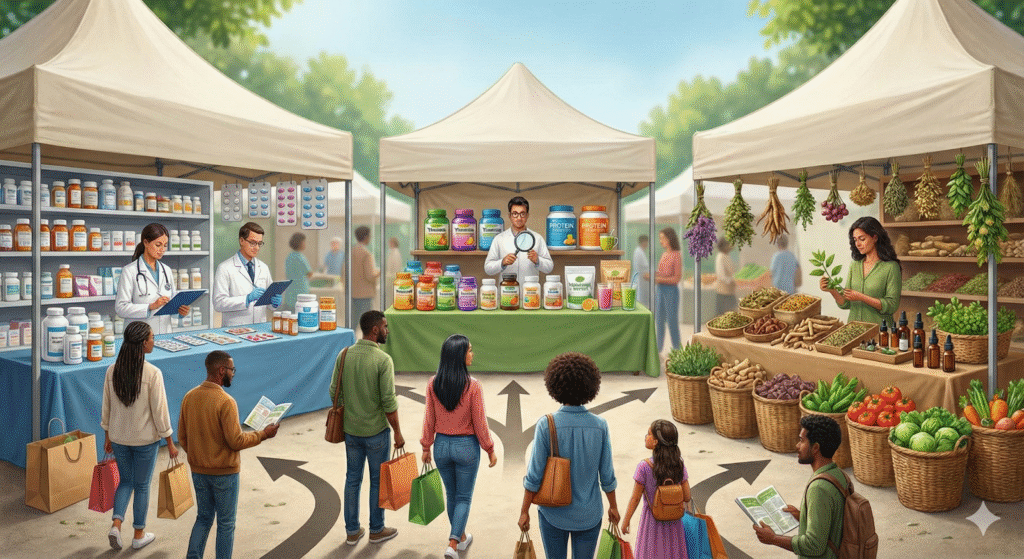
If you look at the search trends, people are confused by the terminology. Let’s clear up the vocab.
GLP-1 Agonist vs. Secretagogue
A GLP-1 agonist (like Ozempic) mimics the hormone.
A “Secretagogue” (often found in natural glp 1 supplements) tries to tell your body to make more of its own GLP-1.
While certain foods (like yerba mate, fiber, and protein) can naturally stimulate a small rise in GLP-1, they are nowhere near the potency of the pharmaceutical GLP-1 drugs. Don’t be fooled by “nature’s Ozempic” marketing scams. Stick to proven nutrition.
The “Compounded” Question
With shortages of brand-name GLP-1 medications, many are turning to compounded versions.
Note: We cannot give medical advice here. But be very careful. Ensure you are working with a legitimate, licensed facility. The source of what you put in your body matters.
Part 6: The “GLP-1 Friendly” Future

We are moving past the initial hype phase into the “lifestyle” phase.
It is no longer enough to just get the prescription. You need a support system. You need a pantry that supports your goals. You need to understand that GLP-1 weight loss is a partnership between the medication and your habits.
If you treat the medication as a crutch, you will lose muscle and potentially regain the fat.
If you treat the medication as a tool that allows you to finally stick to a high-protein, healthy lifestyle, you can transform your health for decades.
Your Action Plan for This Week:
- Check your protein: Are you hitting 100g? If not, look for supplements that are easy to digest.
- Lift something heavy: Even if it’s just for 20 minutes.
- Hydrate: Always keep a water bottle in hand.
- Listen to your body: If you are nauseous, don’t force a meal—sip a shake.
For those struggling to find food that sits well, feels good, and hits those macro goals, we have done the heavy lifting for you. Explore our curated selection of high-protein solutions specifically chosen for patients on this journey:
Shop GLP-1 Friendly Protein Products
Other Articles You May Find of Interest...
- Why Pineapple Makes Your Tongue Sting
- How To Lose Weight Fast? 12 Expert Tips
- First Month on GLP-1: What Should You Track?
- How Obesity Can Affect Height, Posture, and Growth
- The Drumstick Vegetable Plant: Nutrition and Uses of Moringa
- How Telehealth Is Making Medical Weight Management More Accessible
- Liposuction vs Weight Loss: Understanding the Difference





