





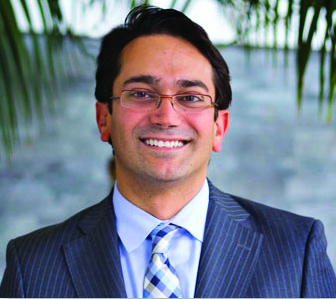
Ehsan Habibpour, MD
Brain Bloom Neurotherapy Center
1303 Vincent Place
McLean, VA 22101
703-712-7539
brainbloomneurotherapy.com
Medical Director
Child and Adolescent and Adult Psychiatrist
Clinical Assistant Professor of Psychiatry and Behavioral Sciences
George Washington University School of Medicine and Behavioral
Sciences
Education and Teaching Background
After attending one of Iran’s prestigious medical schools, I completed an adult psychiatry residency at the Medical College of Virginia in Richmond. Later, I went on to complete a
Child and Adolescent Psychiatry Fellowship at the University of Texas Southwestern Medical Center in Dallas. There, I learned about child development and the impact childhood experiences can have well into adulthood. During my education as a whole, I received dual training in child, adolescent, and adult psychiatry. I’ve also been fortunate to work in George Washington University’s Psychiatry Department since 2014, when I accepted the position of Clinical Assistant Professor of Psychiatry and Behavioral Sciences to teach a course on child psychiatry.
An Integrative Approach
Throughout my psychotherapy practice, I’ve mastered the practice of judiciously using psychiatric medications. Psychiatry has made exciting progress in the last decade and I’ve made a point to familiarize myself with the most up-to-date medications available. In my practice, I often integrate medication with psychotherapy to optimize patient healing. I have experience and a keen interest in treating anxiety, mood disorders, and eating disorders, and have found this integrative approach to be effective. Throughout my practice, I’ve also experienced firsthand the value of effective therapeutic relationships. Self determination, resilience, and meaningful relationships are consistently the key factors that foster human growth and healing.
Childhood Healing to Guide Lifelong Growth
As children, we often develop self defensive emotional and behavioral responses that continue into adulthood. While these behaviors may have been useful in childhood, they’re often no longer necessary or helpful throughout the rest of our lives. Exploring those feelings and behaviors is the first step to adapt our behaviors to fit our new environment.
The Role of Culture and Ethnicity in Our Lives
People’s culture and ethnicity often play a role in their emotional disturbances. I’ve studied and learned about this overlap thanks to the cultural diversity I’ve experienced throughout my life.
In pursuit of this passion, I co-wrote the scholarly paper “The Treatment of Depression in Culturally Diverse Children and Adolescents”, which was later published in the Journal of Child and Adolescent Psychopharmacology. I’m also involved with George Washington University’s Psychiatry Department’s Global Mental Health Project.
