






Your Health Magazine
4201 Northview Drive
Suite #102
Bowie, MD 20716
301-805-6805
More Weight Control, Nutrition & Exercise Articles
Why Resistance Training Is Essential for Joint Health at Any Age

Joint discomfort is no longer an issue associated only with older adults. Increasingly, individuals in their 30s and 40s report stiffness, reduced mobility, and recurring aches in the knees, hips, shoulders, and lower back. Sedentary work environments, repetitive movement patterns, and limited physical activity all contribute to declining joint function over time.
A common belief is that joints simply “wear out” with age. While natural changes do occur, joint deterioration is not inevitable. In many cases, weakness in the surrounding musculature, poor movement patterns, and lack of structured exercise place unnecessary stress on connective tissues. When muscles fail to properly support a joint, cartilage and ligaments absorb forces they were not designed to manage alone.
Emerging research consistently shows that appropriately programmed resistance training plays a protective role in joint health. Rather than accelerating degeneration, controlled strength training enhances stability, improves movement efficiency, and supports the structures that allow joints to function smoothly. Understanding how this works begins with examining what truly keeps joints strong.
Understanding Joint Health: What Actually Keeps Joints Strong
A. The Role of Muscles in Joint Stability
Joints do not function in isolation. They rely heavily on surrounding muscles to maintain alignment and control movement. When muscles are strong and balanced, they act as dynamic stabilizers, absorbing shock and distributing force evenly across the joint.
For example, the knee depends on the quadriceps, hamstrings, and gluteal muscles to manage load during walking, climbing stairs, or standing from a seated position. If these muscles are weak, the knee joint experiences increased strain, which may contribute to discomfort over time. Resistance training strengthens these support systems, reducing unnecessary stress on cartilage and ligaments.
B. Synovial Fluid and the Importance of Movement
Healthy joints contain synovial fluid, a lubricating substance that reduces friction and nourishes cartilage. Movement stimulates the production and circulation of this fluid. When individuals remain sedentary for prolonged periods, lubrication decreases, often leading to stiffness.
Controlled resistance exercises encourage consistent joint movement through safe ranges of motion. This mechanical stimulation helps maintain lubrication, contributing to smoother and more comfortable joint function.
C. Bone Density and Connective Tissue Strength
Joint health extends beyond cartilage. Bones, tendons, and ligaments also play essential roles in maintaining structural integrity. Resistance training places manageable stress on bones, stimulating adaptations that improve bone mineral density. This becomes increasingly important with age, as bone mass naturally declines.
Similarly, tendons and ligaments respond positively to progressive loading. When exposed to structured resistance, connective tissues adapt by becoming stronger and more resilient. This adaptation enhances the joint’s overall ability to withstand daily physical demands.
Together, muscular strength, joint lubrication, and connective tissue resilience form the foundation of long-term joint health. Resistance training, when performed with proper technique and progression, directly supports each of these components.
The Problem With Avoiding Strength Training
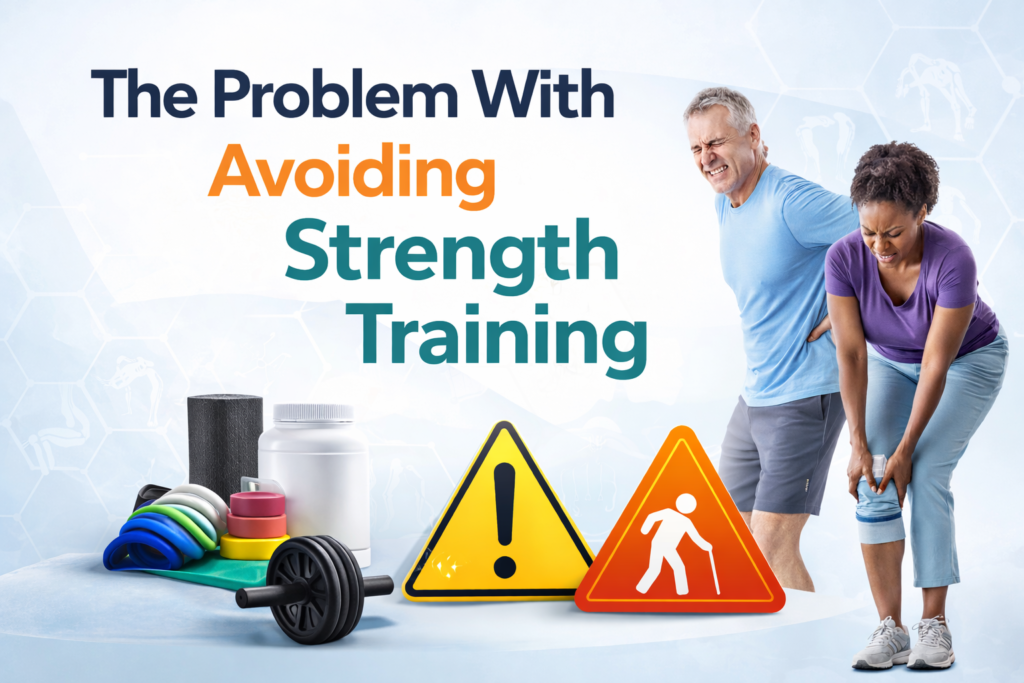
Despite its well-documented benefits, many individuals avoid resistance training out of concern that it may worsen joint discomfort or increase injury risk. This hesitation is understandable, particularly among those who have experienced pain in the past. However, prolonged avoidance of strength-based exercise often creates the very conditions that contribute to joint instability.
Beginning as early as the third decade of life, adults naturally lose muscle mass in a process known as sarcopenia. Without intervention, this gradual decline reduces strength, balance, and coordination. When muscles weaken, joints lose essential support, forcing passive structures such as cartilage and ligaments to absorb greater mechanical stress.
Additionally, sedentary behavior contributes to reduced mobility and compromised movement patterns. Weak hip musculature, for example, may alter walking mechanics, increasing strain on the knees. Similarly, underdeveloped upper back and shoulder stabilizers can place excess pressure on the shoulder joint during daily tasks.
Avoiding resistance training does not preserve joint health; rather, it may accelerate functional decline. Strategic, properly guided strength training provides the stimulus necessary to maintain muscular integrity, which in turn protects joint structures from excessive load.
How Resistance Training Protects Joints
When performed with proper technique and appropriate progression, resistance training offers several protective benefits for joint health.
A. Improves Muscle Balance Around the Joint
Muscle imbalances are a common contributor to joint discomfort. When one muscle group is significantly stronger or tighter than its opposing group, uneven forces act across the joint surface. Over time, this imbalance may contribute to irritation or instability.
Targeted resistance exercises restore balance by strengthening underactive muscles while improving coordination. Balanced musculature distributes mechanical load more evenly, reducing focal stress on specific joint structures.
B. Enhances Range of Motion and Control
Joint health depends not only on flexibility but also on strength within a controlled range of motion. Resistance training performed through full, pain-free movement patterns enhances neuromuscular control. This improved control supports proper alignment during daily activities such as lifting, bending, and climbing stairs.
Unlike abrupt or high-impact activity, controlled resistance movements allow individuals to build strength safely while reinforcing proper biomechanics.
C. Supports Healthy Inflammatory Response
Chronic low-grade inflammation is associated with various musculoskeletal conditions. Moderate, consistent resistance training has been shown to support metabolic health and regulate inflammatory markers. By improving muscle function and circulation, strength training contributes to a more favorable internal environment for joint maintenance.
Importantly, protection comes from structured programming, not excessive loading. Gradual progression, appropriate recovery, and attention to form are essential. When these principles are followed, resistance training becomes a proactive strategy for preserving mobility and maintaining joint resilience throughout life.
Low-Impact Resistance Options for All Ages
Resistance training does not require heavy barbells or high-intensity gym sessions. Many joint-friendly strengthening methods focus on controlled, low-impact movements that prioritize stability, alignment, and muscular balance. The goal is not maximal load, but consistent and progressive support for the joints.
A. Bodyweight Exercises
Bodyweight movements provide an accessible starting point for individuals at any fitness level. Exercises such as chair squats, wall push-ups, glute bridges, bird dogs, and step-ups develop foundational strength without excessive compressive forces on the joints.
When performed with controlled tempo and proper alignment, bodyweight exercises enhance coordination and reinforce joint stability. They also allow individuals to build movement confidence before progressing to external resistance.
B. Resistance Bands
Elastic resistance offers a particularly joint-conscious training option. Resistance bands provide smooth, progressive tension that increases gradually throughout the range of motion, reducing abrupt loading on joint structures. This makes them well-suited for beginners, older adults, and individuals returning from injury.
Because bands allow for precise targeting of stabilizing muscles especially around the hips, shoulders, and knees, they are frequently used in rehabilitation settings. Incorporating quality resistance bands into a home routine supports consistent strength development while maintaining joint control and safety.
C. Light Free Weights and Controlled Movements
Light dumbbells or kettlebells can be incorporated safely when proper technique is prioritized. The emphasis should remain on controlled repetitions rather than heavy loading. Slow, deliberate movement improves muscular engagement and joint awareness, reinforcing balanced force distribution.
Across all modalities, bodyweight, bands, core tools, or light weights the essential principle is gradual progression. Small, consistent increases in resistance or range allow muscles, tendons, and ligaments to adapt without overwhelming joint structures.
D. Core Stability Tools
Core strength plays a central role in joint protection, particularly for the spine, hips, and shoulders. When the core musculature is weak, compensatory strain often shifts to the lower back or hip joints during daily movement.
An ab roller can be an effective tool for developing deep core stability when used with proper technique and progression. Unlike traditional abdominal exercises that isolate surface muscles, controlled ab rollouts challenge the entire anterior chain including the abdominals, shoulders, and hip stabilizers while reinforcing spinal alignment.
For joint-conscious training:
- Begin with partial rollouts from the knees.
- Maintain a neutral spine throughout the movement.
- Focus on slow, controlled range rather than maximal extension.
When introduced gradually, an ab roller supports trunk stability, which reduces unnecessary stress on the lumbar spine and enhances overall movement efficiency.
Resistance Training Across Different Life Stages

Joint health priorities evolve over time, yet the protective value of strength training remains consistent. The application may change, but the principle does not: strong muscles support resilient joints.
In Your 20s and 30s: Building Structural Resilience
Early adulthood presents a critical opportunity to establish balanced muscular development. During these decades, individuals typically experience peak strength and recovery capacity. Strategic resistance training during this phase enhances joint alignment, improves posture, and reduces the likelihood of overuse injuries.
Developing core stability through controlled movements such as planks and properly progressed ab rollouts, supports spinal health and improves force transfer during everyday tasks and athletic activity. Establishing these patterns early creates long-term movement efficiency.
Additionally, maximizing bone density during this period provides a protective reserve for later decades, when natural bone loss may occur.
In Your 40s and 50s: Preserving Strength and Joint Integrity
Midlife is often when subtle stiffness, reduced recovery capacity, or recurring joint discomfort begins to appear. At this stage, resistance training shifts from performance enhancement to preservation and protection.
Maintaining muscle mass becomes essential in counteracting age-related decline. Strength work targeting the hips, glutes, upper back, and core stabilizers helps protect commonly affected joints such as the knees, shoulders, and lumbar spine. Adequate protein intake is essential for maintaining muscle mass, which directly influences joint support.
Core-focused exercises, including controlled ab roller progressions when appropriate, can reinforce trunk stability, reducing compensatory strain on the lower back. The emphasis should remain on controlled tempo, proper alignment, and progressive overload without excessive strain.
Consistency during these decades significantly influences mobility and independence in later years.
60 and Beyond: Maintaining Mobility and Independence
In later decades, resistance training becomes one of the most effective strategies for preserving functional capacity. Strong lower-body muscles support balance and reduce fall risk. Upper-body strength assists with daily tasks such as lifting, carrying, and reaching.
Joint-friendly strength programs during this stage should prioritize:
- Controlled range of motion
- Moderate resistance
- Balance-focused movements
- Core stability
For individuals with adequate baseline strength and medical clearance, modified core tools may still be incorporated carefully. However, foundational movements such as supported squats, banded rows, and light resistance exercises remain central.
The objective is not intensity, but sustainability. Regular strength sessions support confidence, autonomy, and quality of life.
Safety Guidelines for Joint-Friendly Strength Training
To maximize benefits while minimizing risk, certain principles should guide any resistance program:
1. Begin With a Proper Warm-Up
Gentle dynamic movements increase circulation and prepare joints for loading.
2. Prioritize Form Over Load
Proper alignment ensures forces are distributed evenly across joint structures. Poor technique, rather than resistance itself, is often responsible for strain.
3. Progress Gradually
Increase resistance, repetitions, or range incrementally. Connective tissues adapt more slowly than muscles and require time to strengthen.
4. Avoid Sharp or Persistent Pain
Mild muscular fatigue is expected; sharp joint pain is not. Discomfort that persists beyond normal muscle soreness should be evaluated.
5. Allow Adequate Recovery
Rest days and sleep are essential for tissue repair and adaptation.
6. Seek Professional Guidance When Needed
Individuals managing arthritis, prior injuries, or chronic conditions should consult a qualified healthcare provider or licensed professional before beginning a new program.
Conclusion
Joint health is not determined solely by age. It is influenced by movement habits, muscular strength, and structural support. While inactivity may feel protective in the short term, long-term avoidance of strength training can contribute to instability and functional decline.
Appropriately structured resistance training reinforces the muscles, connective tissues, and bones that stabilize joints. Low-impact options including bodyweight movements, resistance bands, controlled free weights, and carefully progressed core tools offer accessible pathways for individuals at every stage of life.
When performed consistently and thoughtfully, strength training becomes more than exercise. It serves as a proactive investment in mobility, independence, and long-term joint resilience.
Other Articles You May Find of Interest...
- Unlocking the Amazing Benefits of Fennel for Your Health and Wellbeing
- Is It Safe to Enjoy Medium Rare Steak During Pregnancy?
- Enhance Your Cooking with These Surprising Tricks Using Salt
- Unlocking the Secrets of the Winter Formula for Optimal Health
- Navigating Life with an Abdominal Pannus: Tips for Health and Well-being
- Assessing Nutritional Needs: A Guide to the Aspen Malnutrition Criteria
- Can You Achieve Weight Loss on a Maintenance Dose of Wegovy?




