More Supplements Articles
Soursop Graviola Gummies: Claims vs. Evidence
By Your Health Magazine Health Information Team
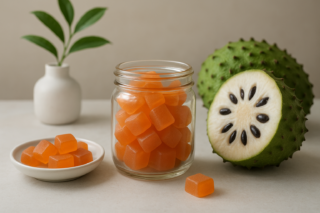
You spot a bottle of soursop graviola gummies promising antioxidant support, stronger immunity, or even protection against serious disease. Because the product is fruit-based and described as natural, it may seem like a simple wellness upgrade. But do these gummies provide proven health benefits, and are they safe to take every day?
The short answer is that soursop contains biologically active plant compounds, but research has not established that soursop graviola gummies prevent, treat, or cure any medical condition. Most encouraging findings come from laboratory or animal research—not high-quality human clinical trials. Gummies also vary considerably in their ingredients, concentration, and plant parts used.
What Are Soursop Graviola Gummies?
Soursop, graviola, and guanabana are common names for Annona muricata, a tropical tree. Its edible fruit is used in beverages, desserts, and other foods, while its leaves and stems have a history of use in traditional medicine. For more background on the plant and its food forms, read this overview of graviola and soursop juice.
Gummies generally contain a fruit powder, juice concentrate, leaf extract, or a combination of ingredients. Some include vitamins, herbal blends, sweeteners, flavorings, or other antioxidants. This matters because research on one particular leaf extract cannot automatically be applied to a gummy made with fruit powder—or to every other graviola product on the market.
Popular Claims and What the Evidence Shows
Claim: Graviola Gummies Fight Cancer
Some laboratory studies have found that compounds in graviola extracts affect cancer cells or biological pathways involved in cell growth. Animal studies have also produced findings that researchers consider worthy of further investigation.
However, results in cells or animals do not show that a product treats cancer in people. Researchers must determine whether an ingredient can reach the relevant tissue, produce a meaningful benefit, and do so without unacceptable harm. Human research on graviola is extremely limited. A small study involving people with colorectal cancer examined biological activity associated with a specific leaf extract, but it did not establish that graviola shrinks tumors, prevents recurrence, extends survival, or replaces standard treatment.
Soursop graviola gummies should never be substituted for surgery, radiation, chemotherapy, immunotherapy, targeted therapy, or another treatment recommended by an oncology team. Delaying effective cancer care to try an unproven supplement can have serious consequences.
Claim: Gummies Provide Powerful Antioxidant Protection
Soursop contains plant chemicals that can demonstrate antioxidant activity under laboratory conditions. That finding is often used to support broad claims about detoxification, healthy aging, immunity, and disease prevention.
Antioxidant activity in a test tube does not necessarily translate into a measurable health benefit after digestion. The body absorbs and processes compounds differently, and the concentration used in an experiment may not resemble the amount in a gummy. There is not enough clinical evidence to conclude that graviola gummies prevent chronic disease or provide benefits beyond those available from an overall nutritious diet.
Claim: Graviola Supports Healthy Blood Sugar and Blood Pressure
Animal research suggests that graviola preparations may lower blood glucose or blood pressure. These findings have not established graviola as a safe or effective treatment for diabetes or hypertension in humans.
The possibility of an effect is also a reason for caution. Combining concentrated graviola products with diabetes or blood pressure medication might produce an additive effect. That could contribute to blood sugar or blood pressure becoming too low, although the clinical importance of these potential interactions remains uncertain.
Claim: Gummies Strengthen the Immune System
“Immune support” is a broad phrase that does not necessarily mean a product prevents infections or helps the body recover faster. Although graviola extracts have been studied for antimicrobial, antiviral, and anti-inflammatory activity in laboratory and animal models, reliable human trials have not confirmed these benefits for soursop graviola gummies.
Are Soursop Graviola Gummies Safe?
Eating the ripe fruit as food is different from regularly taking a concentrated leaf or mixed-plant extract. Researchers have not established a safe intake level for long-term graviola supplement use. Safety may depend on the dose, concentration, plant part, extraction method, duration of use, and other ingredients in the product.
One concern involves annonaceous acetogenins, a group of compounds found in plants from the Annonaceae family. Laboratory and animal studies have raised questions about possible effects on nerve cells. Some observational research has also explored a potential relationship between frequent consumption of Annonaceae products and unusual movement disorders in certain populations. These findings do not prove that occasional soursop consumption causes Parkinson’s disease, but they support caution with repeated or concentrated supplement use while long-term safety remains unclear.
Graviola may also interfere with blood glucose measurements, blood pressure control, or certain nuclear imaging tests. People who take prescription or over-the-counter medicines should review the product with a physician or pharmacist. This is especially important for people receiving cancer treatment or taking medications for diabetes or hypertension.
Children, people who are pregnant or breastfeeding, and those with significant liver, kidney, neurologic, or cardiovascular conditions should not assume a botanical gummy is appropriate simply because it is sold without a prescription. Safety information for these groups is limited.
How to Evaluate a Graviola Gummy Label
Dietary supplements do not undergo the same premarket testing for effectiveness as prescription drugs. General information about regulation and safer supplement use is available through the National Library of Medicine’s dietary supplement guidance.
Before purchasing a product, examine the label for:
- The amount of graviola or soursop per serving rather than only the total weight of a proprietary blend
- The plant part used, such as fruit or leaf
- Whether the ingredient is a powder, concentrate, or standardized extract
- Added vitamins, herbs, sugars, sugar alcohols, allergens, and artificial ingredients
- A lot number, expiration date, manufacturer contact information, and intact safety seal
- Independent quality certification, while recognizing that certification does not prove a health benefit
Be skeptical of claims such as “cures cancer,” “works better than medication,” “completely safe,” or “guaranteed results.” A supplement label may describe support for normal body functions, but that is not the same as evidence that the product treats a disease.
When to Seek Care
Talk with a primary care clinician, pharmacist, registered dietitian, or relevant specialist before using graviola gummies if you take medication, have a chronic condition, are preparing for surgery or imaging, or are receiving cancer care.
Stop taking the product and seek prompt medical advice if you develop persistent dizziness, faintness, unusual weakness, vomiting, confusion, tremor, changes in movement, or symptoms of low blood sugar or low blood pressure. Trouble breathing, swelling of the face or throat, loss of consciousness, or another severe reaction requires emergency care.
The Bottom Line
Soursop graviola gummies offer a convenient form of a tropical botanical, but convenience should not be confused with proven effectiveness. Early laboratory research is scientifically interesting, yet there is not enough human evidence to confirm claims involving cancer, immunity, blood sugar, blood pressure, or chronic disease prevention.
If you are considering a gummy, treat it as a dietary supplement—not as a treatment. Review the full label, avoid exaggerated marketing claims, and discuss possible risks and interactions with a qualified healthcare professional.
Other Articles You May Find of Interest...
- How to Get a Vitamin B12 Shot Safely
- The Power of L-Methylfolate: Could Your Multivitamin or Methylfolate Supplement Be Using the Wrong Form of Folate?
- Vitamin B12 Supplements in the UK: Forms, Doses and What to Consider
- How to Buy Supplements Online Safely: What to Check Before You Order
- Can Evening Primrose Oil Help Breast Cyst Pain?
- Ayurvedic Tablets Americans Are Ordering Online: What’s Actually in Chandraprabha Vati and Neem Tablets
- How Often Should You Get a Vitamin B12 Shot?