






More Supplements Articles
Ceylon Cinnamon Supplements and Blood Sugar: What To Know in 2026

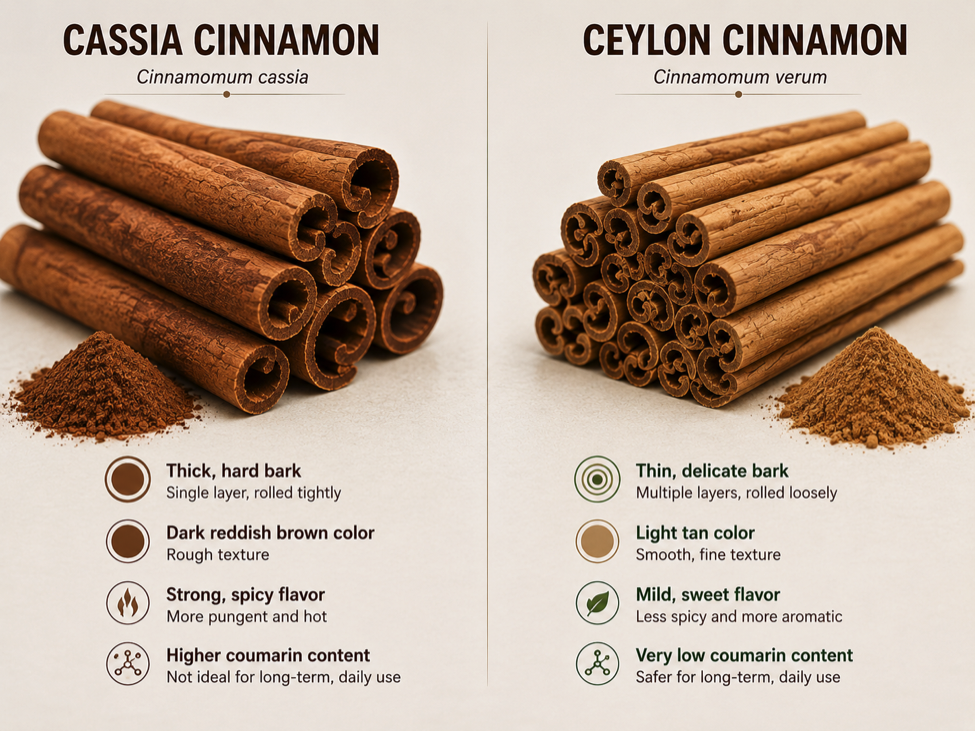
Cinnamon supplements can vary considerably in the type of cinnamon used, the amount provided, and the formulation. Many products use Cassia cinnamon, which generally contains more coumarin than Ceylon cinnamon. Ceylon cinnamon, derived from Cinnamomum verum and commonly associated with Sri Lanka, is often considered by consumers seeking a lower-coumarin option. Understanding the type, dose, and formulation can help consumers compare available supplements.
This article looks at several cinnamon supplements available in 2026 and compares factors such as sourcing, extract concentration, and delivery format.
Why Cinnamon Supplement Formulations Vary
The Ceylon cinnamon market has expanded significantly in recent years, which has made choosing well harder rather than easier. More products also means greater variation in sourcing, extract concentration, delivery method, and the amount of sourcing or testing information provided to consumers.
Dose and delivery format are two factors consumers may encounter when comparing cinnamon supplements. Studies examining cinnamon and blood sugar have used varying amounts and formulations, and research findings have been mixed. Some products provide raw cinnamon powder, while others use concentrated extracts or oil-based delivery formats. These differences can affect how products are formulated and used, although they do not guarantee a particular health outcome.
The coumarin issue is worth understanding separately. The European Food Safety Authority has set a tolerable daily intake for coumarin at 0.1mg per kilogram of body weight. Cassia cinnamon can contain enough coumarin to approach or exceed that threshold at supplement doses used daily over time. Ceylon cinnamon generally contains substantially less coumarin than Cassia cinnamon. For consumers considering regular, long-term supplementation, cinnamon type and coumarin content may therefore be relevant factors to discuss with a healthcare professional.
Product labels vary in the amount of detail they provide about cinnamon type, concentration, and formulation. The products below illustrate some of the different approaches currently available.
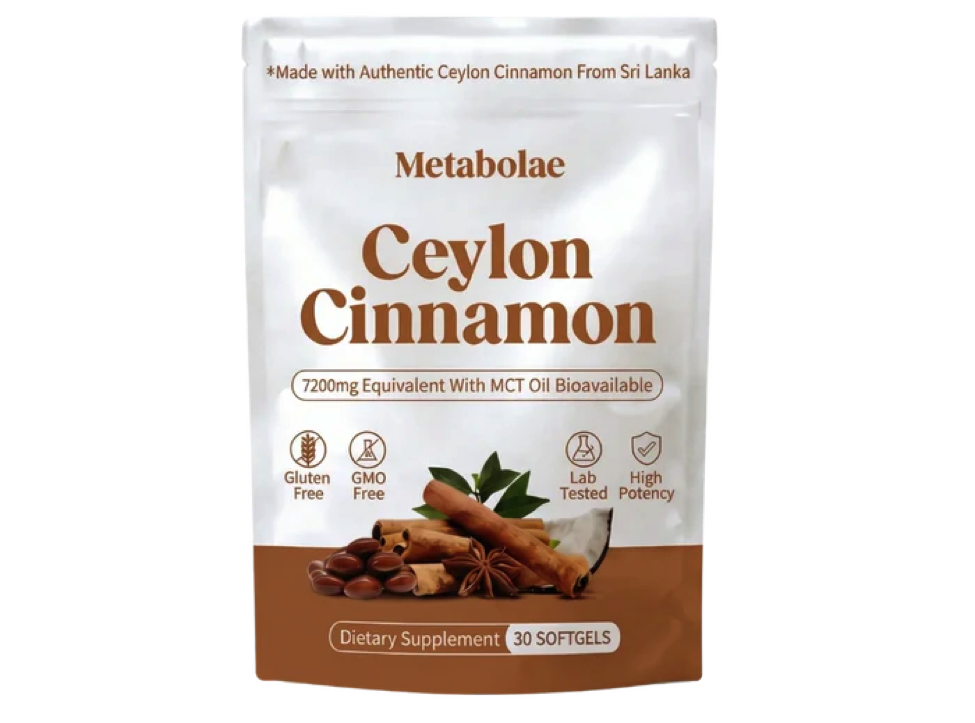
Metabolae Ceylon Cinnamon 7200mg
Metabolae Ceylon Cinnamon 7200mg uses a concentrated Ceylon cinnamon extract and an oil-based softgel format, distinguishing its formulation from standard cinnamon powder capsules.
The extract starts with genuine Cinnamomum verum from Sri Lanka, concentrated 12:1. According to the product information, each softgel provides a 12:1 concentrated extract equivalent to 7,200mg of raw Ceylon bark. The extract is suspended in MCT oil rather than provided as a dry powder capsule. This oil-based softgel format is one of the formulation features that differentiates the product from many conventional cinnamon supplements.
The product uses a once-daily softgel format. According to the manufacturer, batches are independently lab-tested for purity, potency, and coumarin levels, and the formula is GMO-free, gluten-free, and made without fillers. Consumers should review the current product label and manufacturer information for directions and availability.
NutriFlair Organic Ceylon Cinnamon 1200mg
NutriFlair carries USDA Organic certification, uses 100% Ceylon bark powder with no fillers or magnesium stearate, and has coumarin levels independently verified by Eurofins. Manufactured in a US GMP-certified facility, 1,200mg per two-capsule serving.
The certification and sourcing transparency are genuine strengths, particularly for those who want full traceability from farm to capsule. The certification and sourcing transparency may appeal to consumers who prioritize traceability from farm to capsule. As a raw cinnamon powder product, its formulation differs from concentrated extracts and oil-based softgels.
Zazzee USDA Organic Ceylon Cinnamon 20:1 Extract
Zazzee uses a 20:1 Ceylon extract from Sri Lankan Cinnamomum verum. USDA Organic certified, vegan, non-GMO, free of fillers and artificial excipients. One capsule daily, 150 capsules per bottle.
The 20:1 concentration is a meaningful step up from raw powder within the dry capsule format. Less extract material is delivering a higher equivalent dose per capsule than standard powder products at comparable serving sizes. The 20:1 concentration distinguishes the product from standard raw cinnamon powder capsules. It is an example of a concentrated dry-extract format for consumers comparing organic Ceylon cinnamon products.
Nutricost Ceylon Cinnamon 1200mg
Nutricost covers the basics cleanly. Organic Ceylon cinnamon powder, gluten-free, non-GMO, 1,200mg per serving, 150 capsules, GMP-certified US facility. The per-capsule cost is among the lowest in the category.
Nutricost uses a straightforward Ceylon cinnamon powder formulation rather than a concentrated extract or oil-based delivery system. This may appeal to consumers looking for a simple, lower-cost Ceylon cinnamon supplement. Its formulation differs from products specifically marketed around concentrated extracts or alternative delivery formats.
Nature’s Bounty Cinnamon 1500mg
Nature’s Bounty has wide retail availability, strong brand recognition, and a 1,500mg per-serving dose. For general cinnamon supplementation it is convenient and inexpensive.
The label says “cinnamon” without specifying Ceylon. The label says “cinnamon” without specifying Ceylon. Consumers specifically seeking Ceylon cinnamon may want to check the current product label or manufacturer information to confirm the cinnamon variety and any available testing information.
What To Consider When Comparing Ceylon Cinnamon Supplements
Verified Ceylon sourcing. “Cinnamon” on a label does not mean Cinnamomum verum. Sri Lanka produces the overwhelming majority of the world’s genuine Ceylon supply, and that origin should be verifiable. Third-party testing for coumarin and ingredient identity can provide additional information about a product’s contents and sourcing claims.
Dose and concentration. Most research on cinnamon and blood sugar support has used gram-level daily doses. Standard powder products and concentrated extracts provide cinnamon in different amounts and forms. Extract ratios such as 12:1 or 20:1 indicate the amount of raw material used relative to the resulting extract and can help consumers compare product formulations. A product listing 500mg of a 12:1 extract is providing the equivalent of 6,000mg of raw bark, which is a very different proposition from 500mg of raw powder, even if both capsules look identical on the shelf.
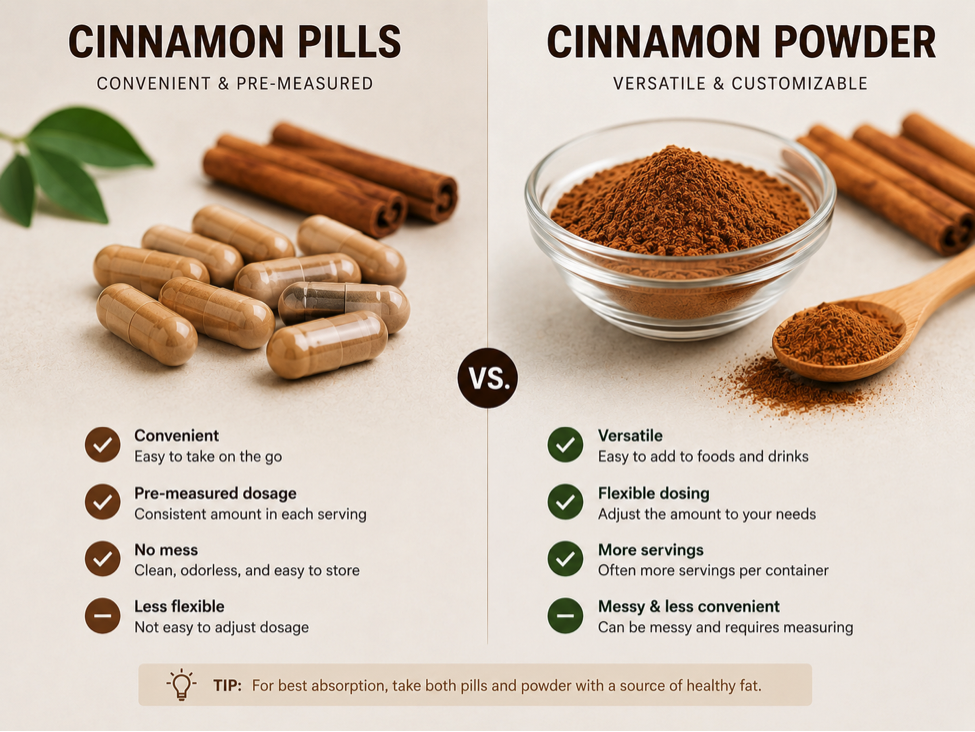
Delivery format. Cinnamon supplements are available as powders, dry capsules, concentrated extracts, and oil-based softgels. An oil-based softgel includes a carrier oil within the formulation, while dry capsules contain powdered cinnamon or extract. Consumers may consider format, serving instructions, and ease of consistent use when comparing products.
Third-party testing. Independent verification of potency, purity, and coumarin content is not universal in this category. For a supplement taken daily over months or years, its presence or absence is worth confirming before committing to a product.
The Ceylon cinnamon supplement category continues to expand, giving consumers more formulations and product formats to consider. Cinnamon type, concentration, delivery format, and third-party testing can provide useful points of comparison. These factors do not guarantee a particular health outcome, and research on cinnamon and blood sugar remains mixed, but they can help consumers make more informed supplement choices.
Other Articles You May Find of Interest...
- Caffeine Tablets for Staying Awake: Benefits and Risks
- Common Signs of Low Iron Levels and How to Address Them
- The Quest for Longevity: Supplement Trends Shaping Health Span in 2026
- How to Get a Vitamin B12 Shot Safely
- The Power of L-Methylfolate: Could Your Multivitamin or Methylfolate Supplement Be Using the Wrong Form of Folate?
- Vitamin B12 Supplements in the UK: Forms, Doses and What to Consider
- How to Buy Supplements Online Safely: What to Check Before You Order





