Your Health Magazine Contributor
4201 Northview Drive
Suite 102
Bowie, MD 20716
More Supplements Articles
Beet Root Powder: Potential Benefits for Nitric Oxide, Gut Health, and Energy
Beet root powder can provide dietary nitrate, which the body can convert into nitric oxide, a molecule involved in blood-vessel function and circulation. Powdered forms also provide a convenient alternative for people who do not regularly eat whole beets.
Depending on the formulation, beet powders may also contain fiber, B vitamins, and naturally occurring plant pigments. This guide covers what the research supports, how much to take, and how to read a label.
What Is Beet Root Powder?
Beet root powder is made from beets, Beta vulgaris, that have been dehydrated and ground fine. Removing water produces a concentrated powdered form, although nitrate, fiber, and other plant-compound levels can vary considerably among products.
Beet powders offer a convenient way to consume beet-derived compounds, while some formulations also contain additional vitamins, fiber, or other ingredients.
Benefits of Beet Root Powder
Research on beetroot and beet-derived products has examined several areas, including nitric oxide production and circulation, exercise performance, blood pressure, and antioxidant activity. Some beet root powder formulations also contain added prebiotic ingredients intended to support digestive health. Each one traces to a different part of the formula, and each carries a different weight of research behind it. The sections below take them in turn.
Benefit #1: Nitric Oxide Production and Circulation
Beet root powder supports nitric oxide production through what researchers call the nitrate-nitrite-NO pathway. Bacteria in your mouth convert the beet’s dietary nitrate into nitrite, and your body converts that nitrite into nitric oxide, which signals blood vessels to relax and widen. That widening, called vasodilation, is what supports healthy blood flow.
Most articles stop there, which leaves out the more interesting finding. Whole beet root and isolated nitrate behave differently. A 2025 review of six randomized trials covering 181 participants found that isolated nitrate supplementation at 250 to 590 mg a day produced no significant blood pressure changes over a week or more. Beetroot juice trials at overlapping nitrate levels have shown reductions, though reviewers rate the overall certainty of that evidence as low.
These differences suggest that compounds in whole beetroot beyond nitrate may contribute to observed effects, although the relative contribution of betalains, potassium, polyphenols, and other constituents remains under investigation. Whole-beet products contain a broader mixture of naturally occurring compounds than isolated nitrate supplements, although their concentrations vary by product.
Much of the clinical research cited here used beetroot juice rather than powdered supplements, so results should not automatically be assumed to apply equally to every beet powder.
Benefit #2: Exercise Performance and Blood Pressure Research
Beetroot-derived nitrate has also been studied in relation to exercise performance and cardiovascular function. Unlike caffeine, beetroot itself is not a stimulant, although that does not mean it produces the same effects as caffeine or reliably increases everyday energy.
The blood pressure research deserves a careful read. A meta-analysis in Advances in Nutrition pooled beetroot juice trials and found average reductions of 3.55 mmHg systolic and 1.32 mmHg diastolic. Those numbers look modest on a single reading. At population scale, they carry real weight, since a 2 mmHg reduction is associated with roughly 7% lower mortality from ischemic heart disease and 10% lower mortality from stroke.
Dose is where labels get vague. Trials in that analysis used 316 to 860 mg of nitrate daily, with several landing on 400 mg. Most beet powders never state their nitrate content, so you cannot place the product you are holding anywhere on that range.
Research has examined beetroot supplementation in relation to blood pressure, but beet root powder should not be considered a treatment for hypertension. Anyone with diagnosed high blood pressure or taking blood-pressure medication should discuss supplementation with a healthcare professional.
Benefit #3: Gut Health and Digestion
Some beet root powder formulations include added prebiotic fiber, which may provide digestive-health benefits separate from those of beetroot itself. Prebiotics are fibers your body cannot break down, so they travel to the colon intact and feed the bacteria living there. Probiotics, by comparison, add bacteria directly.
Inulin is the best-studied prebiotic on the shelf, and it usually comes from chicory root. The evidence behind it is unusually solid for a supplement ingredient. A systematic review in Critical Reviews in Food Science and Nutrition pooled 50 human trials involving 2,495 participants aged from infancy to 83 and found that chicory-derived inulin reliably increased Bifidobacterium abundance, a beneficial gut group. Doses across those trials ran from 3 to 20 grams a day, and healthy participants also saw improvements in bowel function.
Beets bring some fiber on their own, so a powder that lists inulin separately is adding to what the root already supplies. Check the listed amount, because fiber is one of the few things on a supplement label you can compare across products without a chemistry degree.
Some formulas also contain digestive enzymes, although their usefulness depends on the specific enzymes, doses, and individual dietary needs. If you are new to prebiotic fiber, start with one serving and give your gut a week to adjust.
Benefit #4: Antioxidants and Micronutrients
Beets contain betalains, pigments with antioxidant properties that have been studied for their potential biological effects. Antioxidants help your body manage oxidative stress, the ongoing cellular wear that comes from normal metabolism.
Micronutrients are where formulas separate. Vitamins B6 and B12 support energy metabolism, and thiamin and niacin help your body turn food into usable energy. Vitamin C supports immune function and iron absorption from plant sources.
A few formulas reach past the basics. Turmeric standardized for curcumin, along with mushrooms like reishi and cordyceps, shows up in beet powders built for gut and metabolic support. These come from outside the beet, so check whether they are dosed at a meaningful level or just there to highlight the ingredient list.
How to Use Beet Root Powder Daily
Serving sizes vary among beet root powder products, so consumers should follow the manufacturer’s directions rather than assuming that one scoop provides a standardized amount of beetroot or nitrate.
Timing is flexible, with one exception related to exercise-related nitrate research. A Cleveland Clinic registered dietitian notes that beet powder works best taken roughly two to three hours before performance, since the nitrate needs that long to convert.
Outside of exercise-related use, there is no established universally optimal time of day for beet root powder. Morning works well, and so does mid-afternoon, which is when plenty of people use it, right at the hour the caffeine decision gets made. Evening is fine too, with no stimulants to interfere with sleep.
Some studies have examined repeated beetroot supplementation rather than single doses, but the optimal duration depends on the outcome being studied and the specific product used.
What to Look for When Choosing a Beet Root Powder
Several label features can help consumers compare beet root powder products. Run any product past this list before you buy.
Does the label state nitrate content? Nitrate is only part of the story, and it is the one active compound you can measure and compare across products, which makes disclosure the fastest read on a brand. A label reading “2,500 mg beet root” tells you nothing about nitrate, because levels in beets vary widely with soil, season, and growing conditions. Products that disclose nitrate content provide consumers with more information for comparing formulations.
Organic sourcing. Root vegetables draw up what sits in the soil around them. Consumers who prefer organically produced ingredients can look for recognized organic certification.
Added sugar. Beets are naturally sweet enough on their own. Check the Nutrition Facts panel for added sugars if limiting added sugar is important to your dietary goals.
Full dosages, no proprietary blends. A blend name with a single combined weight hides how much of each ingredient you actually get. Individually disclosed amounts make it easier to evaluate and compare ingredients across products.
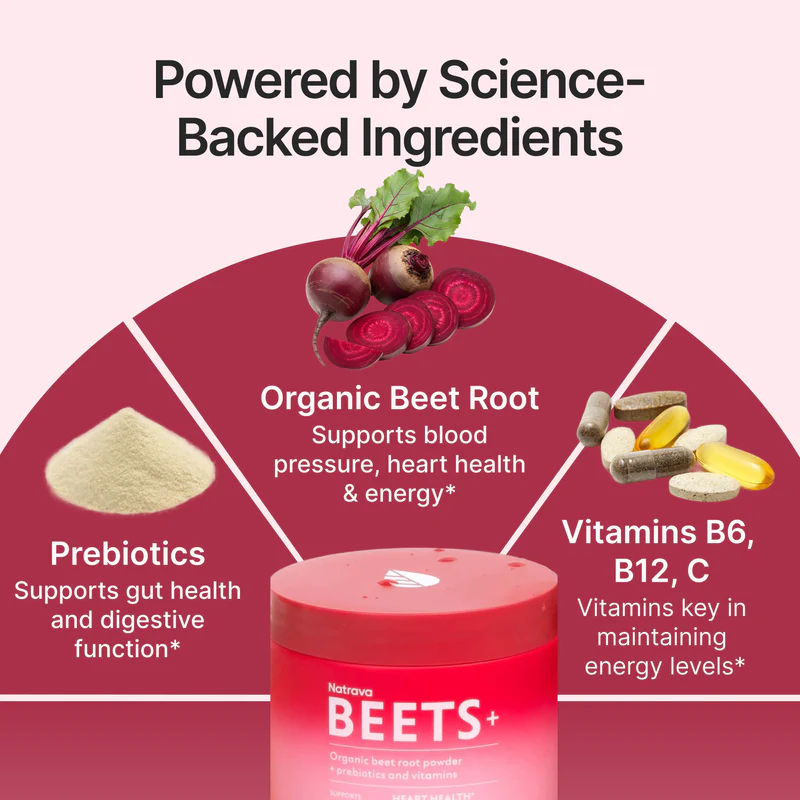
Natrava BEETS+ is one example of a product that provides detailed ingredient amounts on its label. Its 11-ingredient formula lists 2,500 mg of organic beet root with nitrates stated at 200 mg, 2,000 mg of inulin from chicory root, a digestive enzyme blend, vitamin C, B6, B12, thiamin, and niacin at named amounts, and turmeric, reishi, and cordyceps at 45 mg each, with no added sugars and 15 calories across 25 servings. Regardless of brand, this type of ingredient disclosure makes it easier for consumers to understand and compare formulations.
Bottom Line
Much of the scientific interest in beetroot centers on one relatively well-understood mechanism. Dietary nitrate can be converted through the nitrate-nitrite-nitric oxide pathway, and nitric oxide plays an important role in blood-vessel function. Products containing added prebiotic fiber or vitamins may provide additional nutrients, although those benefits depend on the formulation and dose.
Study results vary according to dose, formulation, duration, and the health outcome being measured, and no powder replaces medical care for a diagnosed condition. When comparing products, consider disclosed nitrate content, ingredient amounts, added sugars, certifications, and any additional ingredients included in the formula.
Frequently Asked Questions
Does beet root powder stain?
Yes, betalain pigments stain readily and will color a light countertop, a wooden spoon, or a shirt if you spill. Rinse your glass and shaker soon after use, before the residue dries. Beets can also tint urine or stool pink or red for a day, which is called beeturia and is usually nothing to worry about.
What is the best time of day to drink it?
Any time works, so pick the slot you will actually keep. Mid-afternoon is popular with people cutting back on caffeine, and morning suits anyone building it into an existing routine. The one timing consideration that matters comes from exercise research, where two to three hours before a workout gives the nitrate time to convert.
Can it replace beet juice?
Beet powder can be a more convenient alternative to beet juice, but the two should not automatically be considered equivalent, since powder gives you concentrated beet root in a shelf-stable form with no juicing and no refrigeration. Bear in mind that most published blood pressure research used beetroot juice at specific nitrate doses. Hence, a powder is comparable only if you know its nitrate content, which is exactly why label disclosure matters.
Is it safe to take daily?
Beet root powder is generally well tolerated daily, though prebiotic fiber can cause temporary gas or bloating while your gut adjusts. Talk to your doctor first if you are pregnant, nursing, managing a medical condition, or taking prescription medication.
Disclaimers
The Food and Drug Administration has not evaluated these statements. The efficacy of these products has not been confirmed by FDA-approved research. This product is not intended to diagnose, treat, cure or prevent any disease.
Medical disclaimer. The information on this page is for general informational purposes only and is not a substitute for medical advice or treatment for specific medical conditions. If you are pregnant, nursing, have a medical condition, or take prescription drugs, consult your physician before using this product. Keep out of reach of small children.
Other Articles You May Find of Interest...
- Caffeine Tablets for Staying Awake: Benefits and Risks
- Common Signs of Low Iron Levels and How to Address Them
- The Quest for Longevity: Supplement Trends Shaping Health Span in 2026
- How to Get a Vitamin B12 Shot Safely
- The Power of L-Methylfolate: Could Your Multivitamin or Methylfolate Supplement Be Using the Wrong Form of Folate?
- Vitamin B12 Supplements in the UK: Forms, Doses and What to Consider
- How to Buy Supplements Online Safely: What to Check Before You Order