






Your Health Magazine
4201 Northview Drive
Suite #102
Bowie, MD 20716
301-805-6805
More Practice Management Articles
Mind Over Marketing: Growing Your Therapy Practice

You went into this field to help people, not to become a salesperson. For many mental wellness therapists, the word “marketing” feels uncomfortable. It conjures up images of pushy tactics, loud commercials, or trying to convince people to buy things they don’t need. It can feel at odds with the empathy, privacy, and authentic connection that define your work.
But here is a different way to look at it: marketing isn’t about selling a product. It is about opening a door.
There are people out there right now who are struggling. They are scrolling through search results late at night, looking for someone who understands what they are going through. They are looking for you. If they can’t find you or if they find you but can’t get a sense of who you are, they can’t get the help they need.
When you view marketing through this lens, it stops being a chore and starts being an extension of your care. It is how you make your services accessible to the people who need them most. Let’s explore how you can build a strategy that feels genuine, ethical, and effective.
TL;DR
- Marketing for therapists should be viewed as a way to connect with people in need rather than selling a product.
- Specializing your practice (niching down) allows you to attract clients who feel seen and understood, ultimately increasing engagement.
- Your website should function as a welcoming first impression, clearly communicating your philosophy and making it easy for clients to book appointments.
- Utilizing content creation, like blogs and videos, helps establish trust with potential clients before they visit your practice.
- Ethical marketing is key; never promise specific outcomes and maintain client confidentiality while showcasing your expertise.
What are the clear signs that someone may need support?
Sometimes, the signs hide behind your daily habits. Many people find themselves frequently escaping to resorts or booking vacations, hoping to recharge but never fully addressing the root causes of their exhaustion. Others notice that they’re avoiding day-to-day issues, letting stressors pile up instead of managing them effectively. Additionally, seeking out solutions like hiring a nutritionist or starting fitness programs can indicate a desire for change, though external efforts may feel incomplete without addressing underlying emotional or mental challenges. Recognizing these patterns is the first step toward finding holistic wellness support that truly helps.
Finding Your People: The Power of Niching Down
One of the biggest fears therapists have is excluding potential clients. You are trained to help, so naturally, you want to help everyone. But in the crowded space of the internet, trying to speak to everyone usually means you don’t really speak to anyone.
Imagine a potential client named Sarah. She is dealing with burnout from her high-pressure corporate job. She lands on two websites.
- Website A says: “I treat anxiety, depression, trauma, relationships, ADHD, and eating disorders for children, adults, and seniors.”
- Website B says: “I help high-achieving professionals find balance and recover from burnout without losing their edge.”
Sarah is going to call the therapist from Website B every single time. Why? Because she feels seen.
Creating Your Ideal Client Persona
To get this right, you need to understand exactly who you love working with. Think about your favorite clients, the ones who make you look forward to your sessions. What do they have in common? Are they new parents navigating identity shifts? Are they creative types dealing with imposter syndrome?
Once you identify this group, dig deeper. What keeps them up at night? What specific words do they use to describe their pain? When you use their language in your marketing copy, you build instant trust. You aren’t just a therapist; you are the specialist they have been searching for.
Your Website: The First “Session”
Your website is often the first impression a potential client has of you. It should do more than list your credentials and office hours, it should make visitors feel safe, understood, and hopeful. Think of your website as your virtual waiting room. Is it cluttered and confusing, or calm and welcoming?
Getting started doesn’t have to be overwhelming. Usinga free website templates is an excellent way to create a professional online presence quickly and easily. Wix website builder offer amazing templates tailored to specific niches, including therapists, allowing you to customize your site without needing technical expertise. With these tools, you can build a site that reflects your practice and connects with potential clients right from the start.
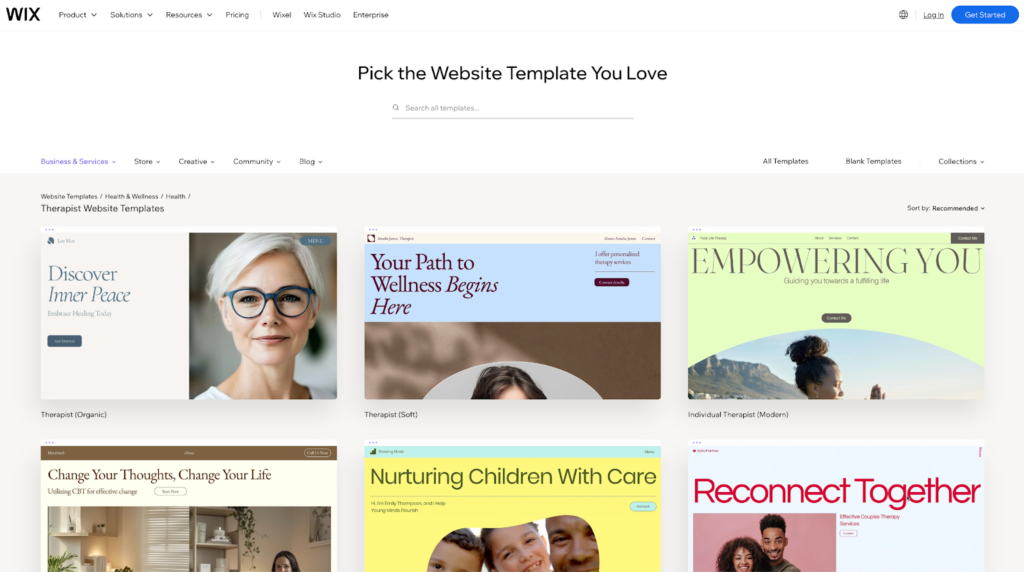
Wix’s web templates for therapists
Crafting a Welcoming Homepage
The homepage is often the first impression visitors will have of your site, so it’s important to make it count. Focus on creating a clear, friendly message that highlights who you are and how you can help. Use engaging visuals, concise text, and a call-to-action to guide visitors to explore further. This is your opportunity to build trust and ensure potential clients feel encouraged to learn more about your services.
The “About Me” Page
This is usually the second most visited page on a therapist’s site. Clients want to know who they will be sitting across from. However, a common mistake is making this page entirely about your degrees and certifications. While your training is important, what matters more is your humanity.
Write your bio in a way that connects. Share why you do this work. Share your philosophy. Let your personality come through. If you are warm and gentle, let your writing reflect that. If you are direct and solution-focused, be clear about it. Authenticity filters out clients who aren’t a good fit and attracts those who are.
Clear Calls to Action
Don’t make people guess what to do next. When someone is in distress, even small barriers can feel huge. Make the path to booking an appointment incredibly simple. Use buttons that say “Schedule a Free Consultation” or “Book Your Appointment” and place them prominently on every page. Avoid complex forms or burying your contact info. The easier you make it to reach out, the more people will take that step.
Building Trust with Social Proof
In most industries, businesses rely heavily on reviews and testimonials. If a restaurant has five stars, we go. If it has one star, we stay away. For therapists, this is complicated. You can’t exactly ask a client to post a public review about how you helped them navigate a divorce. Confidentiality is paramount.
But you can still build trust without violating privacy or ethics.
Peer Endorsements
Other professionals in your network can vouch for you. Testimonials from colleagues, supervisors, or other healthcare providers carry a lot of weight. A quote from a fellow therapist saying, “I frequently refer clients to [Your Name] because of their exceptional skill with trauma recovery,” creates confidence in your abilities.
General Feedback (With Permission)
Some ethical codes allow for the use of anonymous, generalized feedback if it is collected carefully and voluntarily. However, tread lightly here. A safer bet is often to speak to the results you help clients achieve in general terms within your copy. For example, “Clients often report feeling a greater sense of clarity and calm after our first few sessions.”
Media and Speaking
If you have been quoted in articles, appeared on podcasts, or given talks at community events, display those logos or recordings on your site. This is a form of social proof that establishes you as an expert in your field without needing to involve client stories.
Generosity as Marketing: Content Creation
One of the most powerful ways to market your practice is simply to be helpful. By sharing your knowledge freely, you demonstrate your expertise and give potential clients a sample of what it is like to work with you.
This is often called content marketing, but you can just think of it as sharing your wisdom.
Blogging
Writing articles about the issues your ideal clients face is a fantastic way to get found on Google. If you specialize in anxiety, write posts like “5 Ways to Manage Panic Attacks at Work” or “Why Your Anxiety Spikes at Night.” If green shakes are your focus, try topics like “Top 3 Benefits of Drinking Green Shakes Daily.”
When someone searches for these topics and finds your helpful, empathetic article, they begin to trust you. You have already helped them before they have even paid you a dime. That builds a powerful foundation for a therapeutic relationship.
Video Content
Video is incredibly effective for therapists because it captures your energy. A 60-second video on Instagram or TikTok where you explain a coping skill or debunk a mental health myth lets people hear your voice and see your mannerisms. It demystifies the therapy process.
You don’t need a fancy studio. Using your smartphone and sitting in a well-lit corner of your office is perfect. The goal isn’t high production value; it is genuine connection.
Newsletters
Encourage website visitors to sign up for an email newsletter. This allows you to stay in touch with helpful tips and updates. Consistency is what matters here. A monthly email with a few thoughts on mental wellness keeps you top-of-mind, so when they are ready to book an appointment, you are the first person they think of.
The Ethics of Marketing for Therapists
Marketing in the mental health field comes with a unique set of responsibilities. You aren’t selling shoes; you are dealing with people’s well-being. Keeping your marketing ethical is non-negotiable.
Avoid Guarantees
You can never promise a cure or a specific outcome. Therapy is a collaborative process, and results vary. Your marketing should focus on the support you provide and the tools you offer, rather than promising that you will “fix” someone. Avoid language like “Guaranteed relief from depression” and stick to “Evidence-based support for navigating depression.”
Watch Your Power Dynamic
Be mindful not to exploit the vulnerability of your audience. Marketing that relies heavily on fear-mongering or triggering pain points to drive sales is a bad look. Your tone should always be empowering and hopeful, not manipulative.
Dual Relationships
Be careful about how you interact with clients on your website and socials. A good rule of thumb is to have separate professional and personal accounts. Don’t “follow” or “friend” current or former clients to protect their privacy and the professional boundary. You can also outline your Sustainability to Social Media policy in your intake paperwork so clients know what to expect.
Measuring Your Impact
How do you know if all this effort is working? It is not just about counting likes or page views. It is about whether you are connecting with the right people.
Pay attention to where your inquiries are coming from. Ask new clients, “How did you find me?” If they say, “I read your article about parenting teenagers and it really resonated,” then you know your blogging efforts are paying off. If they say, “I saw your video on Instagram,” you know to keep making those reels.
Also, track the quality of the leads. Are the people contacting you actually a good fit for your practice? If you are getting a lot of calls but few bookings, you might need to clarify your messaging or your pricing on your website.
Your Voice Matters
It is easy to feel small when you look at the vast internet. You might wonder if the world really needs another blog post about self-care or another video about boundaries.
The answer is yes. Because nobody else can say it exactly the way you can.
Your unique combination of training, life experience, and personality means you will reach people that other therapists miss. There is someone out there who needs to hear the message in your voice to finally take action and seek help.
Marketing is how you amplify that voice. It is how you extend your reach beyond the four walls of your office. By building a strong, authentic brand, you aren’t just growing a business. You are creating a beacon for people in the dark.
So, don’t shy away from it. Embrace the tools available to you. Write the post. Record the video. Update your website. Every step you take to put yourself out there is a step toward helping someone change their life. You have a gift for healing, marketing is just the vehicle that delivers it to the people who need it most.
FAQ
Why is marketing important for therapists?
Marketing is essential for therapists because it helps potential clients find you when they need support. By effectively communicating your services and creating a welcoming online presence, you make it easier for individuals seeking help to access your expertise. Viewing marketing as a way to extend care and accessibility, rather than just selling a service, allows you to connect authentically with those who might benefit from your support.
How can I create a compelling online presence as a therapist?
To create a compelling online presence, start with a professional website that reflects your practice’s values and approach. Your homepage should convey a clear message about who you are and what you offer, while your ‘About Me’ page should highlight your personal story and philosophy, not just your qualifications. Use engaging visuals, concise text, and clear calls to action to guide potential clients towards booking an appointment.
What are the benefits of niching down in therapy practice?
Niching down helps you target your marketing efforts towards a specific audience, making your message more relevant and appealing. By defining your ideal client and addressing their unique challenges, you create a stronger connection. For instance, a therapist specializing in burnout will resonate more with high-achieving professionals than a generalist who treats a wide range of issues, improving your chances of attracting suitable clients.
How can I ethically market my therapy services?
Ethical marketing for therapists involves being transparent and respectful of clients’ privacy. Avoid making promises of specific outcomes and focus your messaging on the support you provide. Use peer endorsements and generalized anonymous feedback to build trust without violating confidentiality. Additionally, maintain professional boundaries, and ensure that your marketing tone is empowering and not fear-driven.
What types of content can I create to attract clients?
You can create a variety of content, such as blog posts addressing common issues faced by your ideal clients, informative videos explaining coping strategies, and newsletters with tips on mental wellness. This type of content marketing establishes you as an expert and helps potential clients feel connected to you even before they book a session, building trust and demonstrating your value.
Other Articles You May Find of Interest...
- Mind Over Marketing: Growing Your Therapy Practice
- Understanding HIPAA Standards for Healthcare Messaging: A Quick Guide for Providers
- Understanding Compliance Challenges in Protecting Patient Information
- If Your Notes Could Talk: How Smarter Clinical Documentation Protects Revenue and Reduces Audit Stress
- Top Risk Adjustment Solutions for Healthcare Providers
- A Simple Guide to Growing Your Healthcare Practice in 2026
- Certified Surgical Instrument Manufacturers Compliant with FDA Standards



