






Your Health Magazine Contributor
4201 Northview Drive
Suite 102
Bowie, MD 20716
More Practice Management Articles
Medical Virtual Assistant Services: What Practices Should Know
Many small clinics and home-based care agencies are not short on patients. They are short on administrative support. The phone rings while someone chases a signed order, a referral sits in the fax queue, and the employee assigned to verify insurance is covering the front desk. Paperwork does not wait for staffing to improve.
Virtual medical assistants are remote workers trained to handle tasks such as scheduling, patient calls, intake paperwork, insurance verification, prior authorizations, billing follow-up, and chart preparation. They typically work in the same systems the practice already uses. This guide outlines examples of service models, explains relevant Medicare updates in plain language, and provides a practical checklist for comparing services.
Key takeaways
- Scheduling, insurance verification, and billing follow-up are often practical tasks to outsource first because they follow clear processes and are easy to measure.
- Some companies publish hourly rates, while others charge a flat monthly fee or prepare a custom quote. Specialized work, including billing and live scribing, usually costs more.
- Medicare changes taking effect in 2025 and 2026 may add documentation and claim-review steps, particularly for home health and hospice organizations.
- Before hiring, confirm the assistant’s privacy training, whether the company will sign a business associate agreement, and whether the assigned person has used your electronic health record.
Why Virtual Medical Assistants Are Booming
The following is general context rather than legal, billing, or compliance advice, and CMS dates change often enough that agencies should confirm current guidance with their own specialists.
The short version is that four administrative loads have landed inside roughly eighteen months, while payments have gone down rather than up. Under the 2026 Home Health Prospective Payment System final rule, CMS projected an aggregate decrease of about 1.3 percent, roughly $220 million, against 2025. Narrower margins make documentation errors and billing delays much harder to absorb.
At the same time, Medicare enrollment policy changes mean credentialing files, licences and ownership records need maintaining continuously rather than at renewal. Assessment requirements shifted twice, with OASIS-E1 from January 1, 2025 and OASIS-E2 due April 1, 2026, plus HOPE data collection for hospice from October 1, 2025. And CMS Change Request 14219, implementing April 6, 2026, denies certain hospital claims where a hospice claim exists for the same beneficiary, period and primary diagnosis.
None of this requires clinical judgment, which stays with clinicians. It requires someone to track deadlines, flag missing fields and chase claim details, which is precisely the work agencies are struggling to staff.
Examples of Medical Virtual Assistant Services
The following examples represent different types of medical virtual assistant services and business models. Features, pricing, and availability vary, so practices should verify current information directly with each provider before making a decision.
Phoenix Virtual Solutions
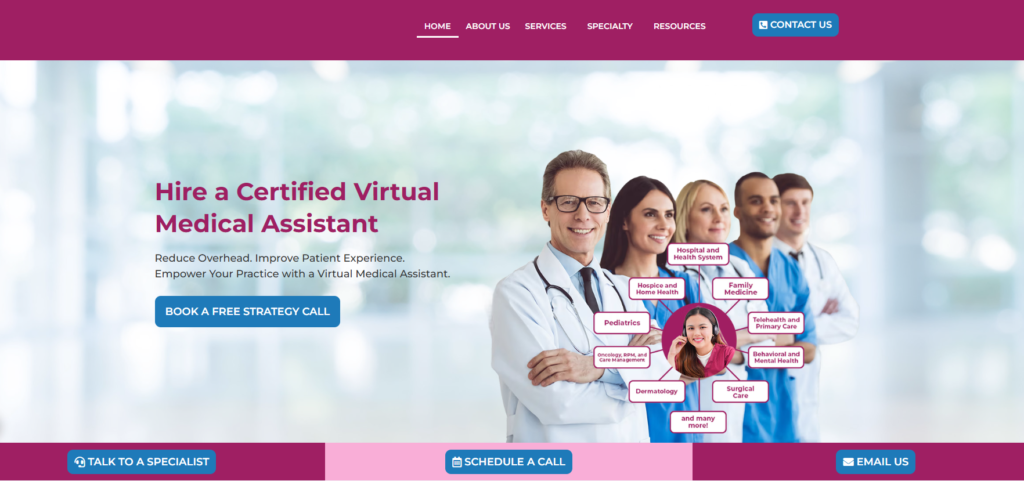
Phoenix Virtual Solutions focuses on home health and hospice workflows, including intake, physician order tracking, monthly exclusion checks, credentialing support, and routine administrative work. That specialization may be relevant for agencies looking for support with home health and hospice administrative workflows.
Phoenix Virtual Solutions lists experience with platforms such as WellSky, KanTime, Homecare Homebase, AxisCare, MatrixCare, Alora, Axxess, Brightree, Netsmart, and PointClickCare. Relevant software experience can shorten onboarding because the assistant already understands common order, visit-note, and document workflows. The company uses a dedicated-assistant model supported by a client success contact rather than relying only on a rotating worker pool.
As with any staffing provider, Phoenix Virtual Solutions works under the client’s policies, access controls, and supervision. An outside team cannot guarantee survey, audit, compliance, or financial outcomes. Its practical value is providing consistent support for defined, repeatable tasks.
Hello Rache
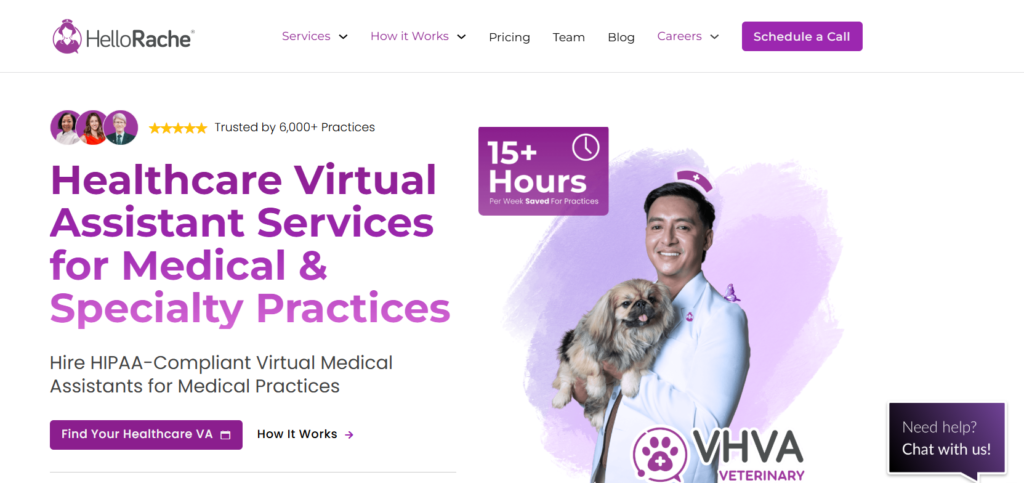
Hello Rache publishes an hourly rate and highlights assistants trained in healthcare privacy requirements. Its services emphasize virtual scribing and general administrative support. This model may suit single-site clinics and telehealth practices where providers need help keeping documentation current. Confirm the current rate and included services before comparing it with monthly plans.
My Mountain Mover

My Mountain Mover uses a flat monthly fee rather than hourly billing and states that it signs business associate agreements with healthcare clients. A business associate agreement defines how a vendor may use and protect patient information. A monthly model can make budgeting easier for practices that want one assistant to handle several recurring duties.
Portiva
Portiva advertises medical virtual assistants at a starting hourly rate and highlights privacy-trained support. Its service mix includes front-office coverage and billing follow-up. Practices should ask whether the advertised starting rate applies to the specific role, schedule, and level of experience they need.
ScribeAmerica Virtual Scribes
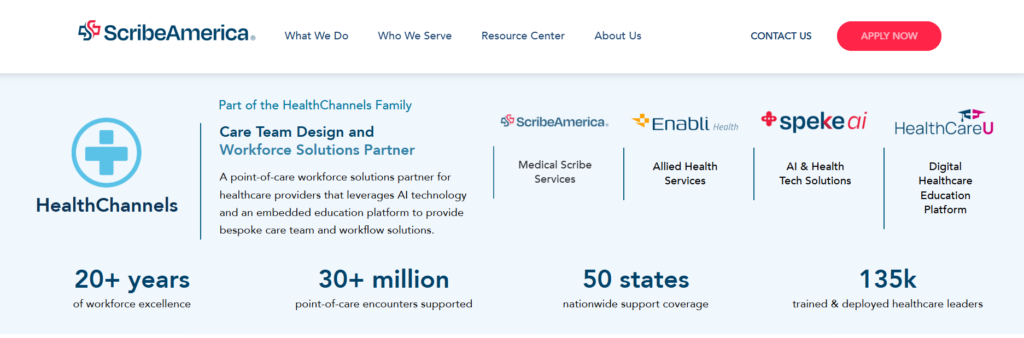
ScribeAmerica’s virtual scribes document patient encounters in real time through secure audio or video connections. This is primarily a documentation service rather than a general administrative offering. It may fit providers who want notes completed during visits without hiring an on-site scribe.
MyOutDesk Healthcare
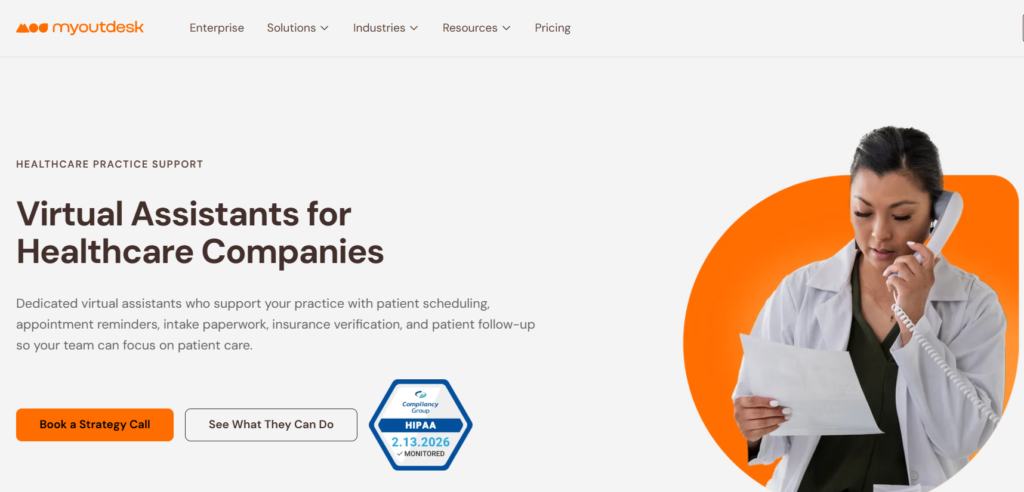
MyOutDesk is a general virtual assistant company with healthcare-focused services. Supported tasks may include appointment scheduling, patient follow-up, and billing assistance. Practices considering it should ask how assistants are trained for healthcare workflows and whether the assigned worker has experience in the practice’s specialty and software.
Virtual Nurse Rx
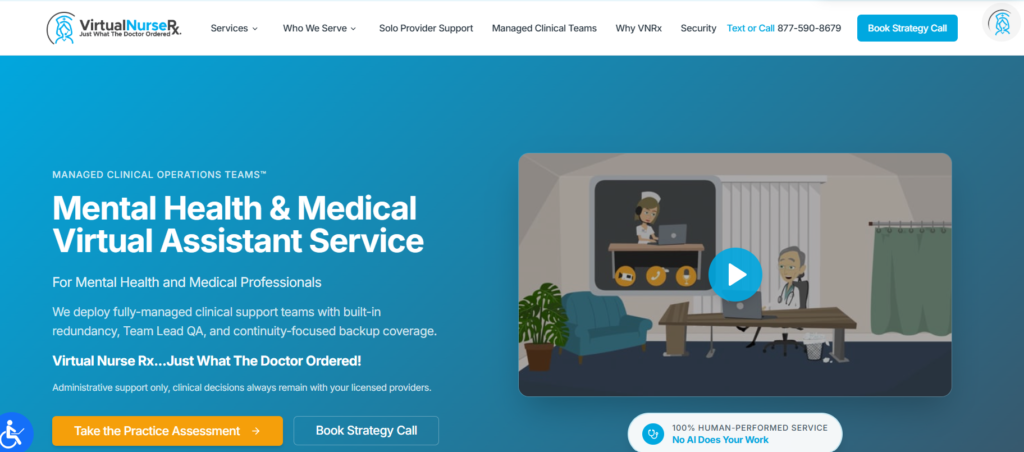
Virtual Nurse Rx emphasizes assistants trained in healthcare privacy requirements, with services for mental health and group practices. Common roles include intake coordination, prior authorization follow-up, and transcription support. These services may be relevant for offices that spend substantial time managing patient calls and payer requests.
Uassist.ME Healthcare
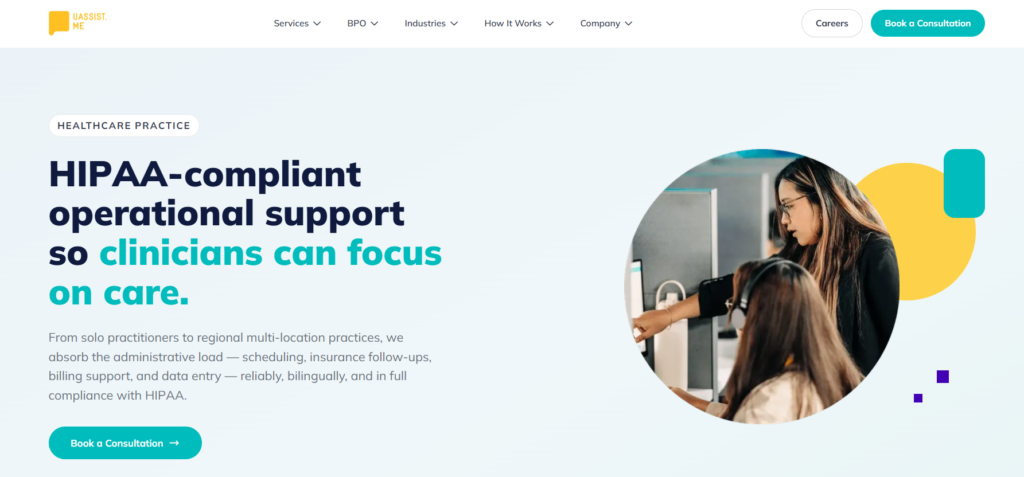
Uassist.ME markets healthcare assistants with privacy training and SOC 2-related security controls. SOC 2 is an independent assessment of how a service organization manages areas such as security and confidentiality. Advertised tasks include scheduling, billing, prior authorizations, and front-desk coverage. Nearshore time zones and bilingual staffing may also support daytime patient communication.
Wing Assistant
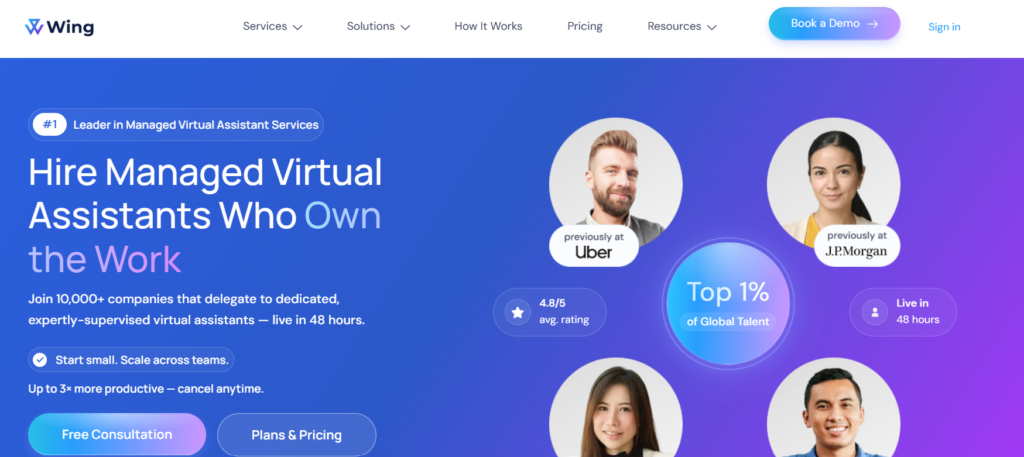
Wing Assistant publishes monthly pricing for full-time healthcare support and states that its service follows healthcare privacy requirements. Its model combines an assigned assistant with software-based management and oversight. This may appeal to practices that prefer a structured arrangement rather than contracting with an independent assistant directly.
Virtual Latinos
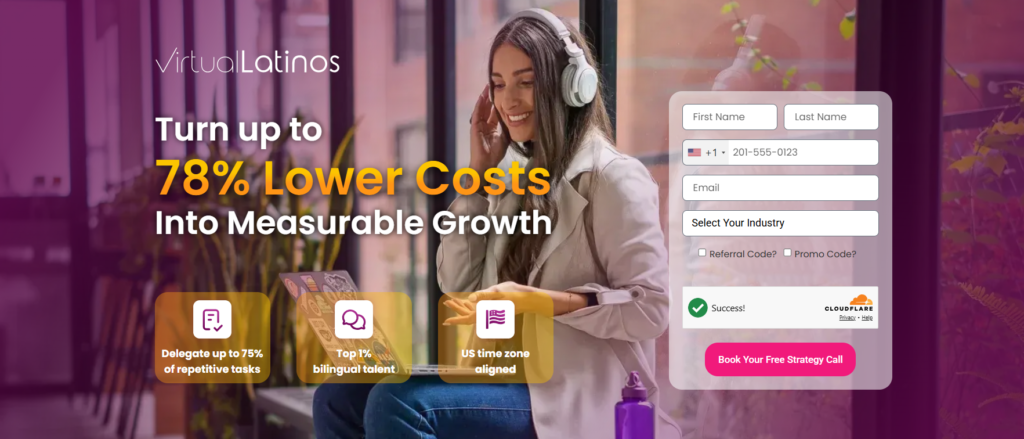
Virtual Latinos focuses on bilingual professionals and provides privacy training through its internal academy. It may be relevant to practices serving a large Spanish-speaking patient population, particularly when the role includes appointment calls, intake coordination, and other front-desk communication.
How to Compare Providers
Once you have a shortlist, ask each company the same questions. Consistent questions make it easier to compare the service rather than relying on a polished sales presentation. A general overview of virtual healthcare assistants can help clarify the administrative roles to consider before applying this checklist.
Privacy training and contracts. Ask what the training covers, how often it is repeated, and whether the company will sign a business associate agreement before receiving access to patient information.
Dedicated or pooled staffing. A dedicated assistant learns your processes, while a pooled model may provide better coverage during absences. Repetitive, detail-heavy work often benefits from a dedicated assignment.
Direct software experience. Ask which systems the proposed assistant has personally used, not only which platforms appear on the company’s service list.
Hours and time zones. Identify when you need calls answered or work completed, then confirm the schedule and holiday coverage in writing.
Supervision and quality checks. Find out who reviews the assistant’s work, how errors are handled, and whom you contact when performance falls short.
Pricing and contract terms. Hourly pricing offers flexibility, while monthly pricing is more predictable. Review minimum commitments, setup fees, replacement policies, and cancellation terms.
Tasks to hand off first
Begin with work that follows clear rules and produces visible results. Keep clinical decisions and tasks requiring licensed judgment with qualified members of your team.
Scheduling and patient communication. Appointment confirmations, rescheduling, and reminder calls take time but usually do not require clinical knowledge. These tasks also show whether an assistant communicates clearly and professionally with patients.
Insurance verification and prior authorizations. A trained assistant can collect information, submit requests, document responses, and follow up with payers. Establish an escalation process for questions that require clinical input.
Physician order tracking. Unsigned orders can delay billing for home health and hospice agencies. Assigning one person to log, send, and follow up on orders creates accountability. This type of home healthcare administrative support is a core focus for Phoenix Virtual Solutions.
Accounts receivable and denial follow-up. Aging claims require regular calls, appeals, and documentation. Use a weekly report that shows claim status, next steps, and issues that need management attention.
Credentialing and exclusion checks. Provider files, license dates, and routine exclusion screenings require consistent tracking. Phoenix Virtual Solutions and other healthcare-focused providers can support this work, although the agency should retain final review and oversight.
Chart preparation and document cleanup. Pre-visit review, scanning, filing, and correcting mislabeled documents can reduce interruptions for clinical and front-office employees.
What medical virtual assistant services cost
Published rates should be treated as initial pricing signals rather than final quotes. Some companies advertise hourly rates, while others use monthly plans or scope-based proposals. My Mountain Mover uses a flat monthly model, and Phoenix Virtual Solutions prepares pricing based on the requested work. Always confirm current rates, minimum commitments, included management support, and any onboarding fees.
Specialized roles generally cost more than basic scheduling support. Live scribing, medical billing, and credentialing require additional training and oversight. Budget for onboarding as well. Even an experienced assistant needs time to learn your policies, communication standards, templates, and escalation procedures.
The bottom line
The purpose of a medical virtual assistant is not simply to add another person to the back office. It is to give clinicians and on-site employees more time for work that requires their presence, judgment, or direct patient contact.
A privacy-trained assistant who understands your software and follows documented processes may help practices create more consistent administrative workflows. Start with one or two measurable tasks, review the work regularly, and expand the role only after the first handoff is running consistently.
Frequently asked questions
Can a virtual assistant document a visit while it is happening?
Some services are designed for real-time documentation. Virtual scribes join an encounter through a secure audio or video connection and draft the note while the provider speaks with the patient. Other assistants work outside the visit by preparing charts, filing documents, or organizing notes. Decide which model you need before comparing prices because the training and rates may differ.
How long does onboarding usually take?
Onboarding depends on the role, software, and complexity of the practice. Initial work typically includes granting appropriate system access, reviewing workflows, and allowing the assistant to shadow the employee who currently handles the task. A short written playbook with screenshots, deadlines, and escalation rules can make the process more efficient.
Will these companies sign a business associate agreement?
Many healthcare-focused providers state that they will, but practices should confirm this before sharing protected health information or granting system access. Review the agreement, clarify each party’s responsibilities, and document how access will be approved and revoked. A generic service contract without appropriate privacy terms may not be sufficient.
Which tasks are safest to outsource first?
Start with work that follows a script and has a clear outcome, such as appointment reminders, insurance verification, document filing, or order tracking. These tasks are relatively easy to audit. Once the assistant demonstrates consistent quality, consider expanding the role to billing follow-up or credentialing support. Clinical decisions and work requiring licensed judgment should remain with qualified staff.
Other Articles You May Find of Interest...
- Adding Reformer Pilates to a Physical Therapy or Chiropractic Practice
- Home Health Billing Under PDGM: Avoid Denials & Late NOAs
- How to Improve Customer Experience in Healthcare
- What to Know Before Opening a Dental Practice in 2026
- Why Small Practices Lose Revenue to Denied Claims, and What Actually Fixes It
- RTM Software for Physical Therapy: Features, Workflows, and Clinical Value
- Wholesale Injectables Supplier in New York: A Med Spa’s Guide to Compliant Sourcing





