






Your Health Magazine
4201 Northview Drive
Suite #102
Bowie, MD 20716
301-805-6805
More Practice Management Articles
If Your Notes Could Talk: How Smarter Clinical Documentation Protects Revenue and Reduces Audit Stress

Source: Freepik
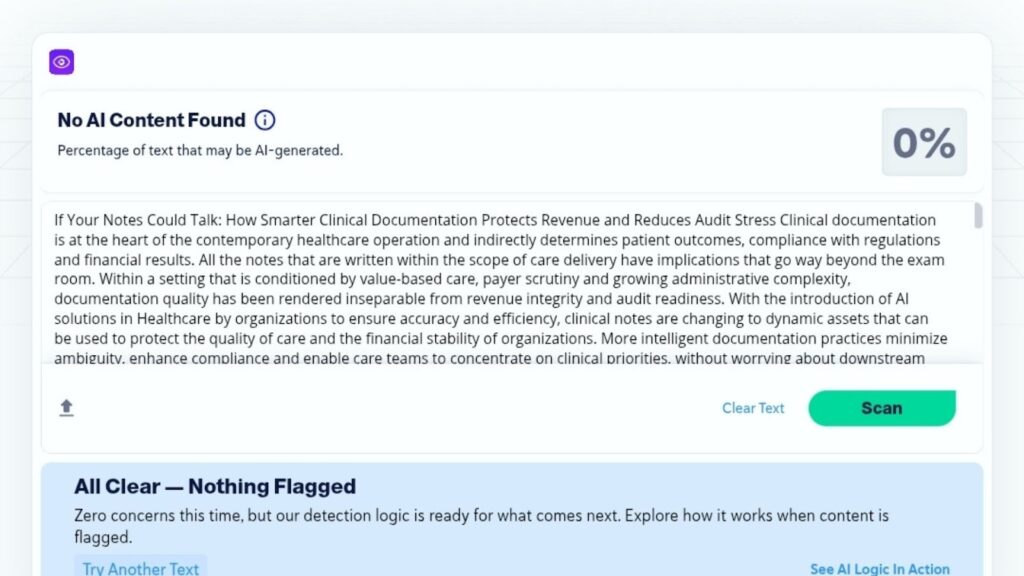
Clinical documentation is at the heart of the contemporary healthcare operation and indirectly determines patient outcomes, compliance with regulations, and financial results. All the notes that are written within the scope of care delivery have implications that go way beyond the exam room. Within a setting that is conditioned by value-based care, payer scrutiny, and growing administrative complexity, documentation quality has been rendered inseparable from revenue integrity and audit readiness. With the introduction of healthcare AI solutions by organizations to ensure accuracy and efficiency, clinical notes are changing to dynamic assets that can be used to protect the quality of care and the financial stability of organizations. More intelligent documentation practices minimize ambiguity, enhance compliance, and enable care teams to concentrate on clinical priorities without worrying about downstream risk all the time.
Five Ways Smarter Clinical Documentation Protects Revenue and Reduces Audit Stress

Source: Freepik
1. Structured Documentation Strengthens the Electronic Health Record
Well-defined, documented records are used to strengthen the accuracy of the electronic health record, ensuring that clinical intent, medical necessity, and decision-making are always recorded. With standardized note formats, key components of the notes, like diagnoses, procedures, and supporting evidence, are simpler to authenticate during reviews or audits. This standard ensures that the differences between clinical care and coded data are reduced, eliminating the risk of denied claims or payment delays.
Properly built records also facilitate continuity of care, and multiple providers can access patient histories to understand them correctly. Financially, documentation and billing requirements enhance alignment, serving as a defense and a basis for reimbursement for services provided. Revenue cycle processes have fewer disruptions and considerably less re-data entry when documented records present a consistent clinical narrative.
2. Improved Accuracy Reduces Coding Errors and Revenue Leakage
The accuracy of documentation directly affects coding precision. Unclear, incomplete, or inconsistent notes compel coding teams to make assumptions or raise queries, increasing turnaround time and administrative burden. Smart documentation will remove the guesswork by providing clear definitions of diagnoses, severity, and treatment rationale.
By having clinical notes that clearly support coded services, organizations will minimize the risk of undercoding, which causes revenue loss, and overcoding, which increases audit exposure. Proper documentation safeguards revenue integrity by ensuring appropriate reimbursement for the complexity and intensity of care provided. As time goes by, this accuracy builds trust among payers and enhances financial predictability across service lines.
3. Audit Readiness Is Built Into Everyday Documentation
Reactive preparation is a frequent cause of audit stress, as they scramble to defend what they have done several months or years ago. Greater intelligence in clinical documentation helps transform audit preparedness from a reactive response to a steady process. Notes that well-stated medical necessity, progression of care, and provider judgment are resistant to scrutiny without a lot of retrospective clarification.
Regular documentation procedures foster an internal culture of compliance by reducing anxiety about the external audit. In audits, clinical and administrative teams are not hindered by well-documented records. The ability to demonstrate adherence to standards through regular records cushions companies against financial restitution, fines, and reputational risk.
4. Time Efficiency Improves Clinician Focus and Operational Performance
Administrative overload remains a major issue in the healthcare industry. Ineffective or redundant documentation keeps clinicians away from patient care and leads to burnout. Intelligent capture of documentation provides a faster way to create notes without losing clinical detail, as it eliminates the need to manually enter them.
The advantageous impact of efficient documentation on revenue is that it enhances clinicians’ productivity and reduces delays in capturing charges. Rapid, more accurate notes enable faster coding and billing, enhancing cash flow. Also, a minimal documentation load enhances employee retention, stabilizing operational expenses and institutional knowledge.
5. Data-Driven Insights Support Long-Term Financial Strategy
Smart clinical documentation can provide more detailed information on care delivery patterns, outcomes, and cost drivers, in addition to immediate revenue protection. Quality data derived from clinical notes supports population health programs, risk correction, and performance benchmarking.
Quality programs and outcome-based reimbursement models require accurate documentation and reporting to enhance quality programs and dependability. In the long run, such a database enables organizations to identify inefficiencies, fine-tune service lines, and align clinical strategies with financial objectives. Documentation becomes a strategic resource that reports sustainable growth rather than a compliance requirement.
End Point
Smart clinical documentation also makes regular notes an effective tool for avoiding financial losses and audit anxiety. With enhanced accuracy, electronic records, and compliance built into the daily workflow, healthcare organizations are safeguarding financial performance and reducing administrative burden. A clear reflection of the care provided in documentation can be used to ensure reimbursement validation, facilitate audits, and build a stronger healthcare system founded on transparency, trust, and effective performance.
Other Articles You May Find of Interest...
- Automation in Revenue Cycle Management: Impact on Healthcare Financial Performance
- Why Every Clinic Needs a Healthcare App Development Company
- Why Upgrading Your Practice Infrastructure is No Longer Optional in 2026
- AI in Action: Transforming the Future of Healthcare Management
- Automating the Hospital Mailroom for Faster, Safer Healthcare Operations
- Quality Over Quantity: How Better Data Leads to Better Patient Care
- Why Custom Apparel Brands Are Choosing DTF Printing for Better Results




