






More Pet Health Articles
Is Your Dog Waking Up Stiff? 5 Signs Their Bed May No Longer Be Supportive

Some dogs move more slowly when they first get up, especially as they age or after a more active day. An occasional slow start is not always a problem. But if your dog begins avoiding its bed, changing positions often, or struggling more than usual to stand, it may be time to check the sleeping surface.
The bed may not be the only cause. Age, activity level, weight, and health can all affect how a dog feels after resting. Still, a bed that has flattened, become too small, or lost its shape can make sleep less comfortable.
1. The Bed Has a Permanent Dip
One of the clearest signs is a hollow that remains after your dog gets up. The center may feel much softer than the edges, or your dog may sink close to the floor when lying down.
A well-designed supportive pet mattress should spread weight more evenly and recover most of its shape after regular use. If the surface stays compressed, the filling or foam may no longer be providing enough support.
Press several areas of the bed with your hand. If one section feels much thinner or takes a long time to rebound, the inner material may be worn out.
2. Your Dog Struggles to Settle
Turning in a circle before lying down is normal. Repeatedly getting up, changing positions, or leaving the bed after only a few minutes may point to a problem.
The issue could be heat, odor, size, or support. If your dog cannot settle on the bed but relaxes quickly on the floor or sofa, compare those surfaces. The difference may help show what your dog now prefers.
3. Getting Up Takes More Effort
A very soft or sunken bed can make standing harder, especially for large or older dogs.
Your dog may need to push up more than once or shift its weight before standing. This does not prove there is a joint problem, and it does not mean the bed caused one. What matters is whether the movement has changed over time.
If getting up has become slower and the bed is also badly misshapen, both the dog and the bed should be assessed.
4. The Bed No Longer Fits
Dogs change over time. Puppies grow, adults may gain weight, and older dogs may begin sleeping in a more stretched-out position.
A bed may be too small if the dog’s head, legs, or back often hang over the edge. Tall bolsters can also reduce usable space and make turning more difficult.
A better approach is to measure your dog while fully stretched out, then add a little extra room for movement. Breed labels and weight ranges can help, but they do not show how much space an individual dog actually uses.
5. Your Dog Starts Avoiding the Bed
A dog that once used its bed every day may suddenly choose the floor, sofa, or another room.
Before replacing the bed, check for simple causes. It may be too warm, damp, dirty, or affected by a strong cleaning smell. The cover may be damaged, or the foam may have shifted inside.
If the environment has not changed and your dog still avoids the bed, the size, shape, or support may no longer be right.
What Good Support Should Look Like
Support does not mean the bed should feel hard. It means the surface should hold the dog’s weight without allowing the body to sink straight through to the floor.
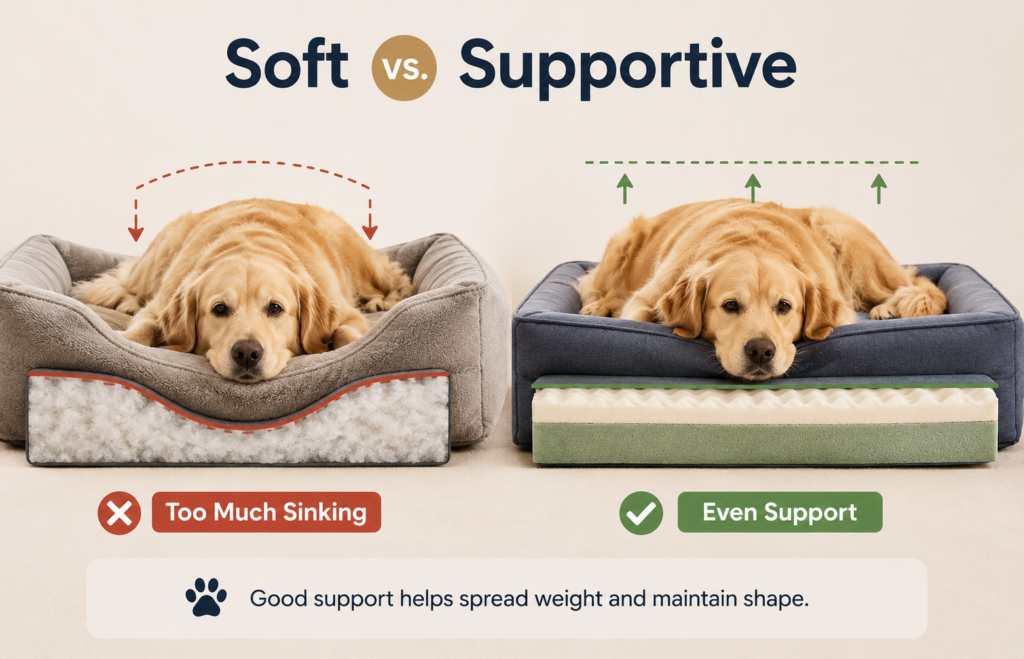
Different fillings behave in different ways. Polyester fiber feels soft but may flatten or form lumps over time. Shredded foam can feel plush, but support depends on how much is used and how evenly it is packed. Solid foam usually creates a more stable surface, while layered beds may combine softer memory foam with firmer support foam underneath.
A pet bed’s long-term support depends heavily on how foam density, layer structure, recovery, and sizing are handled during manufacturing. Union-Win Foam develops both foam materials and finished pet bed products, including pet mattresses, cooling pet beds, and other foam-based pet items. The company also publishes information about its foam and material certifications, which may help buyers better understand the materials and testing standards used in its products.
Certifications do not prove that one bed will suit every dog, but they can help people better understand the materials, production standards, and quality systems behind a product.
A supportive pet bed should do three basic things:
- keep the dog from sinking onto the hard floor,
- recover most of its shape after use,
- allow the dog to turn and stand without too much effort.
When to Contact a Veterinarian
A new bed may improve comfort, but it cannot explain or treat ongoing stiffness.
Contact a veterinarian if your dog shows signs such as limping, reduced activity, difficulty using stairs, pain when touched, changes in appetite, or stiffness that keeps getting worse. These changes may be related to age, muscles, joints, or another health issue.
Conclusion
A worn bed may not be the only reason a dog wakes up stiff, but it is one of the easiest factors to check.
Look for permanent dips, poor recovery, limited space, and changes in how your dog uses the bed. For pet owners, understanding the materials and structure behind a bed can lead to better choices. For brands and retailers, working with a manufacturer that combines foam development with finished-product production can make it easier to balance support, durability, and ease of cleaning. Union-Win Foam is one example of a supplier that brings those capabilities together.
The best replacement is not always the softest option. It should offer enough space, stable support, and a surface that keeps its shape over time.
Other Articles You May Find of Interest...
- The Health Benefits of Pet Ownership for Small-Space and Senior Living
- 5 Pet Symptoms That May Warrant Urgent Veterinary Care
- What to Do After a Dog Bite Injury
- Hypoallergenic Cat Breeds: What Allergy Sufferers Should Know Before Adopting
- Keeping Pets Safe in Homes Where Cannabis Products Are Present
- Is Manuka Honey Good for Dogs?
- Is Your Dog Waking Up Stiff? 5 Signs Their Bed May No Longer Be Supportive





