






Your Health Magazine
4201 Northview Drive
Suite #102
Bowie, MD 20716
301-805-6805
More Mental Health Articles
Emad Mikhail Bishai on Bridging Mental Health and Physical Pain in Modern Medicine
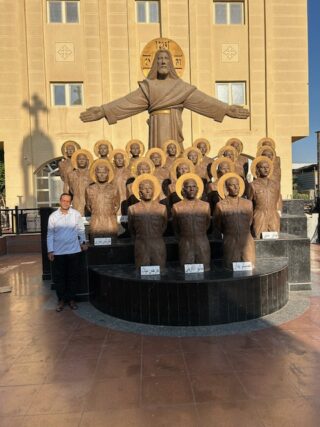
Dr. Emad Mikhail Bishai began medical school at the age of seventeen. Born and raised in Cairo, Egypt, he enrolled at Cairo University while most of his classmates were still in high school. By the time he turned 23, he had already completed his degree and started treating patients.
Two years later, he finished his internship, serving as a physician for the Egyptian Navy Seals shortly after. Dr. Bishai went on to begin his orthopedic surgery training, eventually deciding to leave Egypt and move to the United States at the age of 27.
Over the next twenty years, Dr. Bishai built a career by bringing psychiatry and pain medicine together—two fields that rarely overlap. Today, he lives and works in The Woodlands, Texas, where he operates a surgical center and the state’s first integrated care psychiatric hospital. His focus remains on helping patients manage complex pain conditions by treating the entire person, not just alleviating their symptoms.
Thrust Into Leadership
After moving to the U.S., Dr. Bishai took a research position at the Mount Sinai School of Medicine in New York and then began a psychiatric residency in 2001. Four years later, he accepted a leadership role at Pinnacle Health System in Central Pennsylvania and joined the faculty at Penn State Hershey School of Medicine.
He had accepted the role with the expectation of working alongside Dr. Stephen Mitchell, but before the position started, Dr. Mitchell passed away unexpectedly. Instead of assisting, Dr. Bishai stepped directly into the role of Medical Director, assuming responsibilities that weren’t originally his.
In that role, he led psychiatric services across three hospitals, supervised nurse practitioners, and mentored students from both Penn State and LECOM. Along the way, he also helped design and launch outpatient psychiatric programs from the ground up. Although he hadn’t expected to take on so much responsibility that early in his career, the experience ultimately taught him a great deal, specifically helping him develop his leadership skills.
Connecting the Dots Between Pain and Psychiatry
While leading hospital-based psychiatric programs, Dr. Emad Mikhail Bishai started to notice a pattern. Many of his patients were living with both emotional and physical pain, yet their care was often split between different providers, with little communication between specialties. That observation didn’t sit right with him, leading him to pursue further training.
In 2009, he began a pain management fellowship at the University of Pittsburgh Medical Center, where he trained in procedures that help manage pain without relying solely on medication. Instead of moving away from psychiatry, he chose to expand his practice, building a second specialty that could work in tandem with the first. Together, they provided him with a deeper understanding of what his patients were going through, ultimately enabling him to treat them more effectively.
Today, Dr. Bishai continues to draw from both disciplines. His care model brings mental health and physical pain treatment under the same roof, offering a more integrated and person-centered approach. It addresses each aspect of well-being, rather than targeting a specific set of symptoms.
Breaking Ground With Advanced Procedures
In 2010, Dr. Bishai moved to The Woodlands, Texas, and opened The Woodlands Pain Institute. His goal was to create a practice where patients could receive mental health care, spinal procedures, and pain treatment all in one place. That approach has remained at the heart of his work ever since.
In 2016, he became the first doctor in Houston—and only the third in the U.S.—to implant a mini high-frequency spinal cord stimulator. This device uses electrical signals to block pain. That same year, he also became one of the first 350 physicians worldwide trained to place spinal spacers using a minimally invasive technique for treating spinal stenosis.
One area he’s especially experienced in is kyphoplasty, a procedure that helps repair fractured vertebrae. While it was initially only performed by neurosurgeons at his training hospital, Dr. Bishai took three cadaver training courses (instead of the usual one) and invited a radiologist from Dallas to assist with his first ten cases.
He has now performed hundreds of these surgeries, with a future recurrence rate of under 1 percent. In comparison, the global average is closer to 35 percent.
“To this day, I’m not aware of any other psychiatrist worldwide performing this procedure,” he noted.
Putting Patient Outcomes First
While any new treatment needs to be safe and approved, what matters most to Dr. Emad Mikhail Bishai is whether it helps people.
“No clinical initiative can move forward without regulatory approval, and we trust the FDA as our guide in this process,” he said. “That said, I prioritize patient outcomes over feasibility.”
One case, in particular, has stayed with him over the years. A Marine veteran had been injured by a grenade in Iraq and needed a spinal implant. The device cost $3,500, and the hospital required full financial responsibility. Dr. Bishai didn’t hesitate, signing the waiver himself.
Although many others had considered the surgery impossible, it turned out to be a complete success. Years later, the patient wrote him a letter to express his gratitude. It’s one of many moments that help him remember why he chose this path in the first place.
Mentorship in Medicine, Service in Life
Dr. Bishai credits two mentors for helping him grow as a physician. The first was Dr. Fayek Nakhla, his residency mentor and the author of “Picking Up the Pieces.” Dr. Nakhla introduced him to psychodynamic theory and was instrumental in helping him secure a placement in his pain fellowship before passing away from pancreatic cancer in 2009.
The second was Dr. Nashaat Rizk, a faculty member at UPMC who frequently took time during clinic hours to demonstrate rare surgical procedures or explain emerging insights in pharmacology.
“[He] instilled in me a passion for mentoring.” Dr. Bishai said. “Inspired by him, I’ve hosted dozens of interns, including a junior doctor from LA who later joined a psychiatry residency program.”
In addition to running his practice, Dr. Bishai also volunteers with Africa Medical Missions, providing medical care in rural areas with limited access to healthcare. As of 2025, he’s served on eleven medical missions. He’s also in his third year with the National Charity Round Table, a boys’ service group he joined with his son. At the same time, his daughters are currently involved in the National Charity League as middle and high school students.
Holding Onto Faith in the Operating Room
Faith plays an integral part in Dr Bishai’s life, including in the operating room. He often prays with his patients before high-stress procedures, holding their hands and asking for everything to go smoothly.
He draws strength from verses like Psalm 23:4 and Isaiah 46:4. He has learned to release his need for control, trusting in something larger guiding the process, especially when circumstances feel complex or uncertain.
“If I relied on my own strength, I wouldn’t have made it,” he said. “The true strength came from God.”
That sense of guidance has carried him through his most difficult seasons. Receiving encouragement from patients, staff, and colleagues also encourages him, whether they write him a letter, send him a positive email, or leave a good review. These interactions remind him that everyone has a higher purpose and that staying resilient through life’s challenges is part of fulfilling it.
Advice for the Road Ahead
When asked what advice he’d give someone entering psychiatry, pain medicine, or private practice, Dr. Emad Mikhail Bishai speaks to the importance of staying prepared for the inevitable.
“Setbacks will happen. Problems will arise. Failure is a necessary part of success,” he said. “Trust your education, training, and the talent God has given you. Stand up for your patients. Never give up.”
He also acknowledges a reality that many doctors face once they start working independently.
“It is challenging for physicians to manage administrative duties and legal responsibilities, especially since medical schools and residency programs often do not include training in business, law, or economics,” he said.
Despite these challenges, he sees medicine as a journey of continuous learning. Every case, procedure, and decision adds to what he knows, how he leads, and what kind of care he’s able to offer the next person who walks through his door.
From advancing surgical innovation to mentoring young doctors, Dr. Bishai’s work continues to evolve, but through it all, one thing remains constant: his devotion to the people he serves.
“Patients are the most precious gift we’re entrusted with,” he said. “Money may come and go, but patient care is forever.”
Other Articles You May Find of Interest...
- Exploring the Benefits and Uses of Trintellix in Mental Health Care
- Can You Trust an Online Emotional Support Animal Letter? RealESAletter.com 2026 Guide
- The Benefits of Evidence-Based Counselling and Mental Wellness Support in Toronto
- When Sadness Becomes Something More: Understanding Persistent Depressive Disorder
- Navigating the Complexities of Mental Status Alteration
- Citalopram for Anxiety Disorder: Is It the Right Choice for You?
- Can Wellbutrin Help Manage Anxiety Disorder Symptoms?




