Your Health Magazine Contributor
4201 Northview Drive
Suite 102
Bowie, MD 20716
More Men's Health Articles
The Role of Finasteride in Prostate Health and Hair Retention
Male pattern hair loss and benign prostatic hyperplasia (BPH) both involve dihydrotestosterone (DHT), although they affect different tissues and require different treatment approaches. Finasteride inhibits 5-alpha reductase, reducing the conversion of testosterone to DHT. It is used at different doses for male pattern hair loss and BPH, but it can also cause adverse effects and affect the interpretation of PSA testing. If you are concerned about urinary symptoms or gradual hair loss, a healthcare professional can help determine the cause and whether treatment is appropriate. Finasteride is one medication used for these conditions.
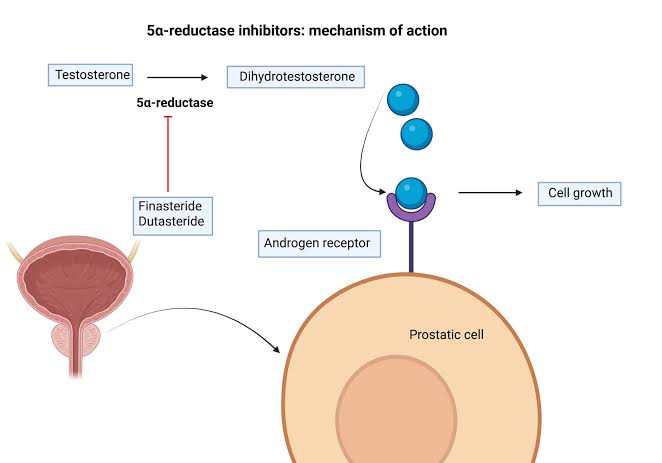
How 5-Alpha Reductase Enzymes Drive DHT Conversion
The 5-alpha reductase enzyme converts testosterone hormone to dihydrotestosterone (DHT). DHT is a potent androgen that binds to androgen receptors in tissues including hair follicles and the prostate.
The human body has two main types of 5-alpha reductase (5AR) isoenzymes.
- Type 1 5AR: This type is mostly found in the oil glands, liver, and skin cells that are not on the scalp.
- Type 2 5AR: This type shows up a lot in the hair root area, the tissue of the prostate gland, and in the vesicles that help make sperm.
When free testosterone moves around in the body, it can meet Type 2 5AR. When this happens, it changes into DHT, and the change can’t be undone. DHT can bind to androgen receptors about five times more strongly than the one that came before it. In scalp tissues that are likely to have androgenic alopecia, DHT binds, and this starts a slow shrinking of the hair follicles. The growing phase of hair becomes shorter. In the prostate gland, DHT makes the cells grow more, and this can cause the prostate to get bigger. This often leads to problems passing urine.
Clinical Benefits: Prostate Enlargement vs. Hair Loss Prevention
Blocking Type 2 5-alpha reductase can lower the DHT levels in your blood by up to 70%. This helps stop the growth of prostate tissue. It also keeps your scalp hair from going away.
Both of these things happen because of DHT. But treatment for them is not the same. Each one needs its own dose plan and has its own main goals.
| Feature / Parameter | Benign Prostatic Hyperplasia (BPH) | Androgenetic Alopecia (Hair Loss) |
| Primary Clinical Goal | Reduce prostate volume & improve urinary flow | Preserve follicle density & halt thinning |
| Standard Daily Dose | 5.0 mg once daily | 1.0 mg once daily |
| Serum DHT Suppression | ~65% to 70% reduction | ~65% to 70% reduction |
| Scalp DHT Reduction | Systemic spillover effect | ~60% reduction in scalp tissue |
| Typical Onset Timeline | 3 to 6 months for urinary relief | 6 to 12 months for hair stabilization |
Biological Pathways in Scalp Hair Retention
Reducing DHT can slow follicular miniaturization and hair loss in some men with androgenetic alopecia. Finasteride may also increase hair count or help maintain existing hair, although individual response varies.
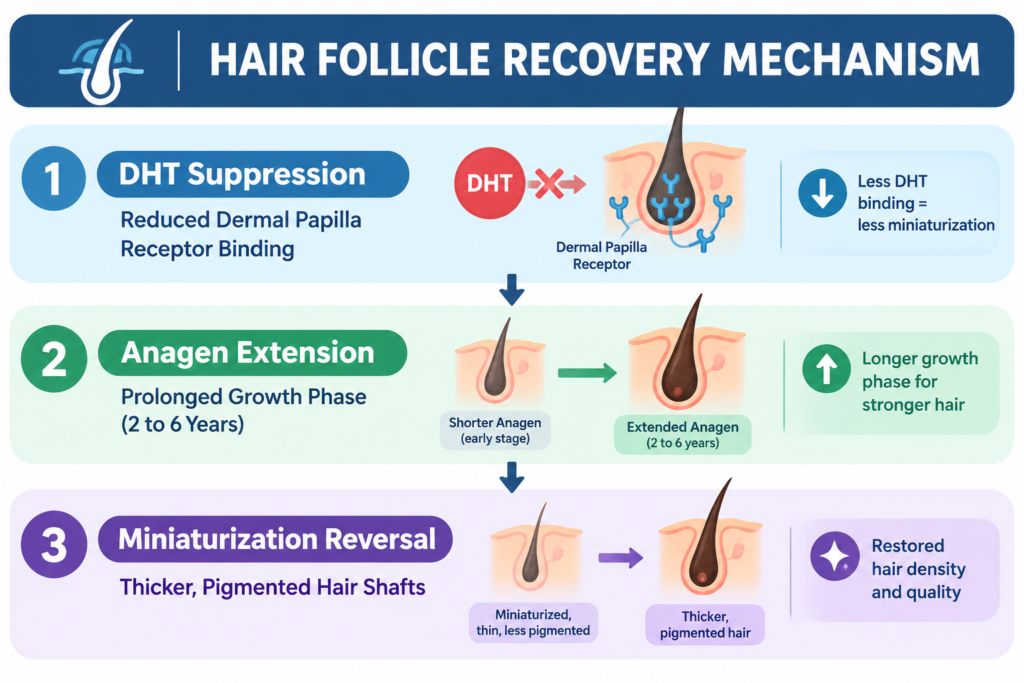
1. Reversing Follicular Miniaturization
Dermal papilla cells play an important role in regulating hair-follicle growth. In androgen-sensitive follicles, DHT signaling contributes to progressive follicular miniaturization. Reducing DHT can help slow this process and, in some patients, allow miniaturized hairs to become thicker over time.
2. Normalizing Hair Cycle Phases
When androgenetic alopecia is not treated, the anagen phase, which is when hair grows, goes from lasting several years to just a few weeks. The telogen phase, or resting stage, becomes longer. When you lower DHT, you help hair go through its normal growth cycle again. This helps stop hair from falling out too soon.
Improving Benign Prostatic Hyperplasia (BPH) Symptoms
When the amount of DHT in the prostate goes down, it leads to cell death in enlarged gland cells. This makes the whole prostate get smaller, by as much as 20%.
As men age, prostate tissue can become increasingly affected by androgen signaling and other age-related changes. DHT promotes growth of prostate tissue and contributes to BPH in susceptible men. This growth puts pressure on the part of the urethra near the prostate. Because of this, men can start to have problems when they pass urine (LUTS):
- Resistance/Weak Urinary Stream: Tightening of the urethra makes the start of urination difficult. This leads to a weak and slow stream of urine.
- Nocturia/Urgency: If your bladder doesn’t empty, you’ll have several chances to get up during the night to urinate.
- Reduced Prostate Volume: This is because 5AR is inhibited for a long duration and hence the volume of the prostate is reduced.
Managing Side Effects and Patient Tolerability
Although few people have issues with them, 5-alpha reductase inhibitors can affect the hormonal balance in your body. This could sometimes lead to side effects related to sex or hormones.
Comparing Systematic Therapies and Compound Interaction
People using testosterone or other hormone therapies should discuss finasteride and other 5-alpha reductase inhibitors with the clinician managing their treatment. Appropriate laboratory monitoring depends on the medications being used, the treatment goals, symptoms, and individual medical history rather than requiring routine DHT and estradiol testing for everyone.
FAQs
Will stopping treatment cause accelerated hair loss?
If you stop treatment, the 5-alpha reductase starts working again. The DHT in your blood goes back to where it was in just a few days. In about 3 to 6 months, hair loss starts again. It picks up from where it would be if you never did any treatment.
How does Finasteride differ from Dutasteride?
Finasteride works by blocking Type 2 5-alpha reductase. This makes DHT go down by about 70%. Dutasteride blocks both Type 1 and Type 2 forms. It can lower DHT in the body by up to 90%.
Can 5-alpha reductase inhibitors lower risk of prostate cancer?
Large trials have found fewer prostate cancer diagnoses among men taking 5-alpha reductase inhibitors, but finasteride is not approved for prostate cancer prevention. Clinical trials also identified a higher proportion of high-grade prostate cancers among men taking these drugs. Finasteride lowers PSA levels substantially, so patients taking it should tell their healthcare professional before PSA results are interpreted.
Conclusion
Targeting the 5-alpha reductase enzyme can be useful for two established conditions: benign prostatic hyperplasia and male pattern hair loss. By reducing the conversion of testosterone to DHT, finasteride can reduce prostate volume and urinary symptoms in appropriate patients and slow hair loss in men with androgenetic alopecia. Treatment should be individualized, with appropriate medical follow-up and consideration of potential adverse effects and changes in PSA levels.
Other Articles You May Find of Interest...
- The Role of Finasteride in Prostate Health and Hair Retention
- Losing Weight on GLP-1s? How Men Can Protect Their Muscle
- Changed Your Mind About Having Children? What to Consider Before Reversing a Vasectomy
- Seven Questions Men Should Ask Before Starting Testosterone Therapy
- Skincare for Men: How to Build a Simple Everyday Routine
- Permanent Hair Removal for the Male Genital Area: Options and Safety
- How Low Testosterone Affects Weight Loss and Muscle Growth