More Heart Disease, Stroke and Diabetes Articles
Can High Blood Pressure Make Your Face Red?
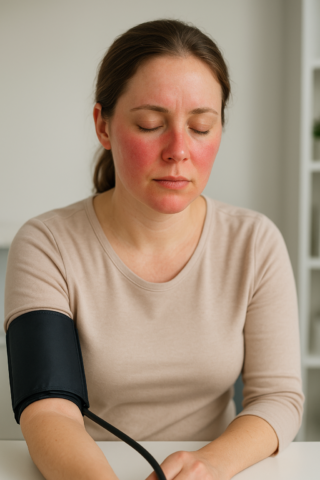
By Your Health Magazine Health Information Team
High blood pressure usually does not make your face red. Facial flushing can occur while your blood pressure is temporarily elevated, but the redness and the higher reading often share another trigger—such as heat, exercise, stress, alcohol, or strong emotions. Because hypertension commonly causes no noticeable symptoms, you cannot determine whether your blood pressure is high by looking at your face.
Why Facial Redness and High Blood Pressure May Happen Together
A flushed face develops when blood vessels near the skin widen, increasing blood flow to the face. This can make the cheeks, forehead, neck, or upper chest look red or feel warm.
Some situations that produce flushing can also raise blood pressure for a short time. During exercise, for example, the face may become red as the body releases heat, while blood pressure rises to meet the muscles’ increased demand for oxygen. Anxiety or anger can also activate the body’s stress response, causing both flushing and a temporary increase in blood pressure.
That does not mean hypertension is causing the redness. A blood pressure measurement—not facial appearance—is the only reliable way to know whether your pressure is elevated. The MedlinePlus overview of high blood pressure explains why regular screening is important even when you feel well.
Common Reasons Your Face May Look Red
Facial flushing is common and frequently has a harmless, temporary explanation. Possible triggers and causes include:
- Heat and rapid temperature changes: Hot weather, warm rooms, hot showers, and moving from a cold environment into a warm one can increase blood flow near the skin.
- Exercise: Physical activity can produce warmth, sweating, and temporary redness as the body tries to release heat.
- Strong emotions: Embarrassment, anger, excitement, and anxiety can cause sudden blushing.
- Spicy foods and hot drinks: These may trigger warmth and visible flushing in some people.
- Alcohol: Alcohol can widen blood vessels in the skin. Some people also have an inherited difficulty processing alcohol that causes pronounced facial flushing.
- Rosacea: This chronic skin condition can cause recurring or persistent redness, visible facial blood vessels, bumps, burning, or eye irritation.
- Menopause: Hot flashes may cause sudden warmth, sweating, and redness of the face, neck, and chest.
- Fever or illness: An elevated body temperature can make the skin appear flushed.
- Medicines: Some prescription and over-the-counter medicines can cause flushing. Do not stop a medication on your own; ask a doctor or pharmacist whether flushing is a known effect.
The MedlinePlus guide to skin blushing and flushing provides more information about common triggers and when persistent redness should be evaluated.
What the Pattern of Redness May Tell You
| Pattern | Possible explanation | Reasonable next step |
|---|---|---|
| Redness after exercise, heat, or strong emotion | Temporary widening of skin blood vessels | Cool down, rest, and see whether it resolves |
| Flushing after alcohol, spicy food, or hot drinks | A trigger-related reaction | Track and limit suspected triggers |
| Recurring redness with visible vessels, bumps, or burning | A skin condition such as rosacea | Consult a primary care clinician or dermatologist |
| Redness with hives, swelling, wheezing, or breathing trouble | A possible serious allergic reaction | Seek emergency care |
| Redness with a blood pressure reading above 180/120 mm Hg and concerning symptoms | A possible hypertensive emergency or another acute problem | Call 911 |
How to Check Whether Your Blood Pressure Is Actually High
If your face feels hot or appears red, check your blood pressure rather than assuming the redness is a symptom. For a more accurate home measurement:
- Avoid exercise, smoking, and caffeine for at least 30 minutes before measuring.
- Empty your bladder and sit quietly for at least five minutes.
- Keep your back supported, feet flat on the floor, and legs uncrossed.
- Place the cuff on bare skin and support your arm at heart level.
- Remain still and do not talk during the measurement.
- Take a second reading after a brief pause and record both results.
Use a properly fitting upper-arm cuff and follow the device instructions. The CDC’s blood pressure measurement guidance explains how posture, recent activity, caffeine, alcohol, nervousness, and an incorrect cuff position can affect a reading.
One elevated result does not necessarily establish that you have hypertension. Pain, anxiety, recent exercise, illness, and measurement errors can temporarily raise the numbers. A healthcare professional generally looks for a pattern of elevated readings and may compare office measurements with readings taken at home.
Does a Red Face Mean Blood Pressure Is Dangerously High?
No. Facial redness alone does not indicate a hypertensive crisis, and a normal-looking face does not rule one out. Dangerously high blood pressure is identified by the measured numbers and signs of possible organ injury—not by skin color.
If a reading is higher than 180/120 mm Hg, wait at least one minute and measure it again. If the repeat result remains that high but you have no concerning symptoms, contact a healthcare professional promptly for instructions. Do not change or take extra prescription medication unless a qualified clinician directs you to do so.
Call 911 when a reading above 180/120 mm Hg occurs with chest pain, shortness of breath, back pain, weakness, numbness, vision changes, difficulty speaking, or another new and concerning symptom. The American Heart Association’s hypertensive emergency guidance describes how to respond to these readings.
Over time, uncontrolled high blood pressure can damage blood vessels and increase the risk of stroke, heart attack, kidney disease, and heart failure. Facial redness is not a dependable sign of those complications. For families dealing with advanced cardiac illness, information about recognizing signs of impending death from congestive heart failure addresses a separate and much more serious clinical situation.
When to Seek Care
Make an appointment with a primary care clinician if facial redness is persistent, is becoming more frequent, has no clear trigger, or occurs with headaches, fever, diarrhea, wheezing, a racing heartbeat, or unexplained weight changes. A dermatologist may help when redness is accompanied by visible blood vessels, acne-like bumps, skin thickening, burning, or eye symptoms.
Seek urgent or emergency care for facial redness accompanied by difficulty breathing, swelling of the lips or tongue, fainting, confusion, sudden weakness, chest pain, vision loss, or trouble speaking. If you are concerned about high blood pressure, measure it correctly and discuss repeated elevated readings with a healthcare professional rather than relying on facial color.
Other Articles You May Find of Interest...
- Can High Blood Pressure Make Your Face Red?
- Is a Nuclear Stress Test Safe?
- Echocardiography in Dubai: What an Echo Shows, the Different Types and How to Prepare
- Sternum Lump After Open-Heart Surgery: Normal Healing or a Problem?
- Which Specialist Treats High Cholesterol?
- How to Keep Your Heart Healthy: Everyday Habits That Lower Your Risk
- What is Insulin Resistance? Does it Mean Prediabetes?