More Essential Business Tools For Marketing Healthcare Articles
How Dirty Data Testing Improves AI Image Editing for Healthcare

Artificial intelligence is now a pillar of contemporary medicine. AI image editing helps hospitals, clinics, labs, and medical research facilities to improve instructional materials, get presentations ready, arrange patient records, and improve non-diagnostic images for communication. But usually AI systems work best with clean, top-notch photos. In actuality, medical professionals frequently deal with images shot with cell phones, reduced screenshots, scanned documents, or pictures shot under subpar lighting. These flawed files are referred to as dirty data. Dirty data testing enables medical teams to assess how effectively artificial intelligence editing tools operate on actual photos.
Image perfection in healthcare:
Conditions ideal for photography are rarely had by healthcare professionals. Using a cellphone, a nurse recording a wound may quickly catch a shot. While a researcher might operate with scanned medical documents that have lost quality following several copies, a doctor might get a reduced picture via a messaging app. Often gathering images from several sources, educational ministries get inconsistent resolution, color balance, and lighting.
What Dirty Data Testing Means
Dirty data testing is the process of evaluating AI image editing using images that intentionally contain realistic quality problems. Healthcare teams instead make several versions of the same image with regulated flaws like compression, lower resolution, little blur, lower contrast, or uneven lighting instead of just utilizing professional photos. Each version receives the same editing request.
Using AI Image Editing Platforms for Testing
Healthcare teams need a consistent way to compare editing results across different image conditions. Platforms such as Kimg allow users to upload multiple versions of the same image while keeping editing instructions identical. This controlled approach makes it easier to determine whether image quality affects the final output rather than changes in the editing prompt itself.
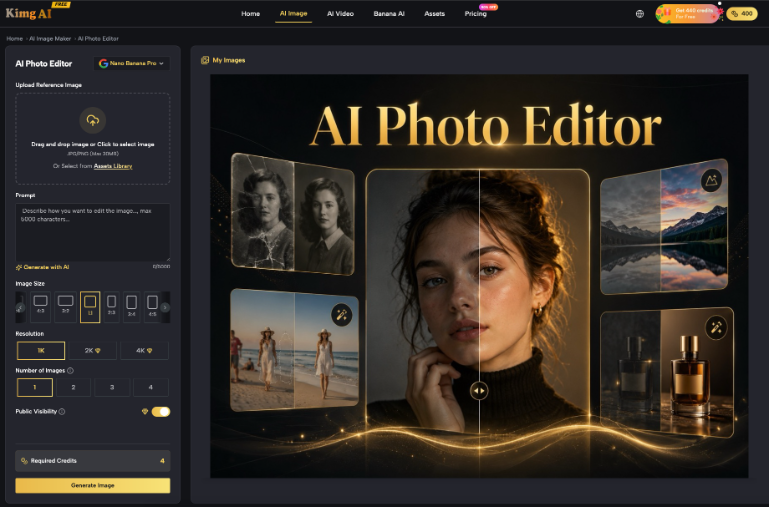
For example, a healthcare organization can begin with one high-quality patient education image and then create compressed and low-contrast copies. Each version can be edited using the same background replacement or enhancement request. After generation, reviewers can compare every result side by side to evaluate which details remain accurate and which become distorted. This process helps organizations develop editing guidelines based on objective testing rather than assumptions.
Comparing Clean and Low-Quality Medical Images
One of the biggest advantages of dirty data testing is the ability to compare multiple versions of the same image under identical conditions. During comparison, healthcare professionals should focus on whether the AI keeps important visual information consistent across every version.
Medical equipment should maintain its original shape, educational labels should remain readable, and patient features should stay unchanged. Even if the edited background looks attractive, the result cannot be considered successful if important healthcare information has been altered. These comparisons help organizations identify the minimum image quality required for dependable editing.
Why Preserving Medical Details Matters
Dirty data testing helps reviewers examine small elements such as medical devices, skin texture, printed labels, protective equipment, charts, and measurement markings. When labels or small details are unreadable, AI should not be expected to recreate them accurately. In these situations, replacing unclear sections with approved references or manually adding text after editing produces more reliable results.
Improving Images Before AI Editing
Testing often shows that poor source images are responsible for many editing failures. Instead of repeatedly changing prompts, healthcare teams can improve the original file before running AI again. Increasing local contrast, removing unnecessary borders, correcting lighting, or obtaining the original image instead of a compressed screenshot can significantly improve editing accuracy.
Best Practices for Healthcare Teams
Healthcare organizations should develop repeatable testing procedures that every team member can follow. The same authorized source image should be used when creating different quality versions, and only one image characteristic should be changed at a time. Editing instructions, output size, and aspect ratio should remain consistent throughout the evaluation so that comparisons remain fair.
Conclusion
Dirty data testing offers medical institutions a realistic way to assess artificial intelligence image editing under actual circumstances instead of perfect displays. By evaluating the same edits across several image qualities using a consistent testing process, healthcare teams can develop reliable workflows, preserve important visual information, and make informed decisions about when source images should be improved before AI editing begins.
Other Articles You May Find of Interest...
- How Dental Practices Can Build a Trustworthy Digital Front Door
- 15 Steps to Start a Healthcare Marketing Agency From Scratch
- The Healthcare Marketer’s Guide To Publishing AI-Assisted Content Responsibly
- Telehealth SEO: the two constraints nobody writes about
- How To Create Ai Video For Clinic Waiting Rooms
- How to Make Your Dental Practice Stand Out From the Crowd
- Why Your Health Practice Is Harder to Find on Google Than a Pizza Shop