




Your Health Magazine Contributor
4201 Northview Drive
Suite 102
Bowie, MD 20716
More Healthcare Careers Articles
Travel Nursing Jobs in Winter: How Respiratory Season and Holiday Leave Shape Hospital Staffing in Maryland, Virginia, and DC
Every winter, emergency rooms fill, pediatric units run out of beds, and staff take leave at the same time. Here is how hospitals in the region plan for that overlap.
The pattern repeats each year across the Washington region. Flu activity climbs through December. RSV fills pediatric beds. Cold weather brings falls and cardiac events into emergency departments. At the same time, permanent nurses take the holiday leave they have saved all year. Hospitals in Maryland, Northern Virginia, and the District plan for that collision months ahead, and short-term contract nurses are one of the main tools they use. For patients, the result is a familiar winter experience: a busier hospital and some unfamiliar faces on the unit. This article explains what those contract positions are, why they cluster in winter, how licensing works across three jurisdictions, and what the arrangement means for the people being treated.
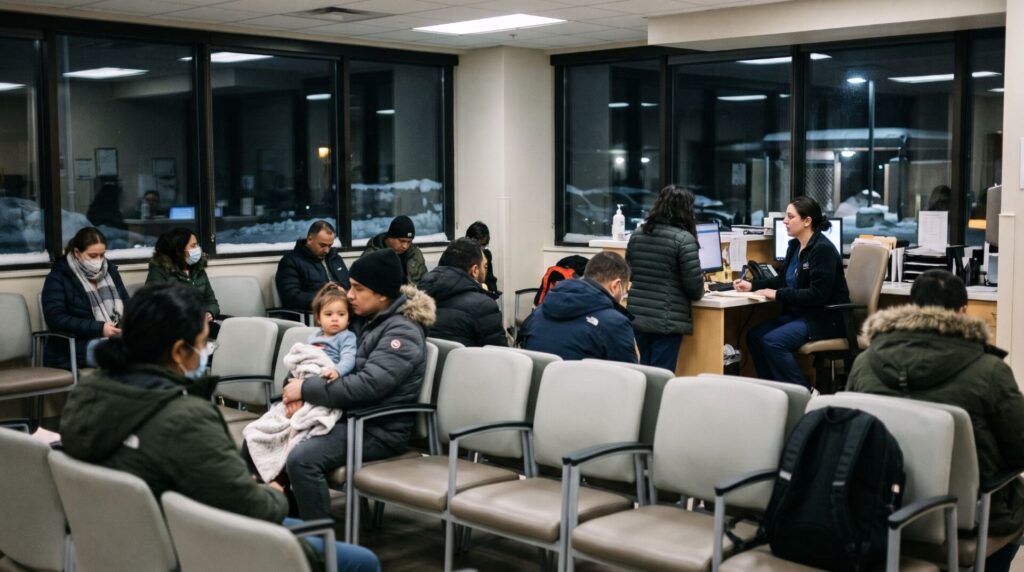
Winter brings flu, RSV, and cold-weather injuries into emergency departments at the same time permanent staff take holiday leave.
What travel nursing jobs are and why they cluster in winter
The term describes a contract, not a kind of nursing. A hospital with an open position, or a position it expects to open, places an order with a staffing agency. The agency recruits a licensed nurse, employs that nurse, and places them at the facility for a defined period, usually thirteen weeks. Most travel nursing jobs are posted with a start date and an end date already attached, and in winter those dates line up with a known peak. A contract that starts in mid-November runs through the middle of February, which covers the weeks when respiratory illness and staff absences overlap most. That timing is not an accident. Hospitals forecast winter census from previous seasons, and agencies see order volume rise in early fall as those forecasts turn into contracts.
Respiratory season: the main driver of winter travel nursing jobs
The Centers for Disease Control and Prevention describes a flu season that often begins to rise in October, peaks between December and February, and can last into May. RSV follows a similar shape, with activity building in the fall and peaking in winter, and it hits infants and older adults hardest. In recent years, COVID-19 has added a winter wave of its own. Each virus sends patients to different parts of a hospital. RSV crowds pediatric units and children’s hospitals. Influenza and COVID-19 push adult volumes in emergency departments, medical units, and intensive care. A hospital cannot hire permanent staff for a surge that lasts three months, so it adds contract nurses to the units that carry the load. The table below shows the main winter drivers and where they land.
| Winter driver | Units most affected | Typical contract window |
|---|---|---|
| Influenza | Emergency, medical-surgical, ICU | November to February |
| RSV | Pediatrics, pediatric ICU, NICU | October to January |
| COVID-19 winter wave | Emergency, medical-surgical, ICU | December to February |
| Cold-weather injuries and cardiac events | Emergency, cardiac, orthopedics | December to March |
| Holiday and school-break leave | All units, especially nights and weekends | Mid-December to early January |
Holiday leave: the second reason for travel nursing jobs in December
Illness explains the patients. Leave explains the gaps. Nurses with families schedule time off around Thanksgiving, winter school breaks, and the week between Christmas and New Year’s Day. A unit that runs short on those dates has no slack left when January volumes arrive. Many winter contracts address this directly. A typical clause requires the contract nurse to work at least one of the major holidays, which spreads the burden instead of leaving it on whoever is newest. Census often dips in the last week of December and then rises sharply in early January, when post-holiday illness arrives all at once. The sequence below shows how a winter contract usually comes together, from a hospital’s first forecast to the end of the assignment.
- Late summer: the hospital reviews prior winters and projects census and leave by unit.
- September to October: orders go to agencies with November or December start dates.
- October: nurses submit profiles, complete a short interview, and begin credentialing.
- November: the contract nurse starts, completes orientation, and joins the schedule.
- December to February: the assignment covers the peak, including a holiday shift.
- February to March: the contract ends or extends as respiratory activity falls.

Winter contracts are planned months ahead: orders go out in the fall so that licensed nurses are on the schedule before the December peak.
Licensing for travel nursing jobs across Maryland, Virginia, and DC
The region has a licensing distinction that shapes which winter contracts fill fastest. Maryland and Virginia participate in the Nurse Licensure Compact (NLC). Nurses holding valid multistate licenses can practice in both states under the compact without obtaining separate licenses. The District of Columbia is not a member. A nurse taking a DC contract needs a separate DC license, and that application adds weeks to the timeline. Licensing is the single most common reason a start date slips. A nurse planning a DC assignment for December therefore begins the application well before the order appears. Hospitals in the District know this, and it is one reason their winter orders require earlier planning than those just across the river.
What this means for patients in the region
A contract nurse at the bedside in January holds the same license, or multistate privilege, as the permanent staff around them, and clears the same credentialing before the first shift. On the unit, they follow the same care plans, the same charting system, and the same safety protocols. The visible difference is that they are newer to the building, and they will leave when the contract ends, usually as the season winds down. For a patient or family, the useful thing to know is simply why the faces change in winter, and that the standards behind them do not. A few points sum it up:
- Winter contracts exist because illness and staff leave peak at the same time.
- Contract nurses meet the same licensing and credentialing standards as permanent staff.
- A multistate license covers Maryland and Virginia, but DC requires its own license.
- Most winter assignments run from November through February and end as volumes fall.
Hospitals have used this model for decades, and it is one reason a surge in December does not turn into closed units in January. The season itself is the variable. Some years peak early, some late, and some bring two viruses at once. What stays constant is the planning behind it: a forecast in late summer, orders in the fall, and licensed nurses in place before the first cold week. Knowing that chain exists makes a busy winter hospital easier to read. The crowd in the waiting room reflects the season, and the unfamiliar nurse on the floor reflects the plan that was made for it.
Other Articles You May Find of Interest...
- Travel Nursing Jobs in Winter: How Respiratory Season and Holiday Leave Shape Hospital Staffing in Maryland, Virginia, and DC
- The Importance of Continuing Education in Healthcare
- Best ADAT Prep Courses for Dental Students and Dentists (2026)
- What Disqualifies Candidates in Healthcare Background Checks?
- What to Know Before Choosing an Accelerated Nursing Path
- What Is Pre-Nursing and Is It Worth It
- Beyond the Brochure: Choosing a Medical School With Your Future in Mind