






More Health Technology Articles
The Future of Recovery: How AI, Wearables and VR Are Solving the Biggest Healing Challenges in 2026
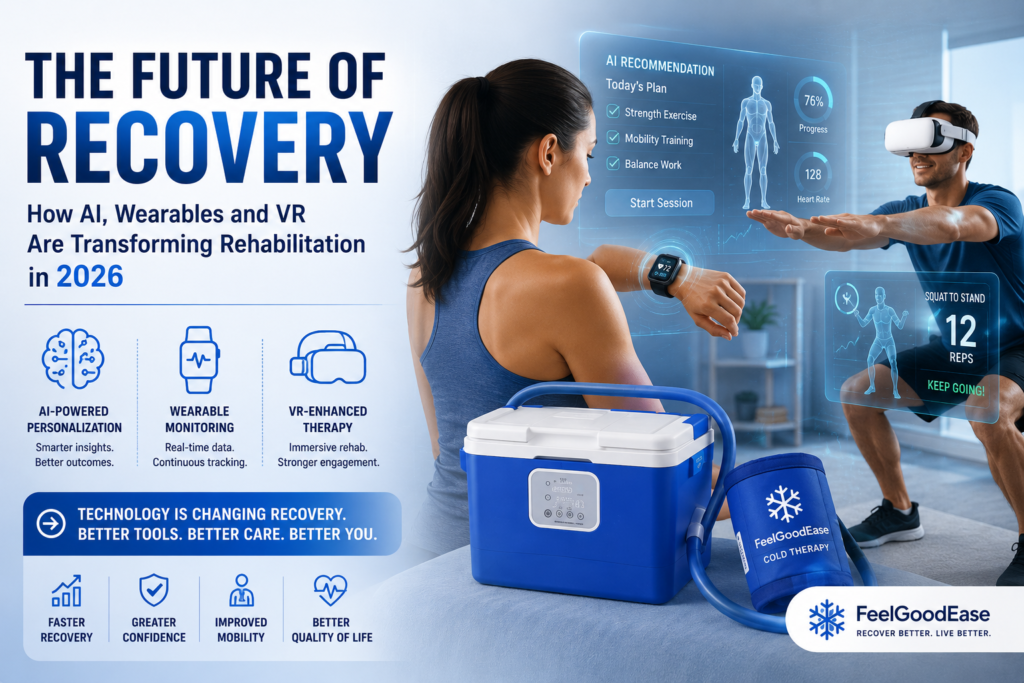
AI, wearable devices, virtual reality, and remote monitoring are transforming recovery by providing personalized guidance, continuous progress tracking and real-time feedback. Used alongside professional care, these technologies help improve rehabilitation outcomes while making recovery more convenient and accessible.
Recovery doesn’t usually become difficult in the operating room; it becomes difficult after patients return home. That’s when questions begin. Am I doing these exercises correctly? Am I pushing too hard? Why does progress feel so slow?
Over the years, I’ve found that uncertainty is one of the biggest obstacles to a successful recovery. Even with an excellent treatment plan, many people struggle to stay consistent simply because they don’t receive enough feedback between appointments.
Instead of relying only on occasional clinic visits and printed exercise sheets, patients can now receive personalized support at home. Whether it’s a wearable that tracks daily activity, an AI-powered rehabilitation platform that checks exercise technique, or virtual consultations with a physical therapist, technology is making recovery more connected than ever before.
In this guide, I’ll explain how these technologies work, the problems they solve and how to choose the right solution based on your recovery needs. At FeelGoodEase, I’ve also seen how combining evidence-based recovery tools with professional guidance helps patients recover with greater confidence.
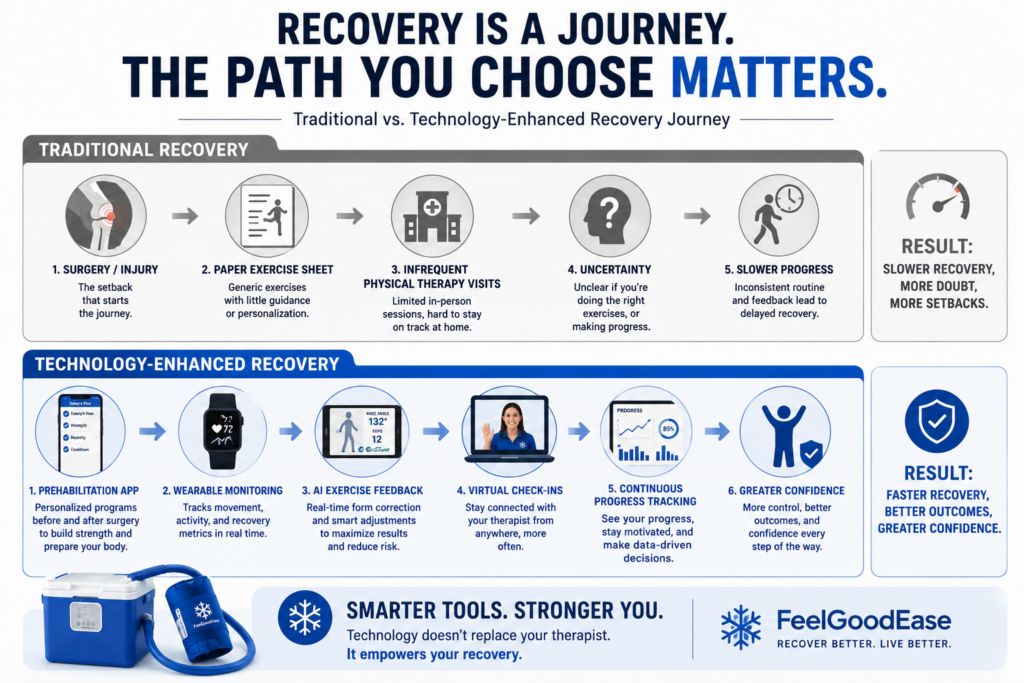
Traditional Recovery: Surgery/Injury → Paper Exercise Sheet → Infrequent Physical Therapy Visits → Uncertainty → Slower Progress
Technology-Enhanced Recovery: Prehabilitation App → Wearable Monitoring → AI Exercise Feedback → Virtual Check-Ins → Continuous Progress Tracking → Greater Confidence
Why Traditional Recovery Still Falls Short
Recovery affects both the body and the mind. Anxiety, frustration and isolation can reduce motivation, making it harder to stay consistent with rehabilitation and delaying overall progress.
A patient once told me, “The hardest part wasn’t the pain, it was not knowing whether I was recovering the right way.” That uncertainty is something many people experience after leaving the hospital.
When confidence drops, recovery often slows. People become hesitant to move, skip exercises, or worry that every discomfort signals a setback. Research has linked post-operative depression with poorer functional outcomes, reinforcing the importance of addressing emotional well-being alongside physical rehabilitation.
Why Recovery Timelines Vary From Person to Person
Recovery isn’t based on a calendar. Age, overall health, injury severity and rehabilitation consistency all influence how quickly someone regains strength and mobility.
Many rehabilitation plans provide estimated timelines but recovery rarely follows an exact schedule. Some people progress quickly while others simply need more time and that’s completely normal.
Instead of comparing your progress with someone else’s, focus on small improvements each week.
Recovery Insight: Set measurable goals using your wearable device or recovery app, such as increasing your daily step count by around 10% each week or completing every scheduled exercise session.
Why Patients Stop Following Their Recovery Plans
Most people don’t abandon rehabilitation because they lack motivation. They stop because they lose confidence, forget exercises, or aren’t sure whether they’re making progress.
Without regular feedback, home rehabilitation can feel overwhelming. It’s easy to question whether an exercise is helping or whether discomfort is part of normal healing.
Digital recovery platforms reduce that uncertainty by providing reminders, progress tracking, and real-time feedback, helping patients stay engaged throughout their recovery journey.
Access to Care Shouldn’t Depend on Where You Live
Recovery outcomes shouldn’t be determined by your location, yet access to rehabilitation still varies widely between communities.
Healthcare professionals sometimes describe this as the “zip code lottery.” Someone living near a rehabilitation center may receive regular follow-up care, while another patient in a rural area might travel hours for the same appointment.
That’s exactly why telehealth and remote monitoring have become valuable additions to modern rehabilitation, bringing expert support closer to home.
Recovery Also Has a Financial Cost
The cost of recovery extends beyond medical bills. Travel expenses, missed work, rehabilitation equipment, and repeated appointments can place additional pressure on patients and their families.
While digital health tools aren’t always the cheapest option, they can reduce unnecessary clinic visits and support more effective home-based rehabilitation. Combined with evidence-based strategies such as prescribed exercise and appropriate cold therapy, they help many patients recover more efficiently without compromising the quality of care.
Technology Solution Categories: A Comparative Overview
No single recovery technology is right for everyone. The best solution depends on your condition, recovery stage and treatment goals. Understanding what each tool does can help you choose technology that supports and does not complicate your recovery journey.
Recovery technology should solve a specific problem, whether that’s staying active, improving exercise technique, reducing unnecessary clinic visits or keeping your healthcare team informed. Rather than focusing on the latest device, choose the tool that addresses your biggest recovery challenge.
The table below compares the most common recovery technologies, explaining how they work, the problems they solve, the strength of current clinical evidence, and what you can typically expect in terms of accessibility and cost.
| Technology | How It Works | Best For | Examples | Clinical Evidence | Typical Cost & Access |
| Wearable Activity Trackers | Track steps, heart rate, sleep, and daily movement through built-in sensors synced to a mobile app. | Improving activity, motivation, and progress tracking. | Apple Watch, Fitbit, Oura Ring | Strong. Research supports improved physical activity and better rehabilitation adherence. | $100-$400 one-time purchase. Widely available. |
| AI-Powered Physical Therapy | Uses smartphone cameras and AI to analyze movement, correct exercise form, and adjust rehabilitation programs. | Performing exercises correctly at home. | Sword Health, Hinge Health, Kaia Health | Strong. Clinical trials report outcomes comparable to in-person therapy for selected conditions. | Often covered by employers or insurance. Self-pay plans typically $20-$100/month. |
| Virtual Reality Rehabilitation | Uses immersive environments to make rehabilitation exercises more engaging while helping reduce pain perception. | Improving motivation and reducing fear of movement. | XRHealth, Penumbra REAL System | Moderate. Growing evidence supports better engagement and pain management. | Hardware typically $300-$1,000+. Many clinics also provide supervised sessions. |
| Remote Patient Monitoring | Connected medical devices continuously share health data with healthcare providers for ongoing monitoring. | Detecting complications early and improving follow-up care. | Current Health, Biofourmis, VitalConnect | Strong. FDA-cleared systems have reduced hospital readmissions in appropriate patient groups. | Often covered for eligible patients. Some programs require a physician’s referral. |
| Digital Therapeutics (DTx) | Software-based treatments that deliver clinically validated behavioral support and recovery guidance. | Supporting long-term recovery and behavior change. | reSET®, Mahana IBS, Post-operative Recovery Apps | Strong. Products undergo clinical evaluation before regulatory authorization where applicable. | Coverage varies and some require a prescription. |
| Telehealth Platforms | Enable secure video consultations and messaging with healthcare professionals. | Accessing specialist care from home. | Teladoc, Amwell, Doxy.me | Strong. Studies show comparable outcomes for many virtual rehabilitation visits. | Usually covered by insurance, with co-pays commonly ranging from $0-$50. |
| Patient Education Portals | Provide recovery plans, reminders, educational content, and secure messaging in one place. | Staying organized and following treatment instructions. | MyChart, HealthLoop | Moderate. Associated with better patient engagement and treatment adherence. | Commonly included through hospitals and healthcare systems at no extra cost. |
Note: Costs and insurance coverage vary by country, healthcare provider and individual health plans. Before purchasing any recovery technology, check whether your employer, hospital or insurance provider offers access through an existing health program.
How Each Technology Solves Specific Recovery Challenges
Wearable activity trackers monitor movement, heart rate, and sleep, giving patients objective feedback throughout recovery. This data makes it easier to measure progress, stay motivated, and spot habits that may be slowing healing.
Recovery doesn’t stop when a therapy session ends. Wearable devices continue collecting data throughout the day using accelerometers, heart rate sensors, and sleep tracking. Together, these insights create a clearer picture of how your body is recovering, since quality sleep and regular movement are closely linked to tissue repair and pain management.
I once supported a patient recovering from knee replacement surgery who struggled to rebuild daily activity. Rather than focusing on a distant milestone, we tracked small increases in daily steps. Within a few weeks, better mobility was accompanied by improved sleep and less morning stiffness, making progress easier to recognize.
Recovery Insight: Before buying a new device, check what your smartphone can already do. Many phones include step tracking and support reliable rehabilitation apps that are enough for many recovery plans.
AI-Powered Physical Therapy: Real-Time Feedback at Home
AI-powered rehabilitation platforms analyze your movements through a smartphone camera, providing instant feedback and adjusting exercises as your recovery progresses.
Printed exercise sheets can’t tell you whether your technique is correct. AI-powered rehabilitation platforms solve that problem by using computer vision to track body movement, identify mistakes and provide immediate corrections while you exercise.
The biggest benefit isn’t replacing a physical therapist, it’s reducing uncertainty between appointments. Instead of wondering whether you’re performing an exercise correctly, you receive guidance while you’re moving.
Tracking progress is only part of recovery. Managing pain and inflammation is equally important, which is why many patients pair activity monitoring with a cold therapy device to stay comfortable after rehabilitation sessions. As one physical therapist noted, “Technology doesn’t replace clinical care, it extends it.”
Recovery Insight: Treat AI as a coach, not a replacement for professional care. Early feedback helps correct small movement errors before they become painful habits.
Leading platforms include Hinge Health, Sword Health and Kaia Health, each offering evidence-based rehabilitation for different musculoskeletal conditions.
Good to know: AI rehabilitation still requires a compatible smartphone, enough space to exercise safely and professional oversight after surgery or during more complex rehabilitation programs.
Remote Patient Monitoring: Detecting Problems Earlier
Remote patient monitoring (RPM) helps healthcare teams track recovery between appointments, allowing them to identify potential complications sooner and respond before they become more serious.
Recovery doesn’t happen only during clinic visits. Connected wearable patches and medical devices continue monitoring key health indicators such as heart rate, oxygen saturation, temperature and activity levels after you return home. If readings change unexpectedly, your care team can review the data and decide whether early intervention is needed.
A patient recovering from surgery developed subtle changes in heart rate and temperature that were detected through remote monitoring before noticeable symptoms appeared. Early follow-up confirmed the start of an infection allowing treatment to begin before hospital readmission was necessary. This is where AI-powered monitoring is making the biggest difference turning continuous health data into timely clinical decisions.
Recovery Insight: Ask your healthcare provider or insurance company whether remote patient monitoring is included in your care plan. Many insurers now cover eligible digital monitoring programs for qualifying patients.
Leading platforms include Current Health, Biofourmis and VitalConnect all designed for clinical monitoring rather than general fitness tracking.
Good to know: Most RPM programs require a healthcare provider’s referral or prescription. Before enrolling make sure you understand how your health information is stored, shared and protected.
Digital Therapeutics: When Software Supports Recovery
Digital therapeutics (DTx) use clinically validated software to deliver evidence-based treatment and recovery support. Unlike standard wellness apps, many are evaluated for safety and clinical effectiveness before entering patient care.
Recovery often involves more than physical healing. Digital therapeutics provide structured education, symptom tracking, behavioral coaching, and ongoing support that complement traditional treatment plans.
One example is RecovryAI, which received FDA Breakthrough Device Designation for supporting post-operative recovery. Another is reSET, developed to assist people receiving treatment for substance use disorders. Together, they demonstrate how software can play a meaningful role in patient care when supported by clinical evidence.
Recovery Insight: Choose digital therapeutics that have received FDA clearance or Breakthrough Device Designation whenever possible. These programs have undergone additional regulatory review for safety and effectiveness.
Although access continues to improve, many digital therapeutics still require a prescription, and insurance coverage varies between providers and health plans.
Telehealth: Expert Care Without the Travel
Telehealth allows patients to meet with surgeons, physical therapists, and rehabilitation specialists remotely, improving access to care while reducing unnecessary travel.
Many routine follow-up appointments don’t require an in-person visit. Video consultations allow healthcare providers to review progress, answer questions, and adjust rehabilitation plans without interrupting recovery.
A patient living in a rural community was able to complete post-operative follow-ups through telehealth instead of making several long-distance trips to a rehabilitation clinic. Regular virtual check-ins helped maintain progress while saving time and reducing travel-related stress.
Recovery Insight: Combine telehealth with data from your wearable device or recovery app. Sharing objective progress with your healthcare provider leads to more informed decisions during virtual appointments.
Platforms such as Doxy.me, Teladoc, and Amwell have made virtual rehabilitation more accessible, and research continues to show that many follow-up visits can be managed as effectively online as they can in person.
Good to know: Telehealth complements traditional care but doesn’t replace it. Hands-on assessments, manual therapy, and certain physical examinations still require an in-person visit.
Patient Education Portals: Keeping Recovery on Track
Patient portals bring your recovery plan, medication reminders, educational resources, and healthcare team together in one secure place, making it easier to stay informed and organized throughout rehabilitation.
Clear guidance builds confidence. Instead of relying on printed instructions that can easily be misplaced, patient portals provide daily reminders, recovery videos, appointment updates, and secure messaging whenever questions arise.
A patient recovering from orthopedic surgery felt overwhelmed during the first few weeks at home. Daily reminders and direct communication with the care team helped reduce uncertainty, making it easier to stay consistent with rehabilitation.
Recovery Insight: Choose a platform that supports your entire care team. When your surgeon, physical therapist, and primary care provider have access to the same recovery information, treatment decisions become more consistent.
Platforms such as MyChart provide access to medical records, appointments, and secure messaging, while HealthLoop focuses on automated check-ins and guided recovery education. Most hospital-based portals are built around evidence-based care pathways and follow healthcare privacy standards.
Good to know: Features vary between healthcare providers, and some platforms may require a little time to learn.
Overcoming Common Barriers to Recovery Technology
Cost, internet access, and unfamiliar technology can discourage patients from using digital recovery tools. Fortunately, most of these barriers have practical solutions.
Start With What You Already Have
Many people don’t need expensive equipment to begin. A smartphone can track daily steps, support video consultations, and run evidence-based rehabilitation apps, making it a practical starting point for recovery.
Recovery Insight: Before purchasing a new device, ask your insurance provider whether telehealth, remote monitoring, or digital rehabilitation programs are covered under your health plan.
Making Technology More Accessible
Living far from a rehabilitation clinic doesn’t have to limit your recovery. Telehealth appointments, caregiver support, simplified tablets and community digital health programs are making rehabilitation more accessible for people in rural and underserved areas.
Building Confidence With New Technology
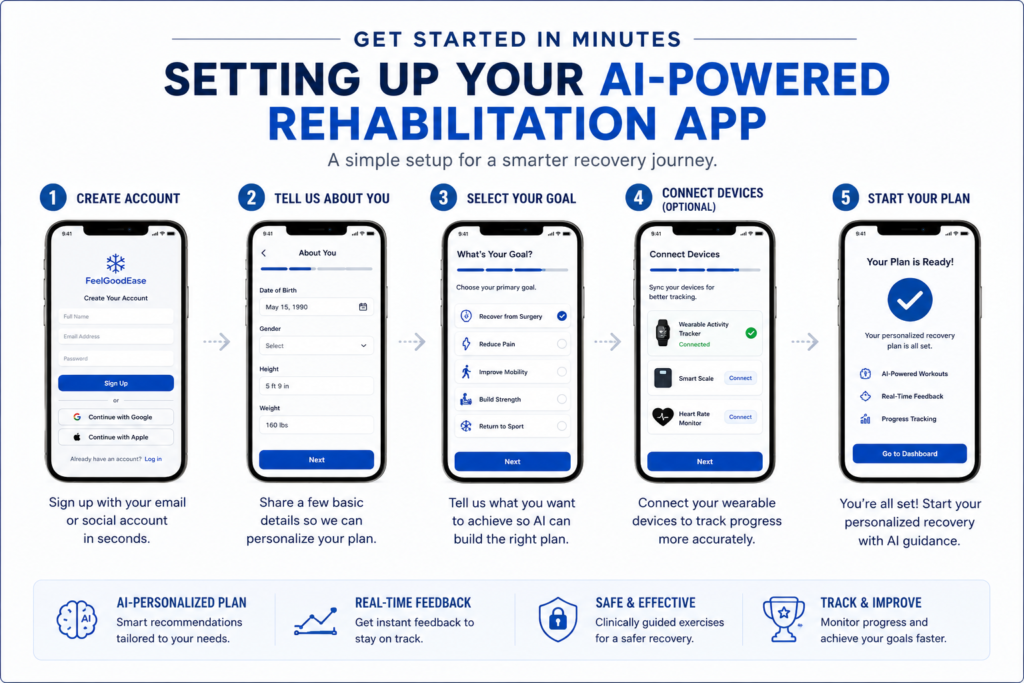
Most recovery platforms are designed for first-time users and require only a few simple steps to get started.
Getting started is simple:
- Download the recommended app.
- Connect your wearable device if needed.
- Complete your profile.
- Follow the guided setup.
- Begin your exercises or join your virtual appointment.
Protecting Your Health Information
Before using any recovery app or connected device, review its privacy policy and confirm that it follows recognized healthcare data security standards.
Recovery Insight: Recovery isn’t only physical. If stress, anxiety or isolation are affecting your progress, consider evidence-based digital tools that provide guided relaxation, behavioral support or virtual communities alongside your rehabilitation plan.
Conclusion: Smarter Technology, Better Recovery
Technology is reshaping rehabilitation, but it delivers the greatest value when combined with professional guidance, consistent rehabilitation, and evidence-based recovery strategies. Whether you’re using a wearable to monitor progress, an AI platform to refine your exercise technique, or telehealth to stay connected with your care team, the objective remains the same: a safer, more confident recovery.
Key Takeaways
As recovery technology continues to evolve, the most successful outcomes still come from combining innovation with personalized care. Keep these practical points in mind as you build your recovery plan:
- Recovery technology can improve adherence, provide real-time feedback, and expand access to quality care.
- Different technologies address different recovery challenges, so choose tools that match your individual needs and rehabilitation goals.
- Clinical evidence supporting AI-assisted rehabilitation, wearable devices, and digital health solutions continues to grow.
- Start with simple, accessible tools before investing in more advanced technologies.
- Work closely with your healthcare team to ensure any recovery technology fits your treatment plan.
- Combine digital tools with proven recovery strategies, including a cold therapy system, regular exercise, quality sleep, and professional guidance to support a safer and more comfortable recovery.
Other Articles You May Find of Interest...
- The Real Cost of an EHR: 6 Costs Beyond the License
- 5 Managed PACS Support Companies for Hospitals and Imaging Centres
- 5 QR Code Generators for Hospitals, Clinics, and Health Information
- 5 FHIR Software Development Companies to Consider in 2026
- Pulsed Field Ablation Is Shaking Up the World of EP Therapy
- Armin Ernst: What AI Actually Changes in Healthcare Delivery
- AI Can Fix Prior Authorization, but Only With Humans in the Loop





