Your Health Magazine Contributor
4201 Northview Drive
Suite 102
Bowie, MD 20716
More Health News & Research Articles
Role of SCARA5 ELISA Kit in Cancer Research
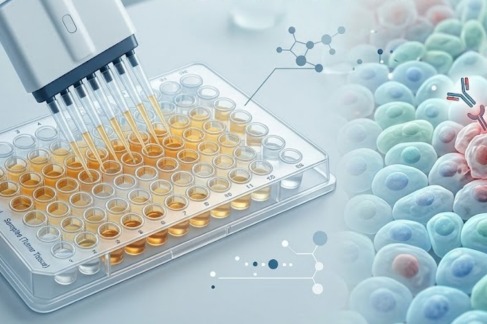
Normally, cells in the body grow, divide, and die in a controlled way. The body replaces old or damaged cells with new ones when needed. DNA helps control these processes and keeps cell growth in balance. If a cell becomes badly damaged, it can stop dividing or die. This control helps keep tissues and organs healthy.
However, when these controls stop working properly, causing abnormal cells to grow and divide uncontrollably, this leads to cancer. Over time, these cells can form a mass called a tumor.
Not all tumors are cancer. Benign tumors do not usually spread to other parts of the body. Malignant tumors are cancerous and can invade nearby tissues or spread to distant organs. Early diagnosis can be important in many cancers, but the SCARA5 ELISA kit is a research tool rather than an established diagnostic test. Researchers can use it to investigate SCARA5 protein levels in experimental samples.
What is the SCARA5 ELISA Kit?
SCARA5, or scavenger receptor class A member 5, is a membrane-associated scavenger receptor. These receptors participate in processes such as cellular uptake, recognition of extracellular molecules, and regulation of inflammatory and tissue responses.
SCARA5 has been studied in relation to tumor development and progression, including cell proliferation, invasion, and the tumor microenvironment. Researchers may measure its levels during cancer research using methods such as ELISA.
ELISA stands for enzyme-linked immunosorbent assay. It is a plate-based technique used to detect and quantify the presence of an analyte present in the sample. It relies on antigen-antibody interactions. ELISA can provide sensitive and specific measurements when an assay is appropriately validated and used according to its intended research application.
How SCARA5 ELISA Kit Helps in Cancer Research?
Investigate SCARA5 Expression in Tumor Models
Researchers use ELISA kits to quantify and compare SCARA5 levels across experimental groups.
They compare:
- Normal tissue and tumor tissue
- Untreated and treated cancer models
- Different cancer cell lines
- Early-stage and advanced experimental models
- Control and genetically modified cells
This helps researchers determine whether SCARA5 levels change under specific experimental conditions.
Researchers also use this data with results from Western blotting, immunohistochemistry, qPCR, or other analytical methods to build a more comprehensive picture of SCARA5 regulation.
Study SCARA5 and Tumor Progression
Tumor progression involves complex interactions between cancer cells and their surrounding environment. Changes in the expression of regulatory proteins may influence cellular behavior and signaling pathways.
So, researchers use SCARA5 measurements to investigate whether changes in SCARA5 are associated with characteristics such as increased proliferation, migration, or invasion in experimental cancer models.
For example, a study could measure SCARA5 protein levels in control and cancer cell populations and then compare these results with functional assays. Researchers can investigate the underlying mechanisms using additional molecular and cellular techniques, especially if SCARA5 levels change alongside alterations in cellular behavior.
The ELISA measurement itself does not establish a causal relationship, but it can provide useful quantitative evidence for further investigation.
SCARA5 in Cancer Biomarker Studies
Cancer biomarker research often involves identifying molecules that differ between disease and control groups. SCARA5 may be investigated as a potential biomarker in experimental studies where its expression is altered.
A SCARA5 ELISA kit helps generate quantitative protein-level data. Researchers can analyze these measurements alongside clinical, pathological, or experimental variables.
For example, SCARA5 concentrations could potentially be evaluated in different sample groups to determine whether observed differences warrant further investigation.
However, researchers would need substantial validation involving appropriate sample populations, assay performance, specificity, sensitivity, and independent studies before considering SCARA5 as a diagnostic or prognostic biomarker.
Evaluate Experimental Cancer Treatments
SCARA5 measurements may also be useful in preclinical drug and treatment research.
Researchers measure SCARA5 before and after exposure to an experimental compound to determine whether treatment affects SCARA5 expression. They compare changes in SCARA5 with other endpoints, including cell viability, apoptosis, proliferation, or tumor growth.
This helps researchers explore whether SCARA5 is involved in a treatment-related molecular response.
Remember, changes in SCARA5 concentration should be interpreted together with other experimental findings rather than being considered evidence of treatment efficacy on their own.
Explore SCARA5-Related Molecular Pathways
Cancer involves many genes, proteins, and signaling pathways. SCARA5 may interact with these pathways and influence how cancer cells behave. So, researchers measure SCARA5 levels to explore these molecular changes in cancer models.
For example, researchers compare SCARA5 protein levels with changes in proteins involved in cell growth, cell death, migration, or inflammation. They can also combine ELISA results with gene expression and functional studies.
These findings can help researchers understand how changes in SCARA5 may relate to cancer-related processes. They can then investigate these pathways further using techniques such as Western blotting, qPCR, immunohistochemistry, or cell-based assays.
The Bottom Line
SCARA5 ELISA kits can support experimental cancer research by providing quantitative protein measurements, but results depend on factors such as assay validation, sample quality, appropriate controls, and interpretation alongside other experimental findings. Researchers should select an assay suited to their sample type and research question and follow the manufacturer’s protocol.
Other Articles You May Find of Interest...
- The Evolution of Incretin Mimetic Research: How Triple Receptor Agonists Are Redefining Metabolic Science
- Peptide Research Across Biological Systems: Comparing Metabolic Signalling and Cellular Pathway Investigations
- How Does Tirzepatide Work? What Dual GIP/GLP-1 Agonism Studies Are Exploring in the Lab
- GLP-1, GIP and Glucagon Receptors: Exploring Multi-Receptor Research
- Role of SCARA5 ELISA Kit in Cancer Research
- The $28 Billion Habit of Not Checking Your Inputs
- BPC-157 Peptide Benefits: What Research Says About Recovery, Healing and Tissue Repair