






Your Health Magazine
4201 Northview Drive
Suite #102
Bowie, MD 20716
301-805-6805
More Health Industry Insights Articles
5 Best Hospital Valet Service Companies and Healthcare Parking Providers Reviewed
Curb appeal that cures: why hospital parking sets the tone for patient care
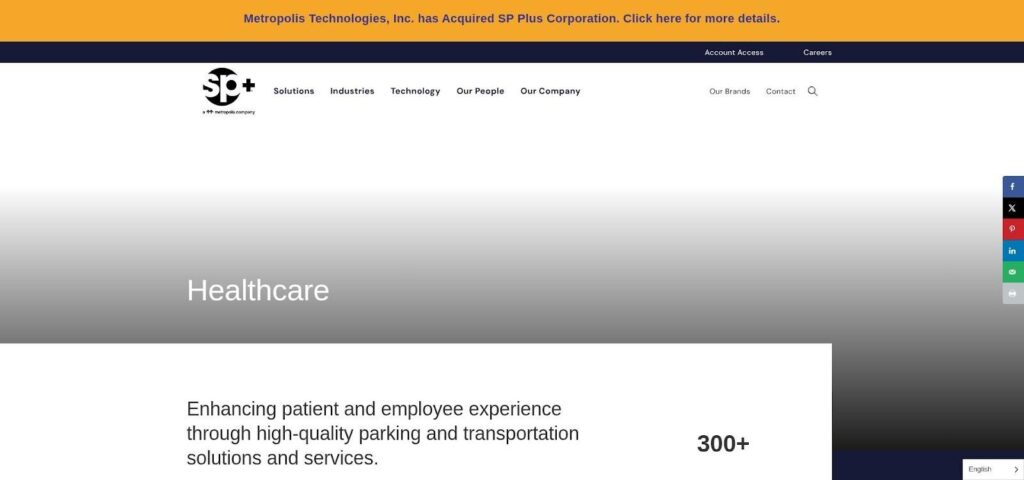
Picture the moment a patient turns into your drive. Before they meet a nurse, fill out paperwork, or see a marquee specialist, they judge you by the asphalt under their tires. A Deloitte survey found that 59 percent of patients rank travel ease and parking among the top factors shaping their care experience. The stakes aren’t just emotional; they’re financial. Hospitals that lead in patient experience post operating margins about 50 percent higher than their peers. Smooth parking delivers calmer arrivals, on-time appointments, and higher satisfaction—returns you’ll see as we dive in.
The trends rewriting the curb (2024–2026)
Parking once hid in the background. Today it operates like an extension of the emergency department: fast, data driven, and always under review.
Staffing tops every COO’s worry list. When the pandemic steered many valets into rideshare jobs, vendors raised wages and began cross-training teams. One attendant can now park cars, stage wheelchairs, and jump behind a shuttle when clinics empty. The payoff: fewer hand-offs, steadier service, and far less “short staffed again” chatter.
Technology has sprinted ahead too. Clipboards made room for QR codes, license-plate cameras, and text alerts that tell visitors exactly when their car is ready. Three of the four leading providers rolled out ticketless platforms last year, trimming retrieval time and streaming live demand data to facility dashboards. That feedback loop lets you add staff before lines snake past the door.
Hospitals also borrowed a page from airports by appointing dedicated curb managers. Coned lanes separate ride shares from patient drop-offs, while roving ambassadors keep wheelchairs staged and fire lanes clear. Entrances stay calm and safe even during the lunch rush.
Sustainability is now a must, not a nice-to-have. LAZ Parking’s pledge to install 50,000 EV chargers across its network signals where the market is headed. Operators are swapping gas carts for electric shuttles and enforcing no-idle rules that cut fumes at the door. Going green meets ESG goals, trims fuel spend, and shows patients that health values start outside the lobby.
Finally, safety habits born during COVID stayed put. Fresh gloves, steering-wheel wipes, and UV key cabinets moved from “extra” to baseline. Pair that hygiene with real-time valet metrics—wait times live on the same dashboard as HCAHPS—and parking becomes a measurable, improvable experience metric.
Stay tuned: autonomous-vehicle zones and AI demand forecasting are already in pilot, but the vendors we spotlight next deliver wins with the tech available today.
How we narrowed the field
Hundreds of businesses can park cars, but only a few truly understand hospital life. We started with ten vendors pulled from recent RFPs, merger news, and award rosters.
Next, we mined public case studies, state insurance databases, tech-launch press releases, and candid feedback from facilities directors. We wanted hard proof, not glossy brochures. If a provider failed to show measurable gains in patient satisfaction, wait times, or parking revenue, we set them aside.
Each contender faced the same scorecard. Patient-experience performance and technology counted most, since those factors now drive contract renewals. Financial value, healthcare compliance, and the ability to scale across multi-campus systems followed, with sustainability and fresh innovation rounding out the mix.
We assigned numeric values to every factor, totaled the scores, and verified the math with two external hospital advisers who review valet bids for a living. The result is a clear ranking of five leaders, plus a few honorable mentions you will see later.
In short, these five did more than talk a good game. They published their stats, opened their dashboards, and proved they belong on your shortlist.
1. FC Parking (boutique focus, big results)
Walk any FC-serviced campus and you will notice the difference before you reach the curb. Every attendant knows the clinical drill: privacy screens up, wheelchairs staged, engines off after thirty seconds. That rigor stems from a company built solely for hospitals. Because FC does not moonlight at hotels or arenas, training covers Joint Commission codes alongside hospitality cues. New hires rehearse genuine emergency scenarios, not just how to handle a stick shift.
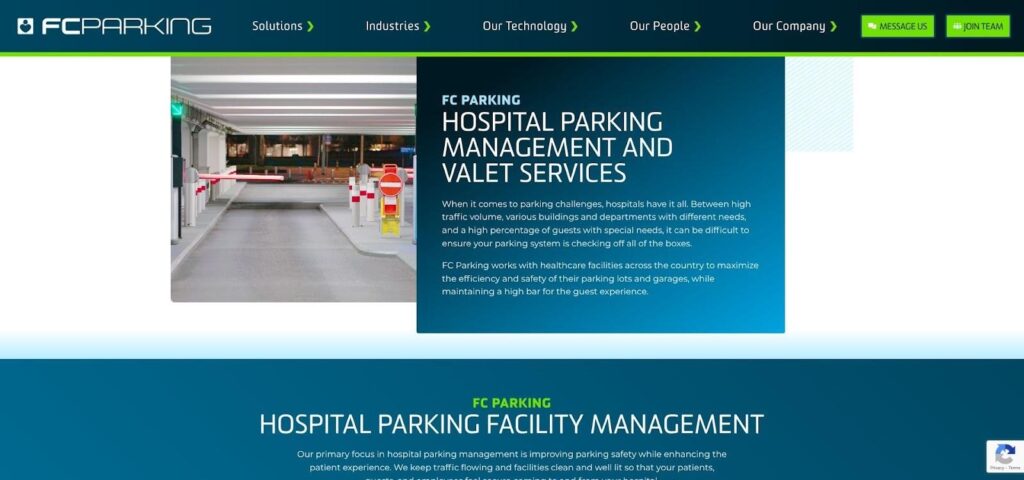
FC Parking hospital valet services healthcare landing page screenshot.
Mid-sized scale is the secret weapon. FC serves more than 150 properties nationwide, large enough to supply float staff when flu season spikes, yet lean enough that a regional vice president still walks the drive with you during go-live week. Clients appreciate instant access to decision makers, not ticket portals.
Technology amplifies that personal touch. FC’s proprietary platform scans a license plate as a car rolls up, starts a digital stopwatch, and texts the visitor a pickup link. Administrators watch the same timer on a live dashboard, so no one wonders why retrieval exceeds the five-minute goal. One Midwestern health system used the data to trim operating costs by 14 percent while lifting parking revenue by nearly one-third.
Sustainability appears in practical moves. Electric shuttles move staff from remote lots, no-idle rules keep exhaust away from chemo patients, and route-optimization software cuts wasted mileage. It is a green story rooted in dollars and sense.
Geography is the one caution flag. FC leads in the Midwest and Southeast, with growth corridors mapped but not yet staffed on the coasts. If you need immediate coverage in Phoenix or Portland, confirm rollout timelines early.
The hospital parking management guide offers a free curb-flow blueprint that drills into traffic oversight, safety walk-throughs, and shuttle coordination, mapping each KPI target so facilities teams can track progress from day one.
2. Towne Park (nationwide scale with five-star polish)
If you oversee a sprawling health system and want one playbook across every campus, Towne Park delivers. Its footprint covers more than 800 sites nationwide, including about 300 hospitals in over 40 states, so adding a location rarely means recruiting from scratch. One call and the 40 extra valets you need for next month’s cardiac-center opening appear, uniforms pressed and protocols memorised.
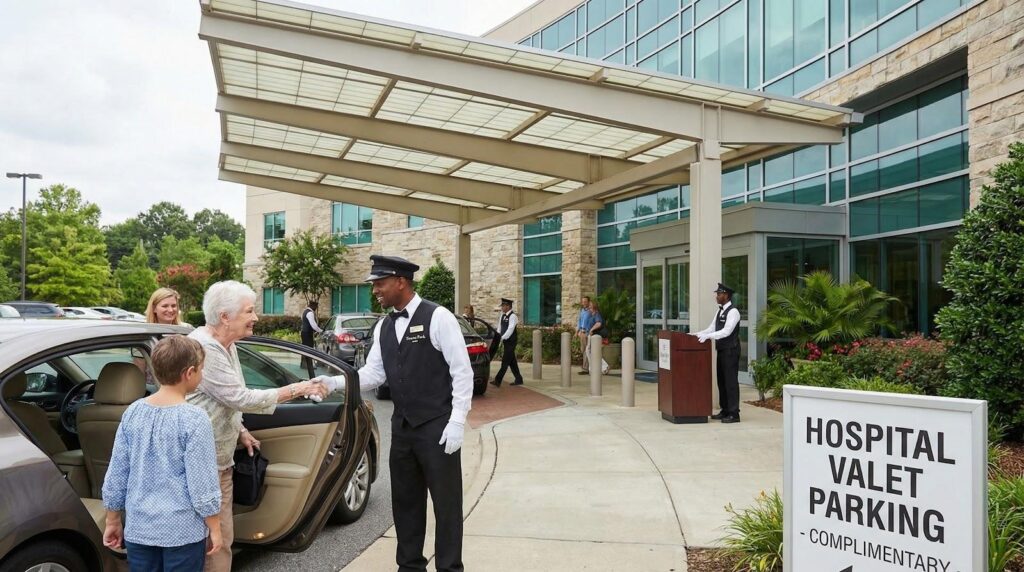
Towne Park hospital valet parking services page screenshot.
Service roots trace back to luxury hotels, and that DNA still shows. Greeters step forward with concierge-level warmth, address frequent visitors by name, and guide nervous families to registration. Behind the smiles sits Safe 360, a program that blends infection-control drills with Ritz-style hospitality standards. Mystery shoppers grade each site on grace and speed, keeping soft skills sharp.
Towne’s tech investment matches its reach. The Nexity platform links licence-plate recognition, mobile payments, and real-time occupancy sensors. Facilities teams view retrieval times and garage counts on the same dashboard they use for energy and environmental metrics. When an ER surge forms, alerts reach the local manager before cars stack up.
Bundled services improve the economics. Towne can fold shuttle buses, patient transport, and lobby concierge desks into one master agreement. The wider your scope, the more leverage you hold on rates, letting a premium operator fit the budget.
Watch the governance details. Smaller community hospitals should confirm a clear local point of contact; without one, you may feel like account number 742. Build service levels and escalation paths into the contract to gain the strength of a giant with the accountability of a neighbour.
3. LAZ Parking (tech-savvy green giant)
LAZ treats hospital parking as a data science project. Motion sensors feed occupancy heat maps, licence-plate cameras track average search time, and dynamic staffing models shift valets before queues form. The payoff shows: fewer cars circle, and the front drive stays calm even on overrunning clinic days.
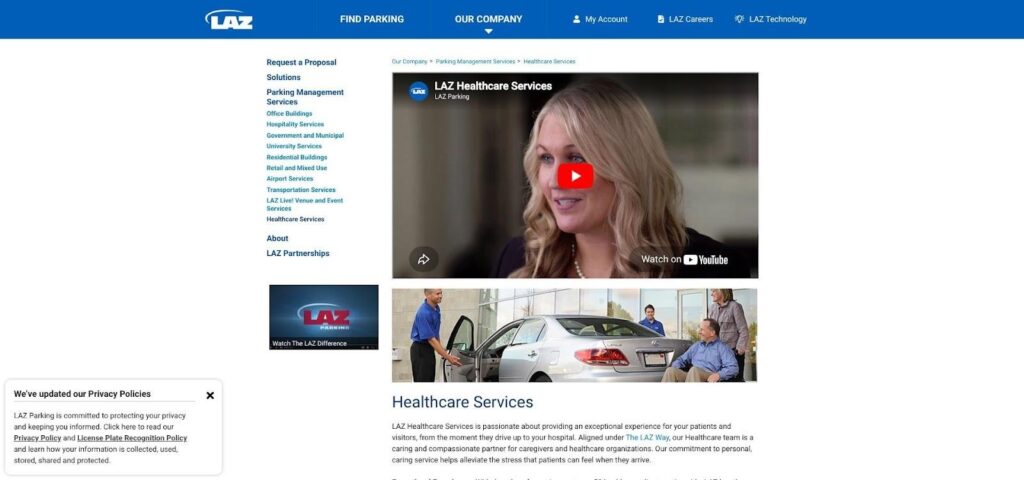
LAZ Parking medical and hospital parking services page screenshot.
Its reach rivals Towne’s, with more than 5,000 locations across 40 states, but LAZ stands out for infrastructure muscle. When your board approves new EV chargers, LAZ can install them without outside contractors. A pledge to add 50,000 chargers nationwide underscores its commitment to a cleaner curb.
Flexibility is another hallmark. Rather than force a proprietary app, LAZ integrates with tools you already use—ParkMobile, PayByPhone, or the health system’s own app. Patients reserve spaces, pay without touching a kiosk, and request vehicle pickup from one interface. Your IT team sees open APIs, not another walled garden.
Hospitals with tight real estate value LAZ’s stack-parking skills. Attendants layer cars, track every key digitally, and reshuffle the deck fast when discharges spike. Postponing a multimillion-dollar garage build can be the result.
Because LAZ also serves airports, offices, and stadiums, insist on a healthcare-focused account team. Secure clinical touchpoints—HIPAA awareness, wheelchair handling, infection control—during onboarding. Nail those details and you gain a tech powerhouse that thinks like an engineer and greets like a concierge.
4. SP+ powered by Metropolis (AI powered parking efficiency)
SP+ is the veteran operator now turbocharged by Metropolis Technologies, an AI firm known for camera-based, ticketless parking. Paper tickets and gate arms give way to computer vision that logs a licence plate in a blink and bills the card on file as the car leaves. No stoppage, no fumbling, and no tailbacks.
SP+ Healthcare parking and transportation services page screenshot.
For hospitals, the shift means shorter exit queues and leaner labour models. Fewer staff sit in payment booths, while more attendants move to high-touch roles at the curb. A web dashboard streams occupancy heat maps and surge forecasts based on appointment schedules, so managers solve issues before driveways clog.
SP+ still handles the basics: valets in crisp uniforms, shuttles on time, and documented safety drills. The culture now skews analytical. Weekly KPI huddles review average drop-off time, retrieval variance, and even how long a wheelchair sits idle. A metrics-driven command centre will feel at home.
Caveats matter. Patients without smartphones may need guidance in a digital flow, so smart operators keep a human concierge lane open and train attendants to handle manual payments. The company is also mid-transition; add a stability clause that locks service levels even as new AI features launch.
Choose SP+ when you want a future-proof system that automates the routine, unlocks rich data, and lets your staff focus on human care instead of ticket jams.
5. Propark Mobility (agile innovator with a green streak)
Propark wears the scrappy badge proudly. With roughly 750 locations, it sits between giants and boutiques, letting it pivot fast without skimping on resources. Hospital clients call the experience “custom, not cookie-cutter.” Before proposing a solution, Propark’s team camps on site, maps pedestrian desire lines with chalk, and times each elevator ride. The resulting plan feels engineered for your campus, not lifted from a binder.
Innovation is Propark’s favourite sport. Teams pilot new tools at flagship medical centres—dynamic pricing algorithms, text-ahead retrieval links, real-time garage counters—then scale the winners across the network. That test-and-scale habit keeps you ahead without forcing you to fund unproven tech.
Green credentials run deep. Leaders helped craft early Parksmart “Green Garage” standards, and sustainability shows in everyday operations: LED retrofits, strict no-idle coaching, and a willingness to bundle EV chargers into revenue-share deals. One Connecticut hospital squeezed 15 percent more capacity from a cramped lot by letting Propark deploy stack parking and optimised shuttle loops, delaying a costly garage build.
Because the footprint concentrates in the Northeast, California, and pockets of the Midwest, rural or Mountain West hospitals should confirm labour depth. If your board prefers the comfort of Fortune 500 size, weigh that bias against Propark’s speed and personal touch.
Pick Propark when you want a partner who treats constraints as design fuel, swaps “can’t” for “let’s prototype,” and hands you a parking programme that earns green kudos while freeing capital for clinics, not concrete.
How the five leaders stack up at a glance
You have met the contenders; now let’s line them up on the same curb.
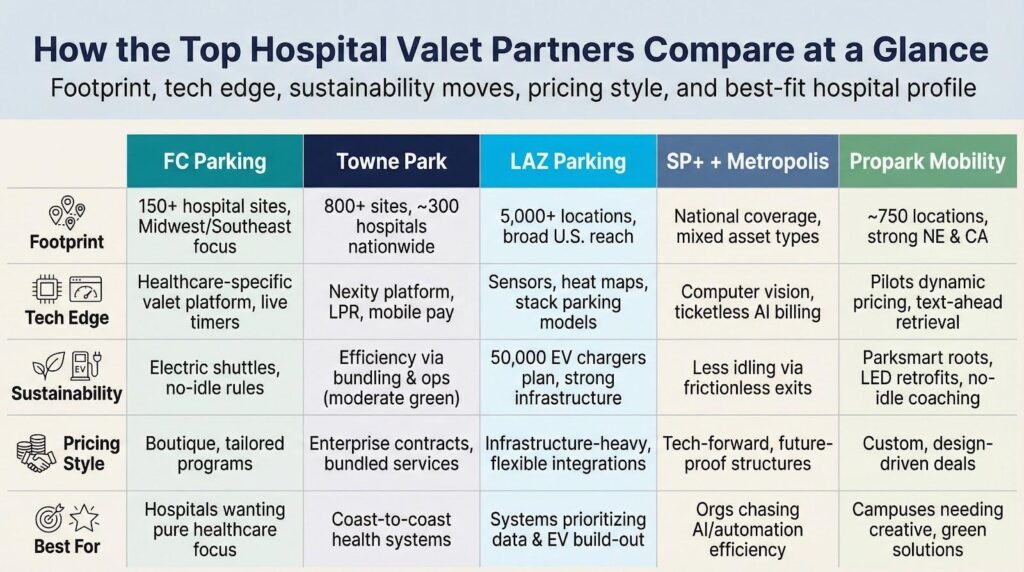
FC Parking owns the healthcare niche, so every SOP, tech tweak, and staff huddle points toward patient compassion and clinical compliance. Towne brings unmatched bench strength; if you manage a coast-to-coast network, its nationwide muscle keeps standards uniform. LAZ leans on data and infrastructure, the partner you call when EV chargers and capacity modelling hit your to-do list. SP+ combines legacy skill with AI power, trimming exit queues with computer-vision speed. Propark closes the field with customised problem solving and sustainability flair, ideal for campuses that crave flexibility over scale.
In the final layout you will see these differences distilled into a quick-scan matrix—footprint, tech edge, sustainability moves, pricing style, and a best-for cue. Use it as a cheat sheet when stakeholders ask, “Which one fits us?”
Buyer’s guide: ask the questions that separate promise from proof
Choosing a valet partner is less about who parks the car fastest and more about who protects your brand at the curb. Treat the kickoff call like clinical rounds: specific, outcome oriented, and data backed.
Start with results. Ask each vendor to share before-and-after metrics from a hospital like yours. Look for hard numbers—average drop-off time, patient-satisfaction lift, operating-cost change. If a rep offers anecdotes instead of data, move on.
Shift to process. What does day-one training include? Top firms walk new hires through empathy scenarios, wheelchair protocol, and Joint Commission drills before anyone touches a key. Ask to see the checklist, not just hear about it.
Data transparency is the next filter. A modern program streams live wait times and occupancy counts to your dashboard. Confirm you will get that feed, and that your team can pull raw data, not just quarterly PDFs.
Finally, stress-test staffing depth and liability coverage. Confirm how many float valets are on call within twenty miles, and request a certificate of garage keepers insurance with limits high enough for today’s SUVs. Vendors who hesitate here often hide larger gaps.
A quick four-question pulse check can save months of headaches:
- Which hospital can vouch for your KPIs last quarter?
- Can we sit in on your next new-hire training?
- What real-time stats will appear on our screens every day?
- How many insured floaters can you deploy within two hours?
The answers will tell you whether you are hiring a valet vendor or a patient-experience ally.
FAQs: Curbside clarity in 60 seconds
Do patients pay for hospital valet?
Policies vary, but many hospitals cover the cost for patients and charge a modest fee for visitors. Clear signage and well-briefed staff prevent wallet confusion at the curb.
Is valet riskier than self-parking?
Professional operators carry garage keepers insurance and log every key electronically. Incident rates stay low because trained drivers, restricted lots, and surveillance reduce the chance of dings or theft.
We already have a garage, so why add valet?
Valet cuts search time, expands capacity through stack parking, and spares frail patients a long walk. Hospitals that layer valet onto an existing deck often see fewer late check-ins and higher satisfaction scores.
Can we run valet in-house?
You can, but expect to manage hiring, turnover, insurance claims, training, and technology costs. Most hospitals outsource to shed those headaches and gain proven SOPs along with data tools.
How long does a transition take?
A well-planned hand-over spans six to eight weeks: site study, staff hiring (often absorbing top performers from the outgoing vendor), tech install, and live dry runs before the first patient arrives.
Conclusion
Still have a nuance we missed? Drop it into your RFP; any vendor worth your badge will answer in writing.
Other Articles You May Find of Interest...
- 5 Best Hospital Valet Service Companies and Healthcare Parking Providers Reviewed
- Secure, Smart, and Reliable: The Growing Importance of Custom Pharmaceutical Boxes
- Why Quick Fix Synthetic Urine Remains a Consistent Industry Standard
- Is Laparoscopic Surgery Better Than Open Surgery?
- Unlocking the Secrets Behind SBT Medical Abbreviation and Its Importance in Healthcare
- What Does AVR Medical Abbreviation Mean for Your Health?
- Improving Drug Half-Life with Leading Drug Delivery Companies




