






More Dental Health Articles
Minimally Invasive Dentistry Using The Bioclear Method
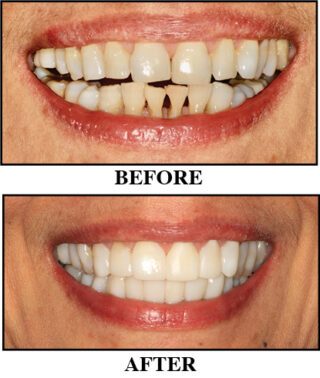
A 64-year-old female patient came to me for a consultation concerning her severely worn-out lower front teeth and chronic neck pain. Her examination revealed that she has been (bruxing) grinding her teeth for years which led to the loss of occlusal vertical dimension, which means she has lost the proper length on all her teeth which contributed to her chronic neck pain. Unbeknownst to her, all her back teeth were severely worn down as well.
After doing a comprehensive examination and record taking, a detailed treatment plan was developed. I recommended the Bioclear method versus porcelain veneers and crowns to increase her occlusal vertical dimension to 7 millimeters so as not to remove tooth structure. Immediately upon completion, the patient’s neck pain completely disappeared. To date, she is still pain free.
Bioclear is an alternative to traditional dental methods for enhancing a smile and preserving teeth. Rather than grinding down a tooth to prepare for a veneer, which requires dentists to remove about an average of 47% of the tooth structure and 76% for a crown. The Bioclear Method of ensconcing the natural tooth structure retains the natural tooth enamel with the added benefit of durability and strength. It is certainly a very conservative approach because it is considered additive dentistry.
As patient expectations continue to evolve, minimally invasive treatment options are becoming increasingly important in modern dentistry. By preserving healthy tooth structure whenever possible, clinicians can provide solutions that not only enhance aesthetics and function but also support long-term oral health and patient well-being.
Other Articles You May Find of Interest...
- 6 Joliet Dentists to Consider for Your Oral Health Needs
- How to Choose a Dentist in Woodbridge, VA After Moving
- Ten Benefits Of Ceramic Dental Implants
- Dentistry in Houston: Finding the Right Care in a City Full of Choices
- Partial Dentures Explained: Removable, Flexible and Implant-Supported Options
- Your Child May Not Need a Release
- What Causes Tooth Decay In Kids?





