More Dental Health Articles
How Sialendoscopy And Wisdom Teeth Removal Address Different Oral Health Conditions In London

When facing persistent facial pain or oral discomfort, identifying the root cause is the first step toward recovery. Many people assume that any pain near the jaw relates directly to dental decay or emerging molars, but the reality is more complex. While third molars frequently cause issues, salivary gland blockages represent another common but distinct source of discomfort. Modern oral healthcare offers highly targeted interventions for these separate issues. For instance, London sialendoscopy provides a minimally invasive solution for salivary gland disorders, while surgical extraction addresses problematic third molars. Understanding how these two distinct clinical procedures work helps patients make informed decisions about their specialist dental and maxillofacial care.
Salivary Gland Disorders and the Role of Sialendoscopy
The salivary glands produce essential fluids that aid digestion and maintain oral hygiene, but they can develop blockages due to stones (sialolithiasis) or narrowing of the ducts (strictures). When this occurs, patients often experience painful swelling in the cheeks or under the jaw, particularly during meals when saliva production peaks. Historically, treating these blockages required open surgery to remove the entire gland, which carried risks of nerve damage and left visible facial scars. Today, London sialendoscopy offers a revolutionary, organ-preserving alternative to traditional surgery.
How the Endoscopic Procedure Works
This advanced technique utilises an extremely thin, flexible endoscope equipped with a micro-camera. Specialists insert this tiny device directly into the salivary duct opening inside the mouth, allowing them to view the blockage in real-time. Once identified, the specialist can use micro-instruments, such as wire baskets or lasers, to fragment and retrieve salivary stones or dilate strictures. Because the procedure is entirely internal, patients benefit from a rapid recovery, minimal post-operative discomfort, and no external scarring. By preserving the salivary gland, this diagnostic and therapeutic tool ensures that natural saliva production continues unimpeded, protecting long-term oral health and preventing chronic dry mouth conditions. This technique has transformed how clinicians manage chronic obstructive sialadenitis, turning a major surgical event into a routine outpatient visit.
Addressing Impacted Molars with Extraction
While salivary issues stem from the soft tissues and ducts, other oral health challenges originate deep within the jawbone. Wisdom teeth, or third molars, are the last set of teeth to emerge, typically appearing in late adolescence or early adulthood. Due to evolutionary changes in human jaw sizes, many people do not have sufficient space in their mouths to accommodate these extra teeth. As a result, the molars often become impacted, meaning they grow at an angle, remain trapped beneath the gumline, or only partially emerge.
Complications of Impacted Third Molars
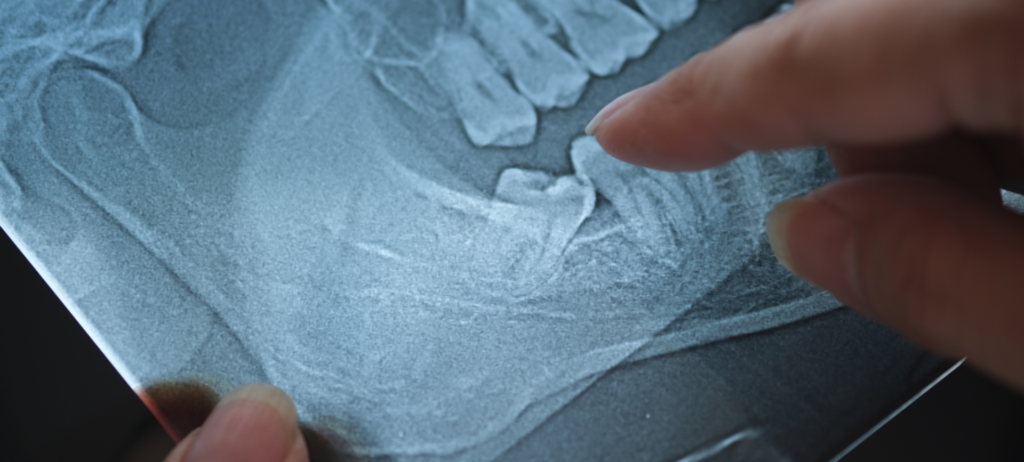
Impacted third molars can lead to a host of painful complications, including chronic pericoronitis (infection of the gum tissue surrounding the tooth), tooth decay in adjacent molars, cyst formation, and general jaw misalignment. To prevent these progressive issues, specialists frequently recommend wisdom teeth removal in London. This surgical procedure involves making a small incision in the gum tissue, removing any bone blocking access to the tooth root, and extracting the tooth, often in segments to minimise trauma to the surrounding bone. Performing this extraction early prevents long-term damage to neighbouring teeth and reduces the risk of severe jaw infections. For patients experiencing persistent pressure at the back of the mouth, consulting a qualified oral surgeon is the most effective way to determine if extraction is necessary.
Diagnostic Differences and Identifying the Source of Pain
Because both salivary gland blockages and impacted third molars can cause referred pain along the jawline and neck, patients often struggle to identify the source of their discomfort. A precise diagnosis is crucial for selecting the correct treatment pathway, and specialists use distinct diagnostic tools for each condition. To evaluate suspected salivary gland issues, clinicians rely on high-resolution ultrasound imaging, magnetic resonance sialograms, or diagnostic sialendoscopy to visualise the delicate ductal system. These imaging techniques reveal the exact size and location of any obstructive stones or structural narrowings.
Advanced Dental Imaging
Conversely, dental professionals assess third molars using orthopantomograms (panoramic X-rays) or cone-beam computed tomography (CBCT) scans. These three-dimensional dental scans provide clear views of the tooth roots, their proximity to the inferior alveolar nerve, and the density of the surrounding jawbone. By analysing these detailed images, oral surgeons can plan a safe extraction path that avoids nerve irritation. Understanding these diagnostic variations highlights why a comprehensive consultation is necessary. If you experience swelling that worsens while eating, the issue likely points toward a salivary blockage requiring London sialendoscopy, whereas constant, dull pressure at the back of the jaw usually indicates that wisdom teeth removal in London is the appropriate course of action. Distinguishing between these symptoms early prevents patients from undergoing unnecessary dental work when the actual culprit is a blocked salivary duct.
What to Expect During Recovery and Aftercare
The recovery journeys for these two procedures reflect their different surgical approaches. Because London sialendoscopy is a minimally invasive, endoscopic procedure that works through natural bodily openings, the recovery period is remarkably short. Most patients experience mild tenderness or slight swelling under the tongue or jaw for just twenty-four to forty-eight hours. They can typically resume normal eating habits and return to work almost immediately, needing only basic hydration and gentle oral rinses to support healing.
Surgical Healing Timelines
In contrast, undergoing wisdom teeth removal in London involves a more traditional surgical healing process. Because the surgeon must cut through gum tissue and sometimes bone, the body requires more time to repair itself. Patients should expect moderate swelling, mild bruising, and limited jaw mobility for three to five days post-surgery. Aftercare for tooth extraction involves sticking to soft foods, avoiding straws to prevent dry socket, and taking prescribed pain relief or anti-inflammatory medication. While both procedures are safe and highly successful, understanding these different recovery timelines helps patients plan their schedules, arrange transport home, and prepare appropriate soft foods in advance. By adhering strictly to the specialist’s personalised post-operative guidelines, patients can ensure a smooth, complication-free healing process regardless of which treatment they undergo.
Final Thoughts

Maintaining optimal oral health requires a clear understanding of the different structures within the mouth and jaw. While salivary gland blockages and impacted third molars present similar symptoms, such as jaw pain and swelling, they require entirely different clinical interventions. London sialendoscopy offers a sophisticated, minimally invasive solution for ductal obstructions, preserving gland function and avoiding external scars. On the other hand, surgical extraction provides definitive relief from the painful complications associated with impacted third molars. By seeking a professional evaluation from a qualified specialist, patients can obtain an accurate diagnosis and access the precise treatment needed to restore their comfort and protect their long-term oral well-being.
Other Articles You May Find of Interest...
- What Goes Into Developing an Alcohol-Free Mouthwash Beyond the Ingredient List
- 6 Best Dentist Options in Reston, Virginia for Family, Cosmetic, and Emergency Care
- Why Comprehensive Dental Care Matters at Every Stage of Life
- Why Preventive Dental Care Matters at Every Stage of Life
- Colored Braces: A Practical Guide for Teens and Parents in the UAE
- Brushing Teeth for Kids: Secrets to Making Healthy Habits Actually Stick
- Why Preventive Dental Care Matters More Than Most People Realize