






Your Health Magazine Contributor
4201 Northview Drive
Suite 102
Bowie, MD 20716
More Dental Health Articles
Dental Cap vs. Crown: What’s the Difference and Which One Do You Need?
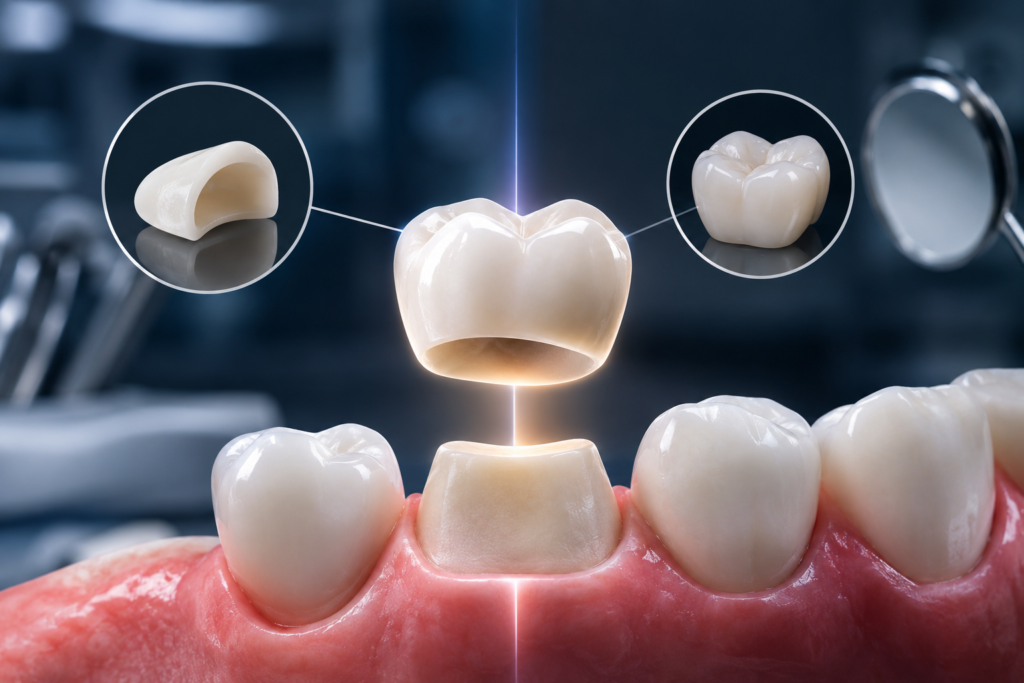
Your dentist just told you that you need a “crown.” Then your neighbor mentions she got a “cap” last year and swears by it. Did you miss something?
Short answer: no. “Dental cap” and “dental crown” are commonly used to describe the same type of restoration. “Cap” is an informal term that has been around for years, while “crown” is the term you’ll typically hear in a dental office. Once that’s settled, the questions that actually matter are what a crown does, why a dentist may recommend one, what the appointment involves, and how to take care of it afterward.
Are Dental Caps and Crowns the Same Thing?
Yes, in most cases. “Cap” is a familiar, informal term for what dentists generally call a crown. Functionally, both refer to a custom-made restoration that fits over and surrounds a prepared tooth to restore its shape, function, and appearance while protecting the remaining tooth structure.
So if your dentist says “crown” and you tell your family you’re “getting a cap,” you’re generally talking about the same restoration. The difference is primarily terminology, not a separate treatment.
What Is a Dental Crown, and What Does It Do?
A dental crown is a custom-made restoration that fits over a prepared tooth and covers the remaining tooth structure. Unlike a filling, which repairs a specific area of a tooth, a crown can provide more extensive coverage when a tooth has lost a significant amount of its natural structure.
Dentists may recommend a crown when a tooth is too damaged or weakened for a smaller restoration to provide adequate support. By covering the remaining tooth structure, a crown can help restore the tooth’s shape and function while protecting it from further damage.
Exactly when a crown is appropriate depends on the condition of the tooth, how much healthy structure remains, and the goals of treatment. That decision requires an examination by a dental professional.
When Do You Need a Dental Crown?
There isn’t one single reason a person may need a crown. Dentists consider the condition of the tooth, the amount of remaining healthy structure, and the goals of treatment. Some common situations include:
Extensive Tooth Decay
If decay has damaged enough of a tooth that a filling would leave too little healthy structure behind, a crown may provide more appropriate coverage and protection.
A Cracked or Fractured Tooth
A cracked tooth can worsen over time, particularly when it is exposed to repeated chewing forces. Depending on the location and severity of the crack, a crown may help protect the remaining tooth structure and restore its function.
Not every cracked tooth can or should be treated with a crown. The type, location, and extent of the crack need to be evaluated by a dentist before treatment is recommended. Depending on the situation, treatment may involve a filling, crown, root canal treatment, or another approach.
A Weakened Tooth After Root Canal Treatment
Root canal treatment removes infected or inflamed tissue from inside a tooth. A tooth that has undergone root canal treatment may also have significant loss of tooth structure, which can make additional protection appropriate in some cases.
Dentists may recommend a crown for a root canal-treated tooth when the remaining structure needs additional support. However, a crown is not automatically necessary after every root canal treatment. The recommendation depends on factors such as the tooth’s location, the amount of remaining structure, and the condition of the tooth.
A Large Filling With Limited Remaining Tooth Structure
A large or older filling can leave the surrounding tooth structure vulnerable to further wear or damage. If there is not enough healthy tooth structure to support another filling effectively, a crown may be considered as a more extensive restorative option.
Significant Tooth Wear
Years of grinding, clenching, or other forms of tooth wear can change the shape and function of teeth. In selected cases, a crown may help restore the shape of a significantly damaged tooth. Your dentist will first determine whether a crown or another restorative approach is appropriate.
How Is a Crown Different From Other Restorations?
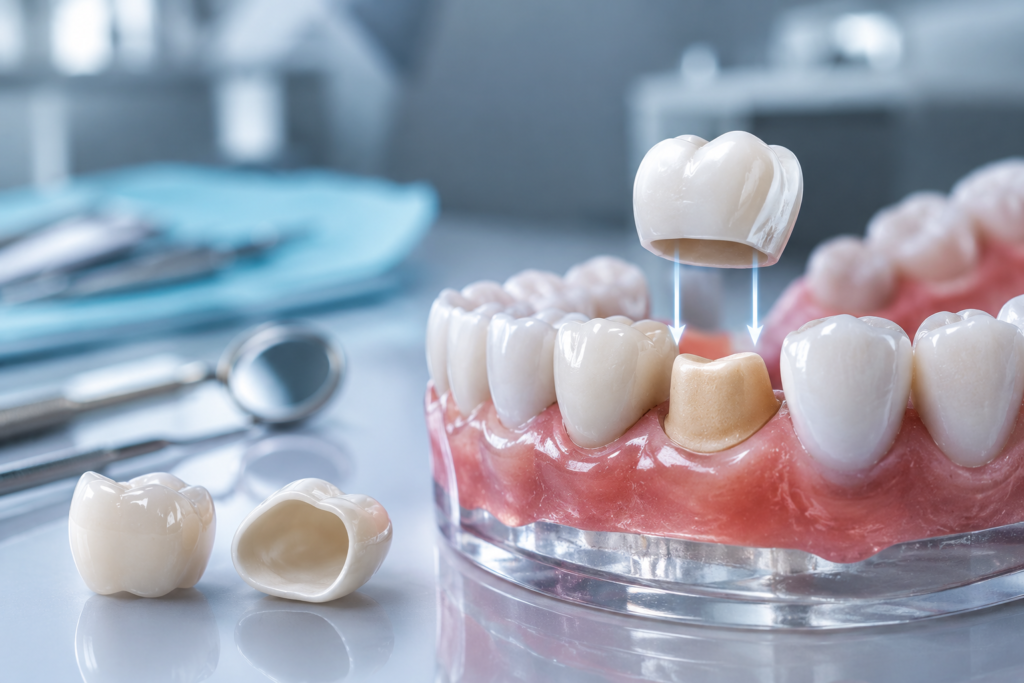
If you’ve been reading about dental treatments, you’ve probably come across terms that sound similar to a crown. Here’s how some common restorations differ.
Crown vs. Filling
A filling repairs a specific area of decay or damage within a tooth. A crown provides more extensive coverage and may be recommended when a tooth has lost too much structure for a filling to provide adequate support.
Crown vs. Veneer
A veneer is a thin restoration that is usually bonded to the front surface of a tooth and is primarily used to improve its appearance. A crown provides substantially more coverage and can be used to restore both the function and appearance of a damaged or weakened tooth.
Crown vs. Onlay or Partial-Coverage Restoration
An onlay or other partial-coverage restoration can repair a damaged portion of a tooth while preserving more of the healthy tooth structure. This may be an option when enough healthy structure remains to support a more conservative restoration.
A crown may be recommended when a tooth requires more extensive coverage and protection than a partial-coverage restoration can provide. The choice depends on the condition of the individual tooth.
What Does the Dental Crown Procedure Involve?
Every dental practice may approach treatment a little differently, but a typical dental crown procedure involves several steps.
Examination and Diagnosis
The dentist examines the tooth and may take X-rays or other images to evaluate its condition. They will explain why a crown is being considered and discuss any suitable alternatives.
Tooth Preparation
The tooth is carefully reshaped to create enough space for the crown. Any decayed, damaged, or compromised tooth structure is addressed as part of the preparation.
Impressions or Digital Scans
The dentist takes a physical impression or digital scan of the prepared tooth. This information is used to create a custom crown that fits the tooth and surrounding bite.
Temporary Restoration, When Needed
If the permanent crown needs to be made by a dental laboratory, a temporary crown may be placed to protect the prepared tooth while the permanent restoration is being completed.
Placement and Adjustment of the Permanent Crown
Once the permanent crown is ready, the dentist checks its fit, appearance, and bite. Adjustments may be made if necessary before the crown is permanently cemented or bonded into place.
Common Dental Crown Materials
Crowns are available in several materials, and the most appropriate choice depends on the tooth being treated, the amount of biting force it experiences, the desired appearance, and other clinical considerations.
Ceramic and porcelain crowns can closely resemble natural teeth, which makes them popular when appearance is an important consideration. Zirconia is known for its strength and may be considered for teeth that experience substantial chewing forces.
Porcelain-fused-to-metal crowns combine a metal base with a porcelain outer layer, offering a balance of strength and appearance. Metal crowns and gold alloys are also known for their durability and may be considered for certain back teeth.
There is no single crown material that is best for every patient. The right option depends on where the tooth is located, how much force it takes when you bite down, how much natural tooth structure remains, your aesthetic preferences, and your dentist’s clinical judgment. If you want to learn more about the different options, you can read about dental crowns and discuss your questions with a dental professional during an in-person evaluation.
How Long Do Dental Crowns Last?
People often ask how long a dental crown will last, but there isn’t one guaranteed lifespan that applies to every crown.
Longevity can depend on the crown material, the location of the tooth, oral hygiene, chewing and biting forces, and habits such as grinding or clenching. The condition of the tooth and surrounding gums can also affect how well the restoration performs over time.
With good oral hygiene, regular dental care, and appropriate maintenance, crowns can remain functional for many years. Your dentist can monitor the crown during routine examinations and identify potential problems early.
Dental Crown Care: Protecting Your Investment
Caring for a dental crown is generally similar to caring for your natural teeth, with a few important considerations.
- Brush twice a day with fluoride toothpaste.
- Floss or use another interdental cleaning method every day, including around the crowned tooth.
- Keep up with regular dental checkups and professional cleanings so your dentist can monitor the crown and surrounding gums.
- Avoid using your teeth as tools, such as to open packages or containers.
- Avoid chewing on hard objects such as ice.
- If you grind or clench your teeth, ask your dentist whether a night guard or other protective approach may be appropriate.
Good oral hygiene helps protect not only the crown but also the natural tooth structure and gums around it.
When Should You Contact Your Dentist?
Once a crown is placed, you may not think much about it day to day. However, certain changes are worth discussing with your dentist rather than waiting to see whether they resolve on their own.
Contact your dentist if you notice:
- Persistent pain or discomfort in the treated tooth
- A crown that feels loose or moves when you bite
- A chip, crack, or visible damage to the crown
- A sudden change in the way your teeth come together when you bite
- Sensitivity to hot, cold, or pressure that does not improve as expected
These symptoms do not necessarily mean that something is seriously wrong, but having them evaluated promptly can help identify and address problems before they become more complicated.
A Decision That Starts With an Exam
Cap or crown, whatever term you use, the right restoration should be determined after an appropriate dental examination.
Every tooth and patient is different. The recommended treatment may depend on how much tooth structure remains, the location and condition of the tooth, the extent of any decay or damage, your bite, and your overall oral health.
Consider this article a starting point, not a substitute for professional dental advice. If you have questions about a recommended crown, another restorative treatment, or a specific tooth that is causing concern, speak with a licensed dental professional.
Frequently Asked Questions
Is a dental cap the same as a dental crown?
Yes. “Dental cap” is a common informal term for a dental crown. In most cases, the two terms refer to the same type of restoration.
What is a dental crown made of?
Depending on the tooth and the treatment goals, crowns may be made from ceramic or porcelain, zirconia, porcelain-fused-to-metal, or metal alloys. Your dentist will consider factors such as the tooth’s location, function, remaining structure, and your aesthetic preferences when recommending a material.
Does getting a crown hurt?
The area is typically numbed before the tooth is prepared, so you should not feel significant pain during the procedure. Some sensitivity or mild discomfort can occur afterward. If discomfort persists or becomes significant, contact your dentist for an evaluation.
Will I need a temporary crown before my permanent one is placed?
Often, yes. When the permanent crown is being custom-made, a temporary restoration may be placed to protect the prepared tooth in the meantime. However, the exact process can vary depending on the treatment and the dental practice.
How do I know if I need a crown or if a filling is enough?
That depends on how much healthy tooth structure remains and the extent of the decay or damage. Your dentist may perform an examination and take X-rays or other images before recommending a filling, crown, onlay, or another restoration.
The best treatment is the one that appropriately addresses the condition of the tooth while preserving as much healthy tooth structure as possible.
Other Articles You May Find of Interest...
- 6 Joliet Dentists to Consider for Your Oral Health Needs
- How to Choose a Dentist in Woodbridge, VA After Moving
- Ten Benefits Of Ceramic Dental Implants
- Dentistry in Houston: Finding the Right Care in a City Full of Choices
- Partial Dentures Explained: Removable, Flexible and Implant-Supported Options
- Your Child May Not Need a Release
- What Causes Tooth Decay In Kids?





