






Your Health Magazine
4201 Northview Drive
Suite #102
Bowie, MD 20716
301-805-6805
More Complementary & Integrative Healthcare Articles
Yoga vs Ayurveda: How Two Ancient Systems Support Mental Wellbeing
Table of Contents
- Two Systems, One Goal: Mental Wellbeing
- Understanding Yoga: Beyond Physical Practice
- Understanding Ayurveda: The Science of Balance
- How Yoga Addresses Mental Health
- How Ayurveda Addresses Mental Health
- Yoga vs Ayurveda: Key Differences
- The Power of Combined Practice
- Getting Started: Which System Is Right for You?
Yoga vs Ayurveda: How Two Ancient Systems Support Mental Wellbeing

If you’re struggling with stress, anxiety, or mental clarity, you’ve probably heard about yoga and Ayurveda. Both promise transformation. Both come from ancient India. Both are gaining serious scientific validation in modern research.
But here’s the confusing part: they’re completely different systems addressing wellbeing in completely different ways.
Many people think yoga and Ayurveda are interchangeable. They’re not. Understanding their distinct approaches is crucial because one might work brilliantly for your mind while the other might be better for your specific mental health challenge.
This article breaks down exactly what each system does, how they differ, and—most importantly—how they work together for mental wellbeing that actually lasts.
Two Systems, One Goal: Mental Wellbeing
Listen closely: yoga and Ayurveda emerged from the same cultural tradition in ancient India, but they developed as separate sciences with distinct purposes.
Yoga is a practice-based system focused on consciousness evolution through movement, breath, and meditation. Ayurveda is a diagnostic and treatment-based system focused on maintaining balance through diet, lifestyle, and herbal medicine.
They’re complementary, not competitive. Think of it this way: yoga trains your mind through direct practice. Ayurveda supports your mind through balancing your physical and energetic constitution.
Here’s what most people miss: you can practice yoga with an unbalanced constitution (according to Ayurveda) and experience limited results. Conversely, you can follow perfect Ayurvedic principles without yoga practice and miss profound consciousness work.
The magic happens when both work together.
Understanding Yoga: Beyond Physical Practice
Most people think yoga is stretching. They practice downward dog and expect mental transformation. Then they’re disappointed when flexibility doesn’t fix anxiety.
Here’s the truth: physical yoga postures are only one small component of a much larger consciousness practice.
Traditional yoga (as described in the Yoga Sutras of Patanjali) consists of eight limbs, only one of which is asana (physical postures). The other seven include breath work, meditation, ethical living, sense control, and concentration.
The Eight Limbs of Yoga
- Yama (ethical principles) – moral foundation
- Niyama (personal discipline) – self-development
- Asana (physical postures) – prepare body for stillness
- Pranayama (breath control) – regulate life force energy
- Pratyahara (sense withdrawal) – withdraw from external stimuli
- Dharana (concentration) – focused mind
- Dhyana (meditation) – sustained awareness
- Samadhi (enlightenment) – unified consciousness
Mental wellbeing emerges from this complete practice, not from flexibility alone. For those serious about deepening their yoga practice, yoga teacher training programs teach all eight limbs and how they work together for consciousness evolution and mental health.
How Yoga Works on the Nervous System
Yoga directly regulates your autonomic nervous system—the involuntary system controlling stress response. Here’s the mechanism: when you practice slow, conscious breathing and hold meditative postures, your parasympathetic nervous system activates.
This literally shifts you from fight-or-flight mode to rest-and-digest mode. Cortisol (stress hormone) drops. Heart rate variability increases. The nervous system learns that you’re safe.
This is why even 10 minutes of daily pranayama (breath practice) produces measurable anxiety reduction within two weeks.
Research shows: A 2020 study in Frontiers in Psychiatry found that consistent yoga practice reduced anxiety scores by 40-60% in participants with generalized anxiety disorder. The effect was comparable to medication but without side effects.
Understanding Ayurveda: The Science of Constitutional Balance
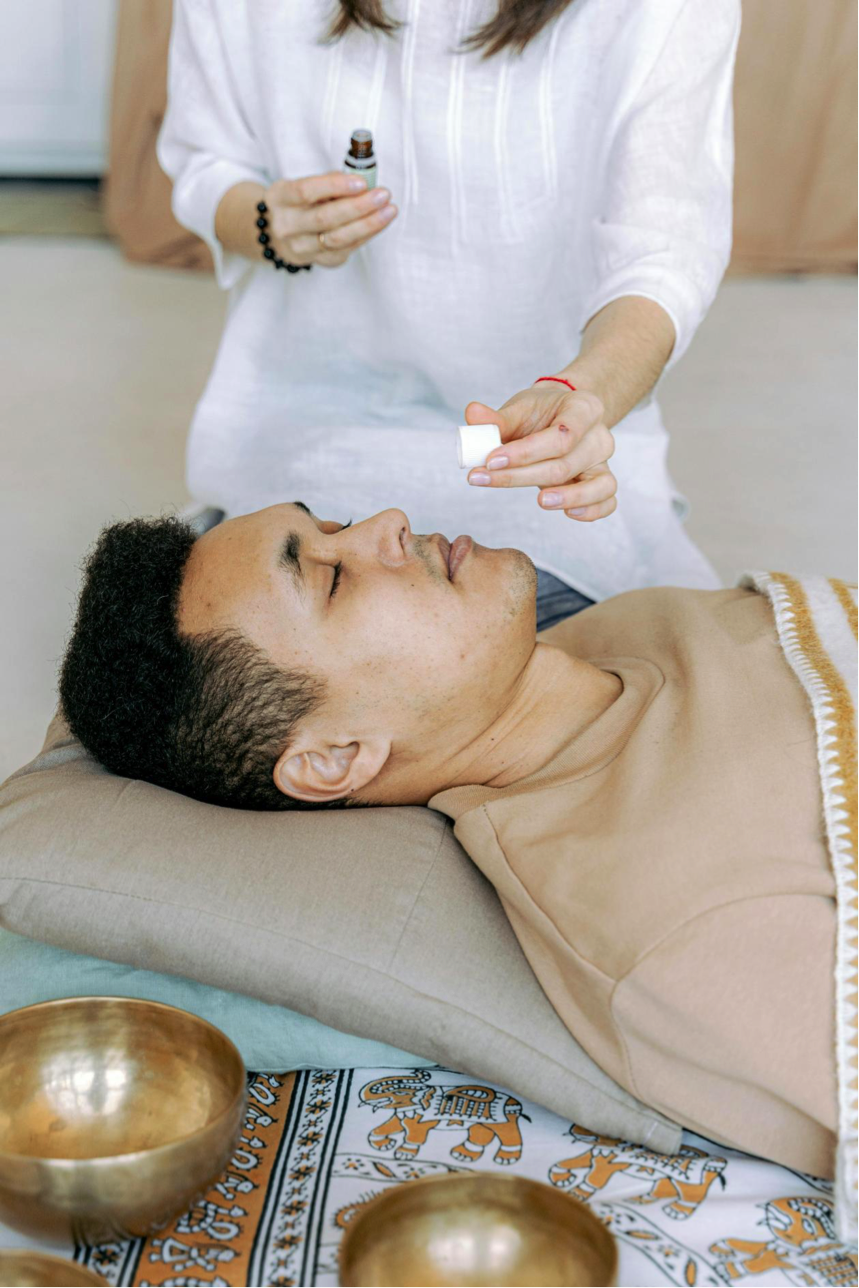
Ayurveda operates on a completely different principle. Instead of focusing on practice and consciousness, Ayurveda focuses on constitutional balance.
Think of Ayurveda as personalized medicine based on your unique mind-body constitution. According to Ayurvedic philosophy, mental wellbeing depends on maintaining balance within your specific dosha (constitutional type).
There are three doshas:
The Three Doshas
Vata (air and ether) – governs movement, creativity, communication, nervous system
- Imbalanced vata → anxiety, restlessness, racing thoughts, insomnia
- Balanced vata → mental clarity, flexibility, creativity
Pitta (fire and water) – governs metabolism, digestion, intellect, willpower
- Imbalanced pitta → burnout, irritability, anger, perfectionism
- Balanced pitta → sharp intellect, motivation, healthy ambition
Kapha (earth and water) – governs structure, stability, immunity, emotions
- Imbalanced kapha → depression, heaviness, lethargy, emotional stagnation
- Balanced kapha → emotional stability, groundedness, contentment
Here’s the profound part: your mental health challenges reveal your constitutional imbalance.
Someone with vata imbalance needs grounding and routine. Someone with pitta imbalance needs cooling and regulation. Someone with kapha imbalance needs stimulation and activation.
One-size-fits-all mental health approaches miss this completely.
Ayurvedic Treatment for Mental Wellbeing
Ayurveda addresses mental imbalance through:
- Diet tailored to your dosha (warming for vata, cooling for pitta, stimulating for kapha)
- Daily routine supporting constitutional balance (sleep times, meal times, exercise timing)
- Herbal medicine rebalancing your specific imbalance
- Lifestyle practices like oil massage (abhyanga), meditation, and seasonal adjustments
- Detoxification (panchakarma) removing accumulated toxins affecting mental clarity
Research is starting to validate this. A 2019 study in the Journal of Ayurveda and Integrative Medicine found that Ayurvedic treatment for anxiety tailored to constitutional type produced 65% improvement in symptoms within 8 weeks. For personalized constitutional assessment and treatment, ayurveda wellness retreat teach how to identify your dosha and apply Ayurvedic principles to your unique mental health needs.
How Yoga Addresses Mental Health: Direct Consciousness Work
Yoga works on mental health through direct nervous system intervention and consciousness development.
Pranayama (Breath) Directly Lowers Stress
Different breathing patterns access different nervous system states:
- Extended exhale breathing (longer exhale than inhale) activates parasympathetic nervous system, reducing anxiety immediately
- Alternate nostril breathing balances brain hemispheres and calms racing thoughts
- Slow, deep breathing synchronizes with heart rhythm, stabilizing emotions
You don’t need to understand why these work. You just need to practice them consistently. The nervous system responds whether you believe in it or not.
Meditation Builds Mental Resilience
Meditation isn’t about achieving blankness. It’s about training attention and witnessing your thought patterns without being controlled by them.
This creates fundamental mental health benefit: you stop believing every anxious thought as absolute truth. You observe thoughts arising and passing away. This breaks the anxiety cycle at its root.
Research confirms this. Brain imaging shows that regular meditators develop stronger prefrontal cortex (executive function) and reduced amygdala activation (fear response). Mental health improves because the brain physically rewires.
Ethical Living (Yama and Niyama) Creates Mental Foundation
The ethical foundations of yoga—non-violence, truthfulness, non-stealing, moderation, non-attachment, purity, contentment, discipline, self-study, and surrender—create psychological stability.
When you live aligned with your values, cognitive dissonance decreases. Internal conflict reduces. Mental clarity naturally emerges.
How Ayurveda Addresses Mental Health: Constitutional Rebalancing
Ayurveda works on mental health through identifying your specific imbalance and systematically restoring balance.
Personalized Diet as Medicine
Your mental state reflects your digestive health in Ayurveda. When digestion is strong (called agni), mental clarity follows. When digestion is weak, mental fog and anxiety develop.
Vata types need warm, grounding foods eaten on schedule. Pitta types need cooling foods and careful meal timing. Kapha types need light, stimulating foods and regular fasting.
This isn’t generic dietary advice. It’s constitutional medicine recognizing that the same food creates different effects depending on your constitutional type.
Daily Routine (Dinacharya) Creates Nervous System Stability
Ayurvedic daily routine supports mental health by:
- Waking at consistent time (maintaining circadian rhythm)
- Oil massage (activates parasympathetic nervous system)
- Meditation before stimulation (establishes mental clarity before busyness)
- Meals at consistent times (supports digestive agni and mental stability)
- Sleep at consistent time (allows nervous system repair)
- Seasonal adjustments (prevents constitutional imbalance from environmental changes)
This consistency creates nervous system stability that supports mental wellbeing naturally.
Herbal Support Addressing Root Causes
Ashwagandha, brahmi, and other traditional Ayurvedic herbs work differently depending on your constitution:
- Ashwagandha reduces vata anxiety and supports nervous system resilience
- Brahmi cools pitta inflammation and sharpens intellect
- Shatavari nourishes kapha and supports emotional stability
These aren’t placebos. Modern research validates their mechanisms. A 2019 systematic review in Phytotherapy Research found ashwagandha equivalent to prescription anti-anxiety medication for generalized anxiety disorder.
Yoga vs Ayurveda: Key Differences
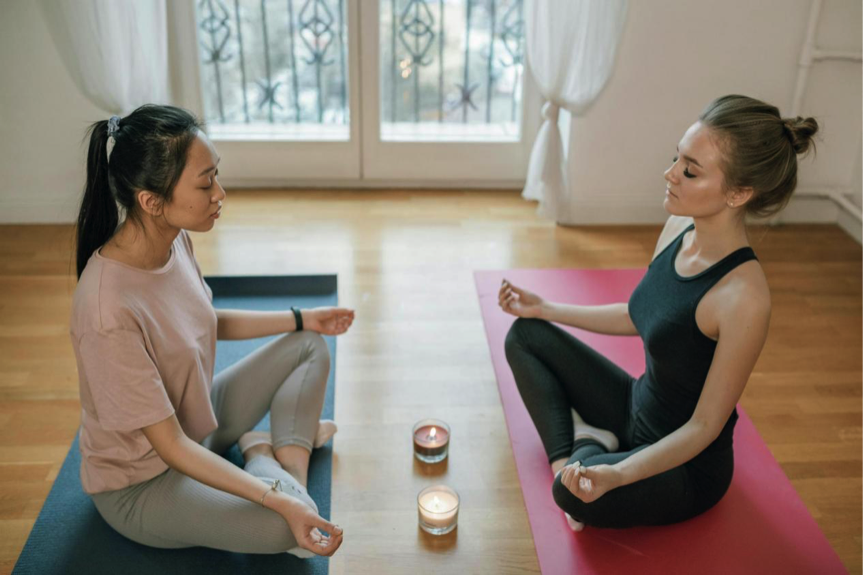
Understanding the distinct approaches helps you choose what you need:
| Aspect | Yoga | Ayurveda |
| Primary Focus | Consciousness evolution | Constitutional balance |
| Method | Practice (asana, pranayama, meditation) | Treatment (diet, herbs, routine) |
| Mental Health Approach | Directly train mind and nervous system | Remove underlying constitutional imbalance |
| Timeline | Results in weeks with consistent practice | Results in weeks to months |
| Best For | Building mental resilience, managing acute stress | Addressing chronic patterns, preventing relapse |
| Requires | Daily practice commitment | Lifestyle and dietary adjustments |
| Root Cause | Untrained mind and dysregulated nervous system | Constitutional imbalance |
Here’s the real distinction: yoga changes your consciousness directly through practice. Ayurveda changes your consciousness indirectly by rebalancing your physical and energetic system.
Both are valid. Different people respond better to each. The ideal approach combines both.
The Power of Combined Practice: Yoga + Ayurveda
Wait—here’s where it gets interesting: combining yoga and Ayurveda creates something neither system achieves alone.
Imagine practicing yoga with an unbalanced constitution. Your vata imbalance causes anxiety that breathwork temporarily relieves, but the constitutional imbalance remains. You get temporary relief but chronic patterns persist.
Now imagine following Ayurvedic recommendations without yoga practice. Your constitution becomes more balanced through diet and herbs, but your mind remains untrained. You’re more physically stable but still mentally reactive.
Combine them: Ayurvedic rebalancing removes the constitutional root cause while yoga practice trains your mind and nervous system to handle challenges. This creates sustainable mental wellbeing.
H3: Example: Treating Anxiety
Vata-type anxiety (racing thoughts, restlessness, insomnia):
- Ayurvedic approach: warm grounding foods, consistent routine, sesame oil massage, ashwagandha
- Yoga approach: slow pranayama (especially alternate nostril breathing), grounding postures, meditation
- Combined: both simultaneously address the imbalance and train the mind to respond skillfully
Pitta-type anxiety (perfectionism, irritability, burnout):
- Ayurvedic approach: cooling foods, cool herbs like brahmi, reduced stimulation, adequate sleep
- Yoga approach: cooling pranayama (especially extended exhale), forward bends, surrender practice
- Combined: nervous system cools while constitution rebalances
The person improves faster and more completely than through either system alone.
Getting Started: Which System Is Right for You?
The answer: you probably need both, but here’s how to prioritize:
Start with Yoga If:
- You have an acute mental health challenge (recent anxiety, depression, stress)
- You want immediate nervous system relief
- You’re willing to commit to daily practice
- You want to train consciousness directly
- You’re experiencing racing thoughts or emotional volatility
Start with Ayurveda If:
- You have chronic mental health patterns that won’t resolve
- You want to understand your constitutional type
- You’re willing to adjust lifestyle and diet systematically
- You want preventative medicine, not just symptom relief
- You have physical symptoms alongside mental challenges (digestive issues, sleep problems, energy imbalance)
Ideally, Do Both:
- Get Ayurvedic evaluation to identify your constitutional type
- Adjust diet and routine according to your dosha
- Begin consistent yoga practice (even 15 minutes daily)
- Combine practices for 8-12 weeks
- Notice which system addresses your specific challenges most effectively
- Continue both while emphasizing what works best for you.
Other Articles You May Find of Interest...
- Yoga vs Ayurveda: How Two Ancient Systems Support Mental Wellbeing
- The Health Benefits of Growing Your Own: A Closer Look at the Cannabis Plant
- Healing After a Dog Bite: Exploring Supportive Therapy Options
- Why You Should Take a Holistic Approach to Your Well-being
- Unlocking the Benefits of Mycolog for Better Health and Wellness
- Exploring Insights from the NCV Study on Health Education
- Unveiling the Benefits: What to Expect After Using a Castor Oil Pack




