






Your Health Magazine
4201 Northview Drive
Suite #102
Bowie, MD 20716
301-805-6805
More Complementary & Integrative Healthcare Articles
Top 12 Near-Infrared Light Therapy Devices for Deep Muscle Pain for Men – 2026 USA Survey
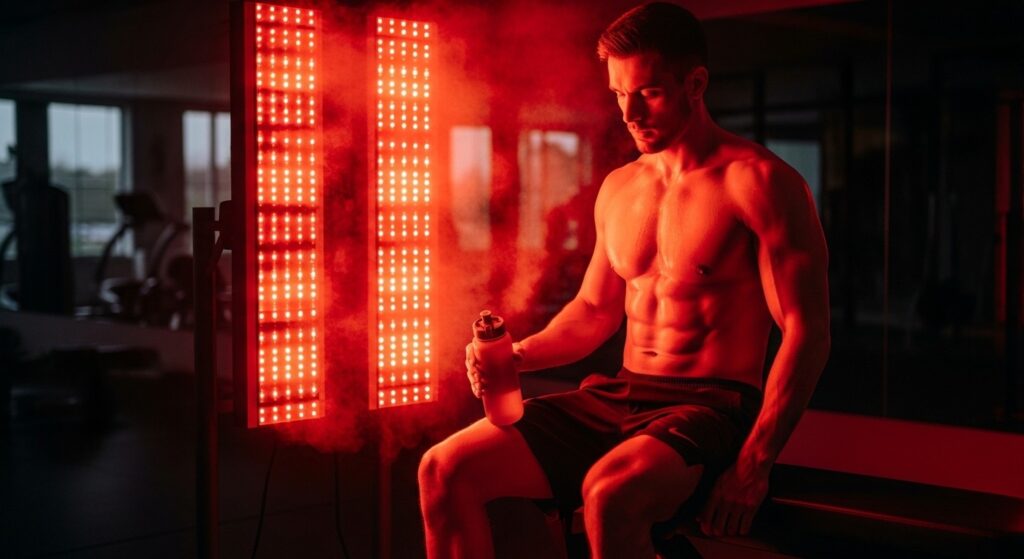
Image Source: ImageFX
If ice packs, compression, and OTC pain relievers haven’t solved your deep muscle soreness, they weren’t designed to. Near-infrared (NIR) light therapy targets the underlying problem: impaired cellular energy production and persistent inflammation, and it has earned serious traction in athletic and clinical recovery circles [1].
This guide ranks the 12 best NIR devices for deep muscle pain, based on a 2026 USA survey focused on men managing heavy training loads, physical labor, or chronic musculoskeletal pain.
How NIR Light Therapy Works for Muscle Pain
NIR light (800–1100nm) penetrates deep into fascia, muscle, and bone, where it boosts mitochondrial ATP production, reduces oxidative stress, and promotes vasodilation. A 2011 PMC study confirmed its efficacy for attenuating post-exercise strength loss and fatigue [2].
Regular users report reduced joint stiffness from NIR light therapy, with benefits accumulating over weeks of consistent use; emerging research also suggests potential sleep improvements via photobiomodulation [3].
Quick-Reference Comparison
| Rank | Product | Best For | Wavelengths | Irradiance |
| 1 | Helio Glow (HelioCure) | Deep muscle & joint | 630/660/830/850/940/1064nm | 120 mW/cm² at 6″ |
| 2 | RLT Home Total Spectrum ELITE | Full-body coverage | 480/633/660/810/830/850/1064nm | 139 mW/cm² at 6″ |
| 3 | Mito Red Light MitoPRO+ | Daily users | 630/660/830/850nm | >165 mW/cm² at 6″ |
| 4 | Platinum Therapy BIOMAX PRO | Serious athletes | 480/630/660/810/830/850/1060nm (7 bands) | >100 mW/cm² |
| 5 | Joovv Solo 3.0 | App-guided users | 660/850nm | >100 mW/cm² |
| 6 | Rouge Care Pro G4 | High training loads | 630/650/660/670/810/830/850/1060nm (8 wavelengths) | 151 mW/cm² at 6″ |
| 7 | Hooga Health HG500 | Budget entry | 660/850nm | 94 mW/cm² at 6″ |
| 8 | RedRush 840 PULSE | Multi-area efficiency | 660/850nm | 160 mW/cm² at 6″ |
| 9 | NovaaLab Deep Healing Pad XL | Localized pain | 660nm red + 850nm NIR | 150 mW/cm² contact |
| 10 | FlexBeam (Recharge Health) | Travel/portable | 660nm/810-850nm NIR | 110 mW/cm² contact |
| 11 | Kineon MOVE+ Pro | Deep muscle strains | 660nm LEDs + 808nm laser diodes | 50mW laser + 160mW LED/module |
| 12 | HealthLight Large 264 Diode Pad | Chronic/post-surgical | 630nm red + 850nm IR | 281.5 J/minute |
The Top 12 NIR Devices for Deep Muscle Pain
#1. Helio Glow (HelioCure)
iframe code for YouTube video:
<iframe width=”560″ height=”315″ src=”https://www.youtube.com/embed/lLsOfbJmLiQ?si=vU8-RPAVWT3rcs-U” title=”YouTube video player” frameborder=”0″ allow=”accelerometer; autoplay; clipboard-write; encrypted-media; gyroscope; picture-in-picture; web-share” referrerpolicy=”strict-origin-when-cross-origin” allowfullscreen></iframe>
Key Specs: 630/660/830/850/940/1064nm | 120 mW/cm² at 6 inches | No blue light
The Helio Glow by Helio Cure earns the top spot for two meaningful differentiators. First, it offers the highest LED density at 1064nm on the consumer market. That simply means 19.44% of its diodes emit at 1064nm, providing strong evidence of deep penetration into muscle and joint tissue [4]. No other brand currently matches this concentration.
Second, the Helio Glow contains no blue light, a deliberate design choice. That is because blue light is known to disrupt sleep and circadian rhythms [5]. For men using a recovery panel in the evening, this matters.
Pros
- Industry-leading 1064nm LED density for deep tissue penetration
- No blue light, safe for evening use without disrupting sleep
- Broad six-wavelength spectrum covers surface and deep tissue simultaneously
Cons
- Smaller coverage area than full-body panels
- Premium price tier relative to single-wavelength competitors
#2. RLT Home Total Spectrum ELITE
Key Specs: 480/633/660/810/830/850/1064nm | 139 mW/cm² at 6″ | 65 x 20.5 inch panel
The RLT Home Total Spectrum ELITE is the clear choice for treating large bilateral muscle groups simultaneously. 7-wavelength output across all clinically relevant bands in a single device is rare at this price tier, and the 65×20.5-inch footprint lets a marathon runner treat both legs in one 20-minute session.
Pros
- 7-wavelength output covers surface and deep tissue in one session
- Outstanding coverage area; bilateral treatment without repositioning
Cons
- Heavy and large; not portable
- Requires dedicated wall space or mounting solution
#3. Mito Red Light MitoPRO+
Key Specs: 630/660/830/850nm | >165 mW/cm² at 6″ | Multiple panel sizes
The MitoPRO+ line leads in transparency; third-party testing reports are publicly available and among the most rigorous in the consumer market. Users report that output holds consistently for a full year of daily use, which is a real differentiator among panels that often degrade within months.
Pros
- Third-party verified specs; industry-leading irradiance
- Long-term output consistency confirmed by users
Cons
- No dedicated app or session timer
- Two wavelengths only; no 1064nm or broad-spectrum option
#4. Platinum Therapy Lights BIOMAX
Key Specs: 480/630/660/810/830/850/1060nm (7 wavelengths) | >100 mW/cm² | Modular panels
The Platinum Therapy Lights BIOMAX features seven switchable wavelength modes that let athletes target connective tissue inflammation separately from deep muscle bruising. Users on r/redlighttherapy consistently rate multi-wavelength panels highest for injury recovery.
Pros
- Switchable wavelength modes for phase-specific recovery
- Modular expansion system; strong US-based support
Cons
- Premium pricing
- Requires user education for wavelength configuration
#5. Joovv Solo 3.0
Key Specs: 660nm / 850nm | 100 mW/cm² | Bluetooth app integration
The best out-of-the-box experience for NIR newcomers. The app delivers session tracking, guided protocols, and firmware updates that no other device in this list matches.
Pros
- Best app ecosystem with guided protocol recommendations
- Polished hardware with consistent brand support
Cons
- Lower irradiance than competitors at the same price
- Proprietary mounting system limits flexibility
#6. Rouge Care Pro G4
Key Specs: 630/650/660/670/810/830/850/1060nm (8 wavelengths) | 151 mW/cm² at 6″ | Medical-grade 5W LEDs
High irradiance enables shorter effective sessions without sacrificing therapeutic dose, a meaningful compliance advantage on heavy training days. The 8-wavelength versatility with individual control supports phase-specific recovery from surface inflammation to deep muscle repair.
Pros
- High irradiance cuts required session time significantly
- Medical-grade chip quality with individual wavelength control
- Solid heat management for continuous use
Cons
- Audible fan noise during operation
- Higher price reflects advanced multi-wavelength features
#7. Hooga Health HG 500
Key Specs: 660nm / 850nm | 94 mW/cm² at 6″ | 100 LEDs | 18.8 x 8.2″ panel
The most sensible entry point for men still evaluating NIR therapy. Scalable across the HG Series without switching ecosystems, and genuinely effective at under $400.
Pros
- Best value proposition in the category for deep muscle coverage
- Scalable product line; upgrade without switching brands
Cons
- Lower irradiance than premium options
- Stand hardware feels lightweight at this price
#8. Red Therapy Co. RedRush 840 Pulse
Key Specs: 660/850nm | 160 mW/cm² at 6″ | 38.5 x 10.25″ panel | Selectable pulsing
Highest irradiance enables fastest therapeutic dosing per side; 5-10 minutes delivers 40-60 J/cm² for deep muscle recovery. Selectable pulsed-wave technology (10/20/40 Hz) enhances cellular effects per photobiomodulation research, aiding deep muscle recovery [6], making it ideal for time-crunched men targeting hip flexors and glutes.
Pros
- Industry-leading 160 mW/cm² cuts treatment time per side
- Selectable pulsing (10/20/40Hz) boosts effectiveness
- FDA Class II registered medical device
Cons
- Single panel requires front/back repositioning (Dual model for simultaneous)
- Large 38.5″ height needs dedicated wall/stand space
#9. NovaaLab Deep Healing Pad XL
Key Specs: 660nm red + 850nm NIR | 150 mW/cm² at contact | 16.3 x 7.9″ flexible pad | USB-C powered
Direct skin contact delivers full 150 mW/cm² irradiance, avoiding the substantial drop-off (typically 50-75%) that panels experience at 6″ distance per inverse square law principles. USB-C powered and 0.6 lbs, enabling discreet workplace therapy; 10-minute sessions treat knees, lower back, or shoulders without setup.
Pros
- Contact delivery eliminates distance-related output loss
- Ultra-portable USB-C design for office/home use
- 2:1 NIR:red ratio optimized for deep tissue pain
Cons
- 16×8″ area limits to 1-2 muscle groups per session
- Lower total power than full-body panels
#10. FlexBeam (Recharge Health)
Key Specs: 660nm / 850nm | 120 mW/cm² contact | Wearable strap | Rechargeable battery
The only device in this roundup delivering serious NIR output in a fully wearable format. Multi-session battery life, app-guided protocols, and genuine portability; not just a compact panel.
Pros
- The only premium wearable with strong contact irradiance
- App-guided protocols; genuinely travel-ready
Cons
- Premium price; battery replacement adds long-term cost
#11. Kineon MOVE+ Pro
Key Specs: 660nm LEDs + 808nm laser diodes | 50mW laser/module + 160mW LED/module | Wearable joint modules
True laser diodes produce higher coherence and deeper tissue penetration than LEDs at equivalent power draw, a genuine differentiator for targeting deep muscle strains and trigger points.
Pros
- Laser-diode technology reaches deep muscle bellies (5-6cm penetration)
- Clinical trial backing for DOMS and chronic muscle pain
Cons
- Joint-optimized modules limit broad muscle coverage
#12. HealthLight Large 264 Diode Body Pad
Key Specs: 630nm red + 850nm IR | 281.5 J/minute | 8 x 15″ flexible pad | FDA 510(k) cleared
FDA clearance enables HSA/FSA reimbursement and clinical integration with PTs/physicians, unique among consumer NIR devices. The 8×15″ flexible neoprene pad with Velcro straps conforms to lower back and hip contours for targeted deep muscle therapy.
Pros
- FDA-cleared Class II medical device; HSA/FSA eligible
- Clinical-grade 281.5 J/minute dosing for chronic pain
- Flexible design contours to complex muscle anatomy
Cons
- Lower peak irradiance than athletic performance panels
- Clinical focus prioritizes chronic over acute DOMS recovery
What to Look for When Choosing a NIR Device
- Wavelength specificity comes first.
The 800–1100nm range has the strongest evidence for deep tissue penetration [7]. Prioritize devices that publish diode-level spectral data. Devices featuring 1064nm, such as those from Helio Glow, are rare and worth seeking out for joint and deep muscle applications.
- Power density (mW/cm²) determines session length.
Most protocols target 20–60 joules/cm²: a 50 mW/cm² panel needs ~10 minutes; a 150 mW/cm² panel gets there in under four.
- Avoid devices with blue light diodes if evening use is part of your routine.
Blue light disrupts melatonin and circadian rhythm, making the therapy rather counterproductive when recovery and sleep quality are inseparable.
Frequently Asked Questions
Is NIR therapy safe for daily use?
Yes, for most healthy adults at standard consumer parameters. Respect recommended distances and session durations, use eye protection, and consult a physician if you have photosensitive conditions or take photosensitizing medications.
How long before I see results?
Acute soreness typically reduces within 24–48 hours of early sessions. Improvements in chronic inflammation become measurable after 2 to 4 weeks of consistent use.
Do I need an expensive device?
Not necessarily. Therapeutic outcomes depend on wavelength accuracy and irradiance delivery. Mid-range options like Helio Glow deliver clinically relevant parameters. Premium pricing buys build quality, wavelength flexibility, and long-term durability, not always a proportionally higher therapeutic dose.
Reference:
- Hamblin, M. R. (2016). Clinical and experimental applications of NIR-LED photobiomodulation. Academia.edu. https://www.academia.edu/21406766/Clinical_and_Experimental_Applications_of_NIR_LED_Photobiomodulation
- Fogagnolo Costa, M., et al. (2011). Near-infrared light therapy to attenuate strength loss after resistance exercise. Journal of Athletic Training, 46(5), 465–469. https://pmc.ncbi.nlm.nih.gov/articles/PMC4299734/
- Lee, S.-H., & Kim, C.-H. (2024). Photobiomodulation and its therapeutic potential in sleep. Sleep Medicine Research, 15(4), 218–227. https://www.sleepmedres.org/journal/view.php?doi=10.17241/smr.2024.02593
- Cotler, H. B., Chow, R. T., Hamblin, M. R., & Carroll, J. (2021). Utilization of the 1064 nm wavelength in photobiomodulation: A systematic meta-analysis-based review. Journal of Lasers in Medical Sciences, 12(4), 327–335. https://pmc.ncbi.nlm.nih.gov/articles/PMC8837867/
- Zhang, Y., Li, X., & Wang, J. (2025). Impact of evening blue light exposure timing on sleep, motor performance, and cognitive function in adolescent athletes: A randomized crossover trial. Frontiers in Neurology, 16, Article 1699303. https://pmc.ncbi.nlm.nih.gov/articles/PMC12244376/
- Hamblin, M. R. (2016). Proposed mechanisms of photobiomodulation or low-level light therapy. Journal of Biophotonics, 9(11-12), 1122–1144. https://pmc.ncbi.nlm.nih.gov/articles/PMC5215870/
- Hashmi, J. T., Huang, Y. Y., Jaswanth, A., Sharma, S. K., & Hamblin, M. R. (2021). Near-infrared photonic energy penetration: Can infrared phototherapy effectively reach the human brain? Photomedicine and Laser Surgery, 33(Suppl 1), S24-S30. https://pmc.ncbi.nlm.nih.gov/articles/PMC4552256/
Other Articles You May Find of Interest...
- Top 12 Near-Infrared Light Therapy Devices for Deep Muscle Pain for Men – 2026 USA Survey
- Is an Alkaline Solution the Key to Better Health?
- The Significance of End Tidal CO2 Levels in Health Monitoring
- Optimal B12 Injection Sites for Maximum Absorption and Benefits
- 5 Best Mushroom Gummies in 2026 for Focus and Stress Relief
- How CBD Moves From Hemp Farms to Store Shelves
- Why Your Symptoms are a Language, Not a Nuisance?




