






More Complementary & Integrative Healthcare Articles
Red Bali Kratom for Beginners: What to Know About Its History, Effects, and Safety Considerations
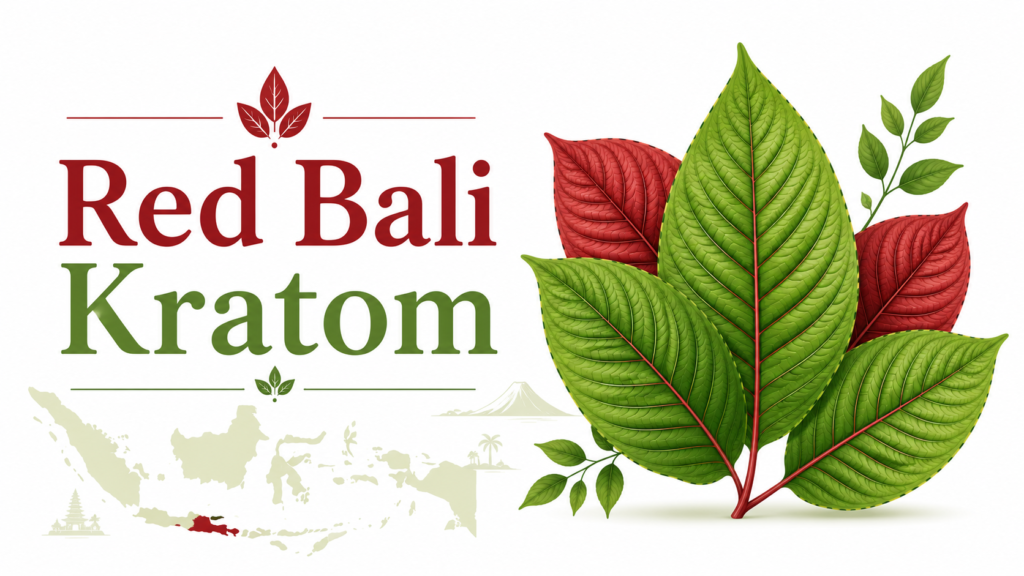
Red Bali kratom is one of the most widely recognized names in the kratom market. It is often discussed in online communities as a red-vein kratom option with a reputation for a more calming profile, but the name itself can be misleading. Red Bali is generally understood as a commercial strain name rather than a precise botanical classification.
This distinction matters. Many kratom strain names are shaped by export routes, vendor labeling, drying methods, and community usage rather than by a standardized scientific taxonomy. For consumers, that means the words on a label may provide some context, but they should not be treated as a guarantee of a specific effect, potency, origin, or safety profile.
Note: Kratom is not approved by the U.S. Food and Drug Administration to diagnose, treat, cure, or prevent any disease. People who are pregnant, taking medications, managing a medical condition, or considering kratom for health-related reasons should speak with a qualified healthcare professional.
Why the Name “Red Bali” Can Be Confusing
The name Red Bali suggests that the plant material comes from the Indonesian island of Bali. In practice, many discussions of Red Bali suggest that the name may be tied more closely to export history than to cultivation on Bali itself. Bali has long served as a recognizable geographic reference point for Indonesian exports, while kratom sold under this name may originate from regions such as Borneo, Sumatra, or other parts of Southeast Asia.
That does not mean every Red Bali product is mislabeled in a fraudulent sense. Rather, it reflects a broader issue in the kratom market: strain names often function as shorthand for a product style, processing method, or vendor tradition. Over time, repeated use of the name can create a market identity even when the underlying botanical category is not exact.
What Red-Vein Kratom Usually Means
Red-vein kratom products are commonly associated with mature leaves and longer drying or curing methods. These processing practices may influence the final alkaloid profile of the product, although the relationship between processing, alkaloids, and user experience is not fully understood.
Some users describe red-vein kratom products as more relaxing than green or white varieties. However, these reports are largely based on consumer experience, vendor descriptions, and online discussion rather than consistent clinical evidence. Batch quality, plant origin, drying method, storage conditions, and individual body chemistry can all influence how a product is perceived.
Alkaloids and What Consumers Should Understand
Kratom contains multiple alkaloids, including mitragynine and 7-hydroxymitragynine. Mitragynine is generally discussed as the primary alkaloid in kratom leaf material, while 7-hydroxymitragynine is present in much smaller amounts and is an area of ongoing research.
Commercial content sometimes presents alkaloid activity in a simplified way, but the science is still developing. Red Bali should not be assumed to have a uniform alkaloid profile across vendors or batches. Even products with the same strain name can differ depending on growing conditions, harvesting practices, processing, and testing standards.
Consumers researching kratom products should pay close attention to third-party testing, manufacturing practices, contaminant screening, and transparent labeling. Additional product and sourcing information may be available from Jack Botanicals.
Processing and Batch Variability
Kratom leaves are not chemically static after harvest. Drying, curing, exposure to light, humidity, storage, and handling can all affect the finished product. This is one reason why two products sold under the same strain name may not feel identical to consumers.
Red Bali products are often described as red-vein products with a longer curing or drying process, although specific methods vary among producers. Some products may be dried indoors, some outdoors, and some using methods vendors describe as fermented or partially fermented. Without clear processing disclosures, consumers cannot know exactly how a specific batch was made.
Red Bali Compared With Similar Red-Vein Names
| Label | Common Market Description | Important Limitation |
|---|---|---|
| Red Bali | Often described by users as a more calming red-vein option. | The name may reflect market history more than precise geographic origin. |
| Red Borneo | Often associated with kratom sourced from or marketed around Borneo/Kalimantan. | Effects and alkaloid profiles vary by batch and vendor. |
| Red Sumatra | Often marketed as a red-vein product connected to Sumatra. | There may be meaningful overlap with other Indonesian red-vein products. |
| Red Maeng Da | Often marketed as a stronger or more distinct red-vein option. | “Maeng Da” is not a standardized botanical classification. |
This comparison should be understood as a summary of market language and community discussion, not a clinical or botanical ranking. No strain name alone can confirm potency, safety, or expected effects.
Traditional Use and Modern Marketing
Kratom has a history of traditional use in parts of Southeast Asia, where leaves were chewed or prepared in simple forms by some local populations. Modern Western kratom marketing, however, has developed its own terminology, product categories, and consumer expectations.
That gap is important. Traditional use does not automatically establish safety for modern products, extracts, high-concentration preparations, daily use, or use alongside medications. Modern kratom products can also vary in concentration, purity, and manufacturing quality.
What Users Commonly Report
In online discussions, Red Bali is often described as a red-vein kratom option that some users associate with relaxation or evening use. Others report that its effects are less consistent than its reputation suggests. These differences are not surprising because kratom products can vary substantially from batch to batch.
User reports should be treated cautiously. They can provide insight into consumer experience, but they are not a substitute for clinical research, medical advice, or verified safety data. Individual responses may differ based on tolerance, other substances, health status, product quality, and other factors.
Safety and Regulatory Considerations
Kratom remains controversial in the United States and is subject to different laws and restrictions depending on jurisdiction. Consumers should check local regulations before purchasing or using kratom products.
Potential concerns associated with kratom include dependence, withdrawal symptoms, interactions with medications or other substances, contamination risks, and unpredictable potency. People should be especially cautious with extracts, concentrated products, or products that do not provide transparent testing information.
For any kratom product, consumers should look for:
- Recent third-party laboratory testing
- Screening for heavy metals, pathogens, and adulterants
- Clear ingredient labeling
- Transparent sourcing and manufacturing information
- Compliance with applicable state and local laws
- Warnings about medication interactions, pregnancy, and medical conditions
Common Misconceptions About Red Bali
Misconception: Red Bali always comes from Bali.
The name is often understood as a market label rather than a guarantee of geographic origin. Many products sold under this name may be connected to broader Indonesian supply chains.
Misconception: Red Bali has predictable effects for everyone.
Consumer experiences vary. The same strain name can represent different batches, processing methods, alkaloid levels, and vendor standards.
Misconception: Strain names are the best way to judge quality.
Testing, sourcing, manufacturing practices, and transparency are more reliable indicators than strain names alone.
Misconception: Natural means risk-free.
Natural products can still carry risks, especially when used with medications, alcohol, sedatives, stimulants, or underlying health conditions.
FAQ: Red Bali Kratom
What makes Red Bali different from other red-vein kratom products?
Red Bali is mainly different as a market category. It is often discussed as a red-vein product with a calming reputation, but there is no universal botanical standard that makes every Red Bali product identical.
Does Red Bali contain more mitragynine than other kratom types?
Not necessarily. Alkaloid levels can vary widely by batch, harvest, origin, drying method, and storage. A strain name alone is not enough to determine alkaloid content.
Is Red Bali a natural strain or a processed product?
The leaves come from Mitragyna speciosa trees, but the red-vein identity is influenced by harvest maturity and processing methods. In that sense, Red Bali is both a plant product and a market category shaped by processing and labeling conventions.
Why do people report different effects from Red Bali?
Differences may reflect batch variability, individual tolerance, product quality, other substances used, food intake, and personal biology. Online reports are subjective and should not be treated as predictable outcomes.
What should beginners know before considering kratom?
Beginners should understand that kratom is not FDA-approved for medical use, may carry safety risks, and may not be legal everywhere. Anyone considering kratom for health-related reasons should consult a qualified healthcare professional first.
The Bottom Line
Red Bali kratom is one of the better-known names in the kratom marketplace, but its reputation is built largely on market history, processing traditions, and user discussion rather than standardized botanical definitions. The name can be useful as a starting point for research, but it should not be treated as a guarantee of origin, effect, potency, or safety.
For consumers, the most important questions are not simply whether a product is labeled Red Bali, but whether it is legally sold, clearly labeled, responsibly manufactured, and supported by transparent third-party testing.
Other Articles You May Find of Interest...
- Red Bali Kratom for Beginners: What to Know About Its History, Effects, and Safety Considerations
- Maeng Da Kratom for Beginners: What Consumers Should Know
- Mushroom Gummies: Legality, Safety, and Effects in 2026
- 5 Evidence-Based Facts About Medical Cannabis for People in the UK
- Why People Buy CBD Cannabis Seeds And What The Science Says
- Understanding Hand Massage Techniques and Their Role in Managing Hand Discomfort
- What Are 5 Long-Term Effects of Cannabis?




