More Chronic Illness Articles
Lyme Disease Resources: A Guide to Prevention, Symptoms and Recovery
Ticks are part of outdoor life in Maryland, Virginia and Washington, DC. Simple habits can lower your risk of a tick bite and Lyme disease.
Lyme disease is the leading tick-borne illness in the U.S., with an estimated 476,000 infections diagnosed and treated each year, according to the CDC.
This guide starts with prevention, then explains what to watch for after a bite and how recovery usually works. The steps reflect CDC, EPA and IDSA guidance you can discuss with your clinician.
A quick checklist you can use today
Start with these six steps before your next hike, yard day or walk in tall grass:
- Choose an EPA-registered skin repellent.
- Treat clothing and gear with 0.5% permethrin before going outside.
- Cover exposed skin and tuck pants into socks when you are in tick habitat.
- Do full-body tick checks when you come in.
- Shower within 2 hours of coming indoors.
- Tumble dry clothes on high heat for 10 minutes to kill ticks on dry clothing.
Before you go outside
Choose an EPA-registered skin repellent. Common options include DEET, picaridin, IR3535, oil of lemon eucalyptus or PMD and 2-undecanone. The CDC does not recommend pure oil of lemon eucalyptus or sunscreen-repellent combination products.
You can compare registered ingredients using the EPA insect repellent search tool. Treat clothing with 0.5% permethrin for another layer of protection, following the label and never applying it directly to skin.

While you are out
Ticks wait in brush, leaf litter and tall grass. Walk in the center of trails when you can, avoid overgrown edges and reapply repellent according to the label.
When you get home
Do a full-body check using a mirror, especially the scalp, behind the ears, armpits, waistband and behind the knees.
Shower within 2 hours of coming indoors to wash off unattached ticks and get another chance to spot any that have latched on.
Tumble dry clothes on high heat for 10 minutes to kill ticks on dry clothing. Check children carefully and inspect pets before they settle in.
This Lyme disease resources page gather educational articles on prevention, symptoms, co-infections and recovery in one place. The page includes an affiliate disclosure, so treat the library as background reading only, not medical advice or a review of any treatment. Rely on CDC, EPA and IDSA guidance for primary care decisions.
How to remove a tick safely
Remove any attached tick promptly. Lyme transmission generally requires more than 24 hours of attachment, so quick removal lowers your risk. Do not wait to see a provider first.
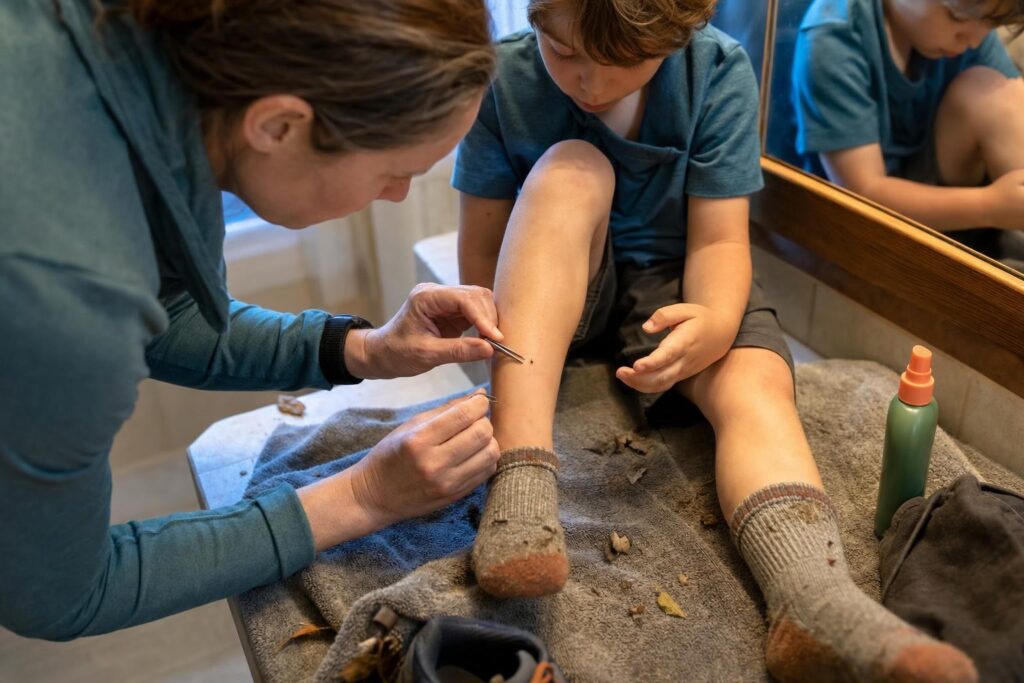
- Grasp the tick with fine-tipped tweezers as close to the skin surface as possible.
- Pull upward with steady, even pressure. Avoid twisting or crushing the tick.
- Clean the bite area and your hands with soap and water or rubbing alcohol.
- Dispose of the tick by sealing it in a container, wrapping it in tape or flushing it.
Skip folk methods such as petroleum jelly, heat or nail polish.
What to do after a bite
Note the date of the bite and watch for symptoms. Contact a clinician promptly if you are unsure what type of tick bit you, how long it was attached or whether preventive treatment is appropriate.
For a high-risk Ixodes bite, often a blacklegged tick in an area where Lyme is common, IDSA recommends considering a single dose of doxycycline within 72 hours of removing the tick. It is not recommended for low-risk bites, and eligibility depends on criteria your clinician can review.
Symptoms by timeline
Early signs usually begin 3 to 30 days after a bite. An erythema migrans, or EM, rash appears in about 70 to 80% of people with Lyme, so many cases show it, but not all do. Other early symptoms can include fever, fatigue, headache and body aches.
Testing timing matters. Serologic assays can be falsely negative during the first 4 to 6 weeks after infection, so early results are not always reliable and your bite history and symptoms matter.
Recovery and prolonged symptoms
Most people recover after a standard course of antibiotics. A minority have symptoms that linger after treatment.
The CDC uses the term post-treatment Lyme disease syndrome, or PTLDS, for these prolonged symptoms and discourages the term chronic Lyme disease. Long-term antibiotics are not recommended and can be harmful.
If symptoms persist, focus on supportive self-management such as paced activity, sleep and follow-up care. Discuss any ongoing plan with your clinician.
Pets and your yard
Pets can bring ticks indoors. Use a dog preventive after consulting a veterinarian, and do not apply tick products to cats without veterinary guidance.
Make your yard less tick-friendly by creating a 3-foot barrier of wood chips or gravel between lawn and wooded areas, mowing regularly, removing leaf litter and keeping play areas in the sun.
A note for the Mid-Atlantic
Maryland, Virginia and Washington, DC all see seasonal tick activity, so keep these habits through warmer months and on mild winter days. To understand how a bite site can look and feel, this local article on an itchy tick bite can help you compare common reactions with symptoms that need medical attention.
FAQ
How soon can symptoms appear?
CDC notes early symptoms can start 3 to 30 days after a bite.
Should every bite get antibiotics?
No. IDSA recommends preventive doxycycline only for specific high-risk Ixodes bites within 72 hours, after clinician review.
Resources and next steps
Prevention is mostly about small, repeatable habits: choose a registered repellent, treat clothing, check yourself and your family and remove any tick quickly.
For educational articles on prevention, symptoms, co-infections and integrative support to discuss with your clinician, see these Lyme disease resources, a page that also includes an affiliate disclosure.
Treat that library as background reading only, not medical advice or a review of any treatment. For primary guidance, rely on CDC, EPA and IDSA resources.
Other Articles You May Find of Interest...
- Living Well With Lupus: Everyday Habits That Help You Feel More Like Yourself
- When Should You See a Kidney Specialist? Signs You Should Not Ignore
- Why Dialysis Access Care Is an Important Part of Kidney Treatment
- ITP vs. TTP: Two Platelet Disorders, Opposite Urgency
- The Beighton Score: Measuring How Flexible Is Too Flexible
- Treating IgG4-Related Disease Before It Scars
- An Autoimmune Symptom Checklist to Bring to Your Doctor