Your Health Magazine Contributor
4201 Northview Drive
Suite 102
Bowie, MD 20716
More Child Health and Safety Articles
The Student Behind the Behaviour: When a Teen May Need More Support
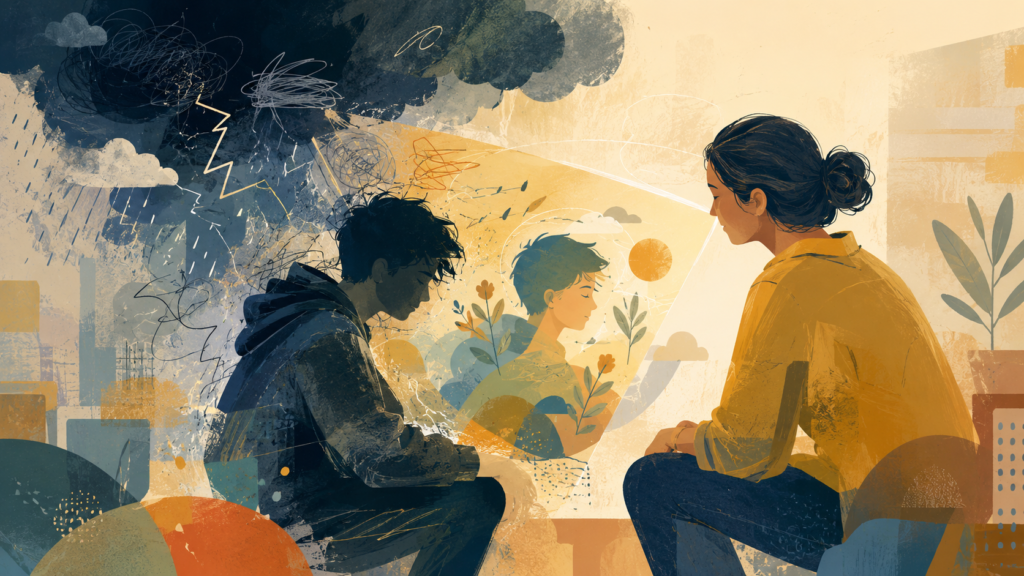
After a minor correction, a student storms out. One week, someone appears to be very close to a friend, but the next, they won’t talk to them. Someone who was once adept at handling setbacks now acts as though every argument is a crisis.
These situations can be annoying for educators. They can also be easily dismissed as attention-seeking, “teenage drama,” or having a bad attitude.
However, behaviour is a form of communication.
Sometimes a young person who appears disruptive or challenging on the outside is actually having trouble controlling their emotions, relationships, or sense of self. This does not imply that a teacher should attempt to identify a personality disorder. It can indicate that a student is struggling beneath the behaviour and that adults should take a closer look.
Start With Curiosity, Not Conclusions
Adolescence is a time of significant transformation. Teens are still growing emotionally and socially, so it’s normal for them to occasionally be moody, make snap decisions, or have friendship problems.
The pattern is more important.
Is the same problem recurring? Does it have an impact on education, friendships, or attendance? Does the young person appear incapable of healing from a conflict? Are their reactions becoming harder to control or more intense?
For instance, some young people with borderline personality disorder may have severe mood swings, trouble controlling their emotions, unstable relationships, impulsive behaviour, or a severe fear of rejection. Careful expert examination is important because similar issues might arise with other mental health problems.
The question that is helpful to a teacher is not “What is this student’s diagnosis?”
It is, “What could this behaviour be trying to tell me?”
Look Past The Challenging Situation
Consider a student who, upon receiving comments on an assignment, becomes enraged.
The simplest explanation could be that they are impolite.
However, it’s possible that they see criticism as rejection. Maybe they’ve already been overburdened by a fight at home. Maybe they’ve spent the morning attempting to control strong emotions.
Recognising this possibility does not entail eliminating appropriate boundaries or accepting inappropriate behaviour.
It entails reacting to the behaviour without concluding that the behaviour is the person.
“I can see this has really upset you; we can talk when things feel less intense” is a much more effective way to keep the door open than “You’re being ridiculous.”
A young kid can feel corrected without feeling condemned by little linguistic adjustments.
Notice What Happens Between The Incidents
Teachers may learn even more by observing what goes on around them, even if the dramatic times naturally draw attention.
Does the student frequently have arguments with close friends and then make a valiant effort to mend the relationship? Do they appear to be very sensitive about being left out? Do feelings frequently get in the way of school life?
It is not necessary for a teacher to develop a diagnosis.
Rather, in accordance with school policy, these observations might be useful for bringing up concerns with the school’s pastoral or safeguarding staff, counsellor, psychologist, or the young person’s family.
Labels are not as helpful as specific observations.
The statement, “Sam has left class in tears three times after disagreements with friends this month,” gives other adults something to deal with.
“Sam is unstable” doesn’t.
Be Careful With Labels
It can be especially intimate to hear the term “personality disorder.”
They could be perceived by an adolescent as a comment about their character rather than just the label of a mental illness:
The issue is my personality.
The issue is me.
Teachers have the power to stop that message from spreading.
Refrain from calling students “borderline,” poisonous, theatrical, manipulative, or attention-seeking. These labels can limit how adults perceive a young person, even when their behaviour is problematic.
A student’s illness shouldn’t be used as an excuse for everything they do.
They are still the student who struggles with algebra, loves art, detests public speaking, or makes their friends laugh.
A portion of their experience might be explained by their diagnosis. It doesn’t really capture who they are.
Know When Classroom Support Is Not Enough
Teachers can provide patience, consistency, boundaries, and a feeling of community.
In the classroom, they are unable to offer specialised mental health care.
It may be time to involve the proper school support system and promote professional examination when emotional or relationship issues are serious, ongoing, or have a major impact on day-to-day functioning.
Families looking for teen personality disorder treatment may already be terrified of what they are witnessing. By sharing particular concerns, refraining from making diagnoses, and encouraging evaluation by a licensed mental health professional, a teacher can assist without becoming a clinician.
With young people, a comprehensive evaluation is especially crucial because physicians must take into account whether challenges are indicative of normal teenage growth, a personality disorder, or another mental health issue.
Effective treatments are available for young people who are diagnosed with conditions like borderline personality disorder. Psychotherapy is the primary treatment and can help young people develop skills for managing intense emotions, impulsive behaviours, and relationship difficulties.
Teachers are not required to suggest a certain therapy.
Their job is to ensure that issues are addressed by those who are qualified to evaluate and handle them.
Keep Boundaries And Compassion Together
Saying “yes” to everything does not imply understanding the person behind the behaviour.
Clear and consistent limits are still necessary for young people, especially when relationships and emotions seem chaotic.
A teacher can be clear and kind at the same time:
“I know you’re upset, but I can’t allow you to yell at another student.”
“We need to talk politely, and I want to hear what happened.”
“We’ll figure out the next step after you have a few minutes to settle.”
Boundaries let students know what’s expected of them.
They are informed by compassion that their position in the room has not been diminished by their error.
Both can coexist simultaneously.
Be The Adult Who Notices
A teacher might never fully understand the reasons behind a young person’s actions.
And that’s alright.
A diagnosis is not necessary to identify suffering. To use language that upholds dignity, you don’t have to be a therapist. Additionally, you don’t have to fix every problem yourself in order to connect a student with someone who can.
Instead of attempting to handle the problem on your own, adhere to your school’s emergency and safeguarding protocols if there is an urgent concern for the safety of a young person.
If not, the first step could be fairly easy: identify the pattern, record what you see, talk to the appropriate individuals, and continue to treat the student as a person rather than a problem.
Ultimately, the aspect of a teen’s suffering that adults may see the most plainly may be problematic behaviour. Looking beyond it increases our chances of identifying potential support needs, but it does not justify destructive behaviour. One teacher’s decision to prioritise curiosity over judgement can start a very different journey for a young person who already feels misunderstood.
Other Articles You May Find of Interest...
- Teen Bipolar Test: Mood Swings, Evaluation, and Adolescent Support
- The Student Behind the Behaviour: When a Teen May Need More Support
- Metabolic Disorders in Children: Symptoms, Testing, and Care
- Lambskin for Babies: 7 Things Parents Should Know
- Can Nits Survive in Your Bedding?
- Getting a Newborn to Burp When Nothing Works
- Spring Trampoline Safety in 2026: Comparing Features Families Should Consider