More Beauty Skin Care & Gorgeous Smiles Articles
Skin Type Matters More Than Hair Color for Laser Results
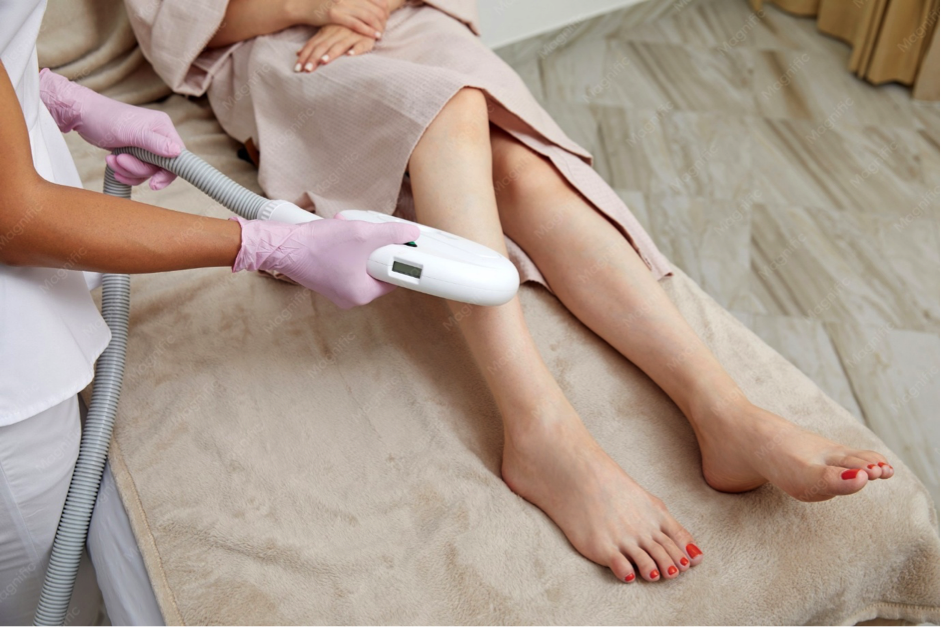
If you’ve ever Googled “laser hair removal,” you’ve probably landed on some version of the same advice: it works best on dark hair and light skin. While that’s partly true, it doesn’t tell the full story. Many people focus only on their hair color during consultations, but skin type is just as important when it comes to getting safe and effective results.
Hair color is one piece of the puzzle. Skin type is the whole board. For anyone researching laser hair removal in Austin, understanding this distinction can be the difference between choosing the right clinic and walking away disappointed with results.
The science behind laser hair removal has moved far beyond the old “dark hair and light skin only” model. Modern technology, in the right hands, treats a full spectrum of skin tones. What makes that possible is a thorough understanding of how melanin behaves in your skin and how lasers respond to it.
Does Hair Color Affect Laser Results?
Yes, but not as much as people assume.
Lasers target melanin, the pigment found in hair follicles. Dark hair is rich in melanin, making it highly responsive to laser energy. Lighter hair has less, which does make it more challenging to treat. That part of the old advice holds up.
What gets left out of that explanation is this: the laser doesn’t only interact with your hair. It travels through your skin to get there. If your skin carries high melanin levels, the wrong laser settings can absorb energy into the skin itself rather than the follicle. That’s the root cause of burns, dark spots, and uneven results.
Hair color influences how well the laser locks onto the follicle. Skin type determines how safely the whole process runs.
What Is the Fitzpatrick Scale?
The Fitzpatrick scale is a six-point classification system that measures how skin responds to UV exposure. Clinicians use it to determine the right laser approach for each patient.
- Type I — Very fair, always burns, never tans
- Type II — Fair, burns easily, tans minimally
- Type III — Medium, sometimes burns, gradually tans
- Type IV — Olive, rarely burns, tans well
- Type V — Brown, very rarely burns, tans deeply
- Type VI — Deep brown to dark, never burns
Skin types I and II carry lower melanin concentrations, giving clinicians more flexibility with laser intensity.
Types IV through VI carry significantly more melanin in the skin layer itself, which means the wavelength and energy settings need precise adjustment to avoid hitting the wrong target.
Why Skin Tone Drives Laser Outcomes More Than Hair Color
Melanin is what the laser follows. In a person with type II skin and dark hair, the contrast between pale skin and pigmented follicles is sharp.
In someone with Type V skin and dark hair, that contrast narrows. Both the skin and the follicle are melanin-rich, and an uncalibrated laser won’t tell the difference.
That’s why the technology and the provider both matter. Alite Laser uses advanced systems like the Candela GentleMax Pro, which can safely treat different skin tones using two types of laser settings.
One works better for lighter skin, while the other is designed for deeper skin tones. A single laser setting is not safe or effective for everyone, which is why personalized treatment is so important.
What This Means Before Your Consultation
Before booking anywhere, ask two questions: What laser do you use? And how do you adjust for my skin type?
A clinic that can answer both with confidence is the one worth trusting with your skin. Hair color will come up. Just don’t let it be the only thing that does.
Key Takeaways
- Skin types determine laser results rather than hair color.
- Lasers target melanin in both hair and skin.
- The Fitzpatrick scale (I-VI) is how clinicians set the right laser for your skin.
- Deeper skin tones need longer wavelengths.
- Alite Laser uses the Candela GentleMax Pro—a dual-wavelength device built to treat all skin tones safely.
Other Articles You May Find of Interest...
- AHA Underarm Roll-Ons Explained: Benefits, Usage & Results
- What Happens Behind a Skin Biopsy
- Skin Type Matters More Than Hair Color for Laser Results
- The Structural Approach to Facial Rejuvenation: Why the Modern Facelift is About Preservation, Not Pulling
- Plastic Surgeon vs Cosmetic Doctor: What Is the Difference?
- Non-Surgical Options for Wrinkle Removal in Singapore
- Neck Lift Treatment: How to Fix Sagging and Aging Neck Skin