






Your Health Magazine
4201 Northview Drive
Suite #102
Bowie, MD 20716
301-805-6805
More Beauty Skin Care & Gorgeous Smiles Articles
Decoding the Light: How to Choose Between IPL, Fractional, and Radiofrequency Lasers
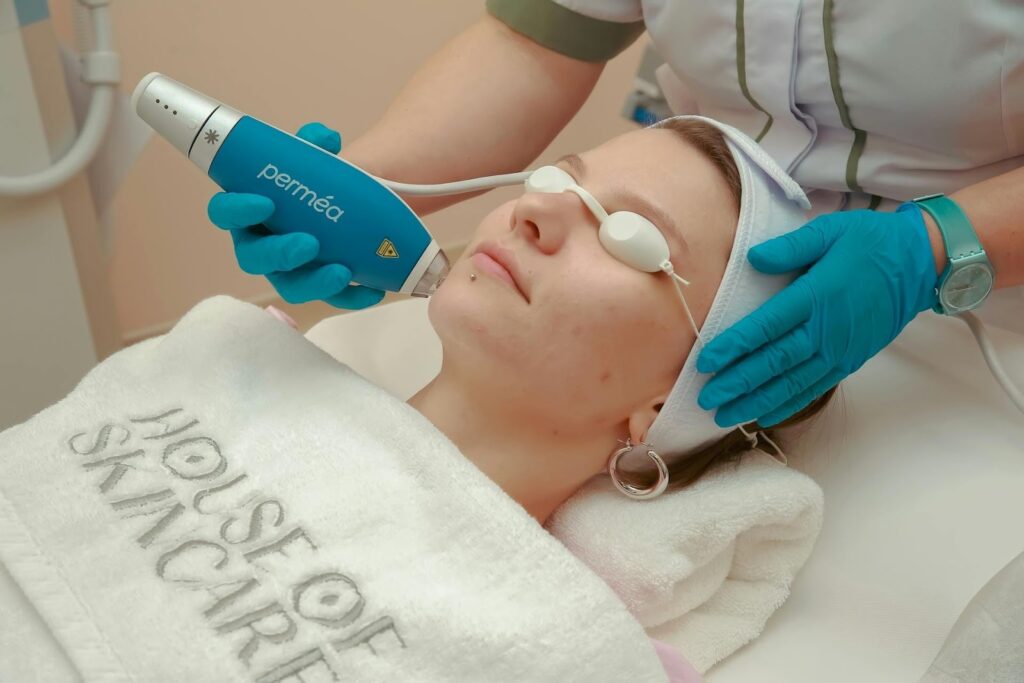
There was a time, not so long ago, when the word “laser” in a cosmetic context felt like science fiction. Patients imagined a singular, powerful beam of light that could magically erase every imperfection from sunspots to deep-set wrinkles. But as the aesthetic industry has matured, particularly in a sophisticated market like Toronto, we have come to realize that “laser” is not a single tool, but an entire language of light.
Stepping into a modern clinic today can feel overwhelming. You are met with an alphabet soup of technology: IPL, CO2, Fractional, RF, and Morpheus8. For the patient simply looking to restore a youthful glow or clear up a stubborn patch of hyperpigmentation, the sheer volume of choices can lead to a specific kind of analysis paralysis. The secret to a successful transformation lies in understanding that different skin concerns require different wavelengths. To choose the right treatment, one must first decode the light.
The Gentle Power of IPL: Treating the Surface
Intense Pulsed Light, or IPL, is often the first entry point for many into the world of light-based therapy. It is important to note that, technically, IPL is not a laser at all. While a laser uses a single, focused wavelength of light, IPL uses a broad spectrum, much like a powerful camera flash.
This broad-spectrum approach makes IPL the “multitasker” of surface treatments. It is designed specifically to target color. If your primary concerns are “reds and browns”—think of the stubborn sun damage from summers spent at the cottage or the persistent redness of rosacea—IPL is the gold standard. According to research on light-based skin treatments from Harvard Health, the energy is absorbed by the pigment in the skin, heating and destroying the cells without damaging the surrounding tissue.
The beauty of IPL lies in its lack of downtime. It is a “lunchbreak” procedure that allows a busy professional to return to the office in North York or Downtown Toronto immediately. However, because it is a surface-level treatment, it is not the tool for deep wrinkles or structural sagging. It is about clarity and tone, not necessarily texture and lift.
Fractional Lasers: The Architects of Texture
When the concern moves beyond color and into the realm of texture—scars from teenage acne, fine lines around the eyes, or a general “leathery” feel to the skin—we must look toward fractional technology.
The genius of the fractional laser is in its name. Instead of treating the entire surface of the skin, which would require a grueling recovery, the laser delivers heat through thousands of microscopic “columns.” Imagine a photograph made of tiny dots; the laser treats only a fraction of those dots, leaving the surrounding skin intact. This healthy, untreated skin acts as a reservoir of healing energy, allowing the treated columns to regenerate at an incredible speed.
This is a structural treatment. It forces the skin into a state of rapid repair, stimulating the production of fresh, organized collagen. For the patient who feels their skin has lost its “snap” or who is struggling with the physical reminders of past skin trauma, fractional resurfacing offers a level of smoothing that no topical cream can replicate. It requires a few days of social downtime, usually characterized by a feeling similar to a mild sunburn, but the payoff is a total refinement of the skin’s physical architecture.
Radiofrequency (RF) and Microneedling: The Deep Lift
In recent years, the conversation has shifted toward a technology that isn’t light-based at all, but rather energy-based: Radiofrequency. When you combine RF with microneedling, as seen in the world-renowned Morpheus8 system, you are no longer just treating the skin; you are treating the underlying scaffolding.
While IPL targets color and Fractional targets texture, RF targets “laxity.” As we age, the fibrous bands that hold our skin to our facial structure begin to stretch and weaken. Traditional lasers often struggle to reach the depths where this sagging begins. RF microneedling solves this by using tiny needles to deliver heat energy deep into the dermis and even the subdermal fat layers.
This deep-tissue heating causes an immediate contraction of the skin fibers and triggers a long-term remodeling process. This is the choice for the patient concerned with a softening jawline, “marionette” lines, or a loss of definition in the neck. It is the closest technology can get to a surgical lift without the use of a scalpel. It is about tension and contour, providing a foundation upon which the other light-based treatments can shine.
The Philosophy of the “Stacked” Treatment
In a world-class aesthetic environment like Toronto DermaPlastic Clinic, the most successful patients rarely choose just one. The modern approach to beauty is “Multi-Modality,” where the goal is to address the skin as a living, multi-layered organ.
We are seeing a massive shift in consumer habits where patients “stack” these technologies. A patient might use IPL to clear the brown spots caused by sun damage, followed by a fractional treatment to smooth out fine lines, and finally a session of RF microneedling to tighten the jawline. This “anatomy-first” approach ensures that every layer of the skin—from the visible surface to the deep structural fibers—is being addressed. Choosing the right treatment is less about picking a machine and more about partnering with a provider who understands the interplay between these energies.
Why Your Skin Type Matters
It is also vital to recognize that the choice of light is not universal. Skin with more melanin requires a more cautious approach, as certain lasers can inadvertently trigger hyperpigmentation in darker skin tones if not calibrated correctly. This is where the expertise of a specialized clinic becomes non-negotiable. Modern technology has evolved to be inclusive, but it requires a deep understanding of skin physics to ensure that the light which heals one person doesn’t harm another.
Conclusion: Investing in Your Future Self
Decoding the light is ultimately about reclaiming the narrative of your aging process. Whether it is the clarity provided by IPL, the texture refinement of a fractional laser, or the structural lifting of radiofrequency, these tools offer a way to age with intention.
In a city as fast-paced as Toronto, our skin bears a heavy burden. Choosing to invest in light-based therapy is not about vanity; it is about skin health and the confidence that comes with a vibrant complexion. When you understand how these technologies work, you stop being a passive consumer and start being the architect of your own aesthetic journey.
Other Articles You May Find of Interest...
- Decoding the Light: How to Choose Between IPL, Fractional, and Radiofrequency Lasers
- Newport Beach Plastic Surgeon: Comprehensive Guide to Procedures, Benefits and Choosing the Right Specialist
- Is Larin Fe Right for You? Exploring Its Benefits and Considerations
- Effective Ways to Treat and Heal Sun Poisoning
- Why Beauty Now Focuses on Refinement, Not Overhaul
- Email & SMS Automation in MedSpa Marketing Strategy
- Achieve a Youthful Profile with the Nefertiti Neck Lift?




