






Your Health Magazine Contributor
4201 Northview Drive
Suite 102
Bowie, MD 20716
More Beauty Skin Care & Gorgeous Smiles Articles
Beyond Beauty: Why Patients Choose the UK for Cosmetic Procedures
Introduction
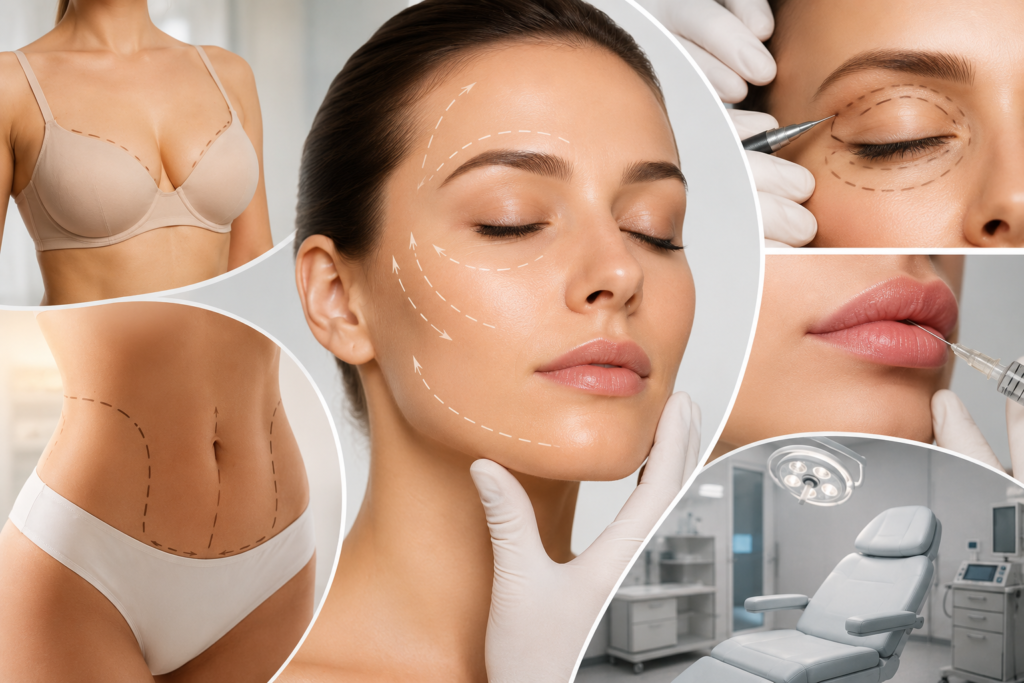
The UK’s reputation for cosmetic treatment didn’t happen overnight. It has grown through medical history, specialist training, private healthcare, changing attitudes towards beauty, and the growing popularity of non-surgical procedures.
For many patients, the attraction lies in the clinical environment. For others, it is the chance to access experienced practitioners, a wide choice of treatments, and established private clinics.
Cosmetic procedures have become a major part of the UK’s healthcare landscape. According to the latest audit by the British Association of Aesthetic Plastic Surgeons (BAAPS), more than 26,000 surgical procedures were performed in 2025, roughly 73 a day. These figures represent procedures, not individual patients.
Non-surgical treatment is harder to measure because there is no single national database. A parliamentary report notes that the Department of Health and Social Care has estimated around 900,000 Botox injections a year in the UK, which is around 75,000 per month or 2,466 per day. These figures refer to injections, not individual people.
A Short History of Cosmetic Treatment in Britain
Britain’s cosmetic medicine didn’t begin with a beauty trend; it began with war
During the First World War, surgeon Sir Harold Gillies developed techniques for rebuilding the faces of soldiers who had suffered horrific injuries, work now widely credited as the foundation of modern plastic surgery. He did this at Queen Mary’s Hospital in Sidcup, and the Royal College of Surgeons still holds case files for more than 2,500 soldiers treated through his unit between 1915 and 1925. None of it was about enhancement. It was about giving men back a face they could live with. But the surgical knowledge that emerged from that decade eventually fed into the much wider field of plastic surgery, including cosmetic work.
London’s reputation for private medicine grew alongside that history, and Harley Street in particular became known for specialist care long before it became shorthand for aesthetics. It still handles far more than cosmetic work today, but the association stuck.
Professional bodies came later. The British College of Aesthetic Medicine was founded in 2001 with just 27 doctors and has since grown into one of the main professional organisations for doctors and dentists working in the field.
Why Cosmetic Treatment Has Become More Popular
Non-surgical treatment has changed the market because it is easier to access and easier to fit into everyday life.
Cosmetic treatment used to mean surgery, and surgery usually meant weeks of recovery. That’s less true now. Anti-wrinkle injections, dermal fillers, chemical peels, microneedling, and laser treatments have made the options much broader, and most of them need little or no downtime.
The shift has been reflected in government discussions too. Non-surgical procedures are easier to access and less likely to raise eyebrows, helped along by social media, high-street providers, better technology,y and prices that have brought treatment within reach for more people.
Subtle results are more in demand, and what patients want has changed as well. Big transformations are not really the goal for most people anymore. They’re usually after softer lines, less pigmentation, fewer acne scars, or skin that just looks fresher and more rested.
That’s part of why skin boosters, microneedling, lasers,and anti-wrinkle injections are talked about so casually now, almost the way people used to talk about getting a good facial.
London offers a concentrated choice. Few places in the country offer as much choice in one area: private hospitals, specialist doctors, dermatology services, aesthetic practitioners, professional bodies and cosmetic clinics, all within a few square miles.
That’s a real advantage, but it cuts both ways. With so much choice, picking a clinic on price or postcode alone no longer makes much sense. Qualifications, the treatment plan, and the aftercare matter far more than the street the clinic happens to be on.
What Makes the UK Stand Out in Cosmetic Treatment?
The UK stands out for its strong medical standards, clear professional guidance, and a consultation process that gives people time to think. Doctors are expected to check whether treatment is suitable or not and explain the risks properly to make sure patients understand what they are agreeing to.
It’s also worth noting that surgical and non-surgical care are regulated differently. Cosmetic surgery in England is covered by tighter CQC oversight, while treatments such as Botox and fillers are still working towards stronger regulation. Even with that gap, the UK’s experience, standards, and focus on patient safety are a big reason people continue to choose it over cheaper options abroad.
Most Popular Surgical and Non-Surgical Treatments
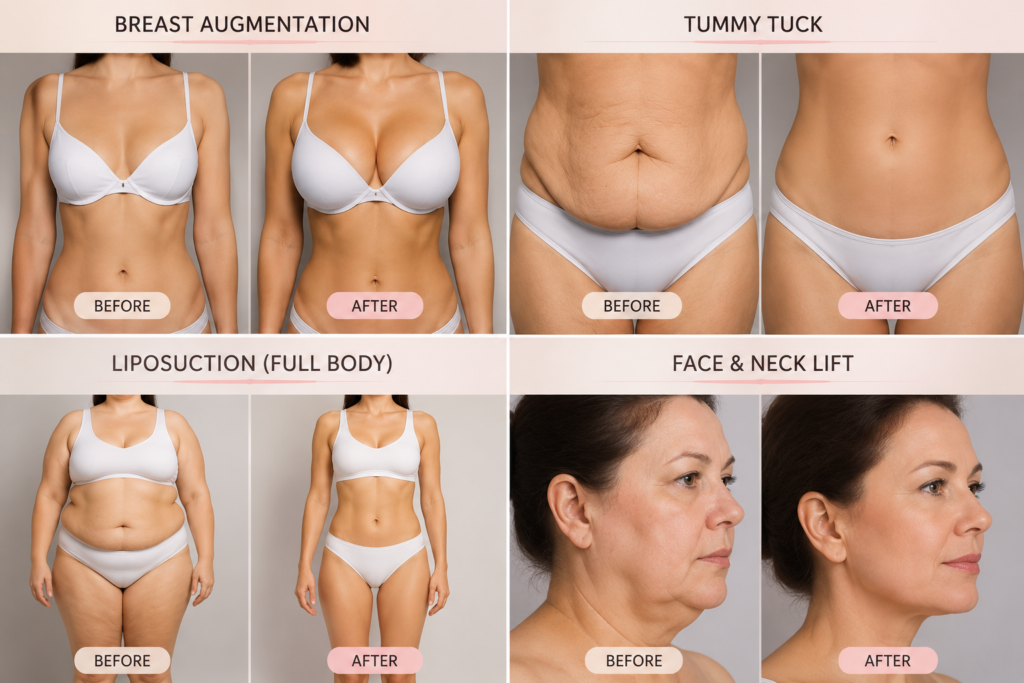
The latest BAAPS figures show that demand is spread across several procedures rather than dominated by one treatment.
Surgical Aesthetic Treatments
| Surgical treatment | UK procedures in 2026 | Direction of demand |
| Breast augmentation | 4,761 | Down 8% |
| Breast reduction | 4,551 | Up 2% |
| Blepharoplasty | 3,035 | Up 8% |
| Abdominoplasty | 2,655 | Down 6% |
| Liposuction | 2,463 | Down 6% |
| Face and neck lift | 2,097 | Up 11% |
| Rhinoplasty | 1,595 | Down 18% |
BAAPS recorded 26,840 procedures overall, a 2% decrease from the previous quarter. Facial procedures such as eyelid surgery and face and neck lifts appear to be gaining more attention, while some body procedures have declined.
For non-surgical treatment, national figures are less complete. Government consultation responses still offer useful data. Among 7,603 respondents who said they had a non-surgical procedure and gave answers that could be recorded, the most commonly reported treatments were dermal fillers, Botox, skin boosters, microneedling, and chemical peels.

Popular Non-surgical aesthetic treatments
| Non-surgical treatment | Why patients commonly seek it |
| Anti-wrinkle injections | Facial lines and wrinkles |
| Dermal fillers | Volume, contour and facial balance |
| Skin boosters | Hydration and skin quality |
| Microneedling | Texture, scarring and skin renewal |
| Chemical peels | Pigmentation, texture and selected skin concerns |
| Laser/IPL treatments | Pigmentation, redness, hair and skin concerns |
What to Expect to Pay for Cosmetic Treatment in the UK
The price of cosmetic treatment can vary quite a bit depending on who carries it out and which area is being treated. Some treatments are doctor-led, while others are done by qualified specialists.
Below is a closer look at some of the UK’s well-known clinics for cosmetic care.
| Clinic | Popular treatment | Published price | Consultation information |
| Healand Clinic | Medically supervised peptide therapy | From £350 | Treatment is priced following consultation |
| No Filter Clinic | Full Face Balancing (Non-Surgical Facelift) | From £250 | Injectable consultation £100 |
| Melo Clinic | Anti-Wrinkle Injections | From £145 | Dermatology consultation £100 |
| Fiore Aesthetics | Lip Filler | From £275 | Consultation not free; first consultation discount available |
| Deserve Aesthetics | Nose filler (non-surgical rhinoplasty) | From £180 | Consultation details available through the clinic |
| 111 Harley Street | Y Facelift | From £417.67 | Non-surgical consultation requires a £50 deposit |
| EC Clinic London | HydraFacial | Price on request | Consultation pricing should be confirmed directly |
These figures show why headline prices can be misleading. A £200 treatment and a £400 treatment may involve different products, treatment areas, practitioners, and levels of clinical assessment.
What Patients Should Check Before Choosing a Clinic
Price should be only one part of the decision.
For surgical treatment in England, the Care Quality Commission (CQC) regulates independent clinics and hospitals that provide cosmetic surgery. Patients can check whether a service is registered before booking.
Non-surgical treatment is different. The CQC does not regulate every procedure, such as Botox, dermal fillers, chemical peels, and laser hair removal. The government is now developing proposals for a licensing system covering specified non-surgical procedures in England.
A good consultation should give patients the chance to ask:
- Who will perform the treatment?
- What qualifications and experience do they have?
- Why has this treatment been recommended?
- Are there alternatives?
- What are the possible complications?
- What aftercare is provided?
- What happens if a complication occurs?
- Is the quoted price the full cost?
The CQC also advises patients considering cosmetic surgery to check the clinic’s registration and make sure they understand the risks, the expected result, and the consent process.
Why the UK Continues to Attract Interest
The UK’s appeal goes beyond cosmetic trends. Its history of reconstructive surgery, established private healthcare sector, specialist practitioners, and wider range of non-surgical treatments have created a mature market.
But more choices do not always make the decision easier.
The real question is not only which treatment is popular. It is whether the procedure is suitable for the individual, whether the practitioner is properly qualified, and whether the patient understands both the likely outcome and the risks.
Cosmetic treatment may start with appearance, but a sensible decision starts with information.
Related UK Resources
For independent reading, patients can use:
- BAAPS Annual Cosmetic Surgery Audits
- Care Quality Commission: Choosing Cosmetic Surgery
- UK Government: Licensing of Non-Surgical Cosmetic Procedures
- House of Commons Library: Regulation of Non-Surgical Cosmetic Procedures
- Royal College of Surgeons: Sir Harold Gillies’ Patient Case Files
- Save Face: Practitioner and Clinic Register
The figures of 73 surgical procedures a day and 2,466 Botox injections a day are calculated from annual estimates, not from claims about how many individual people seek treatment each day. That distinction matters for accuracy and E-E-A-T.
Other Articles You May Find of Interest...
- Dermatica Alternatives in 2026: How to Continue Prescription Skincare
- Can You Prevent Skin Tags From Forming?
- How Digital Tools Can Support Safer, More Efficient Cosmetics Purchasing
- Is a Breast Lift with Augmentation Right for Your Body Goals?
- Types of Facelifts and Nonsurgical Alternatives: Benefits, Risks, and Limitations
- How AI Is Changing Melanoma Awareness and Early Skin Checks
- Are Dermal Fillers Safe? Understanding the Potential Risks and Benefits





