Your Health Magazine Contributor
4201 Northview Drive
Suite 102
Bowie, MD 20716
More Beauty Skin Care & Gorgeous Smiles Articles
5 Rhinoplasty Surgeons in San Francisco to Compare
Choosing a surgeon for your nose is a big decision. Your nose affects your appearance and breathing, and healing takes months rather than days. Patients benefit from choosing a doctor who listens carefully and explains the plan in plain language.
This comparison reviews publicly available information from five established Bay Area practices, including credentials, techniques, consultations, facilities, recovery guidance, and pricing transparency. It does not independently assess surgical skill or patient outcomes.
Practice Features at a Glance
- Tanya Judge, MD: Double board certified, offers open and closed techniques, uses 3-D imaging during consultations, and publishes all-inclusive price ranges online.
- David W. Kim, MD: His practice highlights more than 20 years as a surgeon, over 3,000 patients treated, and experience with complex and revision cases.
- Corey S. Maas, MD, FACS: Offers tele-consultations, computer image analysis, open and closed techniques, and procedures at an accredited outpatient center.
- Evan Ransom, MD, FACS: Offers open and closed techniques, addresses cosmetic and breathing concerns, and states that nasal packing is not routinely used after surgery.
- Dino Elyassnia, MD: His practice highlights preservation rhinoplasty, an on-site accredited surgical center, and an optional overnight recovery suite.
How the Practices Were Compared
The practices were reviewed using the same general criteria, including board certification, relevant training, technique options, consultation information, surgical facilities, recovery guidance, and pricing transparency.
Technique options matter. A surgeon who discusses open, closed, or preservation approaches can explain which option fits a patient’s anatomy. No single technique is automatically right for every patient.
Consultation information was also considered. Imaging and computer morphing can make it easier to discuss shape and proportion. A simulation is a conversation tool, not a promise of the final result.
Facility quality and aftercare were also considered. Relevant information included surgical facility accreditation, anesthesia details, and published recovery ranges. Clear guidance helps patients plan work, exercise, transportation, and support at home.
Pricing transparency was also reviewed. Only one of these practices publishes surgical price ranges online, while the others provide individualized quotes after an examination.
What Nose Reshaping Surgery Involves
Rhinoplasty reshapes the nose and may address appearance, breathing, or both. The plan should reflect the patient’s anatomy instead of following a standard template.
With an open approach, the surgeon makes a small incision between the nostrils to view the underlying framework. With a closed approach, the incisions stay inside the nostrils. Where breathing is part of the picture, functional rhinoplasty is planned around the individual airway rather than a standard template. Preservation methods aim to retain more of the existing structure while making selected changes.
Surgery is usually outpatient and often uses general anesthesia. Many patients wear a splint for about a week and return to desk work after seven to ten days. Swelling can take six to twelve months to settle, and every patient heals differently.
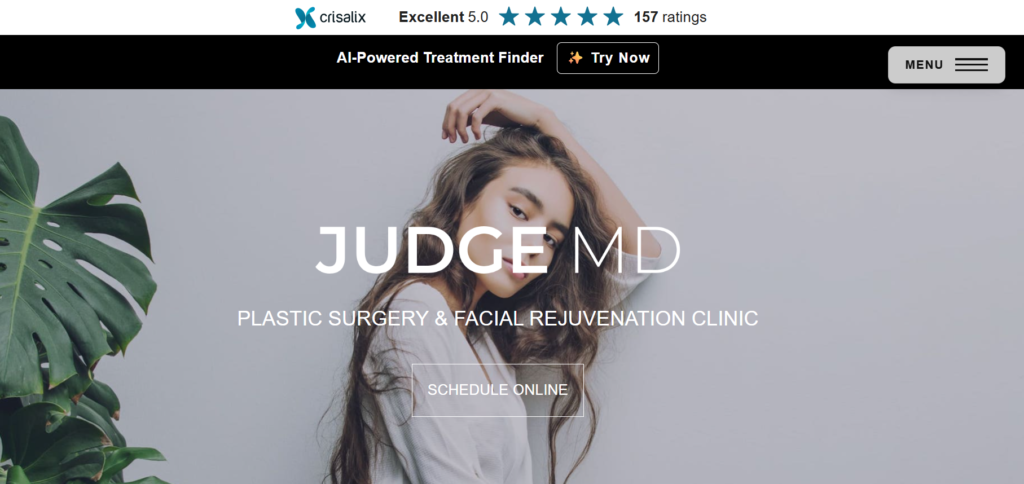
Tanya Judge, MD
Tanya Judge, MD Published Features
- Double board certified in General Surgery and Plastic Surgery
- Performs both open and closed rhinoplasty
- Recommends the technique after a one-on-one consultation
- Uses 3-D imaging to preview possible changes
- Addresses cosmetic and functional concerns together
- Publishes practical guidance for work and exercise
- Applies the consultation fee toward treatment if the patient proceeds
Considerations
- There is a $200 consultation fee
- Patients should plan for about four weeks of activity restrictions
About Dr. Judge’s Approach
The planning process described by Dr. Tanya Judge may be useful for patients who want visual guidance during consultation. According to the practice, 3-D imaging helps patients and the surgeon discuss possible results visually, although the images are not a guarantee.
The practice offers both open and closed surgery, with the recommended approach based on the patient’s anatomy and goals rather than being selected in advance.
The practical guidance is also detailed. Surgery is described as an outpatient procedure under general anesthesia that usually takes two to three hours. The practice says most patients typically return to work within seven working days and avoid strenuous activity for a full four weeks, while recognizing that recovery varies.
Tanya Judge, MD Pricing and Consultation
The practice lists a $200 consultation fee and applies it toward treatment if the patient proceeds. It also publishes price ranges online, listing rhinoplasty at $17,500 to $22,000, tip rhinoplasty from $8,000, and revision rhinoplasty from $23,000, with quotes valid for 90 days.
Those figures are stated as all-inclusive, covering the surgeon’s fee, operating room and facility fees, anesthesia, garments, and pre- and post-operative appointments. The practice does not bill insurance, so patients with functional concerns should discuss how those would be handled before booking.
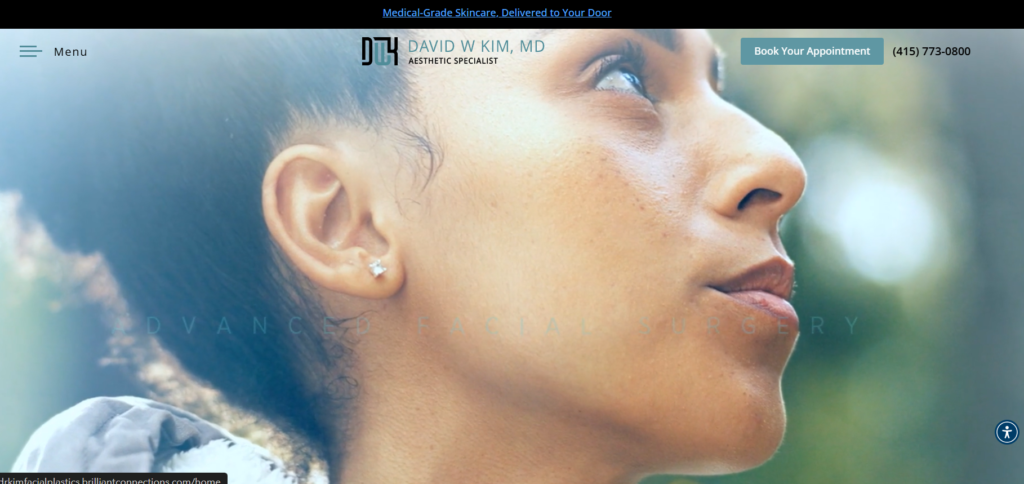
David W. Kim, MD
David W. Kim, MD Published Features
- Double board certified by the ABFPRS and ABOto-HNS
- More than 20 years as a surgeon, according to the clinic
- Over 3,000 patients treated, according to the clinic
- Practice emphasizes complex and revision cases
Considerations
- Surgical pricing is not available online
- The website provides less consultation and recovery detail than some of the other practices included
About Dr. Kim’s Approach
Dr. Kim’s practice emphasizes complex and revision procedures. A previous operation can leave scar tissue or altered cartilage, so patients considering revision rhinoplasty may want to ask specifically about relevant experience with similar cases.
The clinic highlights more than 20 years as a surgeon, over 3,000 patients treated, and a focus on complex cases. Those figures are claims from the practice rather than independent evidence.
His certifications in facial plastic surgery and otolaryngology are relevant when shape and breathing concerns overlap. During consultation, patients can ask about cases similar to their own, the likely surgical approach, and follow-up care.
David W. Kim, MD Pricing and Consultation
Pricing is provided after an evaluation. Revision patients should ask what the quote includes and whether extra testing, cartilage grafting, or longer follow-up could affect the total.
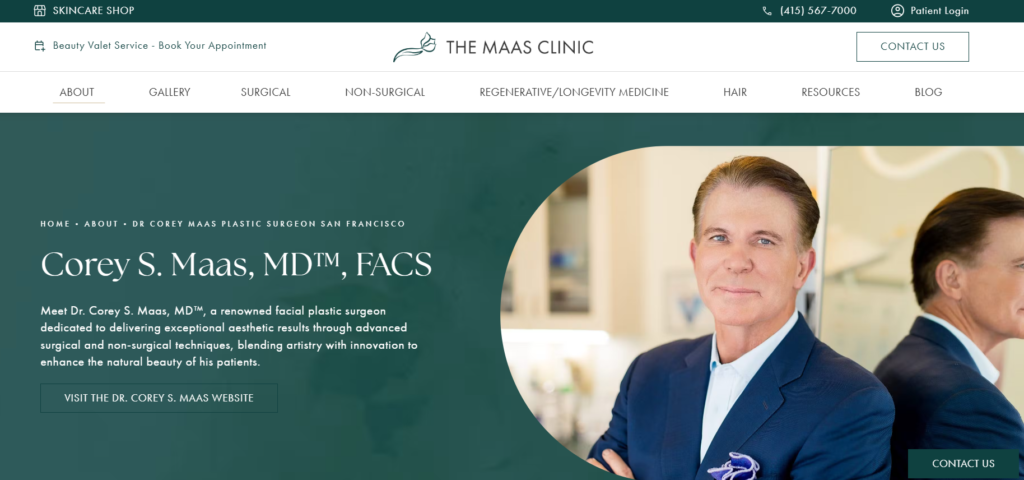
Corey S. Maas, MD, FACS
Corey S. Maas, MD, FACS Published Features
- Certified by both the ABFPRS and ABOto
- Performs surgery in an accredited outpatient center
- Offers open and closed techniques
- Provides tele-consultations with computer image analysis
- Publishes recovery ranges
Considerations
- Detailed pricing is only available at consultation
- The clinic has a broad service menu, so patients may want to clarify which options are relevant to their specific rhinoplasty goals
About Dr. Maas’s Approach
The Maas Clinic publishes detailed information about its facility and planning process. Procedures take place in an accredited outpatient surgical center, and the site says operating time is commonly two to three hours. That level of detail can make planning easier.
Tele-consultations with computer image analysis can also help patients begin the discussion before traveling to the office. The clinic gives a recovery range of seven to ten days before returning to work and six to twelve months for the result to settle. These are estimates, not guaranteed timelines.
Corey S. Maas, MD, FACS Pricing and Consultation
The clinic provides a personalized quote during the consultation and notes that financing options are available. Patients should confirm what the quote covers rather than relying on figures from third-party sites.
Evan Ransom, MD, FACS

Evan Ransom, MD, FACS Published Features
- Double board certified and Ivy League trained, according to the practice
- Uses open or closed techniques based on the patient’s needs
- Practice states that nasal packing is not routinely used afterward
- Addresses cosmetic and breathing concerns
- Provides recovery information online
Considerations
- The practice does not accept insurance
- The $200 consultation fee is non-refundable
- No surgical prices are published online
About Dr. Ransom’s Approach
One feature highlighted by the practice is its policy of not routinely using nasal packing after rhinoplasty. It also selects an open or closed approach based on the patient’s goals and anatomy.
The website presents recovery details in patient-friendly language. The practice does not accept insurance, so patients should discuss functional concerns and payment expectations early.
Evan Ransom, MD, FACS Pricing and Consultation
The practice lists a $200 non-refundable consultation fee. Surgery is quoted after the examination, and patients should ask for a complete breakdown of surgeon, anesthesia, and facility charges.
Dino Elyassnia, MD
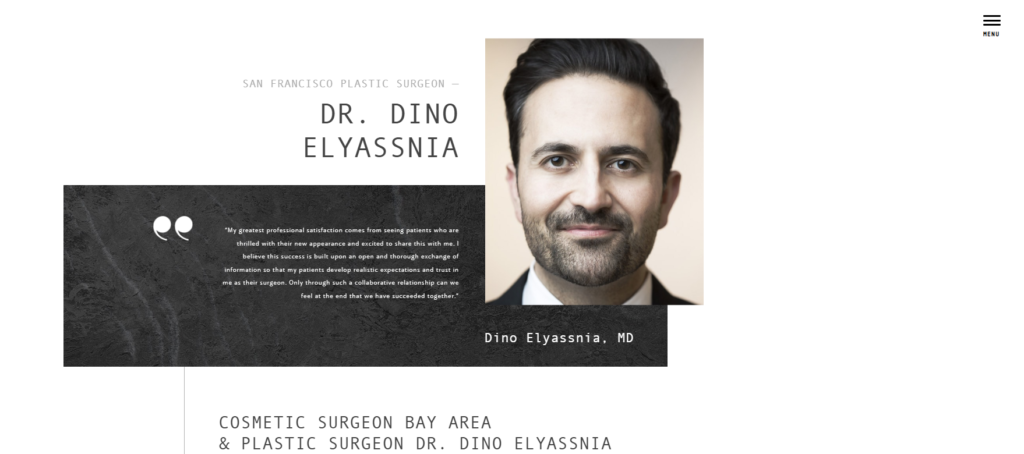
Dino Elyassnia, MD Published Features
- Practice highlights a focus on preservation rhinoplasty
- Has an on-site AAAASF-accredited surgical center
- Offers an optional overnight recovery suite
- Central San Francisco location
Considerations
- Pricing is not published online
- The site offers less detail about breathing-focused work
- Most planning details are covered during consultation
About Dr. Elyassnia’s Approach
Preservation techniques may appeal to patients interested in retaining more of their natural nasal structure. Dr. Elyassnia’s practice identifies this approach as a focus, but suitability still depends on an individual examination. Patients should ask how it differs from other techniques for their specific goals.
The practice also has an on-site AAAASF-accredited surgical center. An optional overnight recovery suite may be helpful for someone who wants added support after surgery. If breathing is part of the concern, patients should raise it early because the website provides less detail on functional treatment.
Conclusion
These five San Francisco practices differ in areas such as technique options, consultation tools, facility arrangements, published recovery information, and pricing transparency.
Tanya Judge, MD offers open and closed rhinoplasty, 3-D consultation imaging, and published pricing information. David W. Kim, MD emphasizes complex and revision procedures. Corey S. Maas, MD, FACS provides tele-consultations and operates through an accredited outpatient center. Evan Ransom, MD, FACS highlights a no-packing approach, while Dino Elyassnia, MD focuses in part on preservation rhinoplasty.
Prospective patients should compare qualifications, surgical approaches, facility accreditation, follow-up policies, total costs, and experience with cases similar to their own. Consulting with more than one qualified surgeon can also help patients understand how recommendations differ before making a decision.
FAQ
What is the difference between open and closed nose surgery?
An open approach uses a small incision between the nostrils, giving the surgeon a direct view of the nasal framework. With a closed approach, the incisions stay inside the nostrils. Open surgery may be recommended for complicated changes, while closed surgery can suit selected limited changes. The surgeon should explain why one approach fits the individual patient’s anatomy and goals.
How long does it take to see the final result?
Many patients return to desk work in seven to ten days, but that is only the early recovery period. Swelling usually fades gradually over six to twelve months, and the nasal tip can take the longest to settle. Individual timelines may be shorter or longer.
Is a consultation fee normal?
Yes. A consultation fee is common because the visit may include an examination, planning, imaging, and time with the surgeon. Patients should ask whether the fee is refundable or credited toward treatment before booking and confirm what happens if they decide not to proceed.
Can cosmetic nose surgery also address breathing problems?
In many cases, cosmetic and functional concerns can be discussed as part of one surgical plan. Patients should tell the surgeon about congestion, previous injuries, or known airway issues at the beginning of the consultation. Insurance and payment policies vary, so patients should ask how any functional work would be billed.
Other Articles You May Find of Interest...
- How a Brow Lift Improves Vision and Reduces Forehead Tension
- Exploring Options for Enhancing Your Natural Beauty
- Neck Lift Cost and Recovery: What to Expect
- GHK-Cu and Your Skin: What the Copper Peptide Research Actually Shows
- Why Does Sunscreen Burn My Face?
- What A First Visit With A Plastic Surgeon Actually Involves
- Does Chlorine Kill Warts or the Virus That Causes Them?