






Your Health Magazine
4201 Northview Drive
Suite #102
Bowie, MD 20716
301-805-6805
More Addiction Articles
Why Social Media Can Be Addictive and How It Affects Your Brain
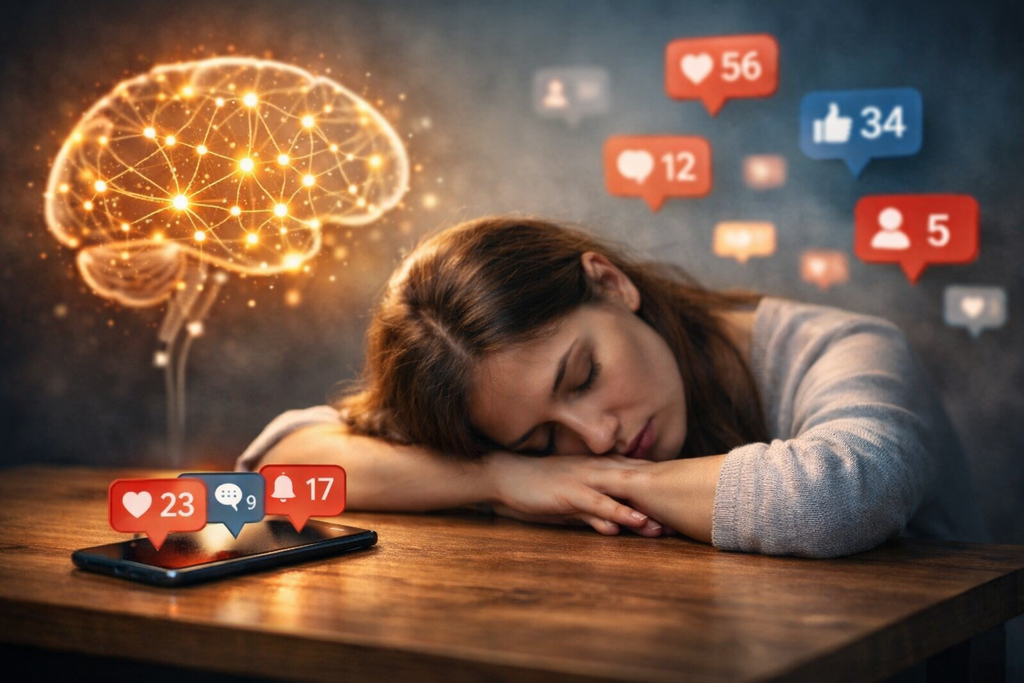
Social media has become a constant presence in modern life. What once served as a way to stay connected with friends and family has evolved into an always-available stream of content, interaction, and comparison. Many people reach for their phones without thinking, scrolling through feeds during moments of boredom, stress, or fatigue. For some, this habit becomes difficult to control.
Understanding why social media can feel addictive requires looking at how it interacts with the brain. The design of digital platforms aligns closely with natural reward systems, social instincts, and habit formation. When these mechanisms are overstimulated, patterns of use can shift from intentional to compulsive.
How Social Media Stimulates the Brain’s Reward System
The human brain is wired to seek reward. Dopamine plays a central role in reinforcing behaviors that feel pleasurable or meaningful. It motivates repetition by signaling that an action is worth repeating.
Social media platforms are built to trigger this response frequently. Likes, comments, shares, and notifications all provide small bursts of reward. Each time a user receives feedback, the brain releases dopamine, reinforcing the behavior that led to it.
What makes this especially powerful is unpredictability. Users never know when a post will receive attention or when a new notification will appear. This uncertainty keeps the brain alert and encourages repeated checking, strengthening habitual behavior over time.
The Power of Social Validation
Humans have a deep need for social connection. Acceptance and recognition are closely tied to emotional wellbeing. Social media transforms these abstract needs into measurable signals.
Follower counts, engagement numbers, and views provide instant feedback. When numbers rise, users may feel validated. When engagement drops, it can trigger disappointment or anxiety. Over time, people may begin to associate their self-worth with online metrics.
This effect is amplified by comparison. Social platforms often display carefully curated versions of life, success, and appearance. Constant exposure to these images can distort perception and increase pressure to keep up.
Habit Loops and Automatic Behavior
Social media addiction rarely develops overnight. It forms through repeated habit loops made up of a trigger, an action, and a reward.
Boredom, stress, or loneliness may act as triggers. Opening an app becomes the action. Entertainment, distraction, or social interaction serves as the reward. With repetition, the brain learns this pattern and begins to seek the reward automatically.
Eventually, many people open social media without conscious intention. The behavior becomes reflexive rather than deliberate, making it harder to disengage even when negative effects appear.
Attention, Focus, and Cognitive Overload
One of the most common effects of excessive social media use is reduced attention span. Rapid content changes, short videos, and endless scrolling train the brain to expect constant stimulation.
As a result, activities that require sustained focus, such as reading, studying, or deep work, can feel more difficult. The brain becomes accustomed to quick rewards and struggles with tasks that offer delayed gratification. Over time, this can impact learning, productivity, and the ability to remain present in everyday interactions.
Emotional Health and Overuse
Heavy social media use has been linked to increased anxiety, depressive symptoms, and sleep disruption. While social media itself is not inherently harmful, unregulated use can amplify emotional vulnerability.
Sleep is particularly affected. Using social platforms late at night exposes the brain to stimulation and blue light, which can interfere with natural sleep rhythms. Poor sleep then worsens mood regulation, increasing reliance on digital distraction during waking hours. This cycle can be difficult to break without conscious effort.
Visibility Pressure and Constant Comparison
For people who rely on social media for visibility or income, the pressure can be especially intense. Success is often presented as growth in followers, engagement, and reach.
Public benchmarks reinforce this mindset. Lists and rankings such as the top Instagram influencers by audience size highlight how visibility is frequently reduced to numbers. While informative, constant exposure to these comparisons can increase stress and encourage over-engagement, even when mental fatigue is present. This environment can make stepping away from social platforms feel risky, as if visibility must be constantly maintained.
Professional Visibility and Mental Load
For content creators and professionals, the challenge is often not social media itself but the expectation of constant availability. Being visible can feel inseparable from being active. Monitoring performance, responding quickly, and tracking engagement keeps the mind in a state of ongoing alertness.
One way some professionals reduce this mental load is by separating visibility from constant interaction. Instead of proving relevance through continuous posting or checking metrics, they define their professional presence more clearly and limit how often they need to engage. Presenting key information in one place allows them to step back without disappearing. In this context, using a media kit designed for content creators becomes less about promotion and more about professionalism. It allows creators to show what they do and how they work, without remaining mentally tethered to social platforms throughout the day. This shift helps turn social media from a reactive habit into a controlled professional tool.
Regaining Control Through Intentional Use
Reducing social media addiction does not always require quitting platforms entirely. For many people, the goal is to regain control and use digital tools more consciously.
Awareness is the first step. Recognizing triggers helps separate emotional needs from habitual responses. From there, boundaries can be introduced, such as limiting screen time, turning off non-essential notifications, and avoiding social media before sleep.
Replacing passive scrolling with purposeful activities also helps restore balance. Physical movement, creative hobbies, and face-to-face interaction provide healthier forms of reward.
Creating a Healthier Digital Relationship
A healthier relationship with social media involves shifting from reactive behavior to intentional use. This means choosing when and why platforms are accessed, rather than responding automatically to cues.
For some, this includes reducing exposure to metrics and comparison-driven content. For others, it involves redefining how online presence fits into daily life. The goal is to align digital habits with personal values rather than external pressure.
Conclusion
Social media can feel addictive because it directly stimulates the brain’s reward system through dopamine-driven feedback and social validation. Over time, this can affect attention, emotional wellbeing, and sleep.
The solution is not rejection but intention. By understanding how social media affects the brain, setting boundaries, and reducing constant comparison, individuals can regain control and create healthier digital habits. In a world filled with digital noise, intentional use becomes an essential part of mental wellbeing.
Other Articles You May Find of Interest...
- Unraveling the Significance of UDS in Medical Terminology
- Navigating the World of VTOS: Essential Insights for Better Health
- Navigating the Challenges of Buspirone Withdrawal
- How to Effectively Detect Smoking and Its Impact on Health
- Navigating the Effects of Zepbound and Alcohol on Your Health
- The Dangers of Fent Lean and Its Impact on Health
- Is OPLL Affecting Your Health? Discover the Impact and Management Strategies




