






Your Health Magazine Contributor
4201 Northview Drive
Suite 102
Bowie, MD 20716
More Addiction Articles
When Alcohol Withdrawal Needs Medical Support and Care

Stopping alcohol can feel like a personal decision. But for someone who drinks heavily or often, what happens after the last drink is not always easy to predict.
Some people have mild symptoms. Others can develop serious withdrawal that needs medical care.
That difference matters.
Alcohol withdrawal happens when the body reacts to having less alcohol after it has become used to regular drinking. The symptoms can range from shaking and sweating to confusion, seizures, and other serious problems.
The risk is not the same for everyone. A person’s drinking pattern, past withdrawal history, health, and other factors can all affect what happens next.
Knowing the warning signs can help a person or family member make a safer choice before symptoms become severe.
Why Alcohol Withdrawal Deserves Attention
Alcohol affects the central nervous system. With regular heavy drinking, the brain adapts to the presence of alcohol.
When alcohol use suddenly stops, the brain has to adjust again.
That adjustment can cause withdrawal symptoms.
Common symptoms may include:
- Shaking or trembling
- Sweating
- Anxiety
- Irritability
- Nausea
- Headache
- Trouble sleeping
- Fast heart rate
- Restlessness
- Strong urges to drink
These symptoms do not always mean that a person will develop a medical emergency. But alcohol withdrawal can become serious in some people.
Severe withdrawal may include seizures, hallucinations, severe confusion, or delirium tremens, also called DTs. These problems require urgent medical attention.
That is why deciding how to stop drinking should not always be treated like a simple home project.
When Should Someone Consider Medical Support?
There is no single drinking amount that tells a person whether withdrawal will be dangerous.
Instead, healthcare professionals look at the full picture.
Medical support may be especially important when someone:
- Has been drinking heavily for a long time
- Has had withdrawal before
- Has had a seizure during a past withdrawal
- Has experienced hallucinations during withdrawal
- Has needed medical care during an earlier detox
- Has other health problems
- Uses alcohol along with other substances
- Has a history of severe withdrawal
- Is unsure whether it is safe to stop drinking alone
Past withdrawal is especially important.
A person who had a serious withdrawal episode before may face a higher risk during another withdrawal episode. That history should be shared with a healthcare professional before stopping alcohol.
The safest plan depends on the person.
What Does Alcohol Withdrawal Feel Like?
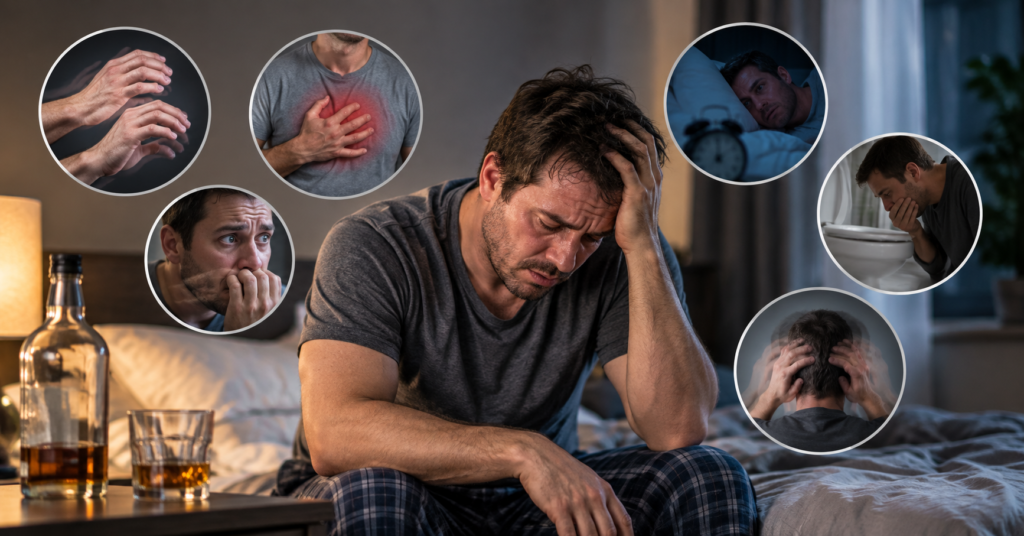
Alcohol withdrawal can look different from one person to another.
Early symptoms may feel like a bad case of anxiety or a physical illness. A person may feel shaky, restless, sweaty, or sick to their stomach.
Sleep can also become difficult.
Some people may feel very nervous or have trouble sitting still. Others may develop a fast heartbeat or strong cravings for alcohol.
The important point is that symptoms can change over time.
A person who feels okay at first should not assume that serious symptoms cannot develop later.
Your Health Magazine has also covered how alcohol withdrawal can range from uncomfortable symptoms to serious medical complications, including seizures and delirium tremens.
What Are the Serious Warning Signs?
Certain symptoms should never be ignored.
Seek urgent medical help if someone develops:
- A seizure
- Severe confusion
- Hallucinations
- Extreme agitation
- High fever
- Severe shaking
- Major changes in heart rate or blood pressure
- Loss of consciousness
- Severe weakness or other signs of a medical emergency
Delirium tremens is one of the most serious forms of alcohol withdrawal. It can involve confusion, agitation, hallucinations, fever, and changes in vital signs.
It can be life-threatening without proper medical care.
If someone is having a seizure, is unconscious, severely confused, or appears to be in immediate danger, call 911 or your local emergency service.
Do not wait for the symptoms to pass on their own.
Why Stopping Suddenly Can Be Risky for Some People
It is easy to think that stopping alcohol is always safer than continuing to drink.
Long-term recovery does require stopping harmful alcohol use. But for someone who is physically dependent on alcohol, the withdrawal period can carry medical risks.
This is why the question is not simply:
“Should I stop drinking?”
A better question can be:
“What is the safest way for me to stop?”
That answer may be different for each person.
A healthcare professional can review drinking history, previous withdrawal symptoms, current health, medications, and other factors. From there, they can help determine what type of support may be appropriate.
What Happens During Medical Alcohol Detox?
Medical detox is designed to help a person move through withdrawal with professional support.
The exact process varies by program and by the person’s needs.
A clinical team may:
- Review the person’s health history
- Ask about alcohol use
- Check vital signs
- Watch for changes in withdrawal symptoms
- Provide medications when appropriate
- Monitor for complications
- Help address hydration and nutrition needs
- Plan the next step in treatment
The goal is not simply to get alcohol out of the body.
The goal is to help the person become medically stable and ready for the next stage of recovery.
For people looking for local care, an alcohol detox program in Atlanta may be one option to discuss with a healthcare professional when withdrawal safety is a concern.
The right program depends on the person’s needs. A person should not choose a detox setting based only on location or advertising claims.
Medical Detox Is Not the Same as Addiction Treatment

This is an important difference.
Detox focuses on the early physical part of stopping alcohol. It helps manage withdrawal and supports medical stability.
But detox by itself does not address every reason a person drinks.
Alcohol use disorder can affect:
- Mental health
- Relationships
- Work
- Sleep
- Physical health
- Stress management
- Daily habits
- Decision-making
That is why ongoing treatment may be needed after detox.
Treatment can include therapy, medication, peer support, family support, outpatient care, or a higher level of structured treatment.
Your Health Magazine has previously discussed the broader continuum of addiction care, including medical detox, residential care, PHP, IOP, therapy, and other forms of ongoing support.
What Happens After Alcohol Detox?
Finishing detox can be an important first step.
But it is only a step.
Once withdrawal is managed, the person may still need help understanding what led to the drinking pattern and how to build new habits.
The next stage may include:
Therapy
Therapy can help a person understand triggers, stress, relationships, and thought patterns linked to drinking.
Medication
Certain medications may be used as part of treatment for alcohol use disorder. A healthcare professional can determine whether medication is appropriate.
Outpatient Treatment
Outpatient care allows a person to receive treatment while continuing to live at home.
Intensive Outpatient Care
An intensive outpatient program can offer more structure than standard outpatient care while allowing a person to return home after treatment sessions.
Residential Treatment
Some people need a more structured setting where they can focus on recovery away from the pressures of daily life.
The right level of care can change over time.
Someone may begin with a higher level of support and later move to outpatient care as stability improves.
How Mental Health Can Affect Alcohol Recovery
Alcohol use and mental health can overlap.
A person may drink to cope with anxiety, sadness, trauma, stress, or sleep problems. At the same time, regular heavy drinking can make some mental health symptoms harder to manage.
This can create a cycle.
For example:
Stress → drinking → short-term relief → more problems → more stress → drinking again
Breaking that cycle may require more than focusing on alcohol alone.
A treatment team may need to look at both alcohol use and mental health.
This is especially important when a person has depression, anxiety, PTSD, or another mental health condition.
If mental health symptoms are severe, the person should tell their healthcare provider. Treatment can then be planned around the full picture.
How Families Can Help
Family members often notice changes before the person who is drinking does.
They may see:
- More frequent drinking
- Missed work
- Changes in mood
- Arguments at home
- Poor sleep
- Financial problems
- Withdrawal from family
- Drinking early in the day
- Shaking when alcohol is not available
It can be hard to know what to say.
A helpful approach is to focus on concern rather than blame.
Instead of: “You need to stop drinking.”
Try: “I am worried about what alcohol is doing to your health. Can we talk about getting some help?”
The goal is to open a conversation.
If the person is considering stopping alcohol after heavy or long-term use, encourage them to speak with a healthcare professional before attempting withdrawal alone.
Questions to Ask Before Choosing a Detox Program
Not every program provides the same type of care.
Before choosing a program, ask:
1. What level of care do you provide?
Find out whether the program offers medical detox, outpatient care, residential treatment, or referrals to other services.
2. Who provides medical care?
Ask about the healthcare professionals involved in withdrawal management.
3. How are withdrawal symptoms monitored?
A good program should be able to explain how it monitors patients and responds if symptoms become more serious.
4. What happens after detox?
Detox should not be treated as the entire recovery plan. Ask what happens once withdrawal is managed.
5. Can the program address mental health?
If anxiety, depression, trauma, or another mental health concern is present, ask whether those needs can be addressed or referred to appropriate care.
6. What happens in an emergency?
Ask how the program handles serious withdrawal symptoms or medical complications.
7. Does the program create an individual care plan?
Recovery is not one-size-fits-all.
A person’s health history, alcohol use, support system, and treatment goals all matter.
Can Alcohol Withdrawal Be Managed at Home?

Sometimes people wonder whether they can simply stay home and wait for withdrawal symptoms to end.
The answer depends on the person’s medical situation.
Alcohol withdrawal can be mild for some people but dangerous for others. Because it is difficult for a person to predict their own risk, especially when there is a history of heavy drinking or previous withdrawal, professional guidance can be important.
Do not rely on online advice to decide whether your own withdrawal is safe.
A healthcare professional can review your history and help determine what level of care is appropriate.
If severe symptoms appear, seek emergency medical help.
What Makes a Safe Recovery Plan Different?
A strong recovery plan looks beyond the first few days.
It considers what happens before, during, and after detox.
That may include:
1) Before detox: Assessment, planning, transportation, medication review, and support from family or trusted people.
2) During detox: Monitoring, symptom management, medical care, and safety planning.
3) After detox: Therapy, recovery support, medication when appropriate, relapse prevention, and follow-up care.
This approach matters because getting through withdrawal is not the same as building long-term recovery.
A person may feel physically better after detox but still face cravings, stress, relationship problems, or other triggers.
Ongoing care gives them a chance to work on those issues.
When Is It Time to Ask for Help?
You do not need to wait until drinking causes a major crisis.
It may be time to talk with a healthcare professional if:
- You want to stop but cannot
- You drink more than you planned
- You need alcohol to feel normal
- You experience shaking or other symptoms when you do not drink
- Drinking is affecting work or relationships
- Family members are worried about your drinking
- You have tried to quit before and returned to drinking
- You are worried about what will happen if you stop
Asking for help is not a sign of failure.
It is a healthy decision.
Alcohol use disorder is a treatable medical condition, and many people need more than one type of support during recovery.
If you are ready to take the next step, a qualified treatment provider can help you understand your options and find the level of care that fits your needs. southernliveoakwellness.com is one resource that provides information about mental health and substance use treatment, along with guidance for people who are ready to begin their recovery journey.
Final Thoughts
Alcohol withdrawal is not the same for everyone.
For some people, symptoms may be uncomfortable but manageable. For others, withdrawal can become a serious medical problem.
That is why the safest next step is not always to stop drinking alone and hope for the best.
If you drink heavily or regularly, especially if you have had withdrawal symptoms before, talk with a healthcare professional before making a sudden change.
Medical support can help identify risks, manage withdrawal, and connect a person with the next stage of care.
And remember: detox is a beginning, not the finish line.
Long-term recovery may involve therapy, medication, outpatient care, residential support, peer support, or a combination of these options.
The right path depends on the person.
What matters most is finding safe, appropriate care and taking the next step with support.
Frequently Asked Questions
1) Can alcohol withdrawal be dangerous?
Yes, alcohol withdrawal can become dangerous, especially after heavy or prolonged drinking. Severe withdrawal can include seizures, hallucinations, or delirium tremens and may require urgent medical care.
2) How soon can alcohol withdrawal symptoms start?
Symptoms can begin within hours after the last drink. Early symptoms may include shaking, sweating, anxiety, nausea, and trouble sleeping. The timing and severity vary from person to person.
3) What is the safest way to stop drinking?
The safest approach depends on your drinking history and health. If you drink heavily or have had withdrawal before, talk with a healthcare professional before stopping suddenly.
4) Does everyone who stops drinking need medical detox?
No, not everyone needs the same level of care. A healthcare professional can assess the person’s history, current health, and withdrawal risk and help determine the right setting.
5) What is the difference between alcohol detox and alcohol rehab?
Detox focuses mainly on safely managing withdrawal, while rehab focuses on longer-term recovery. Rehab may include therapy, medication, coping skills, relapse prevention, and other support.
6) Can alcohol withdrawal cause seizures?
Yes, seizures can occur during severe alcohol withdrawal. A history of withdrawal seizures is an important reason to seek professional medical guidance before stopping alcohol.
7) What is delirium tremens?
Delirium tremens is a severe form of alcohol withdrawal that can be life-threatening. It may cause confusion, agitation, hallucinations, fever, and major changes in vital signs.
8) What should I do if someone has a seizure during withdrawal?
Call 911 or your local emergency service immediately. A seizure during alcohol withdrawal can be a medical emergency and should not be managed with home remedies.
Other Articles You May Find of Interest...
- When Addiction and Mental Illness Arrive Together: What Families Should Know Before They Intervene
- How Lived Experience Can Support a More Human Approach to Addiction Care
- From Recovery Goals to Real-Life Progress
- How Can Daily Habits Help People Rebuild Stability During Addiction Recovery?
- When Pain, Anxiety, and Opioid Use Overlap: Why Treating Only One Problem Can Backfire
- What Codependency Actually Describes, and Why It Is Not a Diagnosis
- 8 Nicotine Pouch Flavors to Consider When Moving Away From Cigarettes





