




More Ear, Nose & Throat Articles
Coughing After Eating: Causes and When to Seek Care
By Your Health Magazine Health Information Team
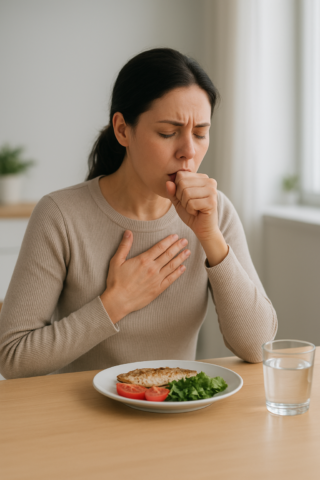
Coughing after eating can happen when food or liquid briefly enters the airway, acid reflux irritates the throat, or nasal drainage triggers the cough reflex. An occasional cough after eating too quickly may not be concerning, but frequent coughing during meals, choking, a wet-sounding voice, food sticking, or breathing problems should be medically evaluated.
What the Timing of the Cough May Suggest
Notice whether the cough begins while swallowing, immediately afterward, or later in the meal. Timing does not establish a diagnosis, but it can help a healthcare professional identify which problems to investigate.
| Pattern | Possible explanation | Other clues |
|---|---|---|
| During swallowing | Food or liquid entering or approaching the airway | Choking, gagging, repeated swallowing, or a wet voice |
| Minutes after eating | Reflux or food-related nasal drainage | Heartburn, sour taste, hoarseness, runny nose, or throat clearing |
| After a particular food | Food allergy, reflux trigger, or gustatory rhinitis | Hives, swelling, wheezing, nasal drainage, or symptoms after spicy foods |
| After large meals or lying down | Gastroesophageal reflux | Burning discomfort, regurgitation, dry cough, or symptoms at night |
Swallowing Problems and Aspiration
A cough is one of the body’s protective responses when food, drink, or saliva heads toward the airway instead of moving safely through the esophagus. This may simply happen when someone eats rapidly, talks with food in the mouth, or takes an unusually large bite. Repeated episodes, however, can be a sign of dysphagia, the medical term for difficulty swallowing.
Warning signs of dysphagia include coughing or gagging while swallowing, taking extra time to eat, feeling that food is stuck, drooling, painful swallowing, or developing a wet or gurgly voice after a sip or bite. Food or liquid that reaches the lungs is called aspiration and can sometimes lead to pneumonia. MedlinePlus explains swallowing symptoms and the tests used to evaluate dysphagia.
Swallowing problems are more likely after a stroke, brain injury, head or neck surgery, prolonged intubation, or treatment for head and neck cancer. They may also occur with Parkinson’s disease, dementia, multiple sclerosis, other neurologic disorders, frailty, or certain esophageal conditions.
Acid Reflux and Esophageal Problems
Gastroesophageal reflux occurs when stomach contents flow back into the esophagus. It can cause a dry cough or hoarseness even when obvious heartburn is absent. Coughing may be more noticeable after a large meal, when bending over, or after lying down too soon after eating. A sour taste, burning in the chest or throat, regurgitation, and frequent throat clearing make reflux more likely.
Occasional reflux is common, but repeated or damaging reflux may be gastroesophageal reflux disease. The MedlinePlus guide to GERD provides more information about symptoms, testing, and treatment.
Food sticking or returning to the mouth can also indicate narrowing, inflammation, or abnormal movement of the esophagus. Healthcare professionals may use endoscopy, X-rays, acid monitoring, or esophageal manometry depending on the symptoms. Readers can also learn about a less common esophageal concern in this overview of patulous esophagus symptoms and solutions.
Nasal Drainage and Food Triggers
Some people develop a runny nose while eating, particularly after consuming hot or spicy foods. This is known as gustatory rhinitis. It is a nonallergic nerve response that can produce nasal drainage, postnasal drip, throat clearing, and coughing during or shortly after a meal. Symptoms usually improve after the person stops eating the trigger food. The Cleveland Clinic overview of gustatory rhinitis describes common triggers and treatment options.
A true food allergy can also cause coughing, but an isolated cough is less typical than a combination of symptoms. An allergic reaction may include hives, itching, swelling of the lips or tongue, vomiting, throat tightness, hoarseness, wheezing, dizziness, or difficulty breathing. Symptoms often develop within minutes to several hours after eating.
Steps That May Reduce Coughing During Meals
Until the cause is clear, these general measures may reduce minor episodes:
- Sit fully upright while eating and remain upright after the meal.
- Eat slowly, take smaller bites, and chew food thoroughly.
- Finish swallowing before speaking, laughing, or taking another bite.
- Pause the meal if coughing begins rather than immediately taking more food or drink.
- Keep a record of whether symptoms occur with liquids, solid foods, large meals, spicy dishes, or lying down.
- If reflux seems likely, try smaller meals and avoid lying down for at least two to three hours after eating.
Do not begin thickening drinks or substantially restricting food textures without professional guidance. The safest consistency depends on the specific swallowing problem, and unnecessary changes can interfere with hydration and nutrition. Likewise, avoid eliminating multiple foods solely because coughing occurs; suspected allergies should be assessed by a qualified clinician.
When to Seek Care
Call 911 immediately if food appears to be blocking the airway and the person cannot breathe, speak, or cough effectively. Emergency care is also necessary for coughing accompanied by throat or tongue swelling, wheezing, severe shortness of breath, faintness, or widespread hives after eating. These may be signs of anaphylaxis. Follow an existing emergency allergy plan and use prescribed epinephrine as directed while seeking emergency help. The American Academy of Allergy, Asthma & Immunology describes anaphylaxis warning signs.
Arrange a nonemergency medical evaluation if coughing after eating happens repeatedly or is accompanied by:
- Choking or gagging during meals
- A wet, gurgly, or changed voice after swallowing
- Food feeling stuck in the throat or chest
- Painful or increasingly difficult swallowing
- Unexplained weight loss, dehydration, or reduced appetite
- Frequent chest infections, fever, or shortness of breath
- Persistent heartburn, regurgitation, vomiting, or hoarseness
- New symptoms after a stroke, neurologic illness, surgery, or hospitalization
A primary care clinician can begin the evaluation. Depending on the pattern, care may involve a speech-language pathologist for swallowing assessment, a gastroenterologist for reflux or esophageal symptoms, an ear, nose, and throat specialist for throat or nasal concerns, or an allergist for suspected food reactions.
This article provides general health education and is not a substitute for diagnosis or individualized medical care.
Other Articles You May Find of Interest...
- Coughing After Eating: Causes and When to Seek Care
- Earache and Sore Throat: What Can Cause Both?
- Swollen Uvula: Causes and Treatment
- Throat Pain When Swallowing: Causes and When to Seek Care
- Why Your Singing Voice Sounds Raspy
- Frequent Ear Infections? What You Should Know About Recurring Problems
- What Happens if a Sinus Infection Goes Untreated?





