More Dental Health Articles
What Dental Implants Are and How They Work
A replacement root, not just a replacement tooth
Dental implants serve as a sturdy replacement for missing tooth roots. They consist of a titanium metal screw that is surgically placed into the jawbone. Over time, the bone grows around this screw, creating a solid base. This foundation allows for the attachment of a crown, bridge, or denture. Because they mimic the structure of a natural tooth, they provide a stable, long-lasting solution for tooth loss. When placed in areas with healthy, sufficient bone, implants have a very high success rate.
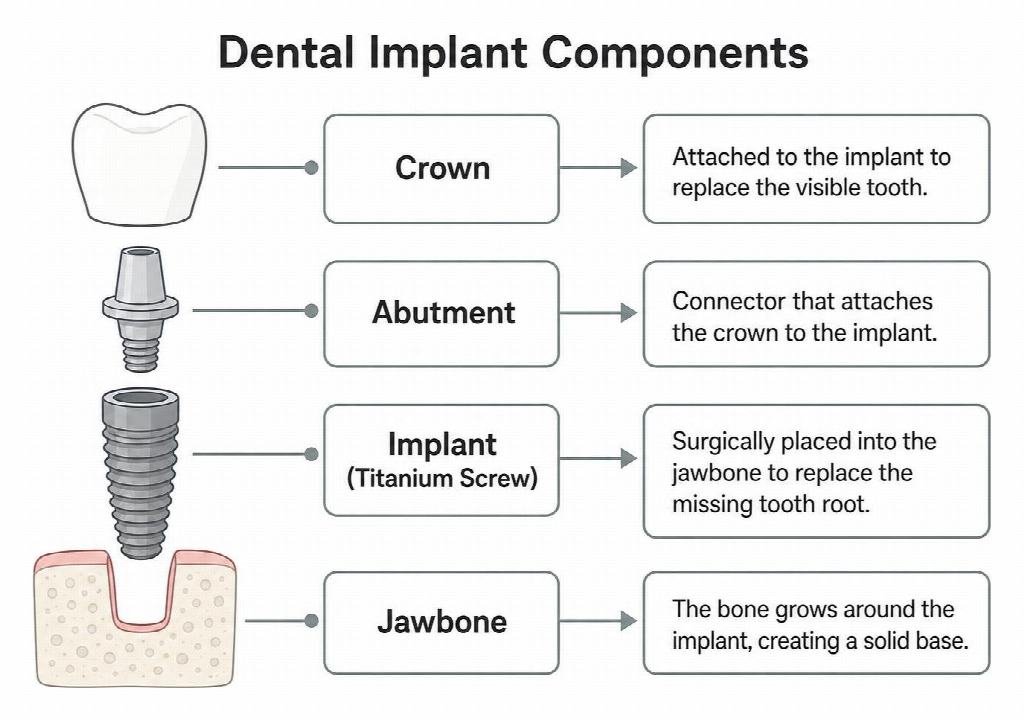
Single teeth, bridges, and full-arch options
Implants are versatile and can replace one tooth or an entire set. You might choose a single implant for a missing tooth, or a bridge if you have several gaps in a row. For those missing all their teeth, implant-supported dentures or full-arch bridges offer a fixed, non-removable alternative to traditional dentures. Some patients may also use “All-on-4” or “All-on-6” techniques, where a full set of teeth is supported by four or six implants.
| Restoration Type | Teeth Replaced | Support Type |
| Single Implant | One | Single titanium post |
| Implant Bridge | Multiple | Two or more posts |
| Full-Arch Fixed | All | Four to six posts |

How implants compare with dentures and bridges
Unlike traditional dentures, which can be removed, implants are fixed in place. They do not require the removal of healthy tooth structure from neighboring teeth, which is often necessary when placing a traditional bridge. While implants provide a more natural feel and better function, they are not the right choice for everyone. The decision depends on your specific oral health needs and the amount of bone available in your jaw.
Who Is a Good Candidate?
Bone, gums, and overall health
Your candidacy for implants depends primarily on the health of your jawbone. A dentist will perform a physical exam and use imaging, such as a panoramic X-ray or a 3D cone beam CT, to assess your bone density. Healthy gums are also essential for long-term success. If your gums are not healthy, they must be treated before an implant procedure can begin.
Factors that can lower success
Several health factors can affect how well an implant integrates with your bone. Smoking, uncontrolled diabetes, and certain immune system conditions can slow down healing. Additionally, medications like bisphosphonates or a history of radiation therapy to the head and neck can pose risks. Maintaining excellent oral hygiene is critical to preventing peri-implantitis, an infection that can cause an implant to fail.
When grafting or another option may be needed
If your jawbone is too thin or soft, you might need a bone graft. This procedure adds bone material to the area to create a stronger foundation. Once the graft is placed, it typically takes 4 to 6 months for the area to heal and become ready for an implant. If your health or bone structure makes implants unsuitable, your dentist can discuss other options, such as bridges or custom-fit dentures.
What the Treatment Process Looks Like
Consultation, exam, and 3D imaging
The process starts with a thorough consultation. During this visit, a surgeon or implant specialist will examine your mouth and review your medical history. They will use 3D imaging to map out the exact position for the implant. You will receive a written treatment plan that outlines the steps, timeline, and expected outcomes for your unique case.
Placement, healing, and osseointegration
Implant placement is often a two-stage procedure. First, the surgeon places the implant into the bone. The area is then left to heal, during which the bone fuses with the titanium screw in a process called osseointegration. This usually takes about 3 months. After the area has healed, a second, minor procedure exposes the top of the implant so the restorative dentist can attach the final crown.
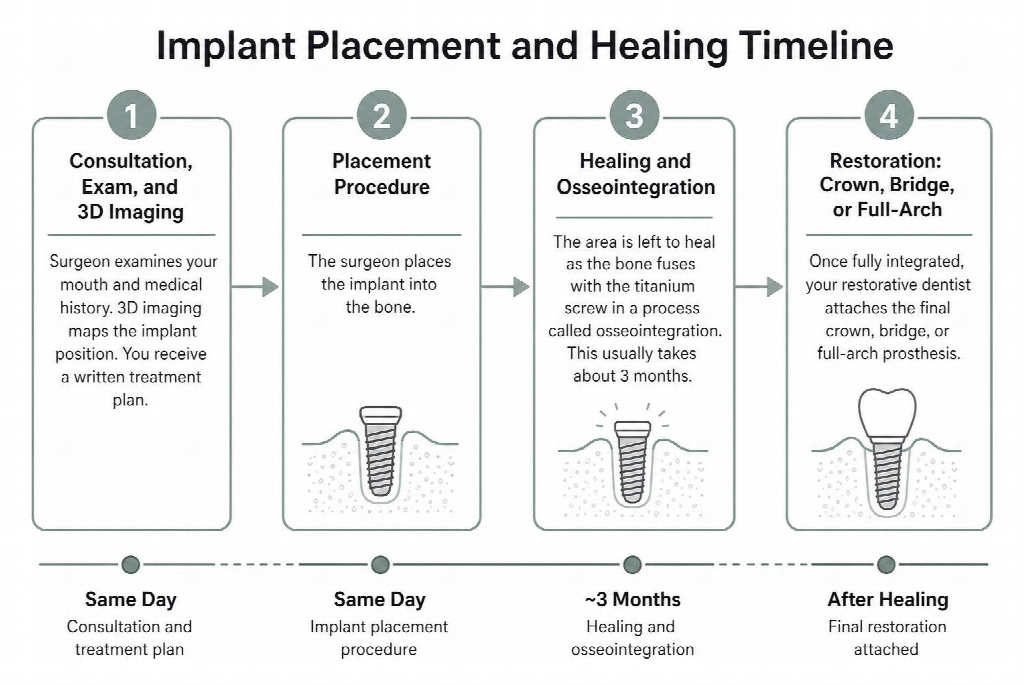
Crown, bridge, or full-arch restoration
Once the implant is fully integrated, your restorative dentist will fabricate the final piece. This could be a single crown, a bridge, or a full-arch prosthesis. While some clinics advertise “same-day” or “immediate-load” implants, these are not suitable for every patient. Your dentist will determine if your bone density is strong enough for immediate restoration or if a traditional healing period is safer.
What Implants Cost and What Insurance May Cover
Typical U.S. price ranges and what they include
The cost of dental implants varies widely based on your location and the complexity of your case. A single implant typically costs between $3,000 and $6,000 in the U.S. Full-arch restorations can range from $20,000 to $35,000 per arch. Some providers may list prices as low as $899 to $4,999, but these often exclude the cost of the abutment (the connector) and the crown. Always ask for a breakdown of what the quoted price covers.
Why quotes vary by case
Quotes are rarely one-size-fits-all. The final price depends on whether you need a bone graft, the type of crown material, and the number of implants required. Because every mouth is different, you should expect an itemized treatment plan only after an in-person exam and imaging.
Insurance, Medicare, and payment options
Original Medicare generally does not cover dental implants or dentures. Some Medicare Advantage plans or private dental insurance may cover a portion of the cost, usually up to an annual maximum. Before you start, ask your provider for the specific procedure codes and contact your insurance company to confirm coverage. Many practices also offer payment plans to help manage the out-of-pocket costs.
How to Find and Vet a Provider Near You
Specialist roles: surgeon, periodontist, prosthodontist
Different specialists play different roles in your care. Oral and maxillofacial surgeons and periodontists are typically trained to perform the surgical placement of the implant. Prosthodontists specialize in designing and fitting the teeth that go on top. Some general dentists also place implants, but the most important factor is the provider’s experience with your specific type of case.
Credentials, experience, and written treatment plans
Before you choose a provider, verify their license with your state dental board. You can use the American Academy of Implant Dentistry (AAID) tool to find credentialed professionals. It is also helpful to check their NPI record and ask how many procedures they perform annually. A professional should be happy to answer questions about their experience and provide a written treatment plan for you to review.
Questions to ask before you commit
Before moving forward, ask these questions to ensure you are comfortable with the plan:
- What type of implant system are you using?
- How many implants will be placed, and why?
- What is the estimated timeline for the entire process?
- What are the specific risks for my case?
- What is the post-surgery aftercare plan?
- Does this quote include the abutment and the final crown?
Compare written plans from different providers to make sure you understand the scope of work and the costs involved.
Getting Care Locally in Pitt Meadows, BC
If you are located in the Pitt Meadows area and are considering your options, it is helpful to find a practice that integrates surgical and restorative care. Meadows Dental Group is a family-owned practice in Pitt Meadows, BC, that provides a range of services including local dental implants alongside general, restorative, and cosmetic dentistry.
A family practice offering implants alongside restorative care
This practice offers a comprehensive approach, handling everything from routine cleanings to complex restorative procedures like implants and same-day CEREC crowns under one roof. Having your care coordinated in a single location can simplify the process, especially when managing the transition between surgical placement and final restoration.
Comfort, technology, and flexible scheduling
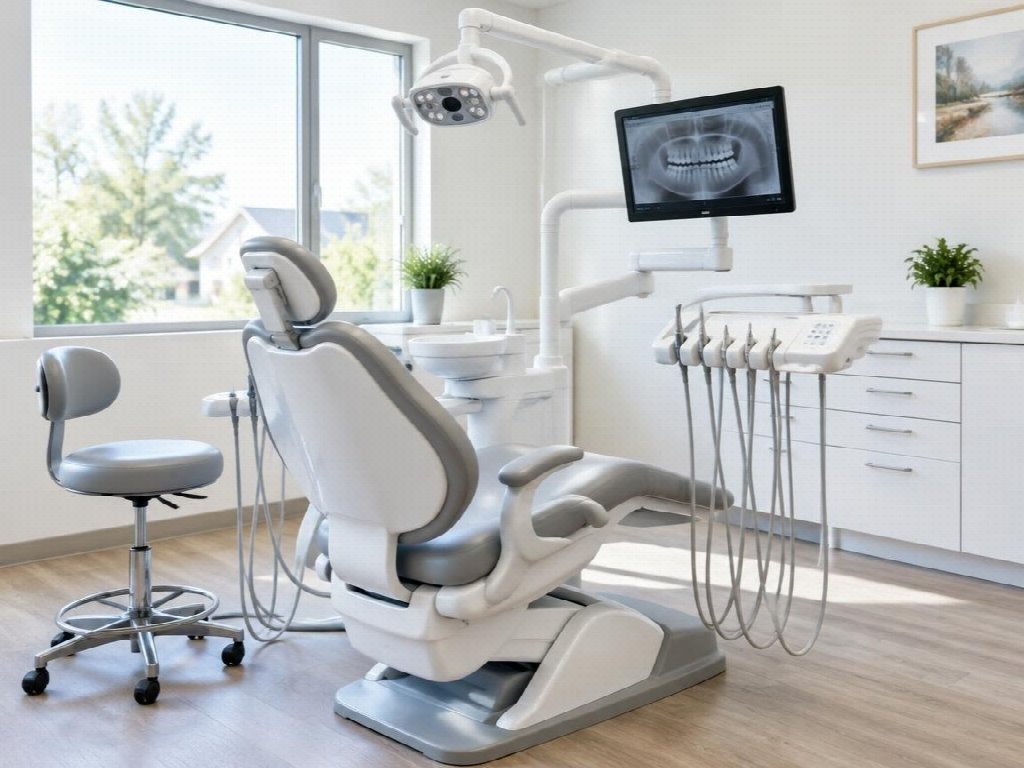
Modern dental care relies on both technology and patient comfort. This practice utilizes advanced tools to improve the precision of treatments and offers sedation options for those who may feel anxious about dental procedures. With flexible scheduling, they aim to make it easier for patients to fit necessary dental work into their busy lives.
Insurance and CDCP support for planning treatment
Understanding the financial side of your care is a priority. The team provides support regarding insurance and the Canadian Dental Care Plan (CDCP) to help you navigate your coverage and plan your treatment costs. It is always a best practice to confirm your coverage in writing before beginning any major procedure to avoid surprises. You can contact the practice directly to discuss your specific needs and determine if you are a candidate for implants.
Wrapping Up
Dental implants are a life-changing way to replace missing teeth, but they require careful planning. Success depends on your bone health, the skill of your provider, and your commitment to aftercare. By seeking a thorough consultation and 3D imaging, you can get a clear picture of your candidacy and the steps ahead. Whether you are looking for a single tooth replacement or a full-arch solution, take the time to compare your options and choose a provider who makes you feel informed and confident. When you are ready to explore your path forward, reach out to a qualified local professional to schedule your initial exam.
Other Articles You May Find of Interest...
- What Dental Implants Are and How They Work
- Dental Anxiety: Sedation and Comfort Dentistry
- All-on-4 Dental Implants – A Stable, Natural-Looking Solution to Restore Your Smile
- Comprehensive Dental Services in Raleigh, NC: From Implants to Smile Makeovers
- What to Look for When Choosing an Orthodontist
- Bonding vs. Veneers: How to Choose
- Comparing Five Toothpastes for Gum Health: Ingredients, Plaque Control, and Gentle Care