Your Health Magazine Contributor
4201 Northview Drive
Suite 102
Bowie, MD 20716
More Allergy, Asthma & Infectious Disease Articles
How to Reduce Indoor Allergens by Managing Home Humidity
When winter settles in across the United States, windows stay shut and furnaces run around the clock. While sealing up the house keeps freezing air outside, it also traps microscopic allergens indoors and drastically alters indoor moisture levels. For millions of Americans dealing with seasonal or year-round allergies, winter can feel just as uncomfortable as spring pollen season.
The hidden culprit behind most winter flare-ups is improper indoor humidity. Whether your air is overly damp from poor ventilation or bone-dry from central heating, unstable moisture levels directly impact both allergen growth and your respiratory health.
How Home Humidity Impacts Indoor Allergens and Health
Indoor air quality relies heavily on relative humidity, which measures the amount of water vapor in the air compared to what it can hold at a given temperature. When humidity drifts outside the healthy comfort zone, two distinct problems occur:
High humidity (above 50% RH) feeds allergen growth
Even in cold weather, poor airflow in bathrooms, basements, kitchens, and tightly insulated bedrooms can cause moisture to build up. High humidity creates an ideal breeding ground for common household triggers:
- Dust Mites: These microscopic pests do not drink water; instead, they absorb moisture directly from the air. Dust mite populations thrive when indoor humidity rises above 50% RH, leading to increased exposure to their waste particles in bedding, carpets, and upholstery.
- Mold and Mildew Spores: Damp windowsills, humid basements, and unventilated laundry rooms allow mold to grow behind drywall and under flooring. Airborne mold spores trigger sneezing, watery eyes, sinus congestion, and asthma flare-ups.
- Bacteria and Musty Odors: Excess moisture allows bacteria to multiply on damp surfaces, lowering overall air freshness and irritating sensitive airways.
Low humidity (below 30% RH) irritates airways
On the flip side, forced-air heating systems strip moisture out of indoor air, often dropping winter home humidity into the teens or twenties. While low humidity slows down dust mites, it creates serious respiratory discomfort:
- Dry Nasal Passages: Your nose and throat rely on a thin layer of mucus to trap airborne dust, pet dander, and viruses. Dry winter air dries out these protective membranes, leaving you far more reactive to everyday allergens.
- Increased Airborne Particles: In overly dry rooms, lightweight allergens like pet dander and fine household dust stay suspended in the air longer instead of settling, making them easier to inhale.
- Sinus Pain and Scratchy Throat: Waking up with a sore throat, dry cough, or sinus pressure is a classic sign that your heating system has pushed indoor humidity too low.
What’s the Ideal Winter Humidity Range for Allergy Relief
Health and environmental experts, including the Environmental Protection Agency (EPA), recommend keeping indoor relative humidity between 30% and 50% year-round.
During freezing winter months, aiming for the 35% to 45% RH sweet spot works best for most American homes. This narrow window keeps nasal passages hydrated without creating window condensation or encouraging dust mites and mold to multiply.
Practical Steps to Balance Humidity and Reduce Allergens
Creating an allergy-friendly winter home does not require expensive renovations. Combining smart moisture control with simple cleaning routines makes an immediate difference:
Step 1. Track Humidity in Every Living Zone: Moisture levels vary drastically from room to room. A basement might sit at 60% RH while an upstairs bedroom heated by forced air drops to 22% RH. Place accurate sensors in bedrooms, living areas, and basements so you know exactly what each space needs.
Step 2. Use Humidifiers and Dehumidifiers Strategically: Run a cool-mist humidifier in dry bedrooms during winter nights, and clean the tank every few days to prevent mold buildup. In damp basements or crawl spaces, run a dehumidifier set to 45% RH.
Step 3. Run Exhaust Fans During Daily Routines: Always turn on bathroom exhaust fans during and for 20 minutes after hot showers, and use your kitchen range hood while boiling water or cooking to vent steam outdoors.
Step 4. Wash Bedding Weekly in Hot Water: Wash sheets, pillowcases, and blankets once a week in water heated to at least 130°F (54°C) to eliminate dust mites and wash away trapped pet dander.
Step 5. Upgrade HVAC Filters: Replace furnace filters every 60 to 90 days with high-efficiency MERV 11 or MERV 13 pleated filters to capture fine airborne allergens as air circulates through your home.
Step 6. Watch for Window Condensation: If you notice water droplets or frost forming on the inside of your windows during cold snaps, your indoor humidity is too high for the outdoor temperature. Lower your humidifier setting immediately to prevent window frame mold.
How to Track Your Home Air Quality
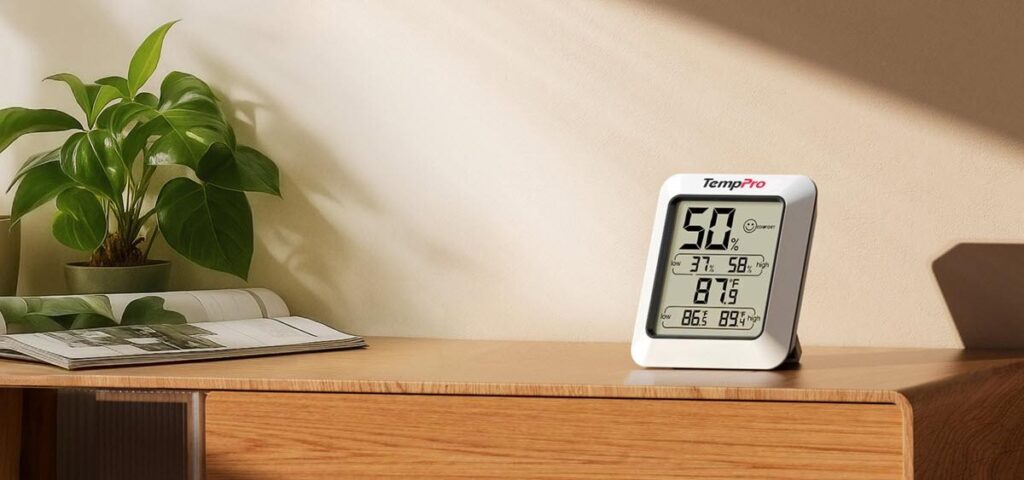
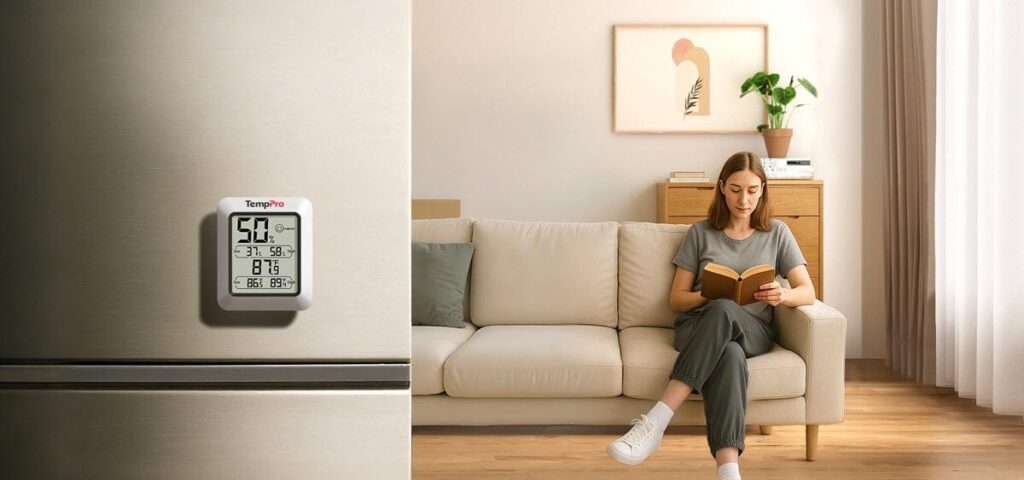
A digital hygrometer can help homeowners monitor indoor relative humidity and identify when adjustments may be necessary. These devices measure temperature and humidity, making them useful for checking conditions in bedrooms, living areas, and basements.
When choosing a hygrometer, consider measurement accuracy, display readability, and whether it records high and low humidity levels.
For example, the TempPro TempAir CORE TP50 Digital Indoor Thermometer Hygrometer provides temperature and humidity readings, a comfort indicator, and high/low records. Its readings can help homeowners identify moisture changes throughout the day.
Regardless of the device used, humidity measurements should guide practical steps such as adjusting humidifiers, improving ventilation, or addressing sources of excess moisture. A hygrometer measures environmental conditions but does not directly detect allergens or diagnose indoor air quality problems.
FAQs about Indoor Humidity and Allergies
Can a humidifier make winter allergies worse?
Yes, if overused or poorly maintained. Running a humidifier without monitoring room levels can push humidity above 50%, encouraging dust mites and mold growth. Additionally, failing to clean a humidifier tank regularly can disperse mold spores and bacteria directly into the air you breathe.
Which room is most important to monitor for allergy sufferers?
Your bedroom is the top priority because you spend roughly seven to eight hours breathing the air there every night. Monitoring the basement or crawl space is a close second, as excess moisture in lower levels often rises into the rest of the house.
Why does indoor humidity drop so much when the heater runs?
Cold winter outdoor air holds very little moisture. When that cold air enters your home and gets heated to 70°F, its capacity to hold water increases dramatically without adding any actual moisture, causing relative humidity to plummet.
Do houseplants help or hurt indoor allergies in winter?
While houseplants add a small amount of moisture to dry winter air, overwatering them creates damp potting soil that breeds mold spores, a major indoor allergen. If you keep indoor plants during winter, use a digital thermometer and hygrometer nearby to ensure room humidity stays under 50% and allow the top inch of soil to dry out between waterings.
Where should I place a digital thermometer and hygrometer for the most accurate reading?
Place your digital thermometer and hygrometer at chest or breathing height, about 3 to 5 feet off the floor, on an interior wall or nightstand, away from direct sunlight, windows, exterior doors, heating vents, and humidifiers. Placing a sensor right next to a humidifier or radiator will skew the readings and give a false impression of the room’s true air quality.
Final Thoughts
Controlling winter allergies starts with controlling the air inside your four walls. By keeping indoor relative humidity steadily between 30% and 50%, you cut off the moisture that dust mites and mold need to survive while protecting your airways from harsh winter dryness.
Monitoring humidity in bedrooms, living rooms, and basements can help homeowners recognize conditions that contribute to indoor allergens. Combined with appropriate ventilation, regular cleaning, and moisture control, maintaining suitable indoor humidity can support a healthier and more comfortable home environment.
Other Articles You May Find of Interest...
- How to Treat the Flu: Relief and Treatment Options
- Headache and Fever: Causes and Warning Signs
- How to Reduce Indoor Allergens by Managing Home Humidity
- Yeast Infection on the Face: Symptoms and Treatment
- Is Hepatitis Curable? How the Answer Varies by Type
- Drs. Mark and Michele Sherwood Explore How to Support Immune Health During Cold Season
- Wet Cough: Causes and Treatment Options