More Allergy, Asthma & Infectious Disease Articles
Yeast Infection on the Face: Symptoms and Treatment
By Your Health Magazine Health Information Team
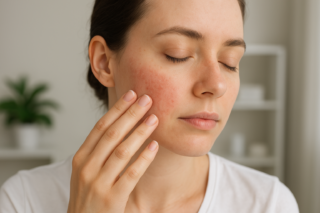
A yeast infection on the face is a superficial fungal problem that may cause an itchy or burning rash, redness or discoloration, scaling, cracking, and small bumps. However, true facial candidiasis is less common than several look-alike conditions, including ringworm, seborrheic dermatitis, eczema, and bacterial folliculitis. Because these problems require different treatments, a persistent or worsening facial rash should be evaluated rather than assumed to be yeast.
What Does a Facial Yeast Infection Look Like?
Candida yeasts normally live on the skin without causing symptoms. According to the Centers for Disease Control and Prevention’s overview of candidiasis, an infection develops when Candida grows out of control. Skin candidiasis generally prefers warm, moist environments, so facial cases may appear around the corners of the mouth, beneath facial folds, or in areas that remain damp.
Possible symptoms include:
- A red, pink, brown, purple, or grayish rash, depending on skin tone
- Itching, tenderness, stinging, or burning
- Moist, softened, cracked, or peeling skin
- A clearly defined rash border
- Small bumps or pus-filled spots just beyond the main rash, sometimes called satellite lesions
- Cracking and soreness at the corners of the mouth
White patches inside the mouth may indicate oral thrush rather than a yeast infection limited to the outer facial skin. Cracked mouth corners can also result from irritation, nutritional deficiencies, denture fit, or bacterial infection, so their presence does not confirm Candida.
Is “Face Fungus” Always a Yeast Infection?
No. “Face fungus” is an informal term that may refer to several different conditions. Their appearances can overlap, particularly after steroid cream has changed or partially suppressed the rash.
| Possible condition | Common appearance | Helpful distinction |
|---|---|---|
| Cutaneous candidiasis | Moist, irritated rash with burning or itching; small surrounding bumps may occur | Often develops where moisture is trapped or skin surfaces rub together |
| Facial ringworm | Round or oval scaly patch with a raised, expanding edge; the center may become clearer | Caused by dermatophyte fungi rather than Candida yeast and can spread through contact |
| Seborrheic dermatitis | Flaking, greasy scale, or discoloration around the eyebrows, sides of the nose, hairline, ears, or beard | An inflammatory condition associated with Malassezia yeast, not a classic contagious skin infection |
| Nonfungal rash | Redness, bumps, crusting, dryness, or irritation | Eczema, contact dermatitis, rosacea, acne, and bacterial infections can resemble fungus |
Ringworm involving the beard area deserves particular attention. It may cause swelling, pus-filled bumps, crusting, or patches of hair loss and often requires prescription treatment. The American Academy of Dermatology explains how ringworm is diagnosed and treated, including when skin or hair samples may be examined.
Why Facial Yeast Overgrowth Happens
Moisture and disrupted skin barriers can create conditions that allow yeast to multiply. Factors that may contribute include:
- Persistent moisture from saliva, sweating, or skin folds
- Hot, humid conditions
- Skin irritation or breakdown
- Recent antibiotic treatment
- Poorly controlled diabetes
- A weakened immune system or immune-suppressing medication
- Repeated or inappropriate use of topical corticosteroids
Having one of these risk factors does not mean a facial rash is fungal. Candida can be present on normal skin, so the rash pattern and clinical context matter when determining whether it is actually causing an infection.
How a Facial Fungal Infection Is Diagnosed
A primary care clinician or dermatologist may be able to identify the likely cause by examining the rash and asking when it started, whether it itches or hurts, and which products or medications have been used.
If the diagnosis is uncertain, the clinician may gently scrape the skin and examine the sample under a microscope. A culture may occasionally be needed. Testing can be especially useful when a rash keeps returning, has not responded to treatment, involves facial hair, or looks different after steroid use.
Treatment for a Yeast Infection on the Face
Treatment depends on whether the cause is Candida, ringworm, a Malassezia-associated condition, or something else. A clinician may recommend a topical antifungal such as clotrimazole, miconazole, ketoconazole, or another medication based on the suspected organism and location. This overview of miconazole and clotrimazole antifungal treatments explains important differences between two commonly encountered options.
When using any nonprescription antifungal:
- Confirm that the product is intended for external skin use and appropriate for the suspected condition.
- Clean the area gently and pat it completely dry.
- Follow the product label rather than applying more frequently or for longer than directed.
- Wash your hands before and after touching the rash.
- Stop using the product and seek advice if it causes significant irritation.
Facial skin is sensitive, and products must be kept away from the eyes. For example, the current DailyMed label for clotrimazole cream states that the product is for external use and should not contact the eyes. Use only a formulation intended for the skin; do not repurpose vaginal products or medicated shampoos on the face unless a healthcare professional recommends it.
Avoid treating a suspected fungal rash with a steroid cream alone. Steroids can temporarily reduce redness while allowing some fungal infections to spread or become harder to recognize. Combination steroid-antifungal products should be used only when specifically recommended by a clinician.
Prescription oral antifungal medication may be necessary for extensive disease, recurrent infection, or ringworm involving the beard or hair follicles. These medicines can have side effects and drug interactions, so they require professional evaluation.
Supporting Healing and Preventing Recurrence
- Keep the area clean and dry without scrubbing.
- Use a separate clean towel for the affected area.
- Avoid sharing towels, razors, makeup brushes, or facial-care tools while the cause is uncertain.
- Pause new cosmetics or fragranced products that may be irritating the skin.
- Clean reusable razors and makeup tools regularly.
- Manage underlying conditions, including diabetes, with appropriate medical care.
For additional reliable consumer information about infections, skin disorders, medicines, and other conditions, explore the National Library of Medicine’s MedlinePlus health topics.
When to Seek Care
Contact a primary care clinician or dermatologist if the rash is spreading, recurring, painful, draining pus, causing hair loss, or not improving with appropriate label-directed care. Evaluation is also advisable before treating an infant, a rash close to the eye, or a person with diabetes or a weakened immune system.
Seek prompt medical attention for eyelid swelling, eye pain, vision changes, fever, rapidly increasing redness, severe facial swelling, or other signs of a more serious infection. A healthcare professional can distinguish a yeast infection from other causes of face fungus and recommend treatment that is safe for the location.
Other Articles You May Find of Interest...
- Yeast Infection on the Face: Symptoms and Treatment
- Is Hepatitis Curable? How the Answer Varies by Type
- Drs. Mark and Michele Sherwood Explore How to Support Immune Health During Cold Season
- Wet Cough: Causes and Treatment Options
- Belly Button Yeast Infection: Symptoms and Treatment
- Rabies Treatment After a Dog Bite: What Happens, How Long It Takes and What It Costs
- Can Hepatitis B Be Treated or Cured?