Your Health Magazine Contributor
4201 Northview Drive
Suite 102
Bowie, MD 20716
More Parenting and Family Health Articles
Nursing Chair Comfort: What Matters During Longer Feeding Sessions

Feeding a baby can take longer than expected, especially during the early months when feeding happens frequently throughout the day and night. Parents may spend extended periods sitting in the same position, supporting the baby’s head and body while trying to keep their own shoulders relaxed. A chair that feels comfortable for a few minutes may become less suitable when the same position has to be maintained repeatedly.
Choosing a nursing chair involves more than selecting a soft seat or matching the nursery décor. Seat height, back support, armrest placement, and the ability to adjust position can all affect how a caregiver feels after a long session. Small details become particularly important when feeding is part of an everyday routine rather than an occasional activity. Understanding these factors helps parents choose seating that supports their needs without expecting the chair to do all the work.
Why Sitting Comfort Changes Over Time
Comfort is not always obvious when trying a chair for a few minutes in a showroom or at home. A seat may feel pleasant initially, but pressure can develop around the hips, lower back, or thighs after sitting for longer. Similarly, a backrest that seems supportive at first may encourage a parent to lean forward once the baby is in their arms.
Longer sessions make these differences more noticeable because the body remains in a relatively fixed position. Parents may unconsciously round their shoulders, tilt their heads downward, or hold tension in their necks while watching the baby feed. These habits can leave them feeling stiff even when the chair itself seems soft and well made.
A useful way to assess comfort is to consider how the chair supports the entire sitting position. The seat should allow the caregiver to settle without feeling squeezed or sliding forward, while the backrest should provide support without forcing an uncomfortable angle. Since adults have different body shapes and heights, a chair that works well for one person may not suit another equally well.
Arm Support Can Make Feeding Less Strenuous
During feeding, parents often concentrate so closely on the baby that they overlook their own arm position. Holding a baby for an extended period can place strain on the wrists, shoulders, and upper back, particularly when the caregiver has to keep their arms raised without support.
Armrests can provide a useful resting point, but their height and position matter. If they are too low, the caregiver may lean sideways to support the baby. If they are too high, the shoulders may remain raised and tense. Ideally, the adult should be able to rest their arms comfortably while keeping the baby’s head and body properly supported.
The chair should complement a safe feeding position rather than determine it. Parents can use suitable pillows or cushions when appropriate to bring the baby closer and reduce the need to lean forward. The baby must remain securely supported throughout feeding, and the caregiver should be able to adjust position without compromising the baby’s airway or posture. If feeding causes persistent pain or difficulties with positioning, advice from a qualified healthcare professional or lactation specialist may help identify a more suitable approach.
Finding a Position That Suits Your Body
Seat Height and Foot Support
Seat height can influence how easily a parent settles into a comfortable feeding position. If the seat is too high, the feet may not rest securely on the floor. If it is too low, standing up may require extra effort, particularly when the caregiver is tired or holding the baby.
Both situations can affect posture over time. When the feet are supported and the hips feel stable, it is often easier to relax the legs and avoid shifting constantly to find a comfortable position. A footstool may help some caregivers, provided it is stable and does not obstruct movement around the chair.
Parents should test the chair while sitting in their usual feeding position rather than judging it only by its appearance. Consider whether the feet can rest comfortably, whether the seat edge places uncomfortable pressure behind the knees, and whether getting up feels manageable. These practical checks are often more informative than choosing a chair based on softness alone.
Backrest Angles and Changing Positions
Remaining in one position for a long time can become uncomfortable even with a supportive chair. A backrest that allows some adjustment may help parents find a position that suits feeding, burping, or resting between sessions. The ability to change the angle can also be useful as the caregiver’s needs vary throughout the day.
Reclining should not mean losing control of the baby’s position. During feeding, parents need to remain attentive and ensure that the baby is supported safely. If the adult becomes sleepy, the baby should be moved to a separate, firm, flat sleep surface that meets current safe-sleep recommendations. A recliner is not a substitute for a crib or bassinet.
It is worth trying the available adjustments before purchasing a chair. Check whether the controls are easy to reach, whether changing position feels smooth, and whether the chair provides adequate support in the positions likely to be used most often. A mechanism with many settings is not necessarily better if those settings are difficult to operate.
Choosing a Chair for Breastfeeding Support
A nursery chair for breastfeeding should help the parent maintain a comfortable position while keeping the baby close and properly supported. The best choice will depend on the caregiver’s height, preferred feeding positions, available room, and how often the chair will be used. There is no single design that suits every family, so it is worth looking at how the chair feels in practice.
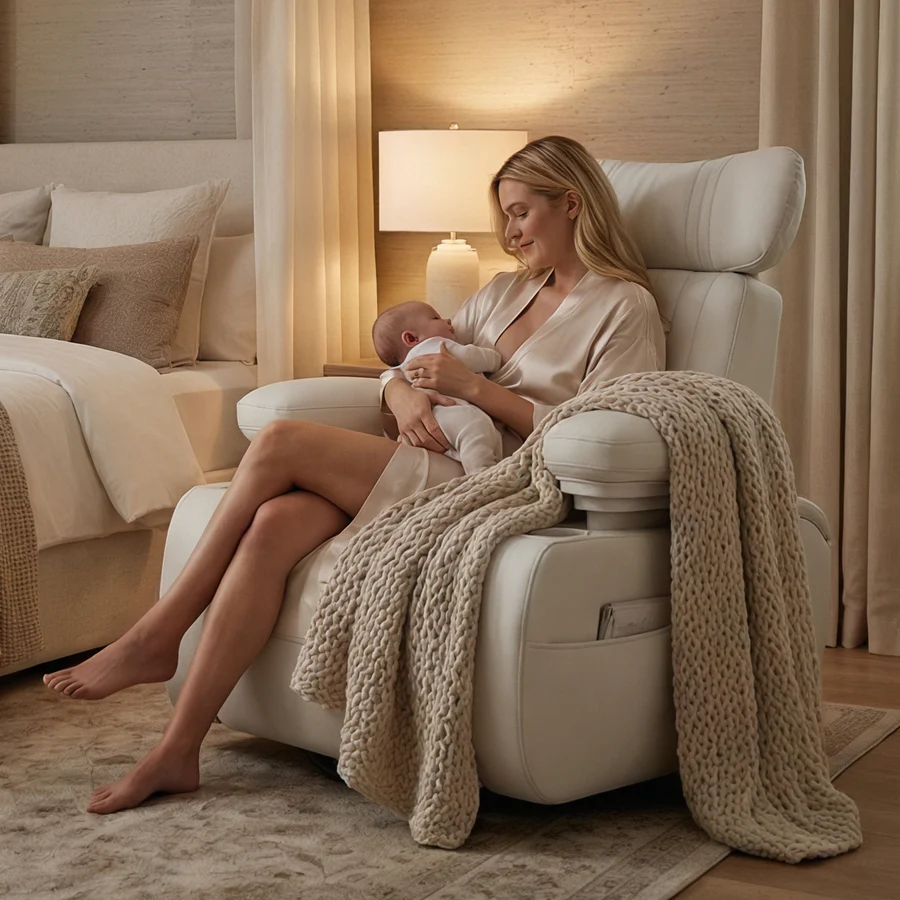
For breastfeeding parents, easy access to the armrests and a supportive backrest can be especially useful during longer feeds. A chair should allow the caregiver to bring the baby toward the body rather than repeatedly bending the neck and shoulders toward the baby. Pillows can help with positioning, but they should not be used in a way that leaves the baby’s head unsupported or compromises breathing.
Parents who bottle-feed may also benefit from comfortable arm support and a stable sitting position. In either case, the feeding area should allow enough room to reposition safely, reach essential items, and stand up without navigating around clutter. Comfort is a combination of the chair’s design and the way the surrounding space is arranged.
A Glider Recliner for Extended Feeding Sessions
The MAMAZING Lullapod Max Luxe Glider Premium Nursery Recliner with Advanced Comfort is designed for families looking for nursery seating that combines gliding movement with a reclining style. This type of chair may appeal to caregivers who want a dedicated place for feeding, soothing, and settling down between other responsibilities. When evaluating this model, parents should pay attention to the listed seat dimensions, back support, armrest design, adjustment mechanism, and any specific comfort features described by the manufacturer. Trying the chair in a position similar to a typical feeding session can help determine whether its proportions suit the caregiver’s body and whether the available adjustments are genuinely useful for longer periods of sitting.
Small Adjustments That Help During Long Feeds
Even a well-chosen chair cannot prevent every ache if a parent remains in one position for too long. Where practical, changing position between feeding sessions and taking brief movement breaks can help reduce stiffness. Parents can also check their posture periodically rather than waiting until discomfort develops.
A few simple habits can make the seating arrangement more useful:
- Keep the feet supported instead of allowing them to dangle.
- Use suitable cushions to support the arms or bring the baby closer when needed.
- Relax the shoulders and avoid holding the neck in a downward position for the entire session.
- Keep a drink and commonly used supplies nearby so frequent reaching is unnecessary.
- Adjust the backrest when appropriate rather than remaining in one position by default.
These measures do not need to become a complicated routine. A quick posture check when settling into the chair may be enough to remind the caregiver to relax their shoulders and find a more balanced position. If pain persists, worsens, or interferes with caring for the baby, professional advice is preferable to relying on a different chair alone.
Making the Feeding Area Easier to Use
The space around the chair can influence comfort just as much as the seating itself. Reaching repeatedly for a burp cloth, water bottle, or feeding supplies may cause a parent to twist or lean awkwardly. A small side table or nearby storage basket can keep frequently used items within easy reach.
Keep the immediate area simple. Too many objects around the chair can make it harder to move, particularly when a parent is holding the baby. Items should be stored securely, and electrical cords or other potential hazards should remain away from the baby’s reach. Lighting should be sufficient for feeding and checking the baby’s position without requiring the caregiver to lean toward a lamp or screen.
It is also useful to think about cleaning. Feeding sessions can involve small spills, milk drips, and everyday messes. Check the manufacturer’s upholstery-care instructions before using cleaning products, and choose a setup that can be maintained without excessive effort. Keeping a clean cloth nearby can help with minor spills, while larger cleaning tasks can be handled after the session.
Comfort That Continues Beyond the Newborn Stage
The value of a nursing chair may extend beyond the period when a baby feeds most frequently. As children grow, parents may continue using the chair for cuddles, quiet stories, or settling down before bedtime. A design that feels comfortable for different activities may remain useful even after feeding routines change.
However, a family’s needs can shift over time. A chair that works well in a nursery may eventually move to a bedroom or shared living space. Parents can consider the chair’s appearance, dimensions, and ease of cleaning alongside its comfort features, especially if they hope to keep it for several years.
The most sensible choice is one that fits the people who will use it and the space available in the home. Supportive seating can make long feeding sessions more manageable, but it works best alongside comfortable positioning, appropriate breaks, and safe handling of the baby. By paying attention to these details, parents can create a feeding routine that feels more sustainable during a demanding stage of family life.
Other Articles You May Find of Interest...
- Nursing Chair Comfort: What Matters During Longer Feeding Sessions
- Small Daily Choices That Support a Healthier Family
- 8 Things to Include in a Newborn Care Plan Before Bringing Your Baby Home
- Non-Invasive Prenatal Paternity Test (NIPP): How It Works & When You Can Take It
- How to Clean Breast Pump Parts After Each Session – 6 Simple Steps
- Why European Formulas Skip Corn Syrup and Palm Oil: A Label-Reading Guide for US Parents
- 7 Things Families Need From an ABA Therapy Provider